
- Release Year: 2014
- Platforms: Macintosh, Windows
- Publisher: Ubisoft Entertainment SA
- Developer: Limbic Entertainment
- Genre: RPG
- Perspective: First-person
- Game Mode: Single-player
- Gameplay: Turn-based combat
- Setting: Fantasy
Description
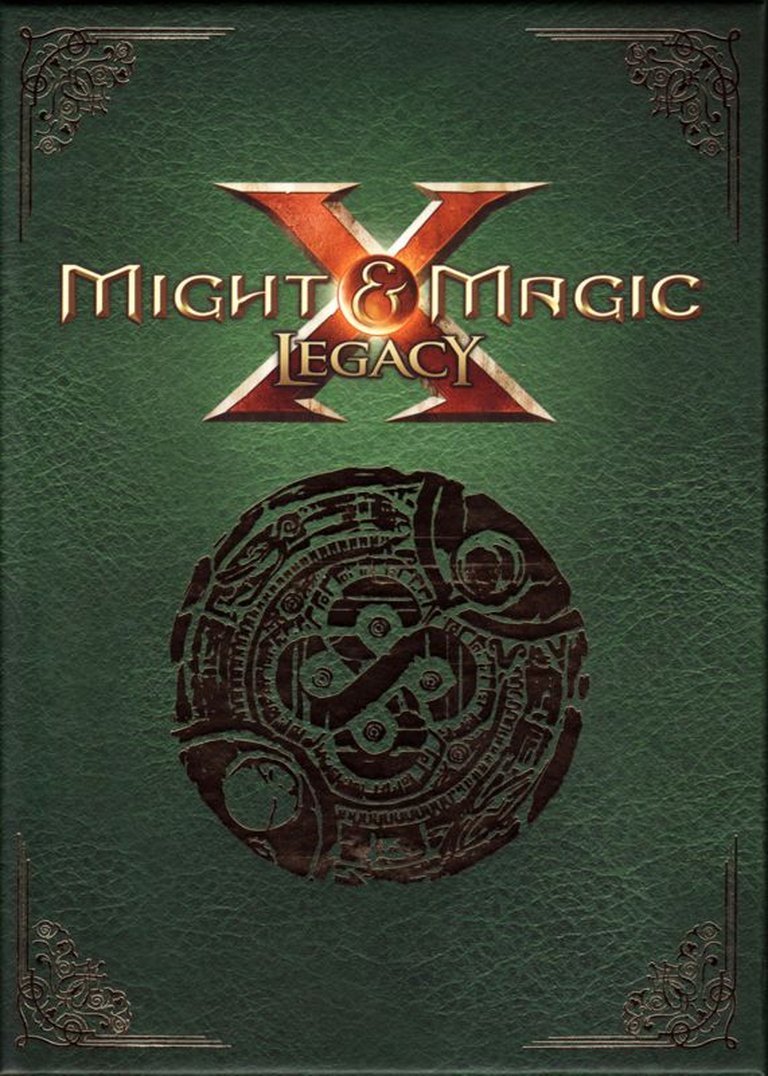
Might & Magic X: Legacy Deluxe Edition immerses players in the rich fantasy universe of the Might & Magic series, set on the enigmatic Agyn Peninsula. As a group of adventurers, players explore ancient ruins, engage in turn-based combats against mythical beasts, and unravel the mysteries surrounding a threatened island once protected by the Grand Archmage, all while building their party’s skills and uncovering the legacy of the Ancients in a classic first-person RPG experience.
Gameplay Videos
Might & Magic X: Legacy (Deluxe Edition): A Nostalgic Revival with Lavish Extras
Introduction
In the ever-evolving landscape of role-playing games, where sprawling open worlds and cinematic narratives dominate, few titles dare to rewind the clock to the grid-based, turn-based roots of the genre’s golden age. Enter Might & Magic X: Legacy (Deluxe Edition), a 2014 release that serves as a bold resurrection of the venerable Might & Magic series, dormant for over a decade in its core RPG form. As a professional game journalist and historian, I’ve long championed the franchise’s legacy—from the groundbreaking 1986 original that blended sci-fi and fantasy in procedural dungeons, to the ambitious expansions of the ’90s that influenced modern CRPGs like Baldur’s Gate. This Deluxe Edition, published by Ubisoft, isn’t just a repackaging; it’s a collector’s dream that bundles the base game with physical and digital treasures, inviting fans to reclaim the series’ exploratory spirit. My thesis: While Legacy stumbles in execution due to its unapologetic retro design amid a hyper-modern gaming era, the Deluxe Edition elevates it to a must-have artifact, preserving a pivotal moment in RPG history where tradition clashed with contemporary expectations.
Development History & Context
The story of Might & Magic X: Legacy begins in the turbulent waters of the franchise’s post-Ubisoft acquisition era. Originally crafted by Russian studio Nival (known for strategy titles like Blitzkrieg and earlier Heroes of Might and Magic entries), the game was announced in 2013 as the first mainline Might & Magic RPG since Might & Magic IX: Writ of Fate in 2002—a 12-year gap marked by spin-offs like Heroes of Might and Magic and the controversial Dark Messiah. Nival’s vision, under creative director Vladimir Vakhramov, was to honor the series’ first-person, party-based roots while adapting to 2010s tech. They aimed for a return to the isometric, grid-movement style of the early games, eschewing the real-time action of recent entries to recapture the tactical depth of yesteryear.
Technological constraints played a dual role. Developed for Windows using a custom engine (with later Mac ports), the game grappled with the era’s push toward high-fidelity graphics and seamless worlds, yet Nival prioritized old-school systems over cutting-edge visuals. This was the mid-2010s gaming landscape: Skyrim (2011) had redefined open-world RPGs, while indie revivals like Pillars of Eternity (2015) were proving demand for isometric CRPGs. Ubisoft, as publisher, positioned Legacy as a bridge—releasing it on January 23, 2014, alongside digital platforms to tap into nostalgia amid a flood of AAA blockbusters. The Deluxe Edition, however, reflects a savvy business model: in an age of digital dominance, it leaned into physical media (DVD-ROM) and collectibles to appeal to hardcore fans, including pre-order DLC like The Falcon & The Unicorn. This edition’s lavish packaging—a 40-page color manual, cloth map of the Agyn Peninsula, and soundtrack CD—harks back to the ’90s box-set era, countering Steam’s rise by offering tangible value. Ultimately, Legacy emerged from a studio eager to revive a legacy, but constrained by budget and Ubisoft’s oversight, resulting in a product that felt like a time capsule in a forward-marching industry.
Narrative & Thematic Deep Dive
At its core, Might & Magic X: Legacy weaves a tale of intrigue and survival in the shattered remnants of the Ancients’ world, set on the fictional Agyn Peninsula—a region of crumbling fortresses, haunted forests, and political machinations. The plot kicks off with your party of customizable adventurers thrust into the power vacuum following the assassination of the governor, Lord Autvar. As “Champions of the New Order,” players navigate alliances between factions like the militaristic Falcon Order and the arcane Unicorn Guild, uncovering layers of conspiracy involving ancient artifacts, demonic incursions, and the enigmatic Dragon of Time. The narrative unfolds through quests that span dungeon crawls and town intrigues, culminating in a multi-path finale where choices influence the peninsula’s fate—echoing the series’ tradition of non-linear storytelling.
Characters are archetypal yet richly detailed, drawn from the Might & Magic lore. Your party comprises up to four members from classes like Knight, Cleric, or Sorcerer, each with backstories tied to the world’s lore (e.g., a grizzled veteran haunted by the series’ multiversal cataclysms). NPCs, voiced sparingly with text-heavy dialogue, range from scheming nobles to quirky informants, their interactions laced with dry wit and moral ambiguity. Dialogue trees branch meaningfully, allowing persuasion checks based on skills like Leadership, which can unlock hidden quests or alter alliances— a nod to the series’ emphasis on player agency.
Thematically, Legacy delves into legacy itself: the burdens of inheritance in a post-apocalyptic fantasy world scarred by the Ancients’ hubris. Themes of decay and rebirth permeate the story—fortified cities crumble under siege, while emergent factions symbolize renewal amid ruin. Political intrigue critiques feudalism, with the Falcon-Unicorn rivalry mirroring real-world power struggles, and the overarching demon threat explores hubris (ancient tech as “magic” gone awry). Subtle nods to series canon, like references to Might & Magic VI‘s Mandate of Heaven (included digitally in the Deluxe Edition), reward historians, but the plot’s density can overwhelm newcomers. Pacing falters in mid-game exposition dumps, yet the thematic depth—blending sci-fi undertones with high fantasy—solidifies Legacy as a thoughtful continuation, where personal ambition clashes with collective survival.
Gameplay Mechanics & Systems
Legacy‘s gameplay is a love letter to ’80s/’90s CRPGs, built around a core loop of exploration, combat, and progression in a semi-open world divided into grids for precise movement. Players control a party navigating the Agyn Peninsula’s hand-crafted zones—towns for shopping and quests, wilderness for random encounters, and instanced dungeons teeming with traps and treasures. The turn-based system shines in combat: encounters unfold on a tactical grid where positioning matters, spells have area effects, and enemies like goblins or undead employ AI patterns that demand strategy. Core mechanics include real-time exploration (pausable) shifting to turns in fights, with skills like Alchemy for crafting potions or Learning for lore unlocks enhancing depth.
Character progression is exhaustive, using a skill-based system where points are allocated across categories like Might (for warriors), Magic (for casters), and Psionic (mind powers). Promotions at levels 10 and 20 unlock advanced classes, fostering builds like a tanky Paladin or a spell-slinging Archmage. However, flaws emerge: the UI, while functional with a keyboard/mouse setup, feels clunky—inventory management is a tetris-like slog, and the journal’s quest tracker lacks polish, leading to backtracking frustrations. Innovative systems include faction reputation, which gates content and alters dialogue, and a day-night cycle affecting encounters, adding replayability. Yet, balance issues plague it: early-game difficulty spikes (hello, permadeath risks) contrast with late-game grind, and the single-player focus (1 offline player) limits co-op dreams.
The Deluxe Edition enhances this with The Falcon & The Unicorn DLC, adding two quests, new items, and a pre-order-exclusive pet—minor but flavorful expansions that tie into faction themes. Overall, the mechanics reward patient tacticians but alienate action-oriented players, cementing Legacy as a flawed but faithful simulation of classic RPG loops.
World-Building, Art & Sound
The Agyn Peninsula is a masterclass in restrained world-building, evoking the series’ blend of fantasy and subtle sci-fi. Drawing from Might & Magic‘s multiverse, it’s a fractured land where medieval aesthetics mask ancient tech ruins—think vine-choked castles atop buried starships. Atmosphere builds through environmental storytelling: torch-lit crypts whisper of lost civilizations, while bustling ports like Sorpigal (a nod to the original game) hum with merchant banter and shadowy alleys. Exploration is gated by abilities (e.g., Disarm Trap for secret doors), encouraging thoroughness, and the cloth map in the Deluxe Edition becomes an invaluable tool for plotting routes across its detailed regions.
Visually, the art direction is isometric minimalism: pseudo-3D models in a muted palette of grays, greens, and golds create a gritty, immersive vibe, reminiscent of Heroes of Might and Magic III. Lighting effects in dungeons add tension, but textures can appear dated, a relic of 2014’s budget constraints. The Deluxe’s four lithography prints—likely depicting key locations or characters—serve as stunning companions, enhancing appreciation for the hand-drawn assets.
Sound design elevates the experience: the original soundtrack CD, featuring orchestral swells by Chance Thomas (known for Uncharted Waters), mixes epic horns with haunting flutes, underscoring the world’s melancholy. Ambient SFX—dripping water in caves, clanging swords in battle—immerse without overwhelming, while sparse voice acting (mostly grunts) keeps the focus on text. These elements coalesce into a cohesive atmosphere: not flashy, but evocatively nostalgic, making the peninsula feel alive and perilous, much like flipping through the included 40-page manual’s lore-packed pages.
Reception & Legacy
Upon launch in January 2014, Might & Magic X: Legacy received a mixed reception, with critics praising its homage to classics but critiquing technical hiccups (e.g., bugs fixed via patches) and steep difficulty. Metacritic aggregated around 65/100 from outlets like IGN and GameSpot, lauding the tactical combat but docking points for UI woes and lack of innovation. Commercially, it underperformed—Ubisoft’s focus on Assassin’s Creed overshadowed it, with sales buoyed by series fans but not breaking even quickly. Player sentiment, as seen in sparse MobyGames ratings (3.9/5 from three votes, no written reviews), mirrors this: enthusiasts appreciated the depth, while others found it archaic.
Over time, its reputation has warmed through mods and community patches, evolving into a cult favorite among CRPG revivalists. It influenced titles like Tyranny (2016) in faction dynamics and Pillars of Eternity II in world-building, while paving the way for Ubisoft’s Heroes VII (2015, also Deluxe-packaged). In the broader industry, Legacy highlighted the viability of retro RPGs amid Kickstarter booms, influencing indies like Divinity: Original Sin. The Deluxe Edition, with its physical perks (soundtrack, map, prints, and cross-game codes for Might and Magic VI and Duel of Champions), has become a collector’s item, symbolizing the last gasp of boxed RPGs before digital ubiquity. Its legacy? A testament to perseverance, reminding us that even flawed revivals can reignite dormant franchises.
Conclusion
Might & Magic X: Legacy (Deluxe Edition) stands as a bittersweet chapter in video game history—a valiant attempt to resurrect a storied series, packaged with affectionate extras that honor its heritage. From Nival’s nostalgic vision to the intricate narratives of Agyn’s turmoil, tactical depths, and atmospheric world, it captures the essence of what made early Might & Magic iconic, even as modern sensibilities expose its rough edges. Thematically rich and mechanically demanding, it’s not for everyone, but for historians and fans, it’s a vital artifact. Definitive verdict: Essential for RPG completists (8/10), earning its place as a bridge between eras, much like the Ancients’ relics it enshrines. If you’re weary of endless fetch quests in glossy worlds, this Deluxe gem offers a grounded, grid-by-grid journey back to the genre’s soul.