
- Release Year: 2002
- Platforms: Macintosh, Windows
- Publisher: Disney Interactive, Inc.
- Developer: Hulabee Entertainment Inc.
- Genre: Adventure
- Perspective: 3rd-person
- Game Mode: Single-player
- Gameplay: Graphic adventure, Point and select
- Setting: Futuristic, Sci-fi
- Average Score: 72/100
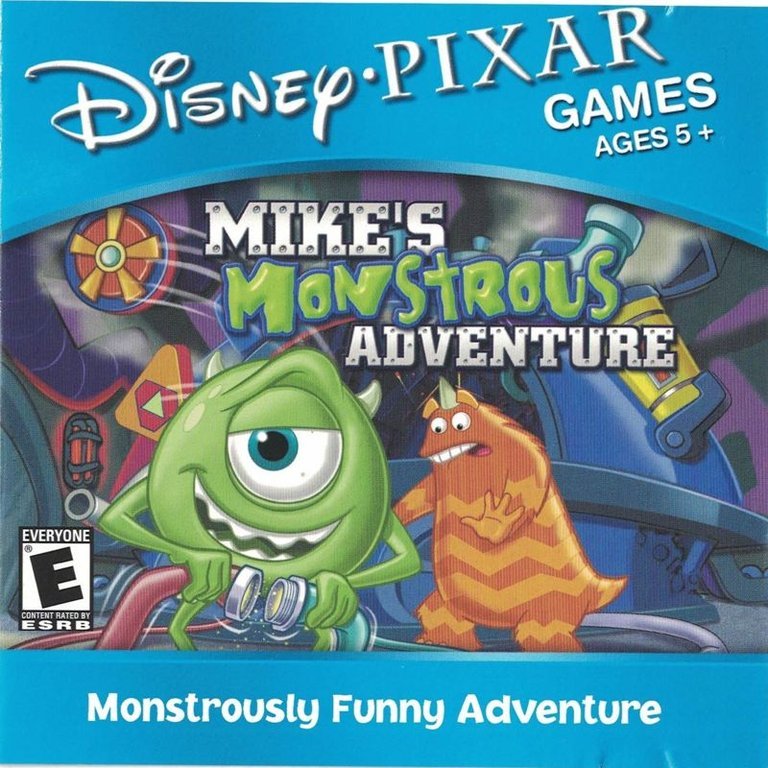
Description
Mike’s Monstrous Adventure is a point-and-click adventure game for young children, set in the world of Disney/Pixar’s Monsters, Inc. After a long day on the laugh floor, Mike Wazowski accidentally breaks the New Laugh Energy Filter 5000, scattering its pieces across the factory. Players must help Mike retrieve the missing parts and repair the machine before Sulley’s press conference the next morning, navigating through the monstrous world in a lighthearted, comedic adventure.
Gameplay Videos
Mike’s Monstrous Adventure Free Download
Mike’s Monstrous Adventure Cracks & Fixes
Mike’s Monstrous Adventure Patches & Updates
Mike’s Monstrous Adventure Reviews & Reception
mobygames.com (72/100): A point-and-click adventure aimed at young children, similar to other games from Hulabee Entertainment.
Mike’s Monstrous Adventure: A Forgotten Gem of Early 2000s Children’s Gaming
Introduction: The Overlooked Adventure of a One-Eyed Hero
In the vast landscape of licensed video games, few titles manage to capture the magic of their source material while offering a genuinely engaging experience. Mike’s Monstrous Adventure (2002), developed by Hulabee Entertainment and published by Disney Interactive, is one such rarity—a charming, if flawed, point-and-click adventure that extends the whimsical world of Monsters, Inc. into interactive form. While it may not have left an indelible mark on gaming history, this title deserves reconsideration as a fascinating artifact of early 2000s children’s gaming, a bridge between Pixar’s cinematic brilliance and the burgeoning world of educational entertainment.
This review will dissect Mike’s Monstrous Adventure from every angle: its development context, narrative strengths, gameplay mechanics, artistic design, and lasting legacy. We’ll explore why it resonated with its young audience, where it stumbled, and how it fits into the broader tapestry of adventure games and licensed properties.
Development History & Context: The Birth of a Monstrous Quest
The Studio Behind the Scares: Hulabee Entertainment
Hulabee Entertainment, the developer behind Mike’s Monstrous Adventure, was a studio specializing in children’s educational and adventure games. Their portfolio included titles like Piglet’s Big Game (2003) and Ollo in the Sunny Valley Fair (2002), all of which shared a common DNA: bright visuals, simple mechanics, and a focus on problem-solving for young players. The studio’s collaboration with Disney Interactive was a natural fit, given Disney’s push to expand its properties into interactive media.
What makes Mike’s Monstrous Adventure particularly interesting is the involvement of Ron Gilbert, the legendary designer behind Monkey Island and Maniac Mansion, who served as Creative Director. Gilbert’s presence hints at a desire to infuse the game with the same wit and charm that defined his earlier works, albeit tailored for a much younger audience.
Technological Constraints and Design Philosophy
Released in 2002, Mike’s Monstrous Adventure was constrained by the hardware limitations of its time. The game employed a fixed/flip-screen perspective, a common approach in early 2000s adventure games, which allowed for detailed, hand-drawn backgrounds without the need for complex 3D rendering. The point-and-click interface was intuitive for children, requiring only basic mouse skills—a deliberate choice to ensure accessibility.
The game’s real-time pacing and third-person perspective were standard for the genre, but its comedy-driven narrative and licensed IP set it apart. Unlike many licensed games of the era, which were often rushed or shallow, Mike’s Monstrous Adventure benefited from Hulabee’s experience in crafting engaging, age-appropriate experiences.
The Gaming Landscape of 2002
The early 2000s were a transitional period for adventure games. The genre, once dominated by LucasArts and Sierra, was waning in mainstream popularity, overshadowed by the rise of 3D action-adventures and first-person shooters. However, children’s adventure games thrived, with titles like Pajama Sam and Freddi Fish proving that there was still a market for narrative-driven, puzzle-solving experiences.
Mike’s Monstrous Adventure entered this space as a licensed tie-in, leveraging the massive success of Monsters, Inc. (2001). Disney’s strategy was clear: capitalize on the film’s popularity while offering young fans a way to engage with the characters beyond the silver screen.
Narrative & Thematic Deep Dive: A Comedy of Errors in Monstropolis
Plot Summary: A Simple Premise with Big Stakes
The game’s story is a direct continuation of Monsters, Inc., taking place after the events of the film. Mike Wazowski, the lovable one-eyed protagonist, is about to head home after a long day on the “laugh floor” when he notices his coworker, George, tinkering with the New Laugh Energy Filter 5000—a device Sulley is set to unveil at a press conference the next morning. In a classic case of “Mike being Mike,” his attempt to fix the machine goes awry, causing it to explode and scatter its components across Monstropolis.
The premise is simple but effective: Mike must retrieve the missing parts before Sulley’s conference, lest he face the wrath of his best friend and the entire company. Along the way, he encounters familiar faces from the film, including Boo, Smitty, Needleman, and Wally, each contributing to the game’s lighthearted tone.
Characters and Dialogue: Staying True to the Source
One of the game’s strongest aspects is its faithfulness to the characters from Monsters, Inc. Mike’s sarcastic wit, Sulley’s gruff but caring demeanor, and Boo’s playful innocence are all preserved, thanks in part to the voice acting (though the game does not feature the original film cast, the impressions are serviceable).
The dialogue is humorous and age-appropriate, with plenty of jokes tailored for young players. The game also introduces joke cards, a mechanic that allows Mike to tell different types of jokes (sports, animals, science, etc.) to various characters, reinforcing the film’s theme of laughter as a power source.
Themes: Responsibility, Teamwork, and the Power of Laughter
At its core, Mike’s Monstrous Adventure is about taking responsibility for one’s mistakes. Mike’s initial blunder sets the entire plot in motion, and his journey to fix it teaches players about accountability. The game also emphasizes teamwork, as Mike relies on his friends and coworkers to help him retrieve the scattered parts.
The overarching theme of laughter as energy is woven throughout the gameplay, particularly in the Cereal Slide mini-game, where players must match joke cards to make characters laugh. This reinforces the film’s central message: that joy and humor are powerful forces.
Gameplay Mechanics & Systems: Puzzles, Mini-Games, and Exploration
Core Gameplay Loop: A Classic Point-and-Click Structure
Mike’s Monstrous Adventure follows the traditional point-and-click adventure formula:
1. Explore the environment (Monstropolis’ various rooms and areas).
2. Interact with objects and characters to gather clues and items.
3. Solve puzzles to progress, often involving inventory management or simple logic.
4. Retrieve missing machine parts and return them to the Laugh Energy Filter.
The game’s fixed/flip-screen perspective means that each location is a self-contained scene, with Mike moving between them via doors or vents. This design choice keeps the gameplay focused and manageable for young players, though it limits the sense of a fully interconnected world.
Puzzle Design: Simple but Effective
The puzzles in Mike’s Monstrous Adventure are straightforward, designed to challenge but not frustrate its target audience (ages 4-8). Examples include:
– Matching joke cards to the right characters to make them laugh.
– Finding hidden objects in cluttered environments (e.g., the trash room).
– Completing mini-games like the Cereal Slide, which plays like a simplified Connect Four.
While the puzzles lack the complexity of adult-oriented adventure games, they are well-integrated into the narrative and reinforce the game’s themes.
Inventory and Progression: A Streamlined Approach
The game features a small inventory system, allowing Mike to carry a limited number of items. This prevents the overwhelm that can come with more complex adventure games. The blueprint mechanic, unlocked after the first puzzle, serves as a progress tracker, showing which machine parts have been found and which remain missing—a helpful feature for younger players.
Mini-Games: A Mixed Bag
The Cereal Slide mini-game is the most notable diversion, offering a turn-based strategy challenge where players must align colored cereal pieces. While fun in short bursts, it lacks depth and replayability. Other mini-games, such as finishing Mike’s paperwork, feel more like chores than engaging activities.
UI and Accessibility: Designed for Young Players
The user interface is clean and intuitive, with large, colorful buttons and clear instructions. The point-and-click controls are responsive, and the game provides hints when players struggle, ensuring that frustration is minimized.
World-Building, Art & Sound: Bringing Monstropolis to Life
Visual Design: A Faithful Recreation of the Film’s Aesthetic
Mike’s Monstrous Adventure excels in visual fidelity to the film. The hand-drawn backgrounds are vibrant and detailed, capturing the industrial yet whimsical look of Monstropolis. Character animations, while not as fluid as the film’s, are expressive and charming, with Mike’s exaggerated facial expressions being a particular highlight.
The fixed/flip-screen perspective allows for richly detailed environments, from the cluttered maintenance room to the eerie tentacle room. Each location feels distinct, reinforcing the idea of Monstropolis as a living, breathing world.
Sound Design and Music: A Laugh-Filled Soundtrack
The game’s sound design is playful and immersive, with ambient noises (e.g., the hum of machinery, distant laughter) enhancing the atmosphere. The music is upbeat and cheerful, though it lacks the orchestral grandeur of the film’s score.
Voice acting, while not performed by the original cast, is competent and fitting, with Mike’s sarcastic tone and Sulley’s deep voice being particularly well-executed.
Reception & Legacy: A Forgotten but Fondly Remembered Title
Critical Reception: A Decent but Flawed Effort
Mike’s Monstrous Adventure received a mixed but generally positive reception upon release. KidZone gave it a 72%, praising its humor and accessibility but criticizing its brevity and lack of replayability. The game’s linear structure and limited puzzles were seen as drawbacks, particularly for older children.
Commercial Performance and Audience
As a licensed children’s game, Mike’s Monstrous Adventure likely sold well enough to justify its existence, though it never became a breakout hit. Its primary audience was young Monsters, Inc. fans, and it succeeded in delivering a faithful, if simplistic, extension of the film’s world.
Legacy and Influence
While Mike’s Monstrous Adventure did not spawn sequels or imitators, it remains a cult favorite among those who played it as children. Its accessibility, humor, and faithful adaptation of the source material make it a standout in the often-maligned genre of licensed games.
In the broader context of adventure games, it serves as a time capsule of early 2000s children’s gaming—a period when point-and-click adventures were gradually being replaced by more action-oriented experiences.
Conclusion: A Charming but Flawed Adventure
Mike’s Monstrous Adventure is a competent, if unremarkable, entry in the children’s adventure game genre. It succeeds in capturing the spirit of Monsters, Inc. while offering a simple but engaging experience for young players. However, its linearity, lack of replayability, and underdeveloped mini-games prevent it from reaching the heights of classics like Pajama Sam or Freddi Fish.
Final Verdict: 7/10 – A delightful but brief romp through Monstropolis, best suited for young fans of the film.
For those who grew up with it, Mike’s Monstrous Adventure is a nostalgic treasure; for modern players, it’s a curious relic of a bygone era in gaming. It may not be a masterpiece, but it’s a worthy footnote in the history of licensed adventure games.