
- Release Year: 2014
- Platforms: Windows
- Publisher: Aldorlea Games
- Developer: Aldorlea Games
- Genre: Role-playing (RPG)
- Perspective: [‘Side view’, ‘Top-down’]
- Gameplay: JRPG, Turn-based
- Setting: Fantasy
- Average Score: 61/100
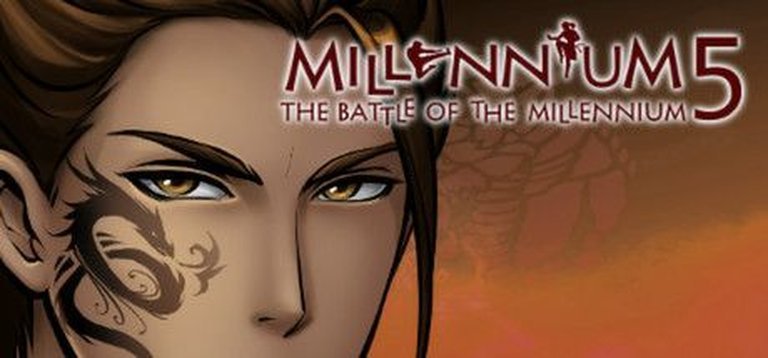
Description
Millennium 5: The Battle of the Millennium is the concluding installment in Aldorlea Games’ Japanese-style RPG series, set in the fantasy world of Myst. Players control Marine, a young peasant girl, as she continues her journey to gather warriors for a showdown to determine the rulership of Mystrock, with turn-based combat and the ability to import saved games from previous episodes to carry over progress and choices.
Gameplay Videos
Where to Buy Millennium 5: The Battle of the Millennium
PC
Millennium 5: The Battle of the Millennium Guides & Walkthroughs
Millennium 5: The Battle of the Millennium Reviews & Reception
operationrainfall.com : Marine, once again pushing The Bear to put them through hell in one final attempt to prepare themselves, has her willpower and stubbornness on full display.
Millennium 5: The Battle of the Millennium: A Retrospective Deep Dive into an Indie RPG’s Swan Song
Introduction: The Last Stand of a Cult Series
In the bustling ecosystem of mid-2010s independent gaming, few paths were as well-trodden yet uniquely traversed as that of Aldorlea Games’ Millennium series. For half a decade, this small studio, under the singular creative vision of “Indinera Falls” (Damien Zeking), crafted a sprawling Japanese-style RPG epic across five interconnected episodes using RPG Maker XP. Millennium 5: The Battle of the Millennium (2013/2014) served as the potent, if understated, culmination of this ambitious project. It is a game that embodies the quintessential indie RPG paradox: a title born from deep passion and systemic continuity, yet one that existed almost entirely outside the mainstream zeitgeist, its legacy a quiet testament to a dedicated niche rather than a broad cultural footprint. This review argues that while Millennium 5 is fundamentally a product of its technological and aesthetic constraints—a polished but unmistakable RPG Maker artifact—its true significance lies in its role as a comprehensive capstone to one of the most committed save-file-transfer narratives in indie history, offering a fascinating case study in long-form, low-budget serialized storytelling.
Development History & Context: The Aldorlea Method
Aldorlea Games represents a archetype of the “solopreneur” or micro-studio that flourished in the late 2000s and early 2010s, empowered by accessible tools like RPG Maker XP and digital storefronts like Steam and Big Fish Games. Damien Zeking, as the credited game designer, story, and character creator, was the undeniable auteur at the helm. The Millennium series began with A New Hope in 2009 and followed a rapid, nearly annual release schedule through to Beyond Sunset (2011) and finally The Battle of the Millennium in 2013 (with a Windows release in November 2014).
The RPG Maker XP Crucible: The technological constraint is the series’ defining feature. Built on the now-antiquated but beloved RPG Maker XP engine, the games visually channel the 16-bit era (as noted by The Gamesmen review of the first game, which hailed it as “software worthy of Genesis and Super Nintendo era gaming”). This meant a fixed top-down or side-view perspective, pre-made tile sets, a specific battle system framework, and a certain aesthetic uniformity. For Millennium 5, this meant inheriting and refining the visual language established four games prior. The credits reveal a small, primarily remote team: Brit F on character arts, Max Chavot on monster arts, and a host of contributors for graphics, tilesets, and panoramas under aliases like Thalzon and Hyptosis. Music was sourced from Kevin MacLeod and “various artists,” a common practice for budget-conscious indies.
The Gaming Landscape of 2013-2014: This was the era of the indie boom, but also a time of transition. Crowdfunding (Kickstarter) was proving viable for larger projects, and pixel art was experiencing a renaissance with titles like Stardew Valley (2016) on the horizon. However, the RPG Maker scene was a world apart—defined by passionate communities, often sold at sub-$15 price points, and reviewed on niche sites like RPG Fan and Gamezebo. Millennium 5’s release on Steam for $9.99 placed it squarely in this budget-conscious, discoverability-challenged corner of the market. Its existence was a direct response to the dedicated players who had imported save files from the previous four episodes, a feature Aldorlea heavily promoted as a key selling point.
Narrative & Thematic Deep Dive: The Weight of a Cumulative Saga
The Millennium series plot, as summarized on Wikipedia, presents a classic JRPG premise: a young peasant girl named Marine embarks on a journey to gather 12 warriors for a showdown that will determine the next ruler of the divided, class-stratified world of Myst, specifically the opulent city of Mystrock versus the poor countryside.
The Challenge of serialization: Millennium 5’s narrative cannot be assessed in isolation. Its thesis is cumulative. By the fifth episode, the plot is not about initial character introductions or world-building from scratch, but about convergence and resolution. The “12 warriors” goal is presumably reached or nearing its climax. Thematically, the series consistently explores prejudice, class struggle, and the burden of destiny. Marine, as a peasant rising against a corrupt system, is the catalyst. The final battle implied by the title (“The Battle of the Millennium”) suggests a culmination of these socio-political tensions on a grand, possibly apocalyptic scale.
Character Legacy: The narrative strength, as noted in Neal Chandran’s 2009 RPG Fan review of the first game, always lay in “the characters make me want to journey with them.” Over five games, player attachment was forged through persistent party members. Millennium 5’s story therefore leverages this emotional capital. The dialogue and character arcs are continuations, not beginnings. For the initiated, the emotional stakes are the payoff of 20+ hours of prior investment. For the newcomer, the game is essentially incomprehensible—a fatal flaw for a standalone product, but an accepted condition for a serialized narrative project.
Thematic Resolution: Thematically, the final episode would logically confront the core dichotomy of Myst. It likely forces players to directly challenge the entrenched power of Mystrock’s elite, with the “Battle of the Millennium” representing the violent upheaval necessary to break the cycle. The title itself suggests a conflict of epochal significance, moving beyond personal quests to a societal revolution. However, without access to the full script or a comprehensive plot summary, one must infer that the ending sought to provide catharsis for these systemic themes, though reviews on MobyGames itself are notably absent, hinting at its limited reach and critical discourse.
Gameplay Mechanics & Systems: Refinement Within a Rigid Framework
As an RPG Maker XP title, Millennium 5 operates within a well-established, almost template-like set of systems. Its innovations are less about genre-redefining mechanics and more about consistency, balance, and content density across a multi-part series.
Core Loop & Combat: The gameplay is quintessential turn-based JRPG: exploration of top-down/side-view maps, random or visible (configurable) enemy encounters, turn-based battles with a standard ATB or command-selection system, and experience/level progression. The combat system is inherited directly from the engine. Aldorlea’s contribution would have been in enemy design, skill trees (likely involving “learning” abilities via weapons or level-ups), and party composition—especially the logistics of managing a large cast of “12 warriors.”
Progression & Import: The killer feature is the save-game import. As per the developer FAQ cited on Wikipedia, players could transfer their inventory, gold, and likely character levels from the previous four games. This created an unprecedented (for the time and scale) sense of persistent progression. Millennium 5’s design had to account for players arriving with massively overpowered gear from prior games or, conversely, new players starting from scratch. This necessitated scalable content, a high degree of optional sidequests (as Bell’s Gamezebo review of the first game noted, it “rewards people who are thorough and curious”), and likely a final chapter that felt climactic regardless of entry point.
UI & Accessibility: The user interface is standard for the engine: menu-based, mouse-driven (a specific feature Aldorlea highlights), with choices for difficulty. The inclusion of an “in-game tutorial” (again, per the official description) suggests an awareness of onboarding new players in the final installment, though its efficacy is questionable given the deep narrative continuity required.
Flaws & Innovations: The primary flaw is inherent to the engine and the model: an inability to evolve the foundational mechanics. The battle system, while functional, lacks the tactical depth of contemporary AAA titles or even more innovative indie fare. Its “innovation” is purely in the domain of serialized save-state persistence, a meta-gameplay layer that de facto made the series a single, 100+ hour RPG split into five parts. This was both its greatest strength (for loyal fans) and its biggest barrier to entry.
World-Building, Art & Sound: The Aesthetic of积木 (Building Blocks)
Setting & Atmosphere: The world of Myst is a standard fantasy dichotomy: gleaming, aristocratic metropolis vs. grimy, oppressed rural provinces. This binary is a clear allegory for class conflict. The atmosphere is built through environmental storytelling in the tile sets—the contrast between Mystrock’s polished stone and the swampy, rustic areas of the early games. Millennium 5, as the finale, likely featured the most iconic locations from the series’ lore, synthesizing these disparate areas into a coherent endgame map.
Visual Direction: The art is a collage of assets. The credits list multiple artists contributing specific elements: character arts (Brit F), monster arts (Max Chavot), graphics (a list including “Thalzon,” “Hyptosis,” “PandaMaru,” etc.). This results in a visible stylistic eclecticism. Character portraits and monster designs may vary in quality and style, a common trait of collaborative RPG Maker projects. The “panoramas” by Vince Seet were likely static background images for key scenes, attempting to create epic vistas within the engine’s limits. The overall visual identity is that of a high-end RPG Maker game— League of Legends champion splash art quality? Perhaps not. But compared to the average RPG Maker title, it aims for a more polished, cohesive look.
Sound Design: Music is sourced from Kevin MacLeod (a royalty-free composer ubiquitous in indie media) and “various artists.” This means the soundtrack is a mix of generic epic fantasy loops and possibly some more distinctive tracks. The sound design—footsteps, spell effects, UI clicks—is almost certainly default RPG Maker XP sounds or very basic custom additions. The audio experience is functional, not immersive, serving the gameplay rather than transcending it.
Convergence of Elements: Where the game succeeds is in consistency of tone. The music, despite its source, is aimed at the same heroic/melancholy/adventure spirit as the visuals and story. For a player invested in the narrative, these elements, while technically modest, form a coherent, if pixelated, fantasy world. It does not aim for the atmospheric depth of Dark Souls or the vibrant expressiveness of a Vanillaware title; it aims for a competent, classic JRPG feel, which it achieves within its self-imposed limitations.
Reception & Legacy: The Quiet cult of the Completed Saga
Critical & Commercial Reception: The game exists in a near-void of mainstream critical discourse. On MobyGames, as of this writing, it has no critic reviews and only 22 players collected. This stark statistic defines its reception: it was a niche product for a niche audience. Its commercial success was likely modest, sufficient to justify its development and release on Steam and digital storefronts. The series’ earlier entries did receive reviews from outlets like RPG Fan (89/100 for A New Hope, Indie RPG of the Year), Gamezebo (3/5 stars), and The Gamesmen (84/100). These reviews consistently praised its content depth, art, and music while noting its adherence to classic formulas. Millennium 5 benefited from this established goodwill with its core audience.
Evolution of Reputation: Its reputation has not evolved significantly because it never had a significant reputation to evolve. Within the tight-knit RPG Maker community and among players who completed the saga, Millennium 5 is likely viewed with a sense of accomplishment and closure. It is the game that fulfilled the promise of the series. Outside that bubble, it is virtually unknown. Wikipedia’s article on the series labels it as the “final episode,” cementing its status as a completed whole, but the article itself is flagged as needing plot summary updates and recent information, a meta-commentary on its fading into obscurity.
Influence & Industry Impact: The influence of Millennium 5, and the series as a whole, is almost entirely experiential and inspirational within the microcosm of RPG Maker development. It demonstrated the commercial viability (however small) of a multi-part, save-transfer narrative. It proved that a dedicated solo/small team could see a five-year, five-game project through to completion with a coherent storyline. For every hopeful RPG Maker developer, the Millennium series stands as a proof-of-concept: build your world, tell your story across chapters, and maintain mechanical consistency. It did not influence mainstream AAA RPG design, but it is a clear predecessor to the “episodic” model later adopted by more polished indies like the Pillars of Eternity expansions or Deltarune’s planned chapters.
Conclusion: A Monument to Niche Persistence
Millennium 5: The Battle of the Millennium is not a lost masterpiece. It is not a genre-defining milestone. Judged by the standards of 2014’s indie landscape—with contemporaries like The Banner Saga, Transistor, or Divinity: Original Sin—it is a technically and artistically modest game. Its mechanics are derivative, its presentation is constrained, and its narrative is impenetrable to the uninitiated.
Yet, to dismiss it is to miss its unique historical value. It is a curatorial achievement. In an industry where even major franchises often fail to conclude their stories, Aldorlea Games, through Damien Zeking’s steady hand, delivered a full, five-part narrative with mechanical continuity. It is a testament to the power of serialized storytelling using accessible tools, a project fueled by a direct relationship with a dedicated player base rather than by venture capital or critical hype.
Its place in video game history is not on a pedestal but in a showcase case: the case study of how passion, consistency, and a clear, scalable vision can produce a completed, cohesive saga in the democratized era of game development. It is a hardy weed growing in the cracks of the mainstream pavement, proof that the dream of telling a complete, epic RPG story is still attainable for the dedicated few, even if the audience remains small and the legacy quiet. For that, Millennium 5 earns its place—not as a classic, but as a conscientious objector to the trend of the abandoned sequel, a final, functional, and heartfelt chapter in a story that, for better or worse, was told in full.