
- Release Year: 2024
- Platforms: Macintosh, Windows
- Publisher: United Soft Media Verlag GmbH
- Developer: Roof Cut Media
- Genre: Adventure
- Perspective: Side view
- Game Mode: Single-player
- Gameplay: Puzzle
- Setting: Apartment, Surreal
- Average Score: 76/100
Description
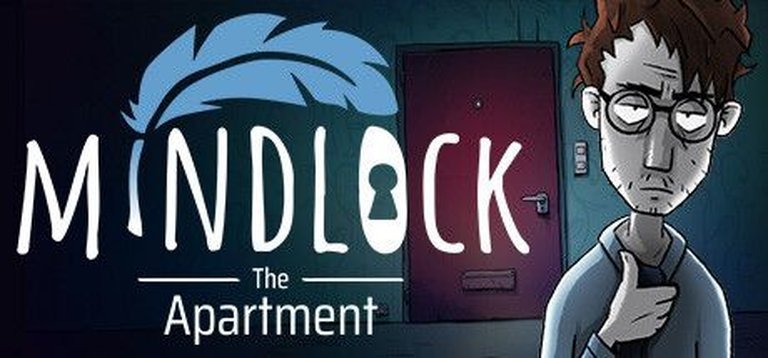
Mindlock: The Apartment is a hand-drawn, animated surreal puzzle adventure where protagonist Colin awakens to find the door to his apartment has vanished, trapping him within a bizarre and ever-shifting version of his own home. He must explore this unexpected escape room, solving cryptic puzzles and interacting with mysterious visitors to unravel the inexplicable phenomena and find a way out.
Gameplay Videos
Mindlock: The Apartment Guides & Walkthroughs
Mindlock: The Apartment Reviews & Reception
metacritic.com (88/100): You’ll be tempted to stay home to finish Mindlock: The Apartment in one go, as it’s a funny-creepy story packed with great gameplay and wrapped up in impressive production values.
allgamenofilter.com (65/100): A bleak but oddly comforting weekend escape. The puzzles, story, and presentation work together beautifully — just be ready for some introspection along the way.
steamcommunity.com : I absolutely loved this, I’m a sucker for point & click games and combined with the humour and art style, this was gold!
Mindlock: The Apartment: Review
Introduction: A Key Turned Inward
In an era saturated with sprawling open-world epics and live-service behemoths, the humble, meticulously crafted point-and-click adventure remains a sacred space. It is within this hallowed ground that Mindlock: The Apartment emerges not merely as a genre entry, but as a profound and unsettlingly personal statement. Released in November 2024 by the singular vision of Rouven Schumacher’s Roof Cut Media and publisher United Soft Media, the game transcends its “escape room” premise to deliver a stark, philosophical interrogation of routine, regret, and thesearch for meaning in a monotonous life. From its first, disorienting moment—the simple, terrifying disappearance of a front door—Mindlock establishes itself as more than a puzzle game; it is a mirror held up to the player’s own life, asking not “how do I get out?” but “why did I stop looking in?” This review will argue that Mindlock: The Apartment is a landmark of contemporary indie adventure gaming, a masterpiece of constrained design where every hand-drawn line, every dryly humorous line of dialogue, and every abstract puzzle piece coalesces into an experience that is as emotionally resonant as it is mechanically satisfying.
Development History & Context: The Solitary Pandemic Spark
The Solo Dev Genesis: The story of Mindlock is inextricably linked to the story of its creator. Rouven Schumacher conceived the project in the quiet, isolating silence of the COVID-19 pandemic. As detailed in his development logs, what began as “a small project at home”—a sketchy, chaotic apartment drawn on a tablet—blossomed from a simple “what if?” premise (the missing door) into a “complete game idea with a complex story.” This organic, almost therapeutic, evolution is baked into the game’s DNA. Schumacher wore every hat: writer, graphic designer, animator, programmer, sound designer. This solo development, while presenting challenges in feedback and workload, allowed for an unprecedented unity of vision. The project was structured around monthly milestones delivered to publisher USM, who provided crucial QA and creative feedback, acting as a vital surrogate for a full team.
Technological & Stylistic Constraints as Strength: Developed in the Visionaire Studio engine—a staple for 2D point-and-click adventures—the game’s technical constraints were embraced as artistic catalysts. Schumacher’s background in hand-drawn comics and influences like Tim Burton’s stop-motion, Gorillaz videos, and Sly Cooper directly informed a style he calls “sketchy” and intentionally imperfect. The use of photo templates early on gave way to Blender 3D for consistent perspective in interconnected spaces, which were then “reimagined in Mindlock’s style.” This hybrid approach allowed for the detailed, eerie atmosphere of the “present” apartment while enabling the rapid, stylistic shifts required for the memory and thought-sequence segments. The low system requirements (OpenGL 2.0, 2GB RAM) speak to the engine’s efficiency and the 2D art’s scalability, ensuring accessibility without sacrificing the hand-drawn aesthetic.
The 2024 Gaming Landscape: Mindlock arrived in a mature adventure game revival. The success of titles like Return of the Obra Dinn, Norco, and the Monkey Island remasters proved an audience for narrative-driven, puzzle-centric games. However, Mindlock differentiated itself by explicitly prioritizing “a compellingly narrated story” over gameplay-mechanic-driven storytelling (as Schumacher contrasts with Obra Dinn). Its release on Steam (November 26, 2024) and later Mac, alongside a well-received demo during Steam Next Fest, placed it in a crowded but receptive indie field. Its subsequent wins at the GermanDevDays Awards (Best Audio, Best Story, Best Game) and nomination for the German Computer Games Award (“Best Debut”) signaled immediate critical recognition within the German and broader European indie scene, a testament to the quality achieved by a solo developer.
Narrative & Thematic Deep Dive: The Philosophy of a Locked Door
Plot as Psychological Unraveling: The narrative is deceptively simple. Colin Walker, a twenty-something corporate drone, wakes up to find his apartment door has vanished. This inciting incident transforms his mundane space into a “chaotic labyrinth” where rooms shift, familiar objects become ominous, and cryptic messages appear. The plot is not about escaping a physical space, but about navigating the ruins of Colin’s psyche. Visitors like the mysterious, unsettling puppet figure Veloria and manifestations of his parents force him to confront his past, his deep-seated dissatisfaction with his “monotonous job,” and his own self-deprecating worldview. The central mystery is twofold: the literal mechanism of the “Mindlock,” and the emotionaltruth of why Colin was locked in his own mental rut.
Character & Dialogue: Dry Humor as a Defense Mechanism: Colin is a brilliantly realized protagonist. His dialogue is a masterclass in character voice, dripping with sarcasm, procrastination, and existential dread (“GO TO WORK” is a recurring, ironically written calendar event). He is the embodiment of punk-rock disillusionment (a poster and dusty guitar adorn his wall, a direct nod to creator Schumacher’s punk past), yet his rebellion is internalized and impotent. This makes him relatable, frustrating, and ultimately sympathetic. Supporting characters, particularly Veloria, act as catalysts and mirrors. Their interactions, fully voiced in German and English by professional actors (Jesse Grimm / Hamish Plaggemars as Colin, Verena Wolfien / Rhiannon Moushall as Veloria), are the game’s emotional core. The dry, often bleak humor is not merely comic relief; it is Colin’s armor, a coping mechanism that slowly cracks as the game progresses.
Themes: The “Banal” Profound: At its heart, Mindlock is a philosophical game. As Schumacher states, it is “a philosophical story for all people.” It explores:
* The Tyranny of Routine: The missing door is a literal interruption of the automated morning commute. The game argues that a “moment of pause” is essential for self-awareness, a concept made visceral through Colin’s forced stasis.
* Repressed Memory & Trauma: The “Relive Colin’s memories” feature is not a fetch-quest sidebar. These sequences—presented in a bright, sketchy, cloudy style contrasted with the dark, detailed “present”—are where the game’s emotional weight lands. We see formative, painful moments that explain his cynicism.
* Facing the “Self”: The apartment’s transformations—rooms becoming labyrinths, loved ones turning into “creepy characters”—are externalizations of internal fears. The puzzles are not just obstacles; they are metaphors for psychological barriers (e.g., the river-crossing planning puzzle representing meticulous, anxious decision-making).
* Ambiguity of Reality: The central question—”Or was it all just a bizarre dream?”—is left beautifully open. The game suggests the feeling of the experience, the self-reflection it forces, is more real and important than a concrete, canonical interpretation.
Gameplay Mechanics & Systems: Point-and-Click as Introspective Tool
Core Loop & Interface: The gameplay is classic point-and-click: move Colin, examine objects, interact, and manage an inventory (accessed by clicking his pants or mouse wheel). This simplicity is a virtue. There is no combat, no fail states (beyond minor puzzle resets), and a general linearity that guides you from one narrative beat to the next. As one review noted, it is “linear in a comfortable way,” focusing energy on narrative and puzzle-solving without filler. The interface, while taking minor getting used to (some players preferred traditional left-click/interact, right-click/examine), is clean and unobtrusive.
Puzzle Design: Integrated, Varied, and Thematic: The puzzles are the game’s mechanical heartbeat and are exceptionally well-integrated. They rarely feel like arbitrary “adventure game logic.” Instead, they are extensions of Colin’s environment and mindset.
* Environmental Puzzles: Converting household items (soap, light bulbs) into tools feels natural within the apartment’s surreal, dream-logic rules.
* Mini-Games as Thought Processes: This is the game’s most innovative system. When Colin must “think,” the game shifts into abstract, simple graphical styles (lines, stick figures) for short, self-contained puzzles. The river-crossing path-planning puzzle or the item-transformation logic puzzles are not just diversions; they are playable representations of his thought processes. This makes the player complicit in his mental struggle.
* Dialogue & Investigation: Progress is often gated by exhausting conversation topics with characters or thoroughly examining clues, reinforcing the investigative, introspective theme.
Post-Release Refinements: The developer actively responded to feedback. A December 2024 patch notably revised two criticized puzzles:
1. The Clock Repair minigame became more forgiving, preventing a single error from triggering a full restart.
2. The Flamethrower battle (against “grabber arms”) was streamlined, removing the need to constantly open inventory and granting more time. This shows a commendable commitment to accessibility without compromising design intent.
World-Building, Art & Sound: The Hand-Drawn Mindscape
Visual Direction: Three Distinct Realms: The art is the game’s most immediate and stunning feature. Schumacher’s “sketchy” style, inspired by Burton, creates a world that is at once grimy, comedic, and deeply unsettling. The genius lies in the tripartite visual language:
1. The Present (Apartment): Dark, detailed, lushly animated. It’s a lived-in, messy space rendered with palpable texture—dust motes, worn furniture, chiaroscuro lighting. The hand-drawn animations are a highlight, with “fluid, dynamic movements” prioritized over length.
2. Memories: Sketchy, bright, and cloudy, as if faded or drawn in a moment of emotional intensity. The lines are looser, the colors washed, visually differentiating the past from the present.
3. Thought Processes: Abstract, minimalist, consisting of basic shapes and lines against a void. This stark visual shift powerfully communicates the internal, conceptual nature of these sequences.
Sound Design & Music: The Punk-Jazz Hybrid: The audio is a critical narrative pillar. Composed by Chris Kohler with support from Rouven Schumacher and lyric contributions from punk/metal songwriter Markus Zierhofer, the soundtrack is a fascinating hybrid. It carries the “punk influence” of Colin’s character and Schumacher’s past, but settles into a “calmer tone” that suits the introspective, often eerie atmosphere. The music uses “thematic motifs” tied to characters, deepening emotional connections. Most importantly, the professional voice acting elevates the entire production. The delivery sells both the dark humor and the pathos, making Colin’s rants feel authentic and Veloria’s ominuous whimsy genuinely chilling. The sound design is “understated” but effective, using silence and subtle audio cues to build tension.
Reception & Legacy: A Cult Hit Forged in Praise
Launch and Critical Reception: Mindlock launched to immediate and strong acclaim, particularly in its native Germany. The wins at GermanDevDays (Best Audio, Best Story, Best Game) and its nomination for the Deutscher Computerspielpreis (German Computer Games Award) in the “Best Debut” category served as powerful validation. International critics followed suit. GAMES.CH (89/100) praised its “dark humor and funny/lovely animations,” recommending it to fans of classic Monkey Island or Daedalic adventures. Adventure Game Hotspot (88/100) highlighted its “funny-creepy story” and “impressive production values.” The review from All Game, No Filter (6.5/10) offered a nuanced take, appreciating its “emotionally resonant” and “psychological narrative” but finding its “bleak” tone and specific mini-games a point of contention, ultimately calling it “an experience” worth a weekend playthrough.
Player Reception: Overwhelmingly Positive: On Steam, the game’s reception has been stellar. As of early 2026, it holds an “Overwhelmingly Positive” rating with a Steambase Player Score of 96/100, based on over 645 reviews (617 positive, 28 negative). The consistent positivity, even months after launch, indicates strong word-of-mouth and a dedicated player base. Common praises in community discussions and reviews align with the critics: the unique art style, the compelling story, the professional voice acting, and the effectiveness of its puzzles and atmosphere. Minor criticisms centered on a few specific puzzle frustrations (addressed by the patch) and occasional missing audio lines in the demo (also fixed for launch).
Legacy and Influence: While still young, Mindlock‘s legacy is forming as a beau ideal of the solo/small-team narrative adventure. It demonstrates that profound, emotionally complex storytelling can be achieved without AAA resources, using the point-and-click format not as a nostalgic crutch but as a perfect vessel for slow-burn psychological horror and introspection. Its success—commercial and critical—reinforces the market demand for “story-rich” games with “dark humor” and “psychological” depth (as per its Steam tags). It joins the lineage of indie adventures like * Kathy Rain* or Prim (also noted for dark humor) but carves its own niche with its uniquely intimate, apartment-bound scale and its explicit focus on the “mindlock” of modern malaise. It has proven that a game about not going anywhere can take you on a far more compelling journey than one with a vast map.
Conclusion: A Definitive Verdict on a Modern Classic
Mindlock: The Apartment is nothing short of a triumph. It is a game that understands the power of its own constraints—a single apartment, a single troubled protagonist, a simple interaction model—and uses them to build a fortress of psychological tension and philosophical weight. Rouven Schumacher’s solo vision, realized with publisher USM’s support, has birthed a title that is at once a loving homage to classic point-and-click adventures and a fiercely original work of interactive storytelling. Its hand-drawn art is a recurring delight, its soundscape a haunting companion, and its puzzles are cleverly woven into the fabric of Colin’s mental breakdown and reconstruction.
The game is not without minor flaws—a puzzle or two may temporarily stall progress, and its relentlessly bleak, self-deprecating humor is an acquired taste. But these are insignificant blemishes on an otherwise flawless execution. The post-release patches demonstrate a developer committed to polish and player experience.
In the canon of video game history, Mindlock: The Apartment deserves to be remembered as a pivotal work of 2020s indie gaming. It stands as a testament to the enduring power of the adventure genre to tackle mature, internal themes with sophistication and artistry. It is a game that asks you to solve puzzles, yes, but more importantly, it asks you to listen—to Colin’s rants, to the cryptic messages, to the silence in the rooms, and ultimately, to the quiet, persistent voice of your own dissatisfaction. It is a game that doesn’t just entertain for 3-4 hours; it lingers, prompting a “moment of pause” long after the credits roll. For this reason, and for its flawless synthesis of narrative, art, and gameplay, Mindlock: The Apartment earns a place among the decade’s most essential and admirable adventure games. Buy it. Play it. Sit with it. Then, maybe, look at your own door a little differently.