
Description
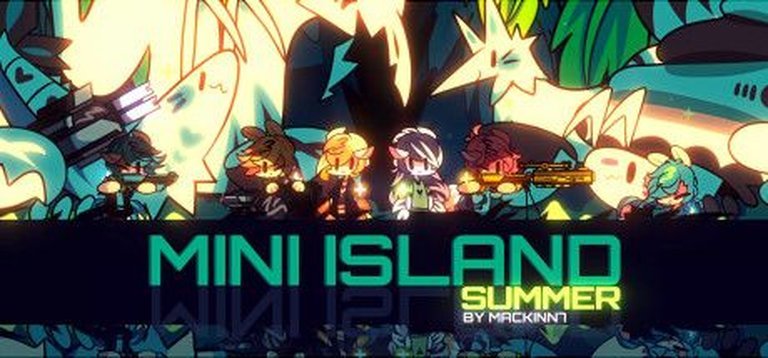
Mini Island: Summer is a casual 2D action platformer set on a vibrant, sun-drenched island where players engage in a boss rush mode. With simple hit-and-dodge gameplay, players choose from 16 characters across 4 types to battle through 7 stages featuring 26 colorful bosses, all in a short, 20-35 minute session with sparkling art graphics.
Gameplay Videos
Where to Buy Mini Island: Summer
PC
Mini Island: Summer: Review
Introduction
In an era where video games often strive for ever-increasing scale—open worlds spanning hundreds of hours, narratives with cinematic budgets, and mechanics of bewildering complexity—there remains a quiet, enduring appeal to the miniature. Mini Island: Summer, a 2021 indie release from developer MACKINN7, is a testament to the power of concision. It does not aspire to be a epic or even a lengthy diversion; instead, it offers a compact, focused experience that can be savored in a single sitting. This review will argue that Mini Island: Summer exemplifies a specific design philosophy: that a game can be both incredibly short and deeply satisfying by honing in on a single, well-executed core loop. Through its accessible boss rush mechanics, vibrant aesthetic, and deliberate simplicity, the game carves out a niche that celebrates the “mini” in its title, providing a refreshing palate cleanser in today’s saturated market.
Development History & Context
Mini Island: Summer was developed and published by MACKINN7, a solo or small-team developer whose output suggests a highly focused production model. The game was released on April 30, 2021, exclusively for Windows via Steam, priced at a modest $2.99. It was built using the Unity engine, a popular choice for independent developers due to its flexibility and relatively low barrier to entry. The system requirements—Windows 7+, an Intel Core i5 series processor, a GeForce 9800GTX+, and only 600MB of storage—reflect a design ethos of maximum accessibility. The game will run on a vast array of hardware, from aging laptops to modern desktops, underscoring its intent to reach the widest possible audience.
The release came during the COVID-19 pandemic, a period that saw a surge in indie game development and consumption as people sought new forms of entertainment at home. This context is important: Mini Island: Summer fits neatly into the trend of short, “snackable” games that could be picked up and played without a large time commitment. Technologically, the use of Unity allowed MACKINN7 to iterate quickly; indeed, Mini Island: Summer is part of a larger “Mini Island Challenge” series that includes multiple seasonal releases (Spring, Winter, Autumn), as well as other thematic variants like Mini Island: Night, Mini Island: Cosmos, and Mini Island: Aroma. This prolific output indicates a studio that has found a sustainable rhythm—creating small, self-contained projects that can be developed and released in a relatively short timeframe, likely by a very small team or even a single developer. The gaming landscape of 2021 was already familiar with boss rush games, thanks to the critical darling Cuphead (2017), but Mini Island: Summer distinguished itself by explicitly targeting a “casual” audience, eschewing the punishing difficulty of its predecessors for a more approachable experience.
Narrative & Thematic Deep Dive
Mini Island: Summer does not have a narrative in the traditional sense. There is no plot, no cast of characters with backstories, no dialogue, and no lore to uncover. The Steam store description simply invites the player to “Welcome to Mini Island!” and explains that “This beautiful place was built only for simple fun!” This absence of story is not a oversight but a deliberate design choice. The game’s theme is conveyed through its title, its visual identity, and its mechanics.
Thematically, the game embodies the essence of its namesake season: summer. Summer is traditionally associated with warmth, vibrancy, leisure, and a carefree spirit. The “colorful and sparkling art graphics” directly translate this into a visual language—bright, saturated colors, likely with a sun-drenched palette, and perhaps a glossy or glittering effect that suggests happiness and energy. The setting, a “Mini Island,” is an idyllic, almost utopian space that exists purely for playful enjoyment. The gameplay reinforces this: a series of short, intense boss battles that are challenging but not frustrating, meant to be enjoyed in a 20–35 minute session. There is no overarching goal beyond overcoming each boss in succession. This creates a meditative, almost zen-like experience where the player is fully immersed in the moment-to-moment action, unburdened by narrative stakes.
The decision to forgo narrative allows the game to be universally accessible. There are no language barriers to understanding the story; the only text is in menus and the brief introductory blurb. This aligns perfectly with the game’s multi-language support (11 languages for interface and subtitles, but no audio) and its “casual” branding. The theme is pure, experiential fun—a digital summer vacation where the only objective is to enjoy the ride.
Gameplay Mechanics & Systems
At its core, Mini Island: Summer is a boss rush game distilled to its essentials. The player selects one of 16 playable characters, which are grouped into 4 types. While the exact differences between these types are not detailed in the source material, the presence of multiple characters suggests variations in attributes such as speed, health, or weapon type, offering mild replayability without complicating the core loop. The “Hold & Gun” mechanic is central: holding a button (presumably the mouse or a controller trigger) fires a continuous stream of projectiles, eliminating the need for repeated button presses and emphasizing positioning and movement over twitch reflexes.
The “Simple Hit & Dodge Style Action” describes the combat paradigm. Each boss has a set of attack patterns that the player must learn and avoid while simultaneously peppering the boss with bullets. There is no mention of health pickups, special moves, or complex combos—the focus is on pure pattern recognition and execution. The game is structured into 7 stages, each containing a varying number of boss fights for a total of 26 distinct encounters. This is a significant number of bosses for a game that lasts only 20–35 minutes, implying very short, intense fights. The “casual difficulty” setting ensures that boss patterns are learnable and that the player likely has a generous health buffer or an infinite lives system, removing the frustration of repeated deaths that characterizes harder boss rush titles.
The gameplay loop is elegantly simple: choose a character, select a difficulty (though only “casual” is explicitly mentioned, there may be other options), and progress through stages by defeating each boss. There is no character progression between runs; each attempt starts from scratch. This design reinforces the game’s identity as a “mini-game”—it is meant to be completed in one or a few sittings, not grinded for loot or levels. The user interface is described as “direct control,” meaning there are no complex menus or inventory systems; the player jumps in immediately. This minimalist approach extends to the entire experience: no crafting, no exploration, no puzzles—only combat and evasion.
Innovation is not the goal here; instead, the game’s systems are refined for accessibility. The “hold to shoot” mechanic reduces the physical demand on the player, allowing them to focus entirely on dodging. The variety of 26 bosses ensures that the gameplay remains fresh throughout the short runtime, with each encounter likely introducing new visual cues and attack rhythms. However, the limited character types and straightforward mechanics mean the game lacks depth for extended play. Its brilliance lies in how well it executes this pared-down formula within its intended timeframe.
World-Building, Art & Sound
The world of Mini Island: Summer is a two-dimensional side-scrolling environment that epitomizes a cheerful, sun-soaked island. The art style is explicitly “colorful and sparkling,” a description that suggests a bright, saturated palette with perhaps a glossy or glittering effect on sprites and backgrounds. User tags on Steam reinforce this: “cute,” “colorful,” “nature.” The island setting likely features lush greenery, blue skies, sandy beaches, and other iconic summer imagery, all rendered in a clean, approachable 2D style. The side-scrolling perspective is a classic choice for platformers and shooters, providing a clear view of the action and allowing for smooth movement.
While the source material does not provide specific details on the art’s technical execution (e.g., pixel art, vector, hand-drawn), the use of Unity implies that the graphics are likely vector-based or use simple sprites with particle effects to achieve the “sparkling” quality. The bosses themselves are probably the visual highlights—each with a unique design that telegraphs their attack patterns through color, shape, and animation. This is crucial in a pattern-based game: the visual clarity of boss movements directly impacts playability. The environment likely changes subtly between stages to provide variety, but the focus remains on the combat arena.
Sound design is virtually unmentioned in the sources. There is no indication of voice acting, and the language support covers only interface and subtitles, not audio. This suggests that the game’s audio is limited to a musical score and sound effects (shooting, explosions, hits, etc.). The music is almost certainly upbeat and looping, designed to match the lighthearted, energetic tone of the visuals. Sound effects are likely punchy and satisfying, providing immediate feedback for player actions and boss attacks. The lack of audio localisation is a cost-saving measure but also fits the “casual” vibe—non-verbal audio cues are universally understandable.
Together, the art and sound create an atmosphere of uncomplicated joy. The world does not feel lived-in or deeply realized; it is a playground. This is not a criticism but a reflection of the game’s priorities: every resource appears to have been channeled into making the combat encounters visually clear and aesthetically pleasing within a compact framework. The “sparkling” graphics may add a sense of polish and magic, elevating what could have been a generic shooter into something with distinct charm.
Reception & Legacy
Mini Island: Summer exists in the shadows of the indie spotlight. Critically, it has been virtually ignored: Metacritic lists “critic reviews are not available,” and MobyGames has no approved critic reviews, with the page itself noting “We need a MobyGames approved description!” This absence is telling. The game did not attract the attention of major outlets, likely due to its minuscule scope, lack of marketing, and the sheer volume of indie releases in 2021.
User reception, however, paints a slightly brighter picture. On Steam, the game has 5 user reviews as of the latest data, resulting in a Player Score of 80/100 (4 positive, 1 negative). This is a small sample size, but the score indicates a generally satisfied audience. The positive reviews presumably praise its simplicity, charm, and effectiveness as a short experience. The single negative review likely criticizes its brevity or lack of depth. The game’s low price point ($2.99) and inclusion in bundles (the Mini Island Challenge 2021 Package at $6.33 and the Mini Island Challenge All Package at $28.82) make it an easy impulse purchase, which may account for its modest sales. The fact that MACKINN7 continued to release multiple entries in the Mini Island series throughout 2021 and into 2022 suggests that each title found a small but sufficient audience to justify the model.
In terms of industry influence, Mini Island: Summer is unlikely to be cited as a groundbreaking title. It does not introduce new mechanics or push technical boundaries. However, it serves as an example of a successful “micro-indie” approach: develop a series of tiny, themed games that are cheap to produce, easy to consume, and can be bundled to increase perceived value. This model has been employed by other developers (e.g., the “DLC” packs for short games, or collections of mini-games). Its legacy is therefore as a footnote in the boss rush genre—a more casual, accessible entry point for players intimidated by the likes of Cuphead or Super Meat Boy. It demonstrates that there is a market for ultra-concise games that respect the player’s time, and it contributes to the diversification of the indie ecosystem where projects of all scales can coexist.
Conclusion
Mini Island: Summer is a game that knows exactly what it is and whom it is for. It is not trying to be the next big thing; it is a bite-sized, colorful boss rush that delivers on its promise of “simple fun.” Its strengths lie in its focused design, accessible mechanics, and cheerful presentation. The “hold & gun” control scheme lowers the barrier to entry, the 26 bosses provide enough variety to sustain its 20–35 minute runtime, and the vibrant 2D art creates a pleasant, stress-free atmosphere. However, its limitations are equally apparent: the lack of narrative, minimal character differentiation, and extremely short playtime mean it cannot compete with more substantial titles. It is a game to be enjoyed in a single sitting and then set aside, perhaps to be revisited another time for a quick dose of nostalgia.
From a historical perspective, Mini Island: Summer represents a growing segment of the indie market: the micro-game. In an industry where time is a precious commodity, such games offer a complete, satisfying experience without demanding a large investment. They are the digital equivalent of a short story or a single song—compact artistic statements that can be appreciated on their own terms. MACKINN7’s continued development of the Mini Island series suggests this model has viability. For players seeking a lighthearted, challenging-but-not-frustrating experience, Mini Island: Summer is a worthwhile $2.99 investment. For scholars of game design, it serves as a case study in restraint: by stripping away everything except the core loop, it highlights how much enjoyment can be derived from a single, polished mechanic. It may not change the world, but for a few minutes on a sunny virtual island, it does exactly what it sets out to do.