
- Release Year: 2021
- Platforms: PlayStation 4, Windows, Xbox One, Xbox Series
- Publisher: Drageus Games S.A.
- Developer: D6 Team
- Genre: Action, Driving, Racing
- Perspective: Behind view
- Game Mode: Single-player
- Gameplay: Arcade, stunts, Tricks
- Setting: Fantasy
- Average Score: 56/100
Description
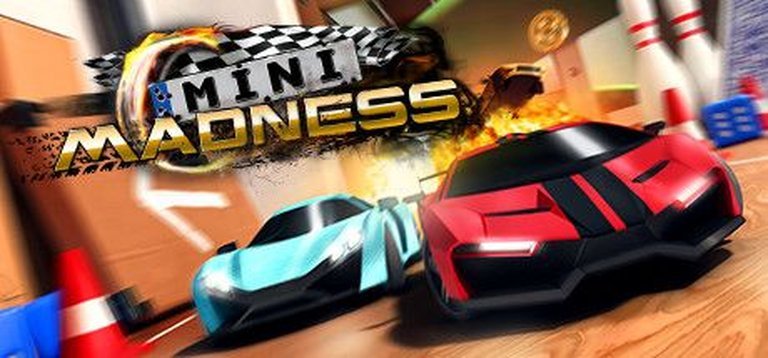
Mini Madness is an arcade racing game inspired by classics like Re-Volt and Micro Machines, where players control miniature remote-controlled cars on crazy, vertically expanded tracks set inside a single-family house and its large garden. Featuring behind-view perspective, tricks, stunts, vehicular combat, and split-screen multiplayer for up to three players, it delivers fast-paced action in a fantastical setting.
Gameplay Videos
Where to Buy Mini Madness
PC
Mini Madness Free Download
Mini Madness Cracks & Fixes
Mini Madness Reviews & Reception
metacritic.com : Mini Madness may hit the right nostalgic notes, but the repetitive humdrum racing and somewhat lazy execution is a long way behind the curve.
thexboxhub.com (40/100): Mini Madness is either one extreme or the other. Frustrating or boring.
steambase.io (72/100): Mostly Positive
Mini Madness: Review
Introduction
In an era where racing games oscillate between hyper-realistic simulations like Forza Horizon 5 and chaotic party racers like Mario Kart, Mini Madness bursts onto the scene as a pint-sized homage to childhood classics such as Re-Volt and Micro Machines. Released in 2021 by indie developer D6 Team and publisher Drageus Games S.A., this arcade racer shrinks players down to control miniature remote-controlled cars tearing through oversized household environments—a kitchen counter becomes a treacherous racetrack, a garden hose a watery hazard. With its vertically expansive tracks, gravity-defying antics, and vehicular combat flair, Mini Madness promises nostalgic mayhem in a bite-sized package. Yet, as we’ll dissect, it stumbles in execution, delivering fleeting thrills amid repetitive drudgery and technical shortcomings. My thesis: Mini Madness captures the chaotic spirit of its inspirations but falters under unpolished mechanics and lackluster depth, cementing it as a curious footnote rather than a genre revival.
Development History & Context
Developed by the small Polish indie outfit D6 Team using the Unity engine, Mini Madness emerged during the 2021 indie renaissance, a period when platforms like Steam, Xbox Game Pass, and Nintendo Switch democratized releases for niche arcade titles. Drageus Games S.A., a publisher specializing in Eastern European indies, handled multi-platform distribution: Windows on July 30, 2021, followed by PlayStation 4, Xbox One, Xbox Series X|S, and eventually Nintendo Switch in 2025. This cross-gen strategy targeted budget-conscious players seeking local multiplayer fun amid the pandemic-fueled couch co-op boom.
The creators’ vision, gleaned from official descriptions, was unambiguous: revive the micro-scale racing madness of late-90s hits like Re-Volt (1999), where toy cars battled in domestic dioramas, and Micro Machines (1991), emphasizing tight controls and environmental interactivity. Technological constraints were minimal—Unity’s accessibility allowed for 3D physics, particle effects for boosts, and split-screen multiplayer without AAA budgets. However, the 2021 gaming landscape was saturated: Crash Team Racing Nitro-Fueled (2019) had polished similar nostalgia, while free-to-play battle royales like Rocket League dominated vehicular combat. Mini Madness launched at $9.99 on Steam, positioning itself as an affordable party game, but sparse marketing and no major endorsements left it overshadowed. Community forums reveal post-launch queries about controls, unlocks, and drifts, hinting at unfulfilled player expectations and limited patches, underscoring indie pitfalls like solo-dev iteration without robust QA.
Narrative & Thematic Deep Dive
Mini Madness eschews traditional storytelling for pure arcade abstraction, a deliberate choice aligning with its Re-Volt-inspired roots where plot is secondary to vehicular anarchy. There is no overarching plot, protagonists, or dialogue—players are thrust into a fantasy microverse as anonymous remote-control pilots, racing AI or friends through 21 tracks across 10 household locales (kitchen, garden, attic, etc.). “Characters” manifest as 20 upgradable sports cars, from Mini Cooper-esque starters to souped-up racers with cosmetic flair like sirens or antennas, embodying themes of customization and escalation.
Thematically, it explores miniaturization and domestic surrealism: everyday objects tower as perilous obstacles—extendable bridges as shortcuts, toy robots as turrets, fans as wind traps—evoking a child’s godlike play with RC toys. Underlying motifs include chaos vs. control, mirrored in afterburner mechanics (flips charge boosts, demanding risky aerial maneuvers) and interactables activated via transmitter pickups. Success hinges on mastering unpredictability: gravity panels flip orientation for wall/ceiling driving, symbolizing inverted perspectives. Yet, absent voice acting, cutscenes, or lore, themes feel surface-level; no evolving rivalries or campaign arcs deepen engagement. Mini-games like tag or mini-golf inject party-game whimsy, hinting at social bonding, but repetitive championships (four events, often two tracks repeated with pickups) underscore a narrative void. In extreme detail, this lack amplifies frustration—AI packs fuse at starts, then either dominate or lag, lacking personality-driven drama. Ultimately, Mini Madness prioritizes kinetic themes over scripted depth, thriving (or faltering) on emergent player stories in local multiplayer.
Gameplay Mechanics & Systems
At its core, Mini Madness loops around afterburner management: perform mid-air flips to charge a boost meter, enabling dynamic speed bursts, while hitting sequential control points gates progress. This direct-control, behind-view racer supports keyboard/mouse or gamepad, with 1-3 player split-screen local co-op/PvP. Modes include Time Race (beat ghosts), Fast Race (pure speed), Championship (series requiring 1st-place wins), Challenge (star collection in free-roam), and mini-games (mini-golf, bomb tag).
Combat and pickups add vehicular flair: collect mines, rockets, smokescreens, shields, or transmitters to activate environmental hazards (e.g., robot volleys, steam vents). Upgrades—accessed via an in-menu shop—span visuals (horns), stats (brake power, flip speed), and abilities (assisted gravity for wall-runs). Tracks’ verticality shines: shortcuts, multi-routes, and physics-based antics (self-righting) encourage experimentation, but flaws abound. Handling is feather-light and unpredictable—slight bumps trigger random flips, airborne control evaporates, leading to frequent falls or misses. Checkpoints are unforgiving yet opaque (miss one, continue unaware, then lag). UI is “shoddy” per critics: cluttered menus, no difficulty sliders, tinny audio drowns effects.
Progression feels grindy: championships repeat tracks (e.g., two laps sans pickups, then with), demanding perfection amid rubber-band AI. Multiplayer salvages fun—split-screen chaos amplifies mayhem—but single-player bores quickly. Innovative systems like gravity panels and interactables falter in execution; pickups rarely impact leads, and 32 Steam achievements (e.g., unlocks) incentivize grinding without depth. Physics shine in flips/boosts but betray in collisions, yielding “flying” more than racing. Overall, loops hook initially but expose repetition and imbalance.
World-Building, Art & Sound
The game’s fantasy setting—a sprawling single-family house and garden scaled to giant proportions—fosters immersive, toyetic world-building. 10 locations host 21 tracks: kitchens with slippery counters, gardens with hose floods, attics cluttered with boxes. Vertically expanded designs (multi-level floors, ceilings) create labyrinthine playgrounds, where everyday items (fans, kettles, robots) become dynamic set-pieces. Atmosphere evokes playful destruction—boost trails streak across wallpaper “walls,” pickups spawn amid clutter—contributing chaotic whimsy.
Art direction is functional but dated: low-poly 3D models resemble PS2-era (original Xbox per reviews), with bland textures and uniform car designs. Visuals prioritize readability (glowing checkpoints, particle boosts) over spectacle, suiting arcade pace but paling against modern indies. No dynamic lighting or destruction elevates immersion.
Sound design disappoints: tinny engine whirs, generic electronica soundtrack loops tiresomely, and SFX (flips, crashes) lack punch—music overwhelms, per critics. No voice lines or contextual audio (e.g., household ambiance) diminishes atmosphere. Collectively, these craft a serviceable but uninspired toybox, where verticality innovates spatially yet presentation lags, undermining the “maximum mayhem” promise.
Reception & Legacy
Launch reception was muted: Steam’s 73% positive (18 reviews, small sample) praises nostalgia and co-op, but Metacritic lacks aggregates; Xbox critics savaged it—TheXboxHub (40/100) called it “repetitive humdrum,” Xbox Tavern (23/100) decried “dull driving” and “terrible music.” No MobyGames or major outlet scores; Nintendo Switch version (2025) adds DLC like Speed Surge. Commercial viability: $9.99 digital sales, low visibility (Steam charts negligible), forums query basics like unlocks/drifts.
Reputation evolved little—mostly forgotten amid 2021’s Ratchet & Clank: Rift Apart giants. Influence is negligible: echoes Re-Volt‘s micros but inspires no successors; related Steam tags (combat racing, physics) highlight niche appeal. As historian, it exemplifies indie pitfalls—ambitious verticality nods to Micro Machines V3 (1996) tricks/stunts, but unpolished launch precludes cult status. Multiplayer focus endures in budget co-op libraries, yet legacy is “promising squandered,” per reviews.
Conclusion
Mini Madness distills Re-Volt and Micro Machines essence—micro-cars, household havoc, boost-flip loops—into 21 tracks of vertical racing with combat pickups and upgrades. Strengths: local co-op chaos, interactive environments, accessible arcade modes. Weaknesses: erratic physics, repetitive championships, dated presentation, absent depth.
In video game history, it resides as a flawed 2021 indie curio: nostalgic but unrefined, evoking 90s mini-racers without recapturing magic. Score: 5/10. Worth a $5 sale for couch sessions; skip for polished alternatives like Team Sonic Racing. D6 Team’s passion shines, but execution demands a sequel polish.