
- Release Year: 2021
- Platforms: Macintosh, Nintendo Switch, PlayStation 4, Windows, Xbox One
- Publisher: H2 Interactive Co., Ltd., Mixtvision Mediengesellschaft GmbH
- Developer: Studio Fizbin GmbH
- Genre: Action, Puzzle
- Perspective: Side view
- Game Mode: Single-player
- Gameplay: Platform
- Setting: Fantasy
- Average Score: 73/100
Description
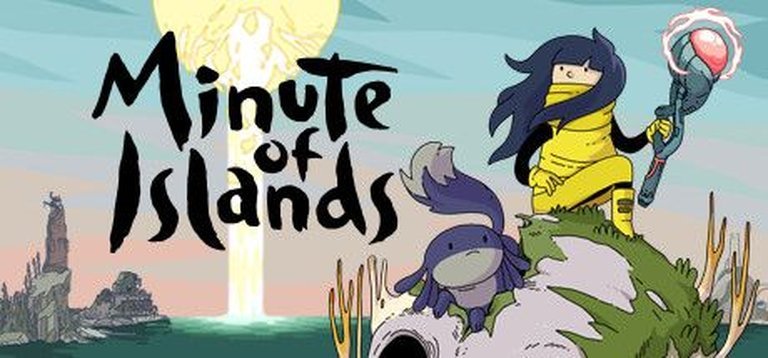
Minute of Islands is a puzzle-platformer set in a beautifully hand-drawn, surreal fantasy world. Players guide Mo, a young girl, as she navigates a dying archipelago filled with strange creatures and haunting landscapes, using her grappling hook and ingenuity to restore balance and uncover a deeply emotional story about responsibility and hope.
Gameplay Videos
Where to Buy Minute of Islands
Minute of Islands Cracks & Fixes
Minute of Islands Guides & Walkthroughs
Minute of Islands Reviews & Reception
metacritic.com (73/100): A triumphant return to form for the series.
opencritic.com (74/100): A beautiful, unflinching game about the power to save what you hold dear.
en.wikipedia.org (73/100): An incredibly elegant game, much more so than most other indie games about death and grief.
bearwiseman.com : A lovely and poignant, if a bit boring game, but if you suffer from mental health issues, I recommend at very least watching a stream of it.
vulgarknight.com : A stellar presentation with a somewhat ‘it’s alright’ gameplay experience.
Minute of Islands: A Hand-Drawn Odyssey Through Decay and Duty
In the crowded landscape of indie games, few manage to carve out a space as distinct and emotionally resonant as Minute of Islands. This puzzle-platformer from Studio Fizbin is not merely a game—it is a hand-drawn meditation on responsibility, isolation, and the weight of being the “Chosen One.” With its breathtaking art, haunting narrative, and deliberate pacing, Minute of Islands stands as a testament to the power of interactive storytelling.
Development History & Context
Released in June 2021, Minute of Islands emerged from the German studio Studio Fizbin, a team already known for their charming adventure games like The Inner World series. Published by Mixtvision, the game was crafted during a period of global uncertainty, its themes of isolation and environmental decay resonating deeply with players navigating their own pandemic-era anxieties.
The game’s visual style is its most immediate draw: a lush, European comic-book aesthetic that blends the whimsy of Adventure Time with the darker undercurrents of Attack on Titan. This juxtaposition of beauty and decay is no accident—it is the very heart of the game’s thematic exploration. The developers, led by game director Anjin Anhut and art director Tim Gaedke, sought to create a world that was as much a character as its protagonist, Mo.
Technologically, Minute of Islands was built using Unity, with sound design by Christian Wittmoser and a haunting score by Thomas Höhl. The game’s FMOD-powered audio design is sparse but effective, using silence and ambient noise to amplify the sense of loneliness and foreboding.
Narrative & Thematic Deep Dive
At its core, Minute of Islands is a subversion of the “Chosen One” trope. Mo, a young mechanic, is tasked with saving her world from a deadly fungal plague by repairing ancient machines built by mysterious giants. Armed with the Omni Switch, a magical tool that allows her to interact with and repair the giants’ biomechanical technology, Mo is the sole hope for her archipelago.
But this is no heroic power fantasy. From the outset, the game makes clear that being the Chosen One is a burden, not a blessing. Mo’s journey is one of isolation, both physical and emotional. Her family—her sister Miri, her grandmother, and her uncle—have all been left behind, either by choice or circumstance. Mo’s obsession with her duty has driven a wedge between her and those she loves, and as the game progresses, it becomes clear that her single-minded focus is as much a curse as it is a calling.
The narrative is delivered through an omniscient narrator, voiced with chilling precision by Megan Gay. Her tone shifts from warm and storybook-like to bitter and accusatory as Mo’s mental state deteriorates, mirroring the player’s growing unease. The story is rich with metaphor: the fungal spores represent not just a physical threat, but the creeping decay of Mo’s own psyche. Her hallucinations, triggered by prolonged exposure to the spores, are surreal, nightmarish visions that blur the line between reality and delusion.
Thematically, Minute of Islands grapples with the idea of martyrdom. Mo’s refusal to accept help, her insistence on shouldering the world’s burdens alone, and her eventual breakdown are all poignant explorations of the cost of heroism. The game’s bittersweet ending—where Mo and her family abandon their dying world in search of a new beginning—is a powerful statement on the necessity of letting go, of recognizing that no one can bear the weight of the world alone.
Gameplay Mechanics & Systems
Mechanically, Minute of Islands is a straightforward puzzle-platformer. Players guide Mo through a series of 2D environments, using the Omni Switch to repair machines, solve puzzles, and navigate obstacles. The platforming is simple but satisfying, with Mo’s ability to climb and jump adding a sense of fluidity to her movements.
The puzzles themselves are not particularly challenging, and this is by design. The game’s focus is on narrative and atmosphere, not mechanical difficulty. That said, the puzzles do become somewhat repetitive over the course of the roughly six-hour experience. The game’s structure—repair a machine, descend into the catacombs, awaken a giant—repeats with only minor variations, which can make the middle sections feel a bit padded.
One of the game’s more unique mechanics is the use of Mo’s memories. Scattered throughout the islands are collectible orbs that, when activated, reveal snippets of Mo’s past. These memories add depth to her character and provide context for her relationships with her family, but they are entirely optional. Collecting them is highly recommended, as they are key to understanding the emotional core of the story.
The game’s most memorable sequences are its hallucinatory dreamscapes. Triggered by Mo’s exposure to the spores, these surreal environments are a highlight of the game, both visually and mechanically. They force the player to think in new ways, using shadows, reflections, and abstract logic to navigate. These sequences are a testament to the game’s creativity, offering a welcome break from the more routine platforming.
World-Building, Art & Sound
Minute of Islands is a visual masterpiece. The hand-drawn art is lush and detailed, with each island boasting its own distinct aesthetic. From the rusted, decaying structures of the first island to the overgrown, fungal-infested landscapes of the later ones, the game’s environments are as much a character as Mo herself.
The art style is a perfect match for the game’s themes. The bright, cartoonish visuals serve as a stark contrast to the darker elements of the story—the dead whales, the decaying machinery, the oppressive atmosphere. This juxtaposition is deliberate, highlighting the fragility of the world Mo is trying to save.
The sound design is equally impressive. The game’s soundtrack, composed by Thomas Höhl, is sparse and atmospheric, using ambient noise and subtle melodies to create a sense of unease. The sound of the wind, the creaking of wood, the distant calls of birds—all contribute to the game’s immersive quality.
The voice acting, particularly Megan Gay’s narration, is a standout. Her performance captures the shifting tone of the story, from the warmth of a bedtime story to the bitterness of a scorned guardian. It is a masterclass in voice acting, adding layers of meaning to every line.
Reception & Legacy
Upon release, Minute of Islands received generally positive reviews, with critics praising its art, narrative, and emotional depth. On Metacritic, the PC version holds a score of 73/100, while the PlayStation 4 version sits at 70/100. Adventure Gamers awarded it a perfect 100%, calling it “a beautiful, unflinching game about the power to save what you hold dear and the responsibility that comes with it.”
However, the game was not without its detractors. Some critics, like Malindy Hetfeld of Eurogamer, felt that the gameplay was too simplistic, writing that “it feels just as unexciting to play… overall these sequences are so simple and so short that there isn’t anything remotely rousing to the exercise.” Others, like Rob Gordon of Screen Rant, praised the game’s emotional core but noted that the puzzles could feel repetitive.
Despite these criticisms, Minute of Islands has left a lasting impression on players and critics alike. Its themes of isolation, responsibility, and the cost of heroism are universal, and its art and storytelling are undeniably unique. The game has been nominated for several awards, including the Deutscher Entwicklerpreis for Best German Game and Best Sound.
In the years since its release, Minute of Islands has been recognized as a standout example of narrative-driven indie games. Its influence can be seen in subsequent titles that blend hand-drawn art with emotional storytelling, and its exploration of mental health and responsibility continues to resonate with players.
Conclusion
Minute of Islands is a game that lingers in the mind long after the credits roll. It is a beautiful, haunting exploration of the weight of responsibility and the cost of heroism. Its art is stunning, its story is poignant, and its themes are universal.
While the gameplay may not be for everyone—its puzzles are simple, and its structure can feel repetitive—the overall experience is one of emotional depth and artistic achievement. Minute of Islands is a reminder that games can be more than just entertainment; they can be a mirror, reflecting our own struggles and triumphs back at us.
In the end, Minute of Islands is not just a game about saving the world. It is a game about learning to let go, about recognizing that no one can bear the weight of the world alone. It is a story of growth, of acceptance, and of the power of family. And in that, it is a triumph.