
- Release Year: 2021
- Platforms: Windows
- Publisher: DigiPen (USA) Corp.
- Developer: Kaiju in the Bayou
- Genre: Action
- Perspective: Diagonal-down
- Game Mode: Single-player
- Gameplay: Hack and Slash
- Setting: Fantasy
- Average Score: 84/100
Description
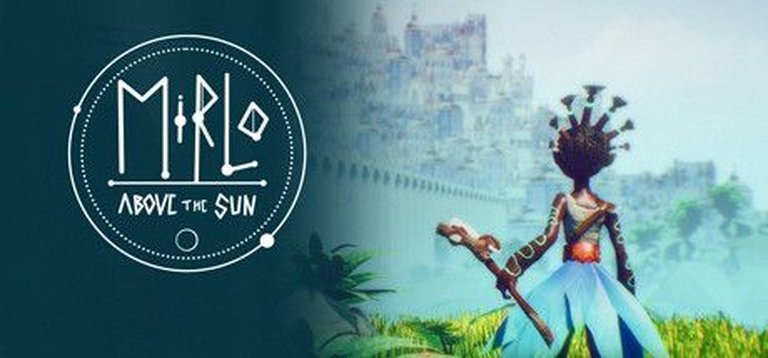
In ‘Mirlo: Above the Sun,’ players embark on a hack-and-slash adventure as Mirlo, a protagonist determined to save her forest home and its mystical Beasts from the Solarean civilization—a totalitarian regime exploiting the creatures for energy. Set in a vibrant fantasy world, the game combines combat, platforming, and exploration, challenging players to defeat enemies, navigate hazards, and free captured Beasts. Developed by DigiPen students using Unreal Engine 4, the game highlights scenic environments and action-packed gameplay centered on resistance and restoration.
Gameplay Videos
Mirlo: Above the Sun Guides & Walkthroughs
Mirlo: Above the Sun Reviews & Reception
steambase.io (85/100): Mirlo Above the Sun has earned a Player Score of 85 / 100.
store.steampowered.com (84/100): Very Positive (84% of the 228 user reviews for this game are positive).
indiegamesplus.com : Mirlo Above the Sun is pretty fast-paced, as you run, jump, and dash through the game.
Mirlo: Above the Sun — A Student Project That Reached for the Stars
Introduction
In a landscape dominated by AAA studios and live-service monoliths, Mirlo: Above the Sun emerges as a poignant reminder of indie craftsmanship’s enduring power. Developed by DigiPen Europe-Bilbao students under the team name Kaiju in the Bayou, this free-to-play hack-and-slash adventure transcends its academic origins, delivering a succinct yet thematically resonant tale of ecological defiance. This review argues that Mirlo, despite its compact scope and student constraints, stands as a microcosm of polished design, environmental storytelling, and the untapped potential of student-led projects in an industry hungry for fresh voices.
Development History & Context
The Vision Behind the Bayou
Mirlo: Above the Sun was born from a nine-month development cycle (September 2020–April 2021) as part of DigiPen’s fourth-year curriculum. The team—comprising five programmers, five artists, and one musician—operated under the mentorship of instructor Daniel Andia, leveraging Unreal Engine 4 and PhysX physics to realize their vision. Their goal was ambitious yet focused: create a “fast-paced, top-down melee brawler” with an emphasis on environmental thematics and fluid combat.
Constraints and Ambitions
The project faced inherent student limitations: tight deadlines, technical inexperience, and balancing coursework with production. Despite this, the team prioritized mechanic polish over expansive content, iterating on a combat system where pushes, jumps, and environmental hazards formed the core loop. The decision to release the game for free on Steam further underscored its role as a portfolio piece—a calling card for its creators rather than a commercial endeavor.
The 2021 Landscape
Released in June 2021, Mirlo entered a market saturated with nostalgic indies (Hades, Eastward) and genre giants (Devil May Cry 5). Its minimalist approach and ecological narrative carved a niche, resonating with players fatigued by bloat. For DigiPen, the game joined a legacy of student triumphs—a proving ground for future industry talent.
Narrative & Thematic Deep Dive
A Fable of Resistance
The game casts players as Mirlo, a warrior defending her forest home from the Solarean Empire—a technocratic regime harvesting energy from enslaved “Beasts.” The narrative is sparse but potent, framing Mirlo’s quest as both a rescue mission and a symbolic rebellion against industrialization’s encroachment. Dialogue is minimal, with story beats conveyed through visual cues: fractured landscapes, caged creatures, and Solarean machinery bleeding kinetic energy into once-pristine vistas.
Characters as Archetypes
Mirlo herself is a silent protagonist, her determination reflected in her fluid animations and relentless spear strikes. The Beasts—designs ranging from avian guardians to hulking earth elementals—serve less as characters and more as embodiments of nature’s vulnerability. The Solareans, depicted as faceless drones and turrets, evoke dystopian tropes, though their lack of nuanced motivation underscores the game’s allegorical simplicity.
Themes: Ecology as Warfare
The game’s central conflict mirrors real-world anxieties about resource exploitation and climate collapse. By framing environmentalism as literal combat—Mirlo shatters energy extractors and topples industrial constructs—the narrative elevates survival into activism. The Solareans’ “totalitarian expansionism” critiques unchecked technological advancement, while Mirlo’s connection to the land champions symbiosis as resistance.
Gameplay Mechanics & Systems
Combat: Precision Over Spectacle
Mirlo’s combat thrives on spatial awareness. Players wield a spear to push enemies into environmental hazards (spikes, pits) or batter them with combos. The inclusion of a dash and charged attacks adds depth, encouraging hit-and-run tactics against groups. Boss fights, like the climactic train sequence, emphasize arena navigation, dodging projectiles while targeting weak points—a design nod to classics like Zelda and Devil May Cry.
Progression and Pacing
The game’s short runtime (~45 minutes) means progression is linear, with abilities unlocked organically. While this prevents bloat, it also limits experimentation. The absence of RPG-style upgrades or skill trees keeps focus on moment-to-minute tactics but may leave players craving deeper customization.
UI and Accessibility
A minimalist HUD centers the action, with health and ability cues rendered as intuitive icons. Partial controller support works seamlessly, though the fixed diagonal-down camera drew criticism for occasionally obscuring platforming edges. The absence of difficulty options aligns with the game’s brevity, though checkpointing is forgiving.
Flaws: Ambition vs. Execution
- Camera Frustrations: Fixed angles sometimes disrupt spatial awareness, leading to unintended falls.
- Enemy Variety: Solarean drones and turrets repeat throughout, with only boss encounters introducing unique patterns.
- Pacing: The rush to the finale underutilizes the game’s lore, leaving narrative threads tantalizingly unresolved.
World-Building, Art & Sound
A Dying World, Beautifully Rendered
Mirlo’s world juxtaposes lush forests and crumbling industrial sprawl. Early levels burst with color—vibrant foliage, cascading waterfalls—while later zones drown in metallic grays and corrosive oranges, visualizing the Solareans’ ecological corruption. The diagonal-down perspective accentuates verticality, turning cliffs and factories into multi-tiered battlegrounds.
Art Direction: Student Ingenuity on Display
Character designs blend Studio Ghibli-esque whimsy (Mirlo’s flowing hair, the Beasts’ elemental forms) with mechanical dystopia. Particle effects—exploding machinery, energy surges—add kinetic flair. Despite Unreal Engine 4’s scalability, performance remains stable, even on minimum specs (GTX 550).
Sound Design: A Missed Opportunity
The score, while serviceable, lacks thematic memorability. Ambient sounds—whirring machinery, forest echoes—ground the world, but combat lacks auditory punch. Voice acting is absent, leaning on visual storytelling instead.
Reception & Legacy
Critical and Player Response
Upon release, Mirlo garnered a Very Positive Steam rating (84% from 228 reviews), praised for its fluid combat, striking visuals, and emotional brevity. Critic Jupiter Hadley (IndieGamesPlus) hailed its “forgiving” design and “striking” world, while players likened it to a “tech demo with heart.” Critiques centered on its short length and camera quirks.
Awards and Industry Impact
- Best Basque Video Game (Fun & Serious Festival 2021, Game Erauntsia Sariak ’21)
- Finalist: Best Animation (Ibero-American Quirino Awards 2022)
Though not a commercial titan, Mirlo became a showcase piece for DigiPen’s program, inspiring subsequent student teams. Its free model amplified reach, with players speculating about expanded sequels—proof of its latent potential.
Legacy: The Student as Mentor
Mirlo’s greatest contribution lies in validating academia’s role in game development. By demonstrating that student projects can resonate beyond classroom walls, it emboldened a generation of indie creators to prioritize vision over scalability.
Conclusion
Mirlo: Above the Sun is a paradox: a fleeting experience that lingers through thematic weight and mechanical polish. Its combat thrills, visuals enchant, and narrative—though minimalist—packs an ecological punch. While technical limitations and brevity prevent it from rivaling genre titans, its success as a student project is undeniable. In the annals of game history, Mirlo stands as a testament to the power of constrained creativity—a proof-of-concept that, like its protagonist, punches far above its weight.
Final Verdict: A diamond in the rough—essential for indie historians, and a hidden gem for players seeking poignant, bite-sized artistry.