
- Release Year: 2008
- Platforms: PlayStation 3, Windows, Xbox 360
- Publisher: ak tronic Software & Services GmbH, Electronic Arts, Inc., Morphicon Limited
- Developer: EA Digital Illusions CE AB
- Genre: Action
- Perspective: 1st-person
- Game Mode: Single-player
- Gameplay: Platform, Shooter
- Setting: Futuristic, Sci-fi
- Average Score: 84/100
Description
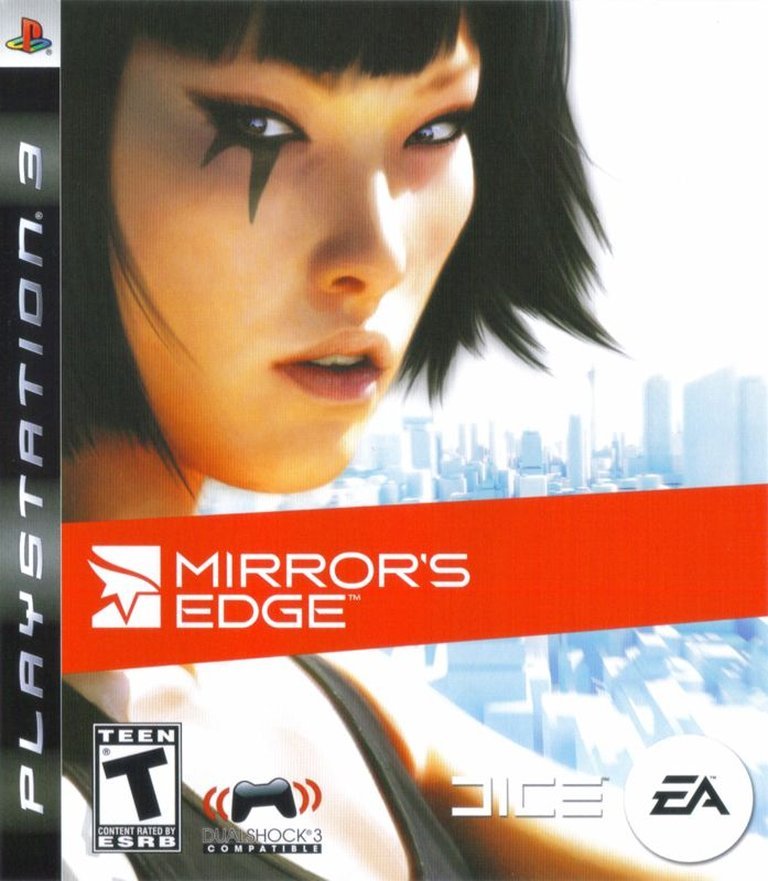
Mirror’s Edge is a first-person action game set in a dystopian, futuristic city with a clean, bright white-and-orange aesthetic under a totalitarian regime enforcing heavy surveillance on its citizens. Players control Faith, a skilled female runner who traverses rooftops using parkour principles to deliver forbidden information and rescue her sister from government agents, featuring fluid movement mechanics, Runner Vision for navigation, melee combat, and minimal HUD in a linear yet freedom-focused experience across ten chapters.
Gameplay Videos
Where to Buy Mirror’s Edge
Mirror’s Edge Free Download
Mirror’s Edge Cracks & Fixes
Mirror’s Edge Patches & Updates
Mirror’s Edge Mods
Mirror’s Edge Guides & Walkthroughs
Mirror’s Edge Reviews & Reception
metacritic.com (79/100): no other game released this year comes close to being as cool.
commonsensemedia.org : A refreshingly different take on first-person action.
imdb.com (90/100): pure bliss.
ign.com (85/100): A solid first attempt at a new type of game.
Mirror’s Edge Cheats & Codes
PC
Edit the TDInput.ini file located in My Documents\EA Games\Mirror’s Edge\TdGame\Config (or similar path). Add binding lines to the ‘bindings’ section above the first existing binding, e.g., Bindings=(Name=”F2″,Command=”god”,Control=False,Shift=False,Alt=False). Save the file, load the game, and press the bound key during gameplay to activate. No visual/audio feedback may appear.
| Code | Effect |
|---|---|
| god | God Mode |
| jesus | Jesus Mode |
| dropme | Free Cam (requires God Mode) |
| FreeFlightCamera | Change 1st/3rd Person Camera |
| ammo | Unlimited Ammo |
| loadfullinventory | All Weapons |
| stat xunit | Show FPS |
| slomo 0.4 | Slo-Mo Mode ON |
| slomo 1.0 | Slo-Mo Mode OFF |
| LockAllLevels | Lock All Levels |
| UnlockAllLevels | Unlock All Levels |
| LockAllTT | Lock All Time Trials |
| UnlockAllTT | Unlock All Time Trials |
| Leipzig | Unknown Effect |
Mirror’s Edge: Review
Introduction
Imagine hurtling across sun-drenched rooftops, your heart pounding as you vault over vents, wall-run along sheer facades, and leap into the void between skyscrapers—all from the intimate, vertigo-inducing view of your own limbs flailing for purchase. Released in 2008, Mirror’s Edge dared to redefine first-person action by stripping away the gunplay glut of the era and centering on fluid parkour traversal in a sterile dystopia. Developed by DICE and published by EA, it became a cult classic, spawning a sequel (Catalyst in 2016) and inspiring parkour-infused mechanics in games like Dying Light and Titanfall. Despite its brevity and frustrations, Mirror’s Edge remains a bold thesis in gaming evolution: pure movement as the ultimate thrill, proving that innovation can eclipse convention even if it doesn’t stick every landing.
Development History & Context
EA Digital Illusions CE (DICE), the Swedish studio behind the Battlefield series, took a seismic pivot with Mirror’s Edge. Best known for multiplayer shooters, DICE channeled their Frostbite engine expertise elsewhere—opting for Unreal Engine 3 due to Frostbite’s incomplete state during early development. Lead Designer Thomas Andersson envisioned a “first-person freerunning” experience inspired by real-world parkour groups like Yamakasi, emphasizing momentum and embodiment over destruction. Art Director Johannes Söderqvist crafted a minimalist aesthetic to highlight navigation aids, while Senior Producer Owen O’Brien and a 458-person team (including animators like Tobias Dahl) fine-tuned Faith’s acrobatics.
Launched November 12, 2008, on Xbox 360 and PlayStation 3 (PC in 2009), it arrived amid a seventh-gen FPS deluge (Call of Duty: World at War, Far Cry 2). Technological constraints like PhysX integration (for PC cloth/debris effects) and a HUDless design pushed Unreal Engine’s limits, creating dynamic camera bobs and limb visibility for immersion. Amid EA’s post-Battlefield 2142 recovery, Mirror’s Edge was a risky IP bet in a sequel-saturated landscape, prioritizing artistic freedom over mass-market shooters. Its linear chapters reflected budget realities—no open world—but sowed seeds for future experimentation.
Narrative & Thematic Deep Dive
Mirror’s Edge unfolds across 10 chapters in a nameless, utopian facade of a city: gleaming whites pierced by orange accents, masking a totalitarian regime’s surveillance state. You embody Faith Connors, a “Runner”—an underground courier dodging monitored channels via rooftops. Orphaned after the November Riots (her mother killed, father fled), Faith was mentored by Mercury, mastering parkour from street survival. The plot ignites when she’s framed for murdering reformist mayoral candidate Robert Pope: her sister Kate, a cop, is imprisoned, forcing Faith into a conspiracy unraveling corporate overlords (Conglomerate Police) and traitorous Runners.
Animated cutscenes (reminiscent of Samurai Jack) deliver exposition via Mercury’s radio chatter and terse dialogues, emphasizing isolation. Themes probe freedom vs. control: Runners symbolize rebellion against a “clean,” sterile society where dissent is erased. Faith’s arc—from detached operative to vengeful kin—mirrors cyberpunk tropes (Blade Runner‘s oppressive sheen) but subverts via physicality; escape is literal flight. Dialogue is sparse, functional (“Keep moving!”), critiqued as “dry” or “z-movie,” yet amplifies themes—Faith’s quips underscore defiance (“They can’t touch us up here”).
Flaws abound: underdeveloped cabal feels cartoonish, Kate underdeveloped, ending cliffhanger unresolved (teasing sequels). Yet, it excels thematically—parkour as metaphor for elusive liberty in a panopticon, where every leap defies the grid below. Player reviews lament its “footnote” backstory, but it fuels urgency: Faith’s personal stakes propel the adrenaline, making the city antagonist-in-chief.
Gameplay Mechanics & Systems
At its core, Mirror’s Edge is a momentum-driven platformer masquerading as FPS, with parkour as the loop: sprint, chain moves (wall-run, slide, vault, roll), evade pursuits. Controls are context-sensitive—hold forward for speed, tap action for vaults—yielding “flow” states where Faith’s arms/legs telegraph intent. Runner Vision tints viable paths red (toggleable), easing linearity; Reaction Time slows peril moments sans momentum loss. No traditional progression: collect 30 hidden bags per chapter for art/videos, unlocking extras.
Combat disrupts purity—melee disarms (counter rifle-butts, slides), pistols (runnable, limited ammo), rifles (stationary). It’s viable pacifist (trophy for no shots), but frustrating: enemies spawn endlessly, timing QTE-like. Levels mix rooftops (exhilarating vertigo) and interiors (cramped vents, sewers), spanning 5-8 hours. Checkpoints mitigate deaths, but trial-error jumps (pixel-perfect ledges) irk sans quicksave.
UI shines HUDless—health via desaturation, speed via camera sway. Time Attack ghosts (red runners) add replay, online leaderboards. Flaws: inconsistent red highlights, finicky angles (wall-run fails), combat halting flow. PC PhysX enhances debris. Innovative yet flawed, it births “first-person freerunning,” rewarding mastery over grinding.
World-Building, Art & Sound
The city is a character: dystopian utopia of Brutalist whites/oranges, evoking Hong Kong’s density under eternal sun. Rooftops dominate—cranes, vents, pipes—but burrow into malls, subways, sewers for variety. Atmosphere evokes vertigo/isolation: vast drops heighten stakes, surveillance choppers blare menace.
Visuals stun—Unreal Engine 3’s sheen with custom lighting/reflections (co-developed Illuminate Labs tech). Faith’s visible body (detailed animations) immerses; anime cutscenes jar stylistically. PC adds PhysX flags/cloth. Critics hail “arresting” style aiding navigation.
Sound design elevates: dynamic score (techno pulses sync momentum), Lisa Miskovsky’s “Still Alive” credits anthem. Faith’s breaths/grunts, urban hums (sirens, rotors), impacts visceralize flow. Audio Director Magnus Walterstad crafts tension—silence pre-leap, crescendo chases. Collectively, they forge embodiment: city pulses alive, every roll a symphony.
Reception & Legacy
Critically, Mirror’s Edge scored 80% (148 reviews), MobyScore 7.9/10—#277 PS3, #295 Xbox 360. Praise flooded innovation (“pied piper for progressive design,” 1UP 91%), visuals (“starkly colorful,” OXМ 95%), flow (“first-person freerunning father,” Gamer 2.0 90%). Players (3.9/5, 176 ratings) echoed: exhilarating runs, but “frustrating combat,” “short story” (HandofShadow), “trial-error” (hribek).
Commercially modest (EA “value” re-releases), reputation soared retrospectively—cult hit via sales ($20 bargains), ports (iOS 2010, Catalyst 2016). Influence profound: parkour in Assassin’s Creed, Mirror’s Edge-inspired movement (Titanfall 2, Doom Eternal). Comics, DLC (Exclusive Map), 4Players award cement legacy as genre pioneer, flaws notwithstanding.
Conclusion
Mirror’s Edge is a exhilarating experiment—masterful movement, iconic aesthetic, thematic bite—hamstrung by clunky combat, linearity, brevity. DICE’s ambition birthed freerunning FPS, influencing a decade despite imperfections. As historian, it marks 2008’s bold IP push amid sequels; as journalist, essential for its “holy crap” highs. Definitive verdict: 9/10—a flawed masterpiece etching Faith’s leaps into history. Replay Time Attacks; demand sequels refined it further. Leap in; the rooftops await.