
- Release Year: 2013
- Platforms: Linux, Macintosh, Windows
- Publisher: cjohnson games
- Developer: cjohnson games
- Genre: Adventure
- Perspective: 1st-person
- Game Mode: Single-player
- Gameplay: Graphic adventure
- Setting: Cave, Village
- Average Score: 80/100
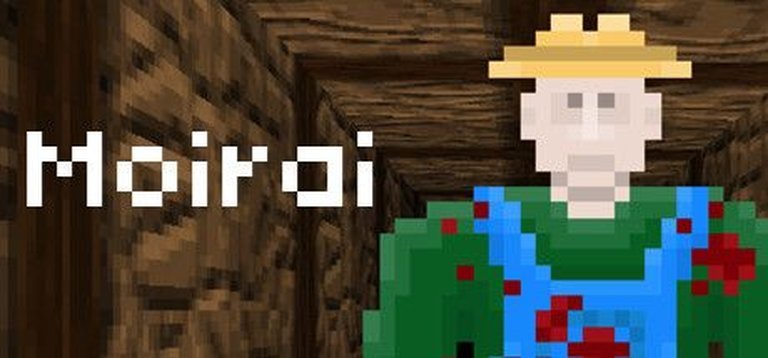
Description
Moirai is an experimental first-person horror adventure game set in a rustic village and a mysterious cave, where players investigate the disappearance of Julia through exploration and moral choices. The game uniquely mechanics that each player’s decisions directly influence the narrative and suspense for the next player, creating a crowd-sourced and dynamically evolving horror experience with every playthrough.
Gameplay Videos
Where to Buy Moirai
PC
Moirai Free Download
Moirai Guides & Walkthroughs
Moirai Reviews & Reception
metacritic.com (80/100): It might seem short and simple, and there is perhaps more I’d like the concept to explore, but this fantastic little example of crowd-sourced morality is deftly handled, super evocative and one of those games you absolutely should experience.
ropname.substack.com : this weird, but awesome indie game that’s lost to time.
Moirai: The Fates of Player Agency – A Definitive Review of Gaming’s Most Haunting Social Experiment
Introduction: The Echo in the Cave
To speak of Moirai is to speak of a ghost. Not a ghost in the machine, but a ghost of the machine—a specter of interconnected consequence that haunted the peripheral vision of the indie gaming scene for a brief, brilliant moment before being violently exorcised. Released in 2013 by the Australian trio cjohnson games (Chris Johnson, Brad Barrett, and John Oestmann), Moirai was, on its surface, a forgettable ten-minute stroll through blocky, first-person horror terrain. Yet beneath its modest aesthetic lay a revolutionary, ethically fraught mechanism: a game that subtly transformed from a solitary adventure into a communal, asynchronous purgatory where your decisions and, more chillingly, your words directly shaped the visceral experience of the next anonymous soul to follow you into the dark. This review contends that Moirai stands as a landmark in experimental game design—a potent, flawed, and tragically short-lived critique of automated morality systems and a raw, unfiltered mirror held up to the human psyche in a context of perceived anonymity. Its legacy is twofold: as a watershed moment in narrative emergence and as a stark case study in the fragility of digital artifacts in the face of malicious intent.
Development History & Context: Forged in a Jam, Doomed by the Net
Moirai was born not in a commercial studio, but in the crucible of the 7 Day FPS (7DFPS) Game Jam of 2013. The lead developer, Chris Johnson, was—and remains—a lecturer at the University of Adelaide and a visual effects programmer. The project, initially conceived for the jam, proved too compelling to abandon. Over about two months of part-time work between jobs and other commitments, Johnson, artist Brad Barrett, and composer John Oestmann crafted a prototype into a standalone release. Their ethos was explicitly non-commercial; the game was released as freeware, a “passion project” free from market pressures but also bereft of the resources those pressures might provide for sustenance and security.
The developers’ influences were tellingly cross-disciplinary. The primary spark came from Johnson’s experience with the Belgian theatre group Ontroerend Goed’s interactive play A Game of You. In that performance, audience members made anonymous observations about others behind a one-way mirror, only to later have those observations revealed to their subjects. This mechanism of delayed, anonymous interpersonal feedback directly informs Moirai‘s core twist. Cinematic influences included Alfred Hitchcock’s narratives of being framed, and game design inspirations drew from social deduction titles like SpyParty and Hidden In Plain Sight, which manipulate perception and trust. The title itself, referencing the Moirai (Fates) of Greek myth, signals the game’s thematic core: the inexorable chain of cause, effect, and imposed destiny.
Technologically, the game was built with modest means, using a simple first-person engine. Its critical, fatal vulnerability was its centralized online dependency. To function, it required a constant connection to a developer-maintained database to fetch the previous player’s responses and submit the current player’s. This design choice was the engine of its innovative narrative but also its single point of failure. The game launched in a quiet, niche fashion on sites like Game Jolt and itch.io in 2013/2014, finding a modest audience. Its fate changed drastically with its Steam Greenlight success and release on July 23, 2016, a move that exposed it to a flood of mainstream traffic it was architecturally and emotionally unprepared for.
Narrative & Thematic Deep Dive: The Morality of the Anonymous Act
Moirai‘s plot is deceptively simple, a three-act folktale of rural horror. A villager is sent to find Julia, a missing woman, exploring a cave with a lantern and knife. The first encounter is with a blood-stained farmer. After asking three questions—”Why do you have blood on your overalls?”, “Why do you have a knife?”, “I heard moans, what have you done?”—the player chooses to let him pass or attack. Later, the player finds Julia, mortally wounded from a botched suicide attempt, who requests a mercy killing. Regardless of choice, the player emerges bloodied. The final encounter is with another farmer (the player’s stand-in for the next person) who asks the player the same three questions. The twist is revealed: the first farmer was a real previous player. Your fate—whether you are spared or killed by the next player—is determined by their response to your recorded answers.
This structure creates a profound ludonarrative dissonance that is the game’s central thesis. For most of the playthrough, the player operates under the assumption of a single-player, scripted narrative. The revelation that the “NPC” was a human, and that you are now becoming an “NPC” for someone else, shatters the safe solipsism of gaming. As critic Heather Alexandra noted, it creates a “particular sort of reflection” on how one is perceived. Janine Hawkins described it as upending the presumption that “mechanics don’t lie to us.”
The academic analysis digs deeper. The narrative is emergent and non-pre-structured, sustained only by the chain of asynchronous player interactions. It exploits the “lack of safety” in what were believed to be private moral choices, forcing a confrontation with the real interpersonal risk inherent in any human experiment. Scholar Patrick Jagoda highlights how the game manipulates expectations around consequence. However, this open-endedness also exposes a critical flaw: the unfiltered player responses often broke immersion entirely. As one academic critique notes, players could input absurdities (“Ketchup. To Fillet Fish. Watched Soap Opera on TV.”) or outright toxic profanity, severing the thematic link to the in-game scene of a blood-stained man.
Thematically, the game probes judgment versus justice. Porpentine Heartscape argued it’s less about a moral dilemma and more about the “flaws of judgment,” where outcomes depend on one’s ability to “advocate for yourself” under suspicion. The Morton’s Fork of Julia’s encounter—you get blood on you regardless of your choice—suggests a deterministic, even cruel, universe where appearances dictate fate, a core tenet of the original Moirai (Fates). The small town, the tragic backstory of Julia’s greedy husband and lost son, the child’s bones in the cave—these are static, grim folklore that provide the context for the player’s dynamic, disposable morality. Your “story” is not the tale of Julia, but the brief, violent vignette you write for yourself and the next person.
Gameplay Mechanics & Systems: The Engine of Connection and Chaos
Mechanically, Moirai is deliberately sparse. Movement is slow and clunky (WASD/arrows), designed to induce vulnerability. Interaction is a single button (spacebar). There is no combat system to speak of; the knife is a binary tool for a single, scripted act (killing the farmer or Julia). The progression is linear: village -> farm -> cave -> Julia’s chamber -> exit. The “innovative system” is entirely meta-textual: the asynchronous multiplayer link.
- The Question/Answer Loop: This is the game’s mechanical heart. The player meets the “previous player” (as the blood-stained farmer) and receives their typed answers to three canned questions. The player then makes a binary choice based on that input. Hours or days later, the next player will meet your avatar holding those same questions, with your typed answers as their prompt.
- The Narrative Relay: Your “fate” email is contingent on the next player’s choice. The game creates a perpetual cycle of death, where each player’s role is two-fold: judge of the past, and subject of the future. This uses replay as a narrative device, demanding “multiple acts of play” across anonymous individuals to sustain its story.
- Meta-Gaming and Trolling: The system’s openness invited exploitation. The “Farmers” book in the cave, listing the last five players’ names, and the ability to type anything created a secondary, unintended game: pushing boundaries. As Chris Johnson admitted, players, many of them children, treated it “like Mario”—testing the limits. The statistics are staggering: out of 10,581 recorded playthroughs, 52% of player responses included profanity. This wasn’t minor rebellion; it was systemic pollution of the shared narrative space. The “moral test” the developers envisioned was subverted into a “test of whether you can react without being a dick,” as Shaun Prescott put it, but the results showed many players failed that test gleefully.
- Technical Fragility: The entire system relied on a personal, unhardened database. When Moirai hit Steam, the surge in traffic and toxicity overwhelmed Johnson’s capacity to monitor and clean the database. The game’s design had no(client-side) filtering, no moderation tools, no rate limiting—it was a raw pipe directly into the developer’s email and database. This utopian faith in player expression was its critical weakness.
The gameplay, therefore, is not about the cave or the knife, but about the typing prompt. It’s a social experiment disguised as an adventure, and its “flaws” (imprecise controls, simplistic puzzles) became irrelevant against the weight of its core interaction.
World-Building, Art & Sound: Whimsy as a Pressure Cooker
The aesthetic of Moirai is a masterclass in using limited assets to amplify unease. The visuals are low-resolution, blocky 2.5D, reminiscent of a poorly rendered Minecraft clone or early 3D adventure games. This isn’t necessarily ugly; it’s spartan and whimsical, creating a dissonance with the dark subject matter. The village is a tidy, harmless square of pixelated homes; the farm is a placid field with sheep. This initial false sense of innocence makes the descent into the dark, fog-shrouded cave more jarring. The cave itself is a network of thin tunnels and larger rooms, with a deliberately constricted field of view (due to the lantern), fostering claustrophobia. The blood-stained farmer is a grotesque, low-poly specter against the dungeon’s grey stone—a视觉 shock that signals the game’s true nature.
The sound design is minimal but effective. John Oestmann’s score is ambient, droning, and unsettling, underscoring the isolation. The most potent audio cues are diegetic: the distant, echoing moans that lead you onward, the wet, squelching sounds of movement, and the final, ragged dialogue of Julia. The lack of traditional “horror” soundtrack cues makes the scares more psychological. The atmosphere is one of slow-burn dread, a creeping suspicion that something is fundamentally wrong with the reality of this world. This aesthetic deliberately avoids AAA horror tropes, instead evoking an experimental theatre or a folk tale—something ancient and elemental, perfectly suited to the timeless, cyclical nature of its fate mechanic.
Reception & Legacy: A Critical Darling and a Community Casualty
Moirai‘s reception is a story of two parallel tracks: academic/critical acclaim and chaotic, toxic player engagement.
Critical Reception: The game was almost universally praised by critics who encountered it. The Telegraph gave it 4/5, calling it a “fantastic little example of crowd-sourced morality.” Kotaku, Vice, The Boston Globe, and PC Gamer all highlighted its profound manipulation of player expectations and its haunting moral implications. It was consistently labeled one of the “most disturbing” and “weirdest” games on PC, often cited as a horror game in disguise. This praise was not for its production values, but for its conceptual audacity.
Academic Reception: Moirai became a case study in game studies. Scholars celebrated its:
* Emergent Narrative: The story is not pre-written but cultivated from player input.
* Asynchronous Interaction: Players influence each other across time, a form of “multiplayer” that defies real-time conventions.
* Exploitation of Ludonarrative Dissonance: The game deliberately misleads players about the nature of their interactions to generate a specific reflective experience.
* Replay as Narrative Device: The need for a continuous “chain” of players to keep the story alive is a radical use of the “replay” concept.
Player Engagement and the Toxicity Problem: The data tells a different story. With 10,581 recorded playthroughs and an estimated 500,000+ downloads, the game was a niche hit. However, the 53% profanity rate and widespread trolling (killing sheep, spamming nonsense answers) revealed a harsh truth: given a consequence-free channel to address an anonymous “next player,” a majority of users chose cruelty or absurdity. Johnson, with a background in teaching, found himself personally emailing trolls, explaining his role as the developer, not the recipient. This paternalistic effort was unsustainable. The YouTube playthroughs by giants like Markiplier and Jacksepticeye (2.3M & 1.3M views) boosted popularity but also spread the “secret,” inviting copycats and those seeking to “break” the system after knowing the twist.
The Hack and Sunsetting: The fatal blow came not from casual trolling but from a targeted, repeatable database attack. In 2017, a hacker script flooded the database, corrupting player data and crashing the system. Johnson identified the attacker, who admitted the motive: “bc I thought it was funny.” Faced with repeated vulnerabilities, a small team with full-time jobs, and a game that relied on a constantly updated, clean database, Johnson made the only viable choice. The June 29, 2017 announcement pulled Moirai from Steam and all portals. It was declared “Sunsetted.” An offline version was later released for speedrunners, but it severs the essential, living chain of consequence, rendering it a hollow shell—a museum piece without the soul.
Legacy: Moirai‘s legacy is that of a cautionary masterpiece. It proved that a profound, emotionally charged experience could be built on a simple, fragile architecture of trust and anonymity. It demonstrated the dark side of disinhibition in anonymous systems. It influenced discussions on persistent world narrative and asynchronous multiplayer long before terms like “massively single-player” were common. It is a permanent exhibit in the argument for digital game preservation. As the “Stop Destroying Videogames” initiative and articles like the one from ROPname lament, Moirai is now a cultural artifact erased, accessible only through memory, recordings, and academic analysis. Its complete unplayability in its intended form makes it a unique graveyard in gaming history.
Conclusion: The Last Player’s Fate
Moirai is not a perfect game. Its controls are clunky, its graphics rudimentary, its core mechanic limited to a single, ten-minute vignette. But within that narrow frame, it achieved something monumental: it made the player feel the weight of their anonymous voice on a stranger’s psyche, and then made them feel the terrifying vulnerability of becoming that stranger. It was a brutal, real morality test, stripped of experience points, alignment meters, or narrative padding. The result was a raw dataset on human nature—52% of players chose to defile that trust.
Its destruction by a “for the lulz” hacker is perhaps the final, ironic chapter in its story about fate and consequence. The developers, unable to defend their fragile experiment against malice, accepted the fate dealt to them by the next “player” in the chain of the internet’s ecosystem. Moirai is gone, but its philosophical and design questions linger. What should we build into systems that connect anonymous strangers? What responsibility do we have to preserve digital spaces that, however briefly, reveal something uncomfortable about ourselves? It succeeded as an experiment, for better and overwhelmingly for worse, and its silencing was not a quiet retirement but a scream cut off mid-sentence. In the history of video games, Moirai will be remembered not as a title you played, but as a haunting you survived—or, for the 53%, one you willingly inflicted. Its final, definitive verdict is that of a tragic, essential ghost, a stark reminder that the most powerful games are sometimes the most vulnerable, and that the fate of a digital world can rest in the hands of the very next person to click “play.”