
- Release Year: 1997
- Platforms: Arcade, Game Boy, Nintendo Switch, PlayStation 3, PlayStation 4, PlayStation, PS Vita, PSP, Windows Apps, Windows, Xbox One
- Publisher: Ado Electronic Industrial Co., Ltd., Athena Co., Ltd., FACE, Hamster Corporation, MonkeyPaw Games Inc.
- Developer: FACE
- Genre: Action, Puzzle
- Perspective: Side view
- Game Mode: Hotseat, Single-player
- Gameplay: Tile matching puzzle
- Average Score: 83/100
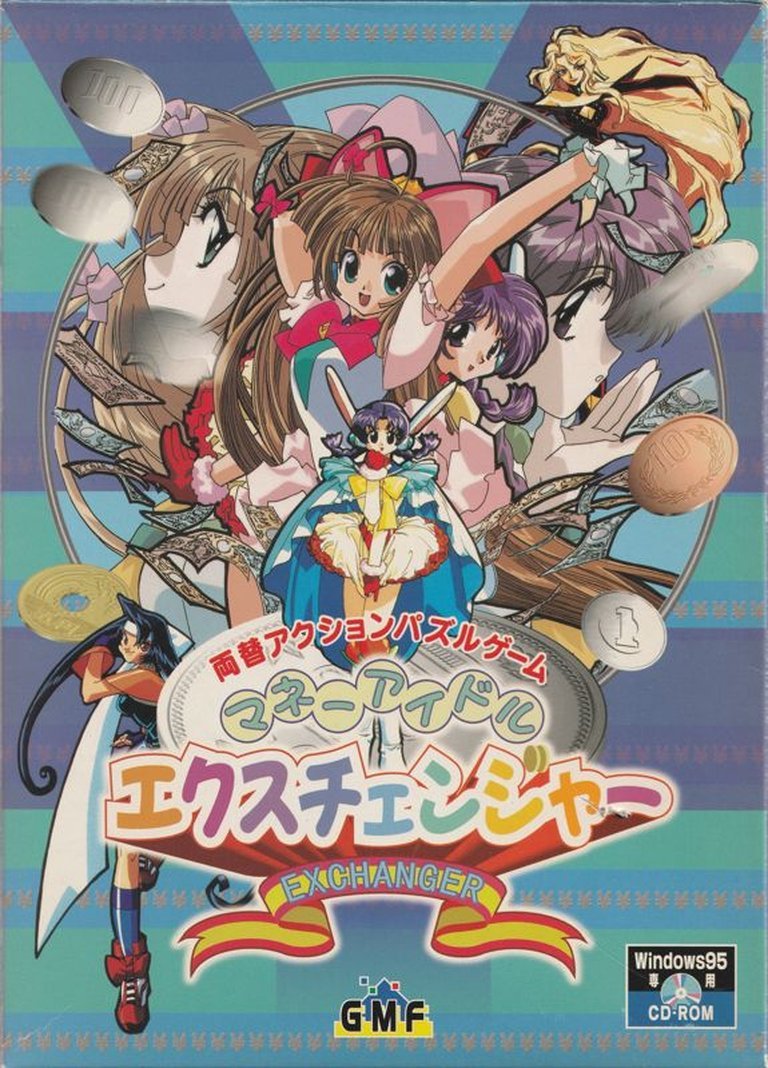
Description
Money Puzzle Exchanger is a fast-paced arcade puzzle game similar to Magical Drop, where players control a mini character at the bottom of the screen to catch falling coins of six denominations (1, 5, 10, 50, 100, 500) and drop them to form connecting groups. Coins combine when grouped correctly—five 1-coins become one 5-coin, and so on up to pairs of 500-coins vanishing for 1000 points—triggering chain reactions for bonus points in single-player or attacks on opponents in versus mode, with defeat occurring if coins reach the bottom of the playfield.
Gameplay Videos
Money Puzzle Exchanger Free Download
Money Puzzle Exchanger Guides & Walkthroughs
Money Puzzle Exchanger Reviews & Reception
neo-geo.com (90/100): exceptional puzzle gameplay lurking behind the cotton-candy exterior
mobygames.com (79/100): Brilliant fun.
opencritic.com (81/100): Money Puzzle Exchanger is nothing short of a classic competitive puzzler.
Money Puzzle Exchanger: Review
Introduction
In the glittering arcades of mid-1990s Japan, where Neo Geo cabinets reigned supreme as the “Rolls Royce” of gaming hardware, a peculiar puzzle gem emerged: Money Puzzle Exchanger (known as Money Idol Exchanger in Japan). Imagine the frantic bubble-popping chaos of Magical Drop reimagined as a high-stakes currency exchange, where yen-inspired coins cascade down screens and merge into escalating fortunes—or bury you in bankruptcy. Released in 1997 by the short-lived studio FACE, this tile-matching puzzler captured the era’s obsession with competitive, combo-driven arcade action while foreshadowing modern merge mechanics seen in mobile hits. Though overshadowed by legal woes and the developer’s bankruptcy, its enduring re-releases via Hamster’s Arcade Archives series cement its status as a cult classic. My thesis: Money Puzzle Exchanger is a brilliantly addictive evolution of the falling-block genre, blending mathematical strategy with anime flair to deliver timeless versus thrills that punch above its obscure weight class.
Development History & Context
FACE, a Japanese developer founded in the late 1980s, crafted Money Puzzle Exchanger as one of its final swan songs before declaring bankruptcy in 2000—just ahead of SNK’s own collapse. The team drew heavily from ex-Technōs Japan talent (creators of Double Dragon), infusing the project with battle-hardened arcade expertise. Producer Kengo Asai, a Neo Geo veteran behind titles like The King of Fighters ’97, Garou: Mark of the Wolves, and the canceled Dragon’s Heaven, oversaw a lean crew: planner “Starman,” programmer “Piggy,” and graphic designers like Sabby and Toshikazu Uechi. Character designs came from Atsuko Ishida (wife of mecha artist Masami Ōbari, with credits on Fatal Fury: The Motion Picture and Magic Knight Rayearth), animated by JC Staff. Composers Kennosuke Suemura and Norihiko Togashi handled the soundtrack, voiced by stars like Sakura Tange (later Cardcaptor Sakura’s titular heroine).
Technologically, the game leveraged the Neo Geo MVS’s robust 24-bit sprites and 15-bit color palette—overkill for a 2D puzzler but perfect for fluid animations and vibrant coin effects on fixed/flip-screen visuals. Arcade constraints like 78MB carts and 8-way joysticks with plunger buttons demanded tight, responsive controls. The 1997 landscape was a puzzle boom: Tetris clones, Puzzle Bobble, and Magical Drop dominated, but FACE innovated by borrowing from Fujitsu’s obscure PC title Moujiya (coin-merging mechanics) and grafting on Magical Drop‘s grab-and-drop loop. Controversy struck early—Data East sued over similarities to their licensed Drop-Drop-inspired IP, forcing a settlement amid FACE’s financial woes. Ports followed: Athena’s Game Boy (1997, mixed reception at 22/40 Famitsu) and PlayStation (1998, 26/40 Famitsu), plus modern Arcade Archives (2018) by Hamster, adding leaderboards and CRT filters. This context birthed a game born of ambition, constrained by hardware and lawsuits, yet resilient through emulation.
Narrative & Thematic Deep Dive
Money Puzzle Exchanger cloaks its minimalist plot in absurd, Engrish-laced anime idol fantasy, where money is both weapon and idol worship. Players embody “money idols”—busty, schoolgirl-esque characters with pun-drenched aliases like Exchanger (Sakura Mitsukoshi, the greedy green-eyed protagonist), Debtmiser (Asahi Takashima, the frugal rival), Coquetrybouncer (Bill Bank), Cherrybeiter (Lulula Franc), Everyworker (Ena Arashizaki), Eldylabor (Seshil Pound), Mackermocally (Blibov Sakata), and Mightdealer (Note Bank). Single-player “Story Mode” pits Sakura or Asahi against this ladder of foes, framed as a battle against a shadowy “crime ring” of tycoons—though ports like PlayStation devolve it into a cheap, non-canon tale of Sakura’s “selfish” betrayal, complete with static photos and random opponent order.
Dialogue sparkles with broken English charm: “Let’s fight to computer!” or “You put the same kind of items. That’s OK.” Themes revolve around capitalism’s absurdity—idols stack coins to amass wealth, chaining combos to “attack” rivals’ piles, symbolizing economic dominance. Female protagonists dominate (a group tag on MobyGames), blending kawaii aesthetics with cutthroat competition, critiquing (or celebrating?) consumerist greed. A post-game manga (two volumes) and merchandise folder expand this lore, but the arcade core prioritizes personality via comical win/lose animations and voiced taunts. PlayStation ports butcher it with lazy cutscenes, underscoring thematic irony: rushed “exchanges” dilute the original’s pure, idol-fueled frenzy.
Gameplay Mechanics & Systems
At its core, Money Puzzle Exchanger is a side-view, tile-matching masterpiece: control a mini-character at screen-bottom, grab falling coins (1, 5, 10, 50, 100, 500 yen values, colored accordingly), and drop them to form connected groups. Merging rules demand mental math—five 1s → one 5, two 5s → one 10, five 10s → one 50, two 50s → one 100, five 100s → one 500, two 500s → 1000 points and vanish. Unlike rigid Tetris lines, blobs (vertical/horizontal adjacency) trigger cascades, flooding opponents’ screens in VS mode for defensive chaos.
Power-ups elevate strategy:
– Green RU (Rank Up): Pairs erase and upgrade all same-denomination coins upward (e.g., all 10s → 50s).
– Blue ER (Erase): Pairs wipe all matching coins from the board.
Modes include:
– VS COM/2P: Ladder battles or head-to-head; chains dictate attack speed.
– Solo/Endless: Survival scoring, any character selectable.
UI is point-and-select clean: joystick left/right, buttons grab/release. Arcade plunger buttons feel tactile; modern ports adapt well to pads with difficulty sliders. Progression lacks RPG depth—no levels, just score multipliers from chains. Innovations shine in dynamic board states—new coins spawn mid-merge, forcing adaptive planning. Flaws: Steep curve punishes newcomers (AllGame notes patience needed); ports limit playable characters (only Sakura/Asahi in single-player); no deep single-player variety. Yet, dexterity shines in chains, prefiguring merge-3 mobile games.
World-Building, Art & Sound
The “world” is a pastel arcade dreamscape: fixed screens of cascading coins against anime backdrops, evoking yen vaults or idol stages. Atmosphere pulses with urgency—piles teeter, chains explode in particle bliss. Visuals dazzle via Neo Geo’s sprite wizardry: hyper-detailed idols (Ishida’s fluid animations via JC Staff), shimmering coins (Japanese yen fidelity vs. generic international), comical reactions (giggles, frowns). Ports falter—PlayStation’s dithered photos feel cheap—but Arcade Archives restores glory with scanlines.
Sound design amplifies frenzy: punchy SFX for grabs/merges, voiced idol quips (Tange’s Sakura chirps triumphantly). Composers Suemura/Togashi deliver poppy J-pop loops—catchy but repetitive (player complaints note reuse across characters, short loops). No per-character themes disappoint, yet high-energy beats sync perfectly with combos, building tension as piles rise. Overall, elements forge a lively, addictive vibe: cute overload masking ruthless strategy.
Reception & Legacy
Launch reception was solid but niche—MobyGames aggregates 79% critics (Softonic 94%, Video Chums 81%), praising addictiveness and multiplayer; players average 3.5/5, loving chains but decrying port flaws. Famitsu scored ports middling (GB 22/40, PS1 26/40); polls like Family Computer Magazine hit 19.4/30. Commercial rarity: 46 VAPS cabinets logged, Game Boy carts fetch $300+. Legal shadow (Data East suit) and FACE/SNK bankruptcies buried it.
Reputation evolved via 2018 Arcade Archives (PS4/Switch/Xbox One): Video Chums calls it a “classic competitive puzzler,” Nintendo Times lauds graphics despite emulation quirks. Influence subtle—prefigures Threes/merge mobiles, inspires Neo Geo preservation. Ports by Athena/GMF/MonkeyPaw/Hamster ensure accessibility, with online leaderboards reviving VS play. No massive industry ripple, but a “secret best puzzle” (US Gamer) for import fans.
Conclusion
Money Puzzle Exchanger masterfully merges (pun intended) Magical Drop‘s tension with coin-exchanging math, delivering combo ecstasy amid anime idols and Engrish whimsy. Strengths—responsive controls, chain depth, vibrant art—outweigh flaws like repetition and port issues, cementing its addictive core. From Neo Geo obscurity to modern revival, it endures as FACE’s finest hour, a testament to 1990s arcade ingenuity amid adversity. Verdict: Essential for puzzle historians (9/10 arcade-original; 8/10 re-releases). Seek Arcade Archives—your next high-score addiction awaits.