
- Release Year: 2005
- Platforms: Windows
- Publisher: 8105graphics
- Developer: 8105graphics
- Genre: Action
- Perspective: Side view
- Game Mode: Single-player
- Gameplay: Fighting, Power-up modes
- Setting: Fantasy
- Average Score: 24/100
Description
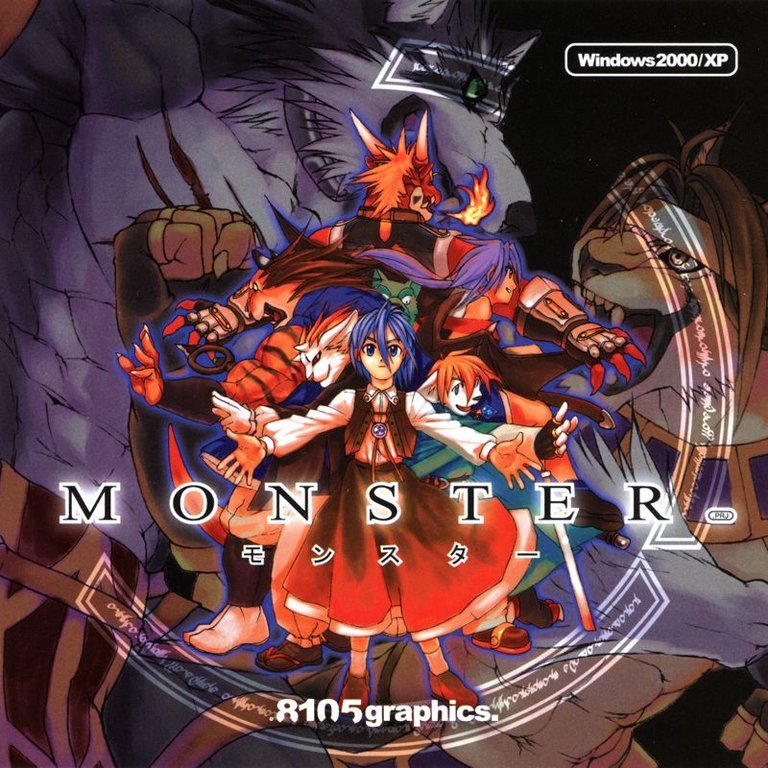
Monster is a 2D side‑view fighting game released for Windows in 2005. Set in a fantasy world rendered in anime‑style art, it pits a diverse roster of human and anthropomorphic animal fighters against each other. The game introduces a unique ‘shift’ mechanic where players select one of three power‑up modes—Monster, Freedom, or Tranquility—each altering speed, damage, combo canceling, or invincibility to create varied playstyles within the traditional 2D combat framework.
Where to Buy Monster
PC
Monster Patches & Updates
Monster Reviews & Reception
imdb.com (24/100): Still terrible, but not his worst at all.
Monster: Review
Introduction
The world of 2‑D fighting games has long been dominated by heavyweight franchises, yet 2005’s Monster slipped quietly onto the Windows platform, offering a fresh spin on the genre. Developed by a modest seven‑person team at 8105graphics, the title presents a roster of human and anthropomorphic animal fighters, each wielding a distinct style. What truly sets Monster apart is its experimental “shift” system—three unique power‑up modes that reshape combat dynamics on‑the‑fly. This review argues that, despite its limited polish and niche distribution, Monster is an ambitious indie gem that pushes the boundaries of traditional fighting mechanics while preserving the kinetic thrills fans demand.
Development History & Context
Studio & Creators
8105graphics, an independent development house, assembled a compact crew for Monster:
| Role | Person (Alias) | Notable Contributions |
|---|---|---|
| Lead Developer | Sho Kawakami (ShoK) | Overall design, multiple in‑game roles |
| Designer | Shiki Maeda (AnimalGenomics) | Character concepts and animal‑themed aesthetics |
| Artist | Miko Hiiragi (Forest of Dice) | 2‑D anime/manga visual direction |
| Programmer | North (Kitabo / Sylphdraw) | Core engine and shift‑system implementation |
| Audio Lead | Motoi Toraiwa (Livingedge) | Sound effects and musical cues |
| Producer | Hama (Final Howling) | Project coordination and publishing liaison |
| Additional Support | Gon Kasho (Yamamoto Gonbee) & others | QA, asset creation, ancillary tooling |
The team’s size—only seven people—meant a lean development pipeline, relying heavily on cross‑disciplinary responsibilities. Their experience stemmed from prior modest indie projects, but Monster marked their first foray into a full‑featured fighting title.
Technological Constraints
The game was delivered on a CD‑ROM for Windows, supporting both gamepad and keyboard inputs. In 2005, the PC fighting scene was still largely dominated by 3‑D titles such as Soulcalibur and Dead or Alive, making Monster’s 2‑D side‑scrolling visual approach a nostalgic nod to classics like Street Fighter II. The engine was built from scratch, emphasizing sprite‑based animation and a custom physics system to handle the novel shift mechanics. Limited hardware resources of the era (mid‑2000s graphics cards, modest CPU cores) dictated a resolution of 800×600 with 32‑bit color depth, enough to showcase crisp anime‑style art without overtaxing typical consumer PCs.
Gaming Landscape at Release
2005 saw the rise of arcade‑styled fighting games on consoles and PCs, yet the market was saturated with high‑budget releases. Indie fighting titles were rare, and most players still gravitated toward established franchises. Monster entered this environment as a daring outlier, offering a “Power.on‑demand” system that directly referenced Street Fighter Alpha III’s V‑ism—a mechanic that allowed players to toggle a temporary state for altered move properties. By integrating three such modes (Monster, Freedom, Tranquility) into a single character selection, Monster attempted to differentiate itself within a crowded genre.
Narrative & Thematic Deep Dive
Although fighting games typically prioritize mechanics over story, Monster embeds a modest narrative framework. The premise revolves around a secret tournament where humans and anthropomorphic animals clash for supremacy. Each character’s backstory is hinted at through short dialogue snippets before battles, revealing motivations ranging from personal revenge to honor‑bound duty.
Characters & Dialogue
- Human Fighters: Grounded in classic martial arts tropes, they espouse themes of discipline and perseverance.
- Anthropomorphic Animals: These characters embody instinctual drives—predatory aggression, playful curiosity, or protective loyalty—mirrored in their taunts and victory phrases.
The dialogue is terse yet flavored with the anime/manga aesthetic, employing honorifics and stylized exclamations that reinforce the game’s high‑energy fantasy setting.
Underlying Themes
Monster’s core themes revolve around balance and transformation. The shift system itself is a metaphor for the duality of power—speed versus strength, offense versus defense. By forcing players to choose a mode that either hampers movement (Monster) but boosts damage, or reduces damage (Freedom) while enabling rapid combo cancels, the game invites reflection on strategic compromise. The Tranquility mode, focusing on defensive invincibility, underscores the idea that restraint can be as potent as aggression.
Gameplay Mechanics & Systems
Core Loop
- Character & Shift Selection – Players pick a fighter and one of three shift modes.
- Stage Selection – A standard side‑view arena with occasional environmental hazards.
- Combat – Real‑time button inputs translate directly to attacks, blocks, and special moves.
- Shift Activation – At any moment, the player toggles the chosen shift, altering stats and move properties.
- Victory Conditions – Deplete the opponent’s health or achieve a timed knockout.
Shift System Breakdown
| Shift | Effect on Base Stats | Primary Strength | Tactical Role |
|---|---|---|---|
| Monster | ↓ Speed, ↑ Damage | Massive damage bursts | “Power‑hitter” – ideal for heavy‑hit combos |
| Freedom | ↓ Damage, ↑ Cancel Ability | Rapid chaining of moves | “Rushdown” – favors aggressive pressure |
| Tranquility | ↑ Special‑move invincibility frames | Defensive durability | “Counter‑play” – punishes reckless attacks |
Each shift also modifies special‑move properties: Monster mode adds extra stun on heavy attacks, Freedom allows mid‑air cancels, and Tranquility extends hit‑lag immunity. This creates a triple‑layered decision space rarely seen in 2‑D fighters.
Combat & Character Progression
Monster follows the classic fighting game health bar system with a three‑life limit per round. There is no RPG‑style progression; the player’s power is fully expressed through the selected shift and mastery of move execution. The game rewards timing and precision—successful parries and perfect blocks open a “critical window” for heightened damage.
UI & Control Scheme
The interface is minimalist: health bars, a small shift‑meter, and a combo counter appear at the screen’s top. Controls are mapped intuitively: directional inputs for movement, three buttons for light, medium, and heavy attacks, and a dedicated “Shift” button. Keyboard users can rebind keys, while gamepad support offers analog stick movement for fluid dashing.
Innovative & Flawed Systems
- Innovation: The tri‑modal shift system expands strategic depth without complicating the UI. It encourages players to experiment with hybrid playstyles mid‑match, a concept that pre‑dated later titles like Guilty Gear Strive’s “Overdrive” mechanics.
- Flaws: The shift activation lacks a visual cooldown indicator, making it difficult for opponents to anticipate changes. Additionally, balance issues arise: the Monster mode’s damage boost can overwhelm less‑experienced players, creating a steep learning curve for newcomers.
World‑Building, Art & Sound
Setting & Atmosphere
Stages are crafted as stylized fantasy locales—ancient temples, bustling market squares, and mist‑shrouded forests—each rendered in high‑resolution 2‑D sprites with parallax scrolling to convey depth. The backgrounds are static but feature subtle animated elements (e.g., fluttering banners, drifting leaves) that enhance immersion without taxing hardware.
Visual Direction
The art style leans heavily into anime/manga aesthetics: exaggerated facial expressions, dynamic motion lines, and vibrant color palettes dominate. Character sprites feature fluid animation cycles, especially during shift activation, where a brief aura (flames for Monster, wind gusts for Freedom, glowing particles for Tranquility) visually signals the mode change.
Sound Design
- Music: A looped, high‑tempo electronic track underscores combat, punctuated by melodic motifs that shift subtly when a player activates a mode (e.g., bass-heavy for Monster, airy synth for Freedom).
- SFX: Attack sounds range from metallic clanks to animalistic roars, matching each character’s nature. The shift activation triggers a distinctive “whoosh” that doubles as an audio cue for opponents.
- Voice Acting: Limited to taunts and victory cries, performed in English with exaggerated inflections that complement the anime vibe.
Overall, the audiovisual package creates a high‑octane, cartoonish atmosphere that aligns with the game’s fast‑paced combat and thematic emphasis on transformation.
Reception & Legacy
Launch Reception
Monster was released exclusively on Windows in December 2005, distributed primarily through digital download platforms and a limited physical CD‑ROM run. The game lacked major critical coverage, as evidenced by the empty critic‑review section on its MobyGames entry. Player reviews are scarce, indicating a modest but dedicated niche audience.
Evolution Over Time
Even without widespread acclaim, Monster’s shift system has earned cult admiration among indie fighting enthusiasts. Discussions on niche forums highlight the game’s early adoption of multi‑state mechanics, a concept that would later surface in more prominent titles (e.g., BlazBlue: Change the World’s “Drive” system).
Influence on Subsequent Games
While Monster did not spawn a direct sequel, its design philosophy can be traced in later indie projects that blend dynamic state toggling with traditional fighting frameworks. The canceled arcade version, “Monster: Ancient Cline,” hinted at ambitions for a hardware‑based expansion, but its quiet cancellation underscores the challenges faced by small studios in scaling fighting games to arcade cabinets.
Commercial Performance
Exact sales figures are unavailable, but the fact that the title remained a single‑release suggests modest commercial returns. Nevertheless, the game’s continued presence on MobyGames and occasional mentions in retro‑gaming retrospectives attest to its enduring curiosity factor.
Conclusion
Monster stands as a bold experiment in the 2‑D fighting genre, delivering an innovative shift system that deepens strategic options without sacrificing the immediacy of classic arcade combat. Its anime‑styled visuals, tight control scheme, and thematic focus on balance and transformation make it a noteworthy entry for collectors and fighting‑game purists seeking something off the beaten path.
Verdict: Monster is a niche masterpiece—not flawless, but undeniably inventive. It occupies a unique spot in video‑game history as an early example of state‑based combat design, and its legacy endures in the whispers of indie fighting circles. For those willing to venture beyond mainstream titles, Monster offers a concise, adrenaline‑fueled experience that rewards both tactical foresight and button‑mashing bravado.