
- Release Year: 2021
- Platforms: Nintendo Switch, PlayStation 4, PlayStation 5, Windows Apps, Windows, Xbox One, Xbox Series
- Publisher: Capcom Co., Ltd.
- Developer: Capcom Co., Ltd.
- Genre: Action, Role-playing (RPG)
- Perspective: Behind view
- Game Mode: Online Co-op, Single-player
- Gameplay: Base building, Crafting, Environmental interactions, Monster capture, Mounted Combat, Open World, Palamute companion, Pettable animals, Wirebug mechanic
- Setting: Fantasy, New World
- Average Score: 87/100
Description
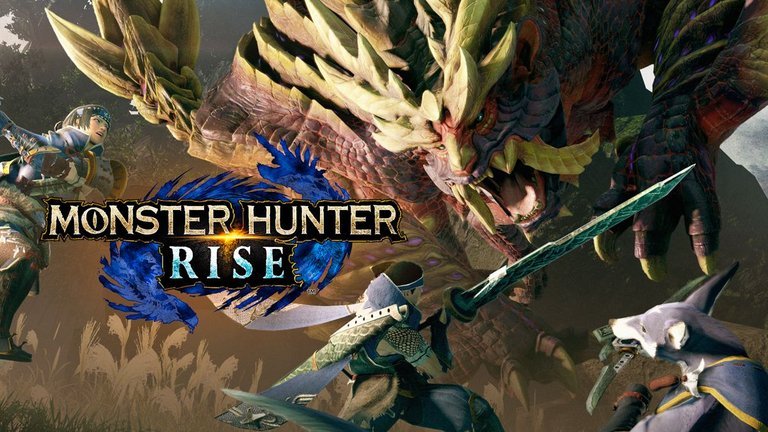
Monster Hunter: Rise is an action role-playing game set in the ‘New World,’ where players take on the role of a hunter tasked with tracking and battling massive, formidable creatures known as ‘Monsters.’ The game blends single-player and multiplayer modes, offering a variety of weapons, environmental interactions, and crafting mechanics to enhance combat and progression. Key features include the ‘Wirebug’ for agile movement and attacks, the ‘Palamute’ companion for battlefield assistance, and a rich, fantasy-inspired setting filled with new monsters and quests to conquer.
Gameplay Videos
Where to Buy Monster Hunter: Rise
PC
Monster Hunter: Rise Mods
Monster Hunter: Rise Guides & Walkthroughs
Monster Hunter: Rise Reviews & Reception
metacritic.com (88/100): Monster Hunter Rise delivers as the ultimate Monster Hunter experience.
ign.com (80/100): Rise’s new Wirebugs are so fun you’ll never want to give them up.
opencritic.com (90/100): Monster Hunter: Rise is arguably the greatest entry in Capcom’s flagship series, and a game that simply never stops giving.
switchscores.com (93.8/100): Monster Hunter Rise is an action rpg for Nintendo Switch 1.
Monster Hunter: Rise: A Masterclass in Evolution and Accessibility
Introduction
Monster Hunter: Rise is a triumphant return to form for Capcom’s beloved franchise, blending the series’ signature depth with groundbreaking innovations. Released in 2021 for the Nintendo Switch, Rise redefines the Monster Hunter experience by emphasizing verticality, mobility, and accessibility while retaining the core loop of hunting, crafting, and progression. This review delves into the game’s development, narrative, gameplay mechanics, world-building, reception, and legacy, offering a comprehensive analysis of why Rise stands as one of the most refined entries in the series.
Development History & Context
A New Direction for the Franchise
Monster Hunter: Rise was developed by Capcom’s internal teams, led by director Yasunori Ichinose and producer Ryozo Tsujimoto. The game’s development began shortly after the completion of Monster Hunter Generations Ultimate, with the team aiming to create a title that bridged the gap between the classic Monster Hunter formula and the modernized approach of Monster Hunter: World.
The game’s title, Rise, reflects its central theme of verticality, a design philosophy that influenced every aspect of the game, from level design to combat mechanics. The team sought to create a world where players could traverse environments with unprecedented freedom, inspired by the agility of ninjas and the natural landscapes of feudal Japan.
Technological Constraints and Innovations
Rise was built using Capcom’s proprietary RE Engine, previously used for Resident Evil 7 and Devil May Cry 5. This engine allowed the team to create a visually stunning game despite the Nintendo Switch’s hardware limitations. The RE Engine’s flexibility enabled seamless, zoneless maps—a feature introduced in World—while optimizing performance for the Switch’s portable and docked modes.
One of the most significant innovations in Rise is the introduction of the Wirebug, a grappling tool that allows players to traverse environments with ease. This mechanic was designed to enhance verticality, enabling players to scale cliffs, swing across gaps, and perform aerial attacks. The Wirebug’s implementation was a response to player feedback from World, where traversal could feel cumbersome in certain environments.
The Gaming Landscape at Release
Monster Hunter: Rise launched in March 2021, a time when the Nintendo Switch was at the height of its popularity. The game’s release was strategically timed to capitalize on the Switch’s massive user base, offering a console-exclusive experience that showcased the system’s capabilities. The game’s demo, released in January 2021, generated significant buzz, briefly causing the Nintendo eShop servers to crash due to overwhelming demand.
Narrative & Thematic Deep Dive
A Tale of Survival and Discovery
Monster Hunter: Rise is set in Kamura Village, a serene mountain locale inspired by feudal Japan. The game’s narrative revolves around the “Rampage,” a catastrophic event where hordes of monsters attack the village in a frenzied rage. Players take on the role of a hunter tasked with uncovering the cause of the Rampage and defending Kamura from the onslaught.
The story is divided into two main arcs: the base game’s Rampage arc and the Sunbreak expansion’s Elgado arc. The base game introduces players to the village’s inhabitants, including the Wyverian twins Hinoa and Minoto, the village elder Fugen, and the chef Yomogi. The narrative is minimalistic, focusing on the immediate threat of the Rampage rather than a sprawling, cinematic plot.
Themes of Unity and Resilience
At its core, Monster Hunter: Rise explores themes of unity and resilience. The villagers of Kamura band together to defend their home, embodying the spirit of cooperation and perseverance. The game’s emphasis on multiplayer gameplay reinforces this theme, as players must work together to overcome the Rampage’s challenges.
The Sunbreak expansion expands on these themes by introducing the Kingdom of Elgado, a land plagued by a mysterious phenomenon that drives monsters into a frenzy. The expansion’s narrative explores the consequences of unchecked power and the importance of balance in nature, culminating in a climactic battle against the vampiric Elder Dragon Malzeno.
Characters and Dialogue
While Monster Hunter: Rise does not feature deep character development, its cast is charming and memorable. The villagers of Kamura are endearing, with each character contributing to the village’s unique culture. The dialogue is lighthearted and often humorous, providing a welcome contrast to the game’s intense combat.
The Sunbreak expansion introduces new characters, such as the knight Fiorayne and the admiral Galleus, who add depth to the narrative. These characters are more fleshed out than their base game counterparts, offering players a greater sense of connection to the story.
Gameplay Mechanics & Systems
Core Gameplay Loop
Monster Hunter: Rise retains the series’ signature gameplay loop of hunting monsters, gathering materials, and crafting equipment. Players embark on quests to slay or capture large monsters, using the materials obtained to forge new weapons and armor. This loop is addictive and rewarding, offering a sense of progression as players tackle increasingly challenging foes.
The game’s quests are divided into Village Quests and Hub Quests. Village Quests are designed for solo play, while Hub Quests are tailored for multiplayer. This separation allows players to experience the game at their own pace, whether they prefer solo hunting or cooperative play.
Combat and Mobility
Combat in Monster Hunter: Rise is fluid and dynamic, thanks to the introduction of the Wirebug. This tool allows players to perform aerial attacks, evade enemy strikes, and traverse environments with ease. The Wirebug’s versatility makes combat more engaging, as players can chain together attacks and maneuvers in ways that were previously impossible.
The game features 14 weapon types, each with its own unique playstyle and moveset. From the brute force of the Great Sword to the precision of the Bow, there is a weapon for every playstyle. The introduction of Silkbind Attacks—special moves that utilize the Wirebug—adds another layer of depth to combat, allowing players to customize their movesets to suit their preferences.
Character Progression and Customization
Progression in Monster Hunter: Rise is tied to the Hunter Rank system, which increases as players complete quests. Higher ranks unlock more challenging quests and powerful equipment, providing a sense of accomplishment as players climb the ranks.
The game’s armor and weapon crafting systems are robust, offering a wide range of customization options. Players can mix and match armor pieces to create unique builds, tailoring their equipment to their playstyle. The introduction of Talismans—special items that grant additional skills—adds another layer of customization, allowing players to fine-tune their builds.
Innovative Systems: Wirebug and Palamutes
The Wirebug is one of Monster Hunter: Rise’s most innovative features. This tool allows players to grapple onto surfaces, perform aerial attacks, and traverse environments with unprecedented freedom. The Wirebug’s versatility makes it an essential part of the game’s combat and exploration, adding a new dimension to the Monster Hunter experience.
Another major innovation is the introduction of Palamutes, rideable canine companions that assist players in combat. Palamutes can be customized with their own armor and weapons, making them valuable allies in battle. The addition of Palamutes, alongside the returning Palicoes, provides players with a range of support options, enhancing the game’s accessibility and depth.
Flawed Systems: Rampage Mode
While Monster Hunter: Rise introduces many innovative systems, the Rampage mode is a notable misstep. This tower defense-style mode tasks players with defending Kamura Village from waves of monsters, using a variety of defensive installations. While the concept is intriguing, the execution feels repetitive and lacks the depth of the game’s traditional hunting quests.
World-Building, Art & Sound
A Vibrant and Immersive World
Monster Hunter: Rise’s world is a visual and auditory feast, blending the natural beauty of feudal Japan with the fantastical elements of the Monster Hunter universe. The game’s environments are diverse and meticulously crafted, ranging from the lush Shrine Ruins to the frigid Frost Islands. Each locale is teeming with life, featuring a variety of endemic creatures and monsters that contribute to the ecosystem.
The game’s art direction is heavily influenced by Japanese culture, with the architecture, clothing, and music reflecting the aesthetics of feudal Japan. The use of traditional Japanese instruments, such as the shamisen and taiko drums, adds to the game’s immersive atmosphere, creating a sense of place that is both familiar and exotic.
Visual Direction and Performance
Despite the Nintendo Switch’s hardware limitations, Monster Hunter: Rise is a visually stunning game. The RE Engine allows for detailed character models, vibrant environments, and smooth animations. The game’s performance is generally solid, with minimal frame rate drops during intense combat sequences.
The game’s visual direction is a testament to Capcom’s ability to push the boundaries of the Switch’s hardware. The environments are richly detailed, with dynamic lighting and weather effects that enhance the immersion. The monsters are meticulously designed, with each creature featuring unique animations and behaviors that make them feel alive.
Sound Design and Music
The sound design in Monster Hunter: Rise is exceptional, with each weapon, monster, and environmental element featuring distinct audio cues. The game’s music is equally impressive, blending traditional Japanese instruments with orchestral arrangements to create a dynamic and immersive soundtrack.
The game’s soundtrack is composed by Satoshi Hori, who has worked on previous Monster Hunter titles. The music is contextually appropriate, shifting between serene melodies during exploration and intense battle themes during combat. The use of traditional Japanese instruments adds to the game’s cultural authenticity, creating a soundtrack that is both memorable and evocative.
Reception & Legacy
Critical and Commercial Success
Monster Hunter: Rise received widespread acclaim upon release, with critics praising its innovative gameplay mechanics, stunning visuals, and accessible design. The game holds an 88% critic score on Metacritic, with many reviewers highlighting the Wirebug and Palamutes as standout features.
The game was a commercial success, selling over 15 million copies worldwide. Its popularity led to the release of the Sunbreak expansion, which introduced new monsters, quests, and gameplay mechanics. The expansion was equally well-received, further cementing Rise’s status as one of the best entries in the series.
Influence on the Franchise
Monster Hunter: Rise’s success has had a significant impact on the Monster Hunter franchise. The game’s emphasis on accessibility and mobility has influenced subsequent titles, with Monster Hunter Wilds incorporating similar mechanics. The introduction of the Wirebug and Palamutes has set a new standard for traversal and combat in the series, offering a blueprint for future innovations.
The game’s multiplatform release—including ports to PlayStation, Xbox, and PC—has expanded the franchise’s reach, introducing Monster Hunter to a broader audience. The inclusion of cross-platform play and cross-save functionality in future titles is a direct response to player feedback from Rise, highlighting the game’s lasting influence.
Conclusion
Monster Hunter: Rise is a masterclass in evolution and accessibility, offering a refined and innovative take on the Monster Hunter formula. The game’s emphasis on verticality, mobility, and cooperative gameplay makes it one of the most engaging entries in the series. While the Rampage mode falls short of the game’s otherwise high standards, the overall experience is a triumph of design and execution.
With its stunning visuals, immersive soundtrack, and addictive gameplay loop, Monster Hunter: Rise stands as a testament to Capcom’s ability to innovate while staying true to the series’ roots. The game’s critical and commercial success, along with its lasting influence on the franchise, cements its place as one of the greatest Monster Hunter titles of all time.
Final Verdict: 9.5/10 – A Must-Play for Fans and Newcomers Alike