
- Release Year: 2001
- Platforms: DOS, Windows
- Genre: Adventure
- Perspective: Side view
- Game Mode: Single-player
- Gameplay: Graphic adventure, Puzzle elements
- Setting: Reality-on-the-Norm
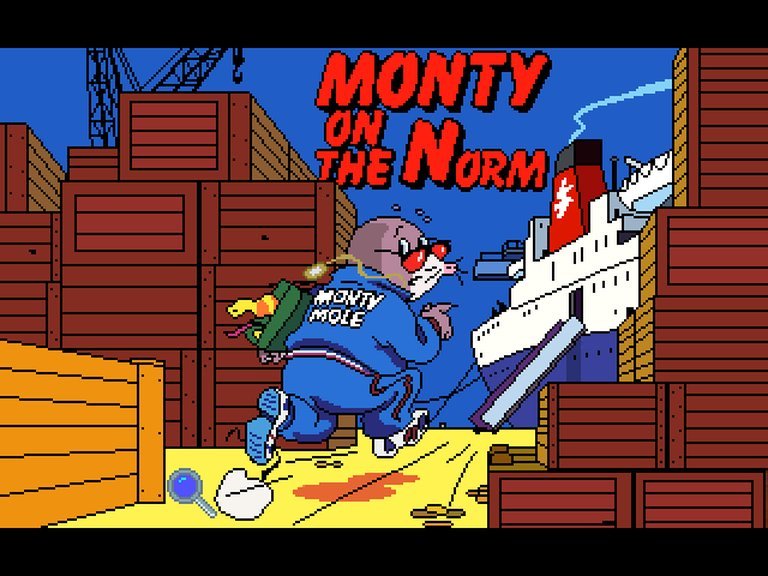
Description
In ‘Monty on the Norm’, players guide Monty Mole, a fugitive from Intermole, through the quirky town square of Reality-on-the-Norm. This humorous point-and-click adventure challenges players to solve puzzles, interact with eccentric townsfolk, and collect items to seal a mysterious pit Monty emerged from, all while navigating the game’s side-view perspective and icon-based interface.
Monty on the Norm Free Download
Monty on the Norm Mods
Monty on the Norm Reviews & Reception
metacritic.com : There are no critic reviews for this game yet.
Monty on the Norm: Review
Introduction
In a gaming landscape dominated by blockbusters, there exists a subterranean world of curiosity and charm: the cult-classic universe of Monty on the Norm. Released in 2001 for DOS and later Windows, this fan-made point-and-click adventure—starring the restless mole Monty—offers a bizarre, nostalgic trip into indie gaming’s early frontier. Synthesizing absurdist humor, retro mechanics, and a DIY ethos, Monty on the Norm remains a fascinating artifact of passion-project design. This review argues that while the game is undeniably rough-edged, its chaotic energy and reverence for gaming history cement its status as a hidden gem of the Adventure Game Studio (AGS) community.
Development History & Context
Studio & Vision
Monty on the Norm emerged from the mind of Finnish developer Mikko Salonen, a one-man force behind dialog, programming, “new crappy art,” and design. It exists within the Reality-on-the-Norm series—a whimsical shared universe of AGS-developed adventures—and serves as a direct follow-up to Paranormal Investigation (2001). Salonen’s vision was steeped in homage: reviving Monty Mole, a character created by Peter Harrap for 1980s ZX Spectrum/Commodore 64 platformers (Wanted: Monty Mole, Auf Wiedersehen Monty), but reimagined as the hapless protagonist of a surreal comedy.
Technological Constraints
Built using Adventure Game Studio (AGS)—a tool popularized by Chris Jones for its accessibility to amateur creators—the game reflects the DIY constraints of early 2000s indie development. AGS enabled rapid prototyping but limited visual fidelity; Salonen’s “crappy art” (his own words) leans into low-res 320×240 pixel backgrounds and rudimentary animations. The DOS-to-Windows port (2007) retained these aesthetic limitations, embracing nostalgia over polish.
Gaming Landscape
2001 was a transitional year: AAA franchises like Grand Theft Auto III redefined 3D worlds, while indie games remained niche. Monty on the Norm joined a wave of AGS oddities celebrating 1990s adventure tropes—think Monkey Island’s humor meets Day of the Tentacle’s puzzles—yet lacked the budget or marketing of contemporaries. Its freeware release model typified the era’s underground spirit, circulating via forums and niche portals.
Narrative & Thematic Deep Dive
Plot & Characters
Monty Mole flees the shadowy Intermole organization, tumbling into the titular town of Reality-on-the-Norm—a surreal microcosm where eccentric NPCs dwell around a gaping pit filled with body parts (a darkly comic nod to Dig Dug). The plot tasks players with sealing this pit using scavenged items and bewildering dialogue trees. Alongside Monty, players encounter:
– Dead Guy from Dig Dug (found in the pit, silently decomposing)
– An aloof town clerk parodying bureaucratic absurdity
– A pet shop owner peddling cryptids
– A philosophical alley bum offering opaque wisdom
Dialogue & Themes
Salonen’s script thrives on meta-jokes, non-sequiturs, and anti-climaxes. Quips like the clerk’s deadpan “We sell fishing nets. No fish” underline the game’s commitment to absurdism. Thematically, it satirizes red tape (endless fetch quests to “legally” seal a death pit) and consumerism (Yahtzeebrand store hawking useless goods). Beneath the chaos lies a commentary on futility: Monty’s Sisyphean struggle mirrors indie developers fighting obscurity.
Comedy as Subversion
By refusing to take itself seriously—even dubbing its own art “crappy”—the game weaponizes incompetence. Climactic moments, like using absurd items (e.g., broken roof tiles as duct tape substitutes), mock adventure-game logic while celebrating it. The Dig Dug corpse epitomizes this tone: a grim gag acknowledging gaming’s disposable NPCs.
Gameplay Mechanics & Systems
Core Loop & Puzzles
As a pure point-and-click adventure, Monty on the Norm tasks players with:
1. Exploration: Clicking through static town screens (square, rooftops, shops).
2. Conversation: NPCs offer clues but revel in unhelpfulness.
3. Item Collection: Combinable objects (sealant, planks, fliers) often defy logic.
4. Puzzle Solving: Solutions demand lateral thinking, like trapping a rat using junk food.
Innovations & Flaws
The game’s icon-based interface (examine/talk/use) streamlines interaction but suffers from:
– Pixel-Hunt Frustrations: Key items blend into cluttered backgrounds.
– Arbitrary Logic: Some puzzles lack intuitive clues (e.g., acquiring a bum’s cardboard box).
While standard for AGS titles, these flaws reflect the era’s design blind spots.
Short Playtime, High Replay
Most players finish in under 30 minutes, but hidden jokes (e.g., Rammstein’s Tier blaring in the pet shop) incentivize replays. The nonlinear structure—permitting out-of-sequence item grabs—offers minor freedom.
World-Building, Art & Sound
Visual Direction
Salonen’s intentionally crude art—blocky sprites, drab palettes—channels early 90s adventure kitsch. Environments like the crumbling town square feel decayed, with litter-strewn corners reinforcing the game’s apathetic mood. The comic-peak: Monty’s emotive grimaces during dialogue.
Soundtrack
A jukebox fever dream:
– Mark J. Lovegrove’s chiptune town theme.
– Rob Hubbard’s Monty on the Run C64 nostalgia.
– Rammstein’s industrial Tier as ironic pet-shop ambiance.
– MacGyver’s theme repurposed for slapstick moments.
This chaotic audio collage heightens the surrealism, contrasting grunge with cheerful MIDI loops.
Atmosphere
Reality-on-the-Norm evokes a liminal space—abandoned yet alive with chatter. The omnipresent pit, framed as existential dread made literal, looms over every interaction. Flickering bulbs, bugs scuttling under trash, and disjointed camera angles build unease beneath the comedy.
Reception & Legacy
Launch & Critical Response
No formal reviews appeared upon release, but fan forums praised its idiosyncrasy and derided obscurity. The 2014 AGS re-release earned nods for preservation, though its 16-bit aesthetic felt anachronistic in a post-Shovel Knight world.
Evolution of Reputation
Monty on the Norm gradually became a cult curiosity:
– Historians laud it as a case study in indie resourcefulness.
– The Reality-on-the-Norm series spawned sequels like Easter in Reality on the Norm (2003), expanding its lore.
– Speedrunners exploit its brevity for sub-20-minute completions.
Industry Influence
While niche, the game exemplifies AGS’s democratizing power—inspiring developers like the Ben “Yahtzee” Croshaw (Chzo Mythos). Its anti-commercial ethos foreshadowed itch.io’s experimental wave.
Conclusion
Monty on the Norm is a paradox: a game that revels in its own jank while delivering a poignant microcosm of indie tenacity. Built on cobbled-together art, stolen music, and existential puns, it transcends technical flaws through sheer audacity. For historians, it documents early-2000s fandom’s DIY pulse; for players, it’s a 30-minute carnival of irreverence. Flawed, yes—but in its crooked seams lies a defiant celebration of gaming’s weird underbelly.
Final Verdict: A minuscule but mighty footnote in adventure-game history—best enjoyed with a love for the absurd and patience for pixel hunts.