
- Release Year: 2015
- Platforms: Windows
- Developer: Kerim Kumbasar
- Genre: Adventure
- Perspective: 1st-person
- Game Mode: Single-player
- Average Score: 66/100
Description
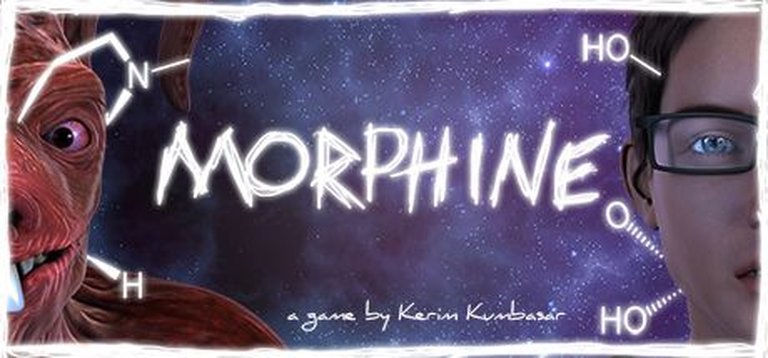
Morphine is a cinematic first-person adventure game that immerses players in the emotional and psychological turmoil of an eighteen-year-old high school student who has been ignored and bullied throughout his life. Through a narrative-driven exploration of his past dramatic events and an alternative subconscious world, the game delivers a haunting horror experience from a deeply personal perspective.
Gameplay Videos
Where to Buy Morphine
PC
Morphine Guides & Walkthroughs
Morphine Reviews & Reception
gamevalio.com : Worth keeping an eye on. Currently sitting in a decent spot, but not quite a must-buy just yet.
metacritic.com (61/100): Simply, for 10 bucks you get narrative physiological triller with scary elements here and there.
Morphine: Review
Introduction: A Pill Hard to Swallow
In the vast, often overcrowded digital shelves of Steam, certain titles exist in a peculiar liminal space—games that are neither celebrated classics nor infamous failures, but rather haunting echoes of a singular, deeply personal vision. Morphine (2015), the debut and seemingly sole release of Turkish developer Kerim Kumbasar, is one such title. Marketed as an “independent story-based cinematic FPS” exploring the psyche of a bullied teenager, it arrived with little fanfare, built on the accessible Unity engine, and promptly dissolved into the background noise of the indie marketplace. Yet, its enduring, if minimal, presence—maintaining a “Mostly Positive” rating on Steam years after release from a small but dedicated player base—demands examination. This review posits that Morphine is not a good game by conventional metrics of polish, design, or narrative coherence. Instead, it is a fascinating and profoundly flawed case study in raw, unfiltered auteurism. Its significance lies not in its execution but in its testament to the double-edged sword of solo development: the ability to translate a visceral emotional experience into interactive form, unmediated by committee, but also shackled by the immense constraints of a lone creator’s skill, budget, and resources. Morphine is, in essence, the gaming equivalent of a passionate, messy, and often incoherent diary entry from the front lines of adolescent trauma.
Development History & Context: One Man, One Engine, One Vision
The development history of Morphine is, by necessity, almost entirely synonymous with its creator, Kerim Kumbasar. Credits on MobyGames and Steam list a mere seven individuals in the “development” role, with Kumbasar himself credited as the director and writer (with Anıl Ayal for dialogue). Four more are listed under “special thanks.” This skeleton crew, coupled with the use of the Unity engine—a tool synonymous with democratizing game development but also with a glut of asset-store-driven productions—immediately frames the project’s context. Morphine was not crafted in a professional studio with a QA department, narrative designers, or dedicated artists. It was, almost certainly, a passion project born from personal experience, brought to life with whatever tools and assets were within reach.
The year 2015 was a pivotal moment for indie game development. The “golden age” of the 2010s was in full swing, with narrative-driven experiences like Gone Home (2013), The Stanley Parable (2013), and Her Story (2015) proving that minimalist mechanics could serve profound stories. However, this era also saw a saturation of low-budget, asset-flipped horror and “psychological” games on Steam Greenlight—the very program through which Morphine was likely shepherded. The game thus exists in a tension: it aspires to the emotional weight of its acclaimed peers but is visually and systemically beholden to the aesthetic and technical limitations of a ubiquitous, entry-level engine and store-bought assets (noted in the credits: “Some Textures from GameTextures.com”). Its developmental context is one of admirable ambition meeting severe, likely crippling, logistical constraints. There is no evidence of a meaningful marketing push beyond its Steam page, and its legacy is built entirely on word-of-mouth and the curiosity its provocative title and description generate.
Narrative & Thematic Deep Dive: The Subconscious as a Labyrinth
The stated narrative premise of Morphine is its most compelling—and its most ambiguously realized—component. Players assume the role of an eighteen-year-old high school student, a figure who has lived “in his own utopia as an ignored, bullied person.” The journey promised is “into his past testifying his dramatic events that troubled his young life,” culminating in a confrontation with an “alternative subconscious world.” This framework, drawn directly from the developer’s own description, suggests a psychological horror/drama where the external torment of bullying is internalized, manifesting as a surreal, dreamlike, or hellish mental landscape.
A thematic analysis, however, must be speculative due to the complete absence of a documented, coherent plot summary from credible critic sources. The only narrative clues come from user reviews and IMDb keywords. The latter is a chaotic collage of disturbing terms: gun shot, school shooting, suicide, Ted Bundy, father son relationship, morphine, bullying. These keywords sketch a nightmare scenario where a bullied protagonist’s psyche fractures, blending memories of familial strife, violent revenge fantasies, and allusions to notorious killers. The title itself, Morphine, is potent metaphor—the drug as a palliative for psychological pain, a substance that both dulls agony and induces hallucinatory detachment, perfectly mirroring the protagonist’s dissociative escape from trauma.
The challenge for the game is translating this internal, psychological ruin into interactive form. According to the lone positive Steam review by “makarov669,” the story is “dark” and succeeds in making the player “imagine yourself on Peter’s place,” evoking empathy. The scathing review by “bleb,” however, describes a narrative collapse where character names change arbitrarily (“Peter to P to eventually Ted”), parallels to Ted Bundy are drawn without clear purpose, and symbolism is rendered incoherent. This stark divergence in user interpretation points to a narrative that is either so open to subjective projection that it becomes a Rorschach test for the player’s own experiences with trauma, or is simply a jumble of evocative but unconnected horror tropes lacking a writer’s discipline. The theme of bullying is unequivocally central, but whether the game meaningfully interrogates its psychological aftermath—or merely uses it as a veneer for shock sequences—is the critical unanswered question. Its legacy may be as a unintentional mirror, reflecting the player’s own tolerance for ambiguity and desire for meaning in abstract presentation.
Gameplay Mechanics & Systems: The “Cinematic FPS” Paradox
Morphine is classified as a first-person adventure with horror and FPS elements. The term “cinematic” is key here—it suggests an experience prioritizing scripted sequences, environmental storytelling, and emotional beats over traditional game mechanics. This is the genre’s most treacherous pitfall: the risk of being a “walking simulator” with a gun, where interaction is minimal and player agency is an illusion.
Given the technical constraints and the solo-dev context, the gameplay loop is almost certainly rudimentary. System requirements from 2015 are modest, indicating dated or simple graphics. The Steam store description offers zero mechanics details, a bad sign. The positive review notes it is “long approx 1.5 hours” and that the developers’ “passion” is evident “even by casual gamer,” implying a focus on atmosphere over interactivity. The negative review is more specific, mentioning “shoddy English translation,” “numerous graphical errors,” and crashes. Crucially, it mocks the possibility of a functional “F” key to interact (likely a literal “press F to pay respects” moment), highlighting the primacy of passive observation.
We can infer a structure: exploration of linear or semi-linear environments (the subconscious world), scripted narrative triggers, and intermittent “combat” or evasion sequences against manifestations of the bully or trauma. The inclusion of “Multiplayer” in user tags is a baffling anomaly, almost certainly a mis-tag by users, as the store page and all credits specify single-player. Character progression is likely non-existent or purely narrative (unlocking memories). The UI would be minimalistic. The “innovative or flawed” dichotomy here is stark: any innovation would be purely thematic—an attempt to make the feeling of helplessness or anxiety the core mechanic. The flaws are almost certainly systemic: clunky controls, poor optimization, a broken save system, and a complete absence of fail-safes or intuitive feedback. The gameplay, in all likelihood, is the vessel through which the developer’s vision is transmitted, but the vessel itself is cracked and leaking.
World-Building, Art & Sound: Asset Store Aesthetics and Emotional Residue
The world of Morphine is the “alternative subconscious world.” This is where the game’s visual identity—and its most evident compromises—are on full display. The use of pre-made assets from GameTextures.com, as credited, means environments and objects lack a unified artistic direction. They are collections of generic, often photorealistic or grungy, stock textures assembled to create “schools,” “hospitals” (per IMDb keywords), or abstract nightmare spaces. This results in what the negative review calls “asset flipping” and a “total lack of narrative or thematic coherence” in the visuals. One moment might be a poorly lit classroom corridor, the next a distorted, texture-less void. The artistic vision is subservient to availability, not intent.
Sound design, conversely, may be the game’s stealth strength. The credits list music from Kevin MacLeod (incompetech.com) and Benjamin Tissot (Bensound), prolific creators of royalty-free library music. A track titled “Quinn’s Song: A New Man” or “EDM Detection Mode” playing over a scene of bullying or a hospital Sequence would create a jarring, uncanny dissonance that could, if used with precision, enhance the feeling of a psyche out of sync. The potential for a haunting, diegetic soundscape is high, but the execution is dubious. Limited to these pre-made tracks, the audio experience is likely repetitive and tonally inconsistent, further fracturing the intended atmosphere.
The overall atmosphere, therefore, is a patchwork. It aims for the oppressive, Personal Horror of Silent Hill 2 but visually resembles a low-budget Unity tech demo from 2012. The tension between the grim thematic material (school shootings, suicide) and the potentially cheap or silly visuals and music creates a profound cognitive dissonance in the player. This dissonance may be the point—the ugliness of the assets reflecting the ugliness of the protagonist’s mind—or it may be a fatal lack of polish that destroys immersion. For every player who finds the jankiness “authentic” to a broken psyche, another will see only unprofessionalism. The world is not built; it is scavenged, and its emotional weight is in direct proportion to the player’s willingness to forgive its foundation.
Reception & Legacy: The Cult of the Failed Vision
Morphine’s reception is a study in obscurity and polarized minimalism. It never received a critic review from a major outlet; its Metacritic user score sits at a Mixed or Average 6.1 based on a tiny sample of 11 ratings. Its Steam status is “Mostly Positive” (72% positive from ~700 reviews), but this figure masks a crucial reality: these are the reviews of the self-selected, the curious, and the completionists willing to spend $1.19 on a mystery. The detailed negative review on Metacritic is a masterpiece of destructive critique, labeling it an “abject failure” and “something you’d find on Newgrounds in the early 2000’s.” The positive review acknowledges its technical shortcomings but praises its emotional core and length (“long approx 1.5 hours”).
This divergence defines its legacy. It has no influence on subsequent games in a tangible sense—no studio cites Morphine as an inspiration. Its legacy is symptomatic, not influential. It represents the raw, unrefined output of the Steam Greenlight/early access ecosystem: a game that could exist because the barriers to publication were virtually nonexistent. It is a footnote in the history of “psychological horror” as a catch-all tag for low-budget, narrative-aspirational indies. Its cult status, such as it is, stems from its very failure. It has become a sort of digital folk horror, a game whispered about in forums for its bizarre, apparently incoherent sequences (the rabbit, the name-shifting, the sudden “end” and restart). People play it not to enjoy a crafted experience, but to witness a specific kind of creative meltdown, to try and parse a signal from the noise. Its price point ($1.19) and brief playtime (2 hours) make it a curiosity, a gambler’s bet on whether a broken vision can still resonate. It validates the argument that intent and authenticity can generate a following, even when execution fails catastrophically.
Conclusion: A Prescription for Perspective
Morphine is not a game to be recommended on the basis of quality. Its systems are likely broken, its art a collage of store-bought parts, its narrative either deeply profound or utterly nonsensical. Yet, to dismiss it entirely is to miss its peculiar value. In an industry increasingly dominated by billion-dollar productions with committee-approved safety, Morphine stands as a stubborn, quixotic artifact of the lone developer. It is the game equivalent of a passionate, shoddily made student film about a deeply personal trauma—awkward, technically inept, but vibrating with a sincerity that polished products can rarely muster.
Its place in video game history is not on a pedestal but in a vitrine: a case study in the limits and possibilities of solo game development. It demonstrates that a powerful thematic core—the scarring reality of bullying—can be poured into the mold of an interactive experience by anyone with a computer and a story to tell. Conversely, it proves that without the craftsman’s tools—narrative structuring, artistic cohesion, technical proficiency—that core can become muddied, confusing, and easily ridiculed. The “Morphine” it offers is not a painkiller for the player, but a bitter pill about the gap between vision and reality. For scholars of indie game culture, it isessential viewing. For the casual player, it is a cautionary tale and a curiosity, best approached with zero expectations and a high tolerance for the bizarre. In the end, Morphine’s true legacy may be that it dared to be exactly what it is: a flawed, frustrating, and faintly indelible human document, encoded not in code alone, but in the raw nerve of a personal pain.