
- Release Year: 1996
- Platforms: DOS, Game.Com, Nintendo 64, PlayStation, SEGA Saturn, Windows
- Publisher: GT Interactive Software Corp., Midway Home Entertainment, Inc., Softbank Corp., Tec Toy Indústria de Brinquedos S.A., Tiger Electronics, Inc., Warner Bros. Interactive Entertainment Inc.
- Developer: Midway Games, Inc.
- Genre: Action, Fighting
- Perspective: Side view
- Game Mode: Hotseat, LAN, Single-player
- Gameplay: Fighting, Martial arts
- Setting: Fantasy
- Average Score: 80/100
Description
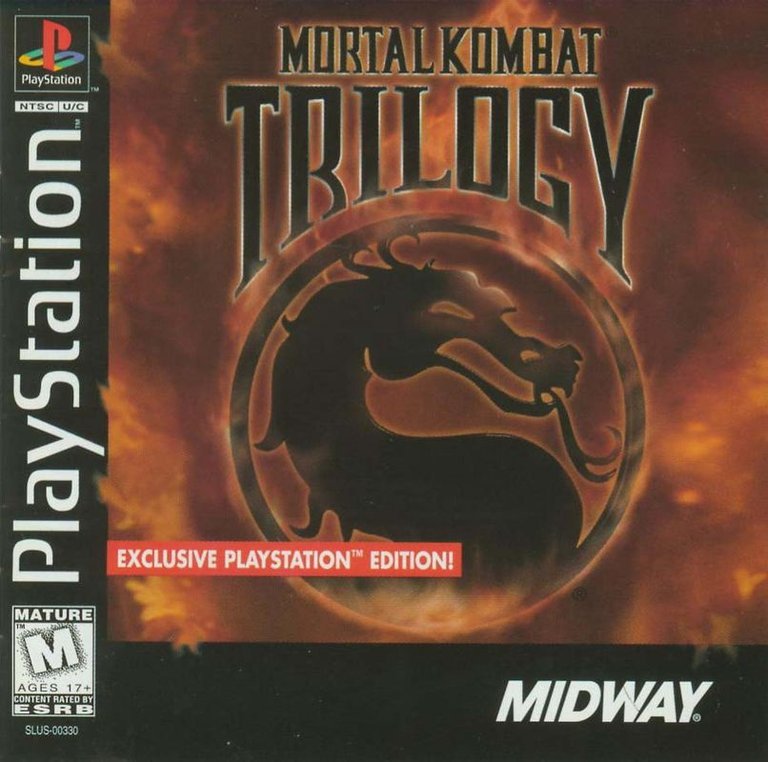
Mortal Kombat Trilogy is the ultimate compilation of the first three Mortal Kombat games, featuring over thirty playable characters from the series, each with unique fighting styles and special moves. The game introduces new features like the aggressor bar for enhanced combat and allows players to face off in one-on-one martial arts battles across various iconic stages. It also supports multiplayer via Windows IPX network, offering a definitive experience for fans of the franchise.
Gameplay Videos
Where to Buy Mortal Kombat Trilogy
PC
Mortal Kombat Trilogy Free Download
Mortal Kombat Trilogy Patches & Updates
Mortal Kombat Trilogy Mods
Mortal Kombat Trilogy Guides & Walkthroughs
Mortal Kombat Trilogy Reviews & Reception
ign.com (81/100): MORTAL KOMBAT TRILOGY brings the whole MORTAL KOMBAT universe to you. Die-hard fans of the series will go krazy over all-new finishing moves and a new secret character: Chameleon.
imdb.com (80/100): Mortal Kombat At It’s Best! Well after the disappoint many people have had with Mortal Kombat 3 that really brought the series down from missing a lot of characters from the previous Mortal Kombat Video Games we now have them all back in Mortal Kombat Trilogy and boy isn’t quite a treat that we can even play as the bosses too like Goro, Motaro, Kitaro and Shoa Kahn too!
Mortal Kombat Trilogy Cheats & Codes
PlayStation (PS1)
Enter codes at the main menu or character select screen.
| Code | Effect |
|---|---|
| Back + High Punch + High Kick + Run + Block | Play as Chameleon |
| Up + R1 + R2 + L1 + L2 | Secret Menu (One Button Fatalities, Instant Aggressor, Normal Boss Damage, Low Damage, Health Recovery) |
| Up + Start | Automatic Character Select (Noob Saibot for Player 1, Rain for Player 2) |
| Up + Start | Arena Select (Highlight Sonya) |
Nintendo 64 (N64)
Enter codes at the story screen or character select screen.
| Code | Effect |
|---|---|
| Back + High Punch + High Kick + Block + Run | Play as Human Smoke |
| C, Up, C, A, B, Down, C, Up, C, Forward, C | Play as Khameleon |
| Back + High Kick + Low Kick | Play as Motaro (Jade’s Desert) |
| Down + High Punch + Low Punch | Play as Shao Kahn (The Pit III) |
| Block, High Kick, Low Kick, Run, Low Punch, High Punch, High Punch, High Punch, Low Punch, Low Punch | Hidden Menus |
| Down, Down, Up, Up, Left, Left, Right, Right | Unlimited Continues |
Sega Saturn
Enter codes at the story screen or character select screen.
| Code | Effect |
|---|---|
| Up + Start | Stage Select (Highlight Sonya) |
| Up + Start | Random Fighter Select (Noob Saibot for Player 1, Rain for Player 2) |
| Down + Start | Endurance Mode (Highlight Kano) |
| Down (2), Up (2), Left (2), Right (2) | Unlimited Continues |
| Start | Play as Classic Characters (Highlight Kung Lao, Jax, Kano, or Rayden) |
| Left + Run + Block + High Punch + High Kick | Play as Chameleon (Player 1) |
| Right + Run + Block + High Punch + High Kick | Play as Chameleon (Player 2) |
| C, Right, A, Z, Y, C, Y, Right, A, X | Cheat Menu |
| Up + L + R | Green ‘?’ Box |
| HK, LK, Run, LP, HP, HP, HP, LP, LP | Red & Blue Question Boxes (Japanese Version) |
PC
Enter codes at the story screen or character select screen.
| Code | Effect |
|---|---|
| Up + Block + Run | Question mark menu |
| 7 or X | Classic characters (Highlight Jax, Kano, Kung Lao, or Raiden) |
| Up + Enter or Up + Z | Stage select (Highlight Sonya Blade) |
| Back + LP + HP | Fight as Chameleon (Choose any male ninja) |
| N | Debug coordinates |
| mkrtilw -f_1butt | One button endings (Command line) |
| mktrilw -instykill | Instant kill (Command line) |
| mktril.exe /treasure | Enable treasure chest (Command line) |
Mortal Kombat Trilogy: A Definitive Retrospective
Introduction
Few franchises in gaming history have left as indelible a mark as Mortal Kombat. With its visceral combat, controversial violence, and iconic characters, the series redefined the fighting game genre in the 1990s. Mortal Kombat Trilogy (1996) stands as a monumental compilation, attempting to encapsulate the essence of the first three games into a single, definitive package. Released during a transitional period for the franchise, Trilogy sought to bridge the gap between the 2D sprite-based era and the impending shift to 3D graphics. This review will dissect Mortal Kombat Trilogy in exhaustive detail, exploring its development, narrative, gameplay, reception, and enduring legacy.
Development History & Context
The Studio and Creators’ Vision
Mortal Kombat Trilogy was developed by Midway Games, Inc., under the creative direction of Ed Boon and John Tobias, the masterminds behind the original Mortal Kombat (1992). The game was conceived as an ambitious compilation, aiming to merge the rosters, stages, and mechanics of Mortal Kombat, Mortal Kombat II (1993), and Ultimate Mortal Kombat 3 (1995) into a single, cohesive experience. The vision was to create the ultimate Mortal Kombat game, offering fans an unparalleled roster of characters and a wealth of content.
Ed Boon, in a retrospective interview, revealed that the idea for Trilogy emerged from the desire to leverage the storage capacity of CD-based consoles like the PlayStation and Sega Saturn. The team saw an opportunity to include assets from the first two games, which had previously been limited by the arcade hardware’s constraints. The result was a game that boasted over 30 playable characters, a feat unprecedented in the fighting game genre at the time.
Technological Constraints and Innovations
The development of Mortal Kombat Trilogy was shaped by the technological limitations and capabilities of the platforms it targeted. The PlayStation, Nintendo 64, and Sega Saturn each presented unique challenges:
-
PlayStation: The CD-ROM format allowed for high-quality audio and a vast amount of data, but the system’s 2D capabilities were limited compared to its 3D prowess. The PlayStation version of Trilogy suffered from noticeable load times, particularly when morphing as Shang Tsung, a issue that plagued the game’s reception.
-
Nintendo 64: The cartridge-based system offered faster load times and superior 3D graphics, but its limited storage capacity forced the developers to make significant cuts. The N64 version lacked several characters and stages present in the CD-based versions, and the audio quality was notably inferior.
-
Sega Saturn: Known for its 2D capabilities, the Saturn was well-suited for Trilogy‘s sprite-based graphics. However, the Saturn version arrived nearly a year after the PlayStation and N64 releases, diminishing its impact.
Despite these challenges, Trilogy introduced several innovations. The “Aggressor” bar, a new mechanic that temporarily enhanced a character’s speed and damage output when filled, added a strategic layer to the combat. The game also introduced “Brutalities,” a new type of finishing move that involved rapidly attacking the opponent until they exploded. These additions were designed to refresh the gameplay and provide fans with new mechanics to master.
The Gaming Landscape of 1996
The mid-1990s were a pivotal period for the fighting game genre. Street Fighter II (1991) had set the standard, and titles like Tekken (1994) and Virtua Fighter (1993) were pushing the boundaries of 3D combat. Mortal Kombat had carved its niche with its digitized sprites and over-the-top violence, but the genre was evolving rapidly.
Mortal Kombat Trilogy arrived at a time when the franchise was at a crossroads. Ultimate Mortal Kombat 3 had been a commercial success, but critics and fans were beginning to question the series’ reliance on gore and its lack of innovation. The fighting game market was becoming saturated, and Trilogy faced stiff competition from titles like Tekken 2 (1995) and Street Fighter Alpha 2 (1996).
Narrative & Thematic Deep Dive
The Plot and Characters
Mortal Kombat Trilogy does not introduce a new narrative but instead compiles the stories and characters from the first three games. The plot revolves around the eponymous Mortal Kombat tournament, a mystical competition that determines the fate of the realms. The game’s story mode follows the events of Mortal Kombat 3, where Shao Kahn, the tyrannical emperor of Outworld, seeks to merge Earthrealm with his domain through the tournament.
The game’s roster is a who’s who of Mortal Kombat icons, including:
- Liu Kang: The Shaolin monk and champion of Earthrealm.
- Scorpion: The vengeful specter seeking retribution for the death of his family and clan.
- Sub-Zero: The Lin Kuei assassin with a complex moral code.
- Raiden: The God of Thunder and protector of Earthrealm.
- Shao Kahn: The primary antagonist, seeking to conquer all realms.
Trilogy also includes characters from the first two games, such as Johnny Cage, Sonya Blade, and Kano, as well as bosses like Goro, Kintaro, and Motaro. The inclusion of these characters allows players to experience matchups that were previously impossible, such as pitting the original Mortal Kombat version of Liu Kang against his Mortal Kombat 3 counterpart.
Themes and Dialogue
The Mortal Kombat series has always been steeped in themes of vengeance, honor, and the struggle between good and evil. Trilogy amplifies these themes by bringing together characters from across the series’ history, each with their own motivations and backstories.
-
Vengeance: Scorpion’s quest for revenge against Sub-Zero (and later Quan Chi) is a central narrative thread. The game’s story mode and character endings explore the consequences of vengeance and the cycle of violence it perpetuates.
-
Honor and Duty: Characters like Liu Kang and Raiden embody the ideals of honor and duty. Liu Kang’s journey from a humble Shaolin monk to the champion of Earthrealm is a testament to his unwavering commitment to protecting his realm.
-
Power and Corruption: Shao Kahn’s lust for power and his willingness to manipulate others to achieve his goals highlight the corrupting influence of absolute power. The game’s narrative explores the lengths to which individuals will go to gain and maintain power.
The dialogue in Mortal Kombat Trilogy is minimal, as the series has never been known for its deep storytelling. However, the game’s character endings and the occasional in-game quips provide insight into the characters’ personalities and motivations. The iconic “Finish Him/Her” and “Fatality” announcements remain a staple of the series, adding to the game’s over-the-top tone.
Gameplay Mechanics & Systems
Core Gameplay Loop
At its core, Mortal Kombat Trilogy is a one-on-one fighting game that retains the mechanics of its predecessors. Players select a character and engage in combat against an opponent, using a combination of basic attacks, special moves, and finishing moves to emerge victorious. The game’s controls are straightforward, with a high punch, low punch, high kick, and low kick button, as well as a block and run button.
The game’s combat is fast-paced and brutal, with an emphasis on combos and special moves. Each character has a unique moveset, allowing for a variety of playstyles. The inclusion of the “Aggressor” bar adds a strategic element, rewarding aggressive play with temporary enhancements.
Combat and Character Progression
Mortal Kombat Trilogy features a deep combat system that rewards mastery of each character’s moveset. The game’s combo system allows players to chain together attacks for devastating results, and the inclusion of special moves adds variety to the combat.
The game’s character progression is limited to unlocking hidden characters and stages. Unlike modern fighting games, Trilogy does not feature a robust single-player campaign or a progression system that rewards players with new abilities or customization options. Instead, the game’s appeal lies in its vast roster and the sheer variety of matchups it offers.
UI and Innovative Systems
The game’s user interface is functional but unremarkable. The character select screen is straightforward, with players choosing from a grid of portraits. The game’s options menu allows players to adjust the difficulty, toggle blood and gore, and customize the controls.
One of the game’s most innovative features is the “Aggressor” bar, which fills as the player lands attacks. Once filled, the bar grants the character a temporary boost in speed and damage output, encouraging aggressive play. The game also introduces “Brutalities,” a new type of finishing move that involves rapidly attacking the opponent until they explode. These additions were designed to refresh the gameplay and provide fans with new mechanics to master.
Flawed Systems
Despite its innovations, Mortal Kombat Trilogy is not without its flaws. The game’s AI can be overly aggressive and cheap, particularly in the higher difficulty settings. The PlayStation version suffers from noticeable load times, which can disrupt the flow of combat. The Nintendo 64 version, while faster, lacks several characters and stages, and the audio quality is notably inferior.
The game’s combo system can also be exploitative, with certain characters capable of performing infinite combos that can quickly deplete an opponent’s health. These issues, while not game-breaking, detract from the overall experience.
World-Building, Art & Sound
Setting and Atmosphere
Mortal Kombat Trilogy takes place across a variety of stages, each with its own unique atmosphere. The game’s stages are drawn from the first three Mortal Kombat games, including iconic locations like the Courtyard, Goro’s Lair, and The Pit. Each stage is richly detailed, with interactive elements and environmental hazards that add depth to the combat.
The game’s atmosphere is dark and gritty, with a focus on the supernatural and the macabre. The stages are filled with eerie details, from the skeletal remains in The Graveyard to the ominous thunderstorms in The Rooftop. The game’s visual direction reinforces its themes of violence and vengeance, creating a world that feels both dangerous and immersive.
Visual Direction
Mortal Kombat Trilogy retains the digitized sprite-based graphics of its predecessors, with each character rendered as a high-resolution photograph. The game’s visuals are a testament to the technology of the time, with detailed sprites and fluid animations. The inclusion of characters from the first two games required the developers to create new running animations for some characters, ensuring that they fit seamlessly into the game’s combat system.
The game’s visual direction is consistent with the series’ aesthetic, with a focus on realism and brutality. The character designs are iconic, with each fighter instantly recognizable. The game’s use of color is striking, with vibrant hues that contrast with the dark and gritty stages.
Sound Design
The sound design in Mortal Kombat Trilogy is a mixed bag. The game’s soundtrack features a blend of original compositions and tracks from the first three games. The PlayStation and Sega Saturn versions benefit from CD-quality audio, with high-quality music and voice acting. However, the Nintendo 64 version suffers from compressed audio, with muffled sound effects and distorted music.
The game’s voice acting is minimal but effective, with each character delivering iconic one-liners and battle cries. The announcer’s iconic “Finish Him/Her” and “Fatality” calls remain a highlight, adding to the game’s over-the-top tone.
Reception & Legacy
Critical and Commercial Reception
Mortal Kombat Trilogy received mixed to positive reviews upon release, with critics praising its vast roster and wealth of content but criticizing its technical limitations and lack of innovation. The game’s reception varied significantly depending on the platform:
-
PlayStation: The PlayStation version was praised for its responsive controls and large amount of content but criticized for its load times and unbalanced AI. GamePro called it “a must for any fighting gamer’s library,” while GameSpot noted that it was “the best Mortal Kombat yet.”
-
Nintendo 64: The Nintendo 64 version was praised for its faster load times and superior graphics but criticized for its lack of characters and stages. IGN called it “a faithful conversion of the arcade games,” while GameSpot noted that it was “conspicuously missing frames of animation.”
-
Sega Saturn: The Sega Saturn version received comparatively little attention, with Sega Saturn Magazine calling it “a superior MK Saturn offering that’s identical to the PlayStation version.”
Commercially, Mortal Kombat Trilogy was a success, selling over a million copies across all platforms. The game’s vast roster and wealth of content made it a must-have for fans of the series, and its inclusion of characters from the first three games ensured that it had broad appeal.
Evolution of Reputation
Over time, Mortal Kombat Trilogy has come to be seen as a flawed but ambitious compilation. While it is not regarded as the pinnacle of the series, it is remembered fondly for its vast roster and wealth of content. The game’s technical limitations, particularly on the Nintendo 64, have been criticized, but its innovations, such as the “Aggressor” bar and “Brutalities,” have been praised.
Influence on Subsequent Games and the Industry
Mortal Kombat Trilogy had a significant impact on the fighting game genre, demonstrating the appeal of compilation titles that bring together multiple games’ worth of content. The game’s vast roster and wealth of stages set a new standard for fighting games, and its innovations, such as the “Aggressor” bar, influenced subsequent titles in the series.
The game’s reception also highlighted the challenges of porting arcade games to home consoles, particularly in terms of load times and audio quality. The PlayStation version’s load times were a significant issue, and the Nintendo 64 version’s compressed audio was widely criticized. These challenges would inform the development of future Mortal Kombat games, particularly as the series transitioned to 3D graphics.
Conclusion
Mortal Kombat Trilogy is a flawed but ambitious compilation that sought to encapsulate the essence of the first three Mortal Kombat games into a single, definitive package. While it is not without its technical limitations and lack of innovation, the game’s vast roster and wealth of content make it a must-have for fans of the series.
The game’s reception was mixed, with critics praising its responsive controls and large amount of content but criticizing its load times and unbalanced AI. Commercially, Trilogy was a success, selling over a million copies across all platforms.
Mortal Kombat Trilogy stands as a testament to the ambition and creativity of the Mortal Kombat series. While it may not be the pinnacle of the franchise, it is a significant entry that demonstrates the appeal of compilation titles and the enduring popularity of the Mortal Kombat universe. For fans of the series, Trilogy remains a beloved and essential entry, offering a wealth of content and a vast roster of iconic characters.