
- Release Year: 2016
- Platforms: Windows
- Developer: Nauris Amatnieks
- Genre: Action
- Perspective: Side view
- Game Mode: Co-op, Single-player
- Gameplay: Platform
- Average Score: 69/100
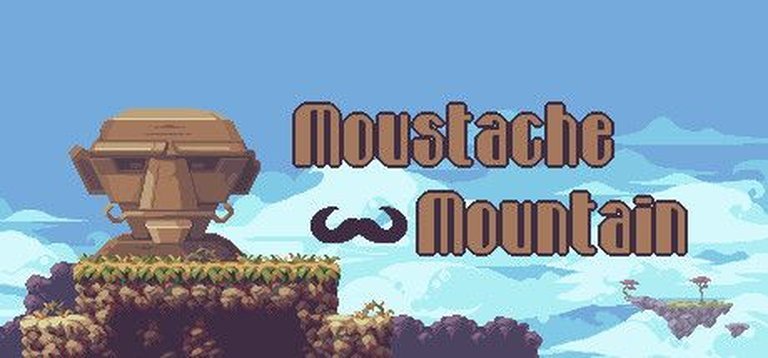
Description
Moustache Mountain is a side-scrolling platformer where players take on the role of a young moustache enthusiast embarking on a perilous quest to scale a trap-laden mountain and retrieve the legendary Moustache Gel, hidden atop by the last survivor of an ancient civilization that perfected the irresistible elixir. Featuring 15 increasingly difficult randomized levels with beautiful high-resolution pixel art, local co-op racing for up to two players, global leaderboards, and Steam achievements, every ascent offers unique challenges demanding precise jumping and environmental awareness.
Gameplay Videos
Where to Buy Moustache Mountain
PC
Moustache Mountain Reviews & Reception
steambase.io (72/100): Mostly Positive
store.steampowered.com (75/100): Mostly Positive
howlongtobeat.com (60/100): a fun little $2 time-killer
Moustache Mountain: Review
Introduction
Imagine scaling a treacherous, ever-shifting peak not for gold or glory, but for the ultimate mustache gel—a mythical elixir so potent it once nearly conquered the world through sheer facial charisma. This is the absurd, infectious premise of Moustache Mountain (2016), a solo-developed indie platformer that punches far above its modest $1.99 weight class. Released amid the mid-2010s Steam Greenlight boom, it has carved a niche as a “short, sweet” precision platformer for busy players craving bite-sized challenges. Though not a blockbuster, its cult appeal endures via global leaderboards and speedrunning feats shared on Steam. My thesis: Moustache Mountain exemplifies indie design at its purest—tight, replayable mechanics wrapped in humorous fantasy, proving that brevity and precision can outshine bloated epics in delivering pure platforming joy.
Development History & Context
Developed single-handedly by Latvian creator Nauris Amatnieks—a pixel artist and programmer credited on 16 other indie titles, including the similarly minimalist There Was a Caveman—Moustache Mountain emerged from Steam Greenlight in March 2016. Amatnieks handled everything: code, art, sound, and even post-launch support via Steam forums, where he fielded bug reports and feedback threads like “Can’t get past level 6” (highlighting wall-jump frustrations) and calls for workshop support or Russian localization.
The era’s technological constraints favored such solo projects. With minimal specs (Windows XP+, 512MB RAM, DirectX 9), it targeted low-end PCs, aligning with the post-Super Meat Boy indie wave emphasizing precision over spectacle. Steam’s ecosystem enabled features like achievements (15 total), trading cards, leaderboards, and Remote Play Together, boosting longevity without multiplayer servers. The 2016 landscape brimmed with roguelite platformers (Celeste precursors, Dead Cells vibes), but Moustache Mountain stood out via randomization and co-op racing, a nod to local multiplayer nostalgia amid rising online dominance. Amatnieks’ vision? A deliberate “time-killer” for parents or casuals, as reviewer Dirk Gently noted, countering the “40-hour AAA” grind with 2-3 hours of focused play.
Narrative & Thematic Deep Dive
At its core, Moustache Mountain spins a delightfully ridiculous legend: An ancient civilization crafts irresistible Moustache Gel, earning universal adoration until a plague spares only one survivor. He ascends “the highest flying mountain” to stash the last vial, dooming his legacy to obscurity. Enter the protagonist—a burly, mustachioed everyman, “Young Moustache Enthusiast”—driven by folklore to reclaim this world-altering pomade.
The plot unfolds implicitly across 15 single-screen levels, with no dialogue or cutscenes; environmental storytelling reigns. Hazards like spikes, arrow traps, and floor spears symbolize the guardian’s desperate defenses, turning ascent into a perilous invasion. Themes of perseverance shine through randomization—no two runs identical—forcing adaptation and skill-honing. Enthusiasm as folly underpins the humor: a macho climber bloodied by gore-splattered traps in pursuit of vanity. Subtle motifs of legacy and isolation echo the lone survivor’s plight, mirrored in solo climbs or co-op races. Player agency amplifies this; leaderboards immortalize top times, letting enthusiasts “conquer” via splits like 2:41 speedruns shared on Steam.
Critically, the narrative’s brevity enhances replayability, avoiding bloat while inviting headcanon. As one HowLongToBeat review quips, it’s a “fun little $2 time-killer,” where mustache mania satirizes gaming obsessions like achievement hunting.
Gameplay Mechanics & Systems
Moustache Mountain distills platforming to its essence: a side-scrolling climb through 15 tiers of escalating peril, each a fixed/flip-screen pulled randomly from presets (save the notorious Level 11). Core loop? Jump, survive, repeat—with three lives per run, lasting 3-5 minutes on success but hours via trial-and-error.
Movement is Spartan yet precise: left/right, variable-height jumps, wall-sliding/jumping (key for vertical cliffs), and momentum-based physics. Early levels dodge static spikes; mid-game adds player-triggered arrows; peaks unleash shifting blades and spears. Controls shine—responsive keyboard/gamepad input ensures “each death feels like your fault,” per SomeAwesome’s 7/10 review. UI is minimalist: timer for leaderboards/achievements, lives counter, no clutter. Randomization (e.g., trap layouts) demands pattern recognition, fostering mastery.
Progression is skill-gated, not gear-based—no upgrades, just muscle memory. Co-op (split-screen, 1-2P) enables races but feels “kind of meh,” per critiques, due to spotty wall mechanics and cramped screens.
Flaws persist: Wall-jumps occasionally “jank,” as Steam users lament (e.g., overhang bounces on Level 6), and no checkpoints amplify frustration. Innovations? Roguelite replay via randomization, plus Steam integration (stats, cards) for grindy replayability. Overall, a masterclass in deliberate shortness—perfect for “15-minute bites.”
| Mechanic | Strengths | Weaknesses |
|---|---|---|
| Jumping/Wall Mechanics | Tight, momentum-driven precision | Occasional unresponsiveness on edges/overhangs |
| Randomization | Infinite variety, skill focus | Predictability creeps in (finite presets) |
| Hazards | Escalating tension (spikes → spears) | Repetitive patterns after dozens of runs |
| Co-op/Leaderboards | Competitive fun, global rivalry | Split-screen feels tacked-on; no online |
World-Building, Art & Sound
The titular “flying mountain” is a vertical pixel-art gauntlet: craggy platforms, precarious ledges, and trap-riddled cliffs evoking a fantastical, perilous Everest. Visuals—high-res pixel art by Amatnieks—pop with clean, colorful palettes (vibrant reds/greens amid gore). Textures repeat (rocky motifs dominate), but fixed screens maintain focus, building claustrophobic tension. Atmosphere? Tense urgency, amplified by blood sprays and a summit glow symbolizing gel glory.
Sound design falters: Chiptune loops are “dreary boops and bops,” repetitive per reviews, lacking dynamism. No voicework or SFX variety; jumps/traps elicit basic thuds/pings. Yet, this retro austerity enhances immersion—like a NES climber stripped bare. Together, elements craft a cohesive, meme-worthy vibe: absurd fantasy meets brutal precision, where visuals charm and audio underscores grind.
Reception & Legacy
Launch reception was quietly positive: Steam’s “Mostly Positive” (75% of 107 reviews, 72/100 player score via Steambase), praising value (“worthy of your time if you like precise platforming”). MobyGames logs 70% (one critic), HowLongToBeat 60% (noting music woes). No Metacritic aggregate; it’s unranked elsewhere.
Commercially modest—collected by 14 MobyGames users, cheap sales ($0.81)—but community thrives: Steam hubs buzz with deathless speedruns (2:49 PB), bug fixes, and feedback. Legacy? A footnote in indie platformers, influencing none directly but embodying 2016’s “short game renaissance” amid Undertale/Celeste hype. Tags like “Roguelite,” “Precision Platformer” link it to Super Meat Boy heirs; speedrun videos preserve its niche. Evolving rep: From “not revelatory” to enduring cheap thrill, bolstered by Remote Play and sales.
Conclusion
Moustache Mountain is a pixel-perfect testament to indie ingenuity: Nauris Amatnieks’ absurd gel quest delivers tight platforming loops, randomization replayability, and co-op charm in under 300MB. Strengths—responsive controls, escalating mastery—outweigh gripes like repetitive audio and janky walls, cementing its place as a $2 gem for precision fans. In video game history, it joins the pantheon of bite-sized classics (Super Crate Box, early VVVVVV), reminding us shorter can satisfy. Verdict: 8/10—buy on sale, climb repeatedly, embrace the ‘stache. Essential for platformer historians seeking unpretentious purity.