
- Release Year: 2023
- Platforms: Atari VCS, Linux, Macintosh, Nintendo Switch, PlayStation 4, PlayStation 5, Windows, Xbox One, Xbox Series
- Publisher: Atari Interactive, Inc.
- Developer: Graphite Lab, LLC, Heavy Horse Games, LLC
- Genre: Action
- Perspective: Side view
- Game Mode: Single-player
- Gameplay: Platform, Precision
- Setting: Futuristic, Sci-fi
Description
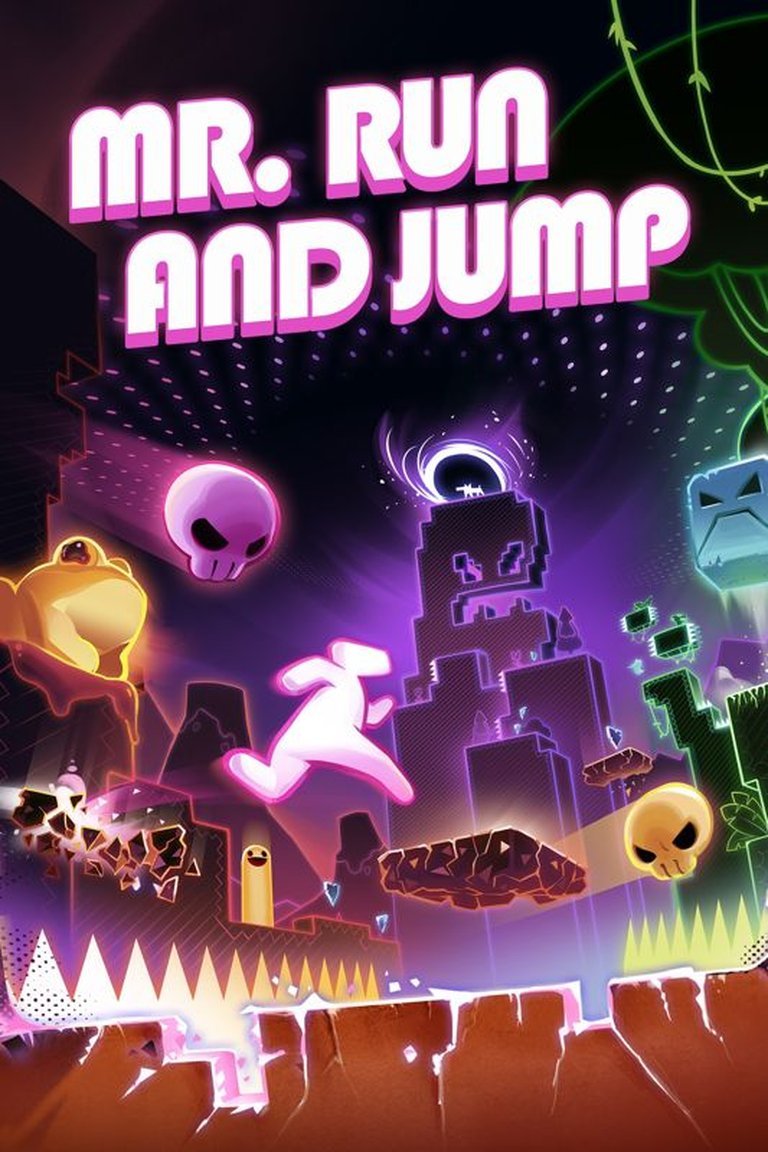
Mr. Run and Jump is a 2D side-scrolling platformer set in a sci-fi/futuristic world, featuring smooth mechanics that evolve from simple controls into complex and creative level designs. The game includes a main campaign and post-game content, released in 2023 across multiple platforms including Windows, PlayStation, Xbox, Nintendo Switch, and Atari VCS.
Gameplay Videos
Where to Buy Mr. Run and Jump
PC
Mr. Run and Jump Cracks & Fixes
Mr. Run and Jump Patches & Updates
Mr. Run and Jump Guides & Walkthroughs
Mr. Run and Jump Reviews & Reception
midlifegamergeek.com : It’s really harsh, and having to reach the end of a stage without making a single mistake is incredibly challenging, to say the least.
Mr. Run and Jump: A Masterclass in Precision Platforming and Retro Revival
Introduction
In an era saturated with photorealistic worlds and open epics, Mr. Run and Jump emerges as a defiant celebration of simplicity and nostalgia. Developed by Graphite Lab and Heavy Horse Games and published by Atari, this 2023 release is more than just a platformer—it is a bridge between eras. Born from a humble Atari 2600 homebrew project, it evolved into a modern neon-soaked odyssey that honors the golden age of arcade gaming while pushing contemporary design boundaries. This review will argue that Mr. Run and Jump excels as a meticulously crafted challenge, offering a sublime marriage of retro aesthetics and precision mechanics. Though its steep difficulty and limited content may deter some, it stands as a testament to Atari’s enduring legacy and the timeless appeal of pure, unadulterated platforming.
Development History & Context
Mr. Run and Jump traces its origins to a passion project by John Mikula, a senior programmer at St. Louis-based Graphite Lab. In 2021, Mikula created a homebrew game for the Atari 2600, aiming to craft a title that captured the essence of classic platformers while feeling distinct. The name—a playful nod to the era’s titles like Mr. Do!—and the character’s gender-neutral customization (male, female, or non-binary) reflected his vision of inclusive, back-to-basics fun. Atari, seeking to revitalize its brand, recognized the project’s potential and expanded it into a full modern release.
The studio’s vision was constrained by the 2600’s limitations (simplified controls, single-screen levels), but the modern adaptation leveraged the Unity engine to transcend these boundaries. John Mikula served as director, with a small team at Graphite Lab and Heavy Horse Games refining the concept into a neon-infused spectacle. Technologically, the game bridges two worlds: the 2600 version features monochrome visuals, joystick-only movement, and a countdown timer, while the modern release introduces fluid animations, dynamic soundscapes, and complex level design.
The 2023 gaming landscape was ripe for such a title. Atari was actively reinventing itself through initiatives like the Recharged series and acquisitions (e.g., MobyGames), targeting both nostalgic veterans and new players. Mr. Run and Jump launched across ten platforms—including PC, consoles, and the Atari VCS—on July 25, 2023, solidifying Atari’s commitment to bridging retro and modern experiences. This dual-release strategy underscored the game’s unique position: a sequel of sorts to its 2600 ancestor, yet a standalone triumph in its own right.
Narrative & Thematic Deep Dive
Mr. Run and Jump’s narrative is lean, serving as a thematic scaffold for its gameplay. The story begins with a deceptively simple premise: Mr. Run’s dog, Leap, spots a mysterious anomaly and dashes away, leading the duo into a vortex that transports them to the “Realms of Color.” Here, they must defeat the encroaching Void—a consuming darkness threatening to erase the world—and rescue Leap. The plot is intentionally minimal, echoing the storytelling brevity of Atari classics like Yars’ Revenge. Dialogue is sparse, with occasional quips from Mr. Watch and Learn, an eyeball companion who provides tutorials, adding a touch of whimsy without overwhelming the action.
Thematically, the game explores nostalgia and perseverance. The Realms of Color—violet, blue, green, yellow, red, and dark—symbolize both the vibrancy of life and the encroaching Void, creating a metaphor for preservation against entropy. Mr. Run’s journey mirrors the player’s own: a relentless pursuit of mastery through repeated failure. The dog, Leap, embodies loyalty and the emotional stakes beneath the challenge, transforming abstract levels into a personal quest. This blend of simplicity and thematic depth ensures the story never overshadows the gameplay yet provides enough context to invest players in the struggle against the Void.
Gameplay Mechanics & Systems
Mr. Run and Jump’s core is a ballet of precision. Players control Mr. Run with two buttons, executing a fluid array of moves: running, jumping, double-jumping, wall-jumping, diving, rolling, and high/long jumps. Critically, all abilities are unlocked from the start, though they are introduced organically as the game demands. This design encourages experimentation, letting players discover combos (e.g., wall-jumping into a dive) without gating progression.
The gameplay loop revolves around traversing 20 levels across six realms, each introducing escalating hazards. Enemies range from rhythmic piston-like creatures to skull-spitting turrets, demanding meticulous timing. Combat is avoidance-based, with instant death on contact, respawning players at the start of the room. This unforgiving nature is balanced by “Dynamic Assistance”: after repeated deaths, invincibility stars or checkpoint flags may appear, adjustable via settings (frequent, occasional, or off). This system—praised by critics like Touch Arcade for its “cruel but fair” design—ensures accessibility without compromising the game’s soul.
Character progression is skill-based, not stat-driven. Collecting 120 Orbs per realm repairs the “Shattered Orb,” unlocking the final level. Time Trials add replayability, though branching paths are minimal. Controls, however, are a point of contention. The two-button scheme maps multiple actions (crouch, roll) to one button, leading to “non-intentional ice physics” (Shacknews). Despite this, the physics feel responsive, akin to Celeste, rewarding precision with exhilarating flow.
World-Building, Art & Sound
The Realms of Color are a visual feast, each themed around a single hue. Violet’s dreamy pastels give way to Blue’s industrial grit, then Green’s jungle canopies and Yellow’s desert expanses. The art direction marries retro minimalism with modern neon aesthetics—inspired by Atari’s Recharged series—creating a “psychedelic” glow (NextGen Player). Enemies, like the Montezuma’s Revenge-esque skulls or LocoRoco-like pistons, evoke classic sprites while feeling fresh in their neon-painted environments.
Sound design amplifies the atmosphere. Composed by Fat Bard and Andrew P. Masson, the soundtrack shifts per realm: Violet’s laid-back chiptunes escalate to Yellow’s frantic beats. Sound effects—skull pops, dive splashes—are crisp and retro, syncing with enemy movements. Critics like Game Informer noted how music “set the tone,” while PSX Brasil praised the “retro-inspired” audio as “pleasantly unobtrusive.” This cohesive audio-visual package transforms platforming into a visceral, synesthetic experience, where every jump and dodge feels in harmony with its world.
Reception & Legacy
At launch, Mr. Run and Jump received “generally favorable” reviews (78% on Metacritic, 80% on OpenCritic). Critics lauded its precision platforming (GameGrin: “smooth and complex”), art, and nostalgia. Game Informer celebrated the “shouting in triumph” of overcoming challenges, while Touch Arcade deemed it a “very well made” cruelty. However, its difficulty divided audiences; GameZebo criticized it as a “cheap cop out” for speedrunners only, and Shacknews lamented controls turning levels into “chores.” Commercially, the game was moderately successful, buoyed by Atari’s marketing and its multi-platform release.
Its legacy is twofold. As a modern title, it revitalized the challenging platformer genre, praised for its accessibility options and fluid mechanics. As a retro artifact, the 2600 version—featuring seven single-screen levels and a countdown timer—marked Atari’s first new cartridge since 1990, celebrated by outlets like Midlife Gamer Geek as a “cool way to check out original hardware.” Influences are seen in games like RollerCoaster Tycoon Story (shared developers), and it stands alongside Atari’s Recharged series as part of its brand renaissance. For many, it remains a benchmark for retro-inspired design, proving that “simple” can still mean “timeless.”
Conclusion
Mr. Run and Jump is a dichotomy: a punishingly difficult yet supremely satisfying platformer that wears its nostalgia on its neon sleeve. Graphite Lab and Atari have crafted a game that honors the past without being enslaved by it, blending the Atari 2600’s spirit with modern polish. Its precision mechanics, art direction, and dynamic assistance system create an experience that is both brutally honest and deeply rewarding. While the two-button controls and repetitive structure may frustrate, the game’s core—a celebration of mastery through perseverance—resonates powerfully.
In the pantheon of platformers, Mr. Run and Jump earns its place as a modern classic. It may not redefine the genre, but it refines it, proving that the joy of running and jumping remains as potent as ever. For those willing to embrace its challenge, it offers an odyssey that is as nostalgic as it is innovative. As Digital Chumps aptly noted, it is a “phenomenal tip of the hat” to an era, and for Atari, it is a bold step into the future. Ultimately, Mr. Run and Jump leaps beyond mere tribute—it lands as a testament to the enduring magic of pixel-perfect platforming.