
- Release Year: 1998
- Platforms: PlayStation 3, PlayStation, PS Vita, PSP, Windows
- Publisher: GungHo Online Entertainment, Inc., KSS
- Developer: Mediamuse
- Genre: Action, Simulation, Wilderness survival
- Perspective: Top-down
- Game Mode: Single-player
- Gameplay: Action RPG, Crafting, Real-time, Survival
- Setting: Island
Description
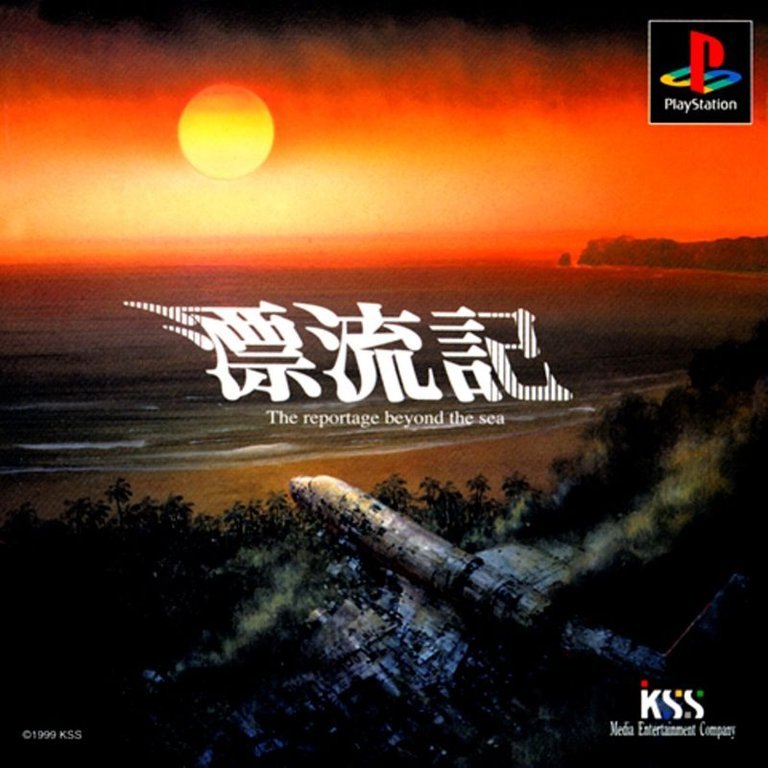
Mujintō Monogatari 4 is a survival life simulation game that retells the story of the original, where a child survives a plane crash and finds themselves on a deserted island with another survivor. Players must manage resources like water, food, and materials while crafting tools and exploring the island. The game introduces action RPG elements, allowing players to control multiple characters and engage in real-time combat and exploration.
Mujintō Monogatari 4: A Forgotten Experiment in Survival RPG Hybridity
Introduction
In the late 1990s, as Japanese developers flirted with genre-blending experiments, Mujintō Monogatari 4 emerged as a curious oddity: a survival simulation reimagined as an action RPG. Released in 1998 by Mediamuse and KSS, this fourth entry in the cult Mujintō Monogatari series aimed to modernize its desert-island premise with mouse-driven mechanics and dynamic character progression. While its ambitions were laudable, the game’s legacy remains shrouded in obscurity—a relic of Japan’s PC gaming underground. This review argues that Mujintō Monogatari 4 is a fascinating, albeit flawed, artifact that foreshadowed the survival RPG boom of the 2010s while struggling to reconcile its simulation roots with action-oriented design.
Development History & Context
The Studio & Vision
Developed by Mediamuse, a now-defunct studio with ties to niche Japanese PC titles, and published by KSS (known for anime-adjacent games like Tokimeki Memorial), Mujintō Monogatari 4 was helmed by director Takahiro Shimose and scenario writer Makoto Katsube. The team sought to reinvent the series’ survival formula for the Windows era, pivoting from the slower-paced management of earlier entries to a real-time, action-heavy structure.
Technological Constraints
The late ’90s PC gaming landscape in Japan was defined by CD-ROM limitations and the rising dominance of consoles. Mujintō Monogatari 4’s mouse-driven interface reflected the era’s embrace of point-and-click adventuring, but its top-down perspective and sprite-based art were conservative compared to 3D pioneers like Final Fantasy VII. The game’s focus on emergent character stats—a proto-“immersive sim” touch—clashed with the hardware’s inability to support complex AI or physics systems, resulting in repetitive tasks.
Gaming Landscape
Survival games were still a niche concept in 1998, with titles like Robinson’s Requiem and the nascent Harvest Moon series exploring related themes. By merging survival mechanics with RPG progression, Mujintō Monogatari 4 anticipated later hybrids like Don’t Starve but lacked the polish to stand alongside contemporaries such as Metal Gear Solid or Resident Evil.
Narrative & Thematic Deep Dive
Plot & Characters
The game opens with a plane crash that strands a child protagonist and a growing ensemble of survivors on a mysterious island. Unlike the first game’s straightforward setup, Mujintō Monogatari 4 introduces three unique pairs of characters—each with distinct stats and implied backstories—who can be swapped to explore different areas. Relationships are minimal, but subtle dialogue hints at tensions over resource scarcity, echoing themes of cooperation vs. individualism.
Themes
Survival here is both literal and existential. Gathering water and food becomes a Sisyphean task, mirroring Japanese post-bubble economic anxieties. The abandoned cabin and scattered tools evoke Lord of the Flies-style decay, while the island’s topography—lush yet hostile—symbolizes nature’s indifference. Notably, the child protagonist’s resilience contrasts with adult survivors’ fragility, suggesting a commentary on innocence’s adaptability.
Gameplay Mechanics & Systems
Core Loop
Players juggle real-time survival tasks—collecting materials, crafting tools, fending off wildlife—while managing character stats like stamina and morale. Double-clicking items or enemies with the mouse initiates actions, but the system feels unwieldy during combat, where timing is critical.
Innovations & Flaws
- Dynamic Progression: Characters’ stats shift based on activities (e.g., foraging boosts endurance, while crafting improves intelligence). This “organic” leveling system was ahead of its time.
- Multi-Character Control: Managing three pairs of survivors adds strategic depth but exacerbates menu clutter.
- UI Issues: The top-down view obscures environmental details, and the lack of tooltips frustrates newcomers.
Combat & Crafting
Combat is rudimentary, requiring players to spam clicks on enemies like wild boars. Crafting, however, is satisfyingly granular: building a fire demands specific wood types, while repairing the cabin unlocks new narrative beats.
World-Building, Art & Sound
Visual Design
Shigeo Satō’s anime/manga-inspired character designs and event illustrations lend charm, but the environments—while colorful—feel sparse. The top-down perspective limits immersion, though the cabin’s cluttered interior subtly tells a story of prior inhabitants.
Atmosphere & Sound
Composer Satoshi Sato’s ambient tracks mix eerie synths with tropical motifs, heightening the isolation. The crash’s cacophonous opening contrasts with the island’s eerie quietude, reinforcing the narrative’s emotional whiplash.
Reception & Legacy
Initial Reception
No contemporary critic reviews are archived, suggesting minimal marketing push. However, its multiple re-releases—including PlayStation (1999), PSP (2011), and PS Vita (2018)—hint at cult appeal.
Modern Reappraisal
As abandonware, Mujintō Monogatari 4 is now prized by retro enthusiasts for its experimental systems. Its DNA can be traced to The Forest and Stranded Deep, though its lack of polish limits broader recognition.
Conclusion
Mujintō Monogatari 4 is a time capsule of late-’90s ambition—a game straining against its technical limits to pioneer a genre hybrid that wouldn’t flourish for another decade. While its clunky controls and repetitive loops undermine its vision, the game’s stat-driven survival mechanics and thematic depth deserve recognition. For historians, it’s a vital footnote; for players, a fascinating curio. In the pantheon of forgotten gems, Mujintō Monogatari 4 occupies a lonely but provocative island of its own.