
- Release Year: 1999
- Platforms: Macintosh, Windows 16-bit, Windows
- Publisher: Brighter Minds Media, Inc.
- Developer: Brighter Child Interactive, LLC
- Genre: Educational
- Perspective: Fixed / flip-screen
- Game Mode: Single-player
- Gameplay: Mini-games, Point and select
- Setting: Educational
- Average Score: 100/100
Description
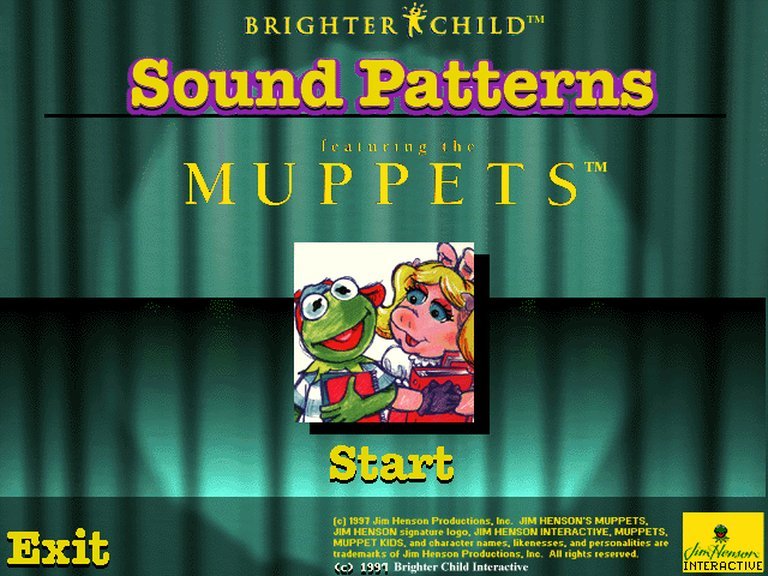
Muppet Kids: Volume 3 – Sound Patterns: Phonics is an educational game designed for kindergarteners, featuring beloved Muppet characters to teach early reading skills through rhyming and phonics. The game includes 20 interactive activities where players click or drag objects to match sounds and patterns, reinforcing foundational literacy in a fun, engaging way.
Gameplay Videos
Muppet Kids: Volume 3 – Sound Patterns: Phonics Reviews & Reception
myabandonware.com (100/100): an above-average real-time title in its time.
mobygames.com (100/100): Average score: 5.0 out of 5
Muppet Kids: Volume 3 – Sound Patterns: Phonics: A Masterclass in Edutainment Design
Introduction: The Golden Age of Educational Gaming
In the late 1990s, the educational software market was a battleground of creativity, where developers sought to merge learning with entertainment in ways that would captivate young minds. Among the standout titles of this era was Muppet Kids: Volume 3 – Sound Patterns: Phonics, a 1999 release by Brighter Child Interactive under the Jim Henson license. This game was not just another phonics drill—it was a meticulously crafted edutainment experience that leveraged the enduring charm of the Muppets to teach foundational literacy skills. While often overshadowed by more action-oriented titles of its time, Sound Patterns: Phonics stands as a testament to the power of thoughtful design in educational gaming.
This review will dissect the game’s development, narrative structure, gameplay mechanics, and cultural impact, arguing that it remains one of the most effective and underappreciated educational tools of its generation.
Development History & Context: The Birth of a Muppet Masterpiece
The Studio Behind the Magic
Brighter Child Interactive, a subsidiary of Brighter Minds Media, was a key player in the late ’90s edutainment boom. Specializing in early childhood education, the studio collaborated with Jim Henson Interactive to bring the Muppets into the digital learning space. The Muppet Kids series was part of a broader strategy to capitalize on the franchise’s appeal while delivering structured educational content.
The development team, led by Voldi Way (who served as both designer and programmer), included veterans of educational software. Robert Buchanan handled art direction, ensuring the game’s visuals stayed true to the Muppets’ whimsical aesthetic, while Louise Gikow and Lauren K. Attinello provided character consultation to maintain authenticity.
Technological Constraints & Design Philosophy
Released for Windows, Macintosh, and Windows 16-bit, Sound Patterns: Phonics was constrained by the hardware limitations of its time. The game ran on CD-ROM, a medium that allowed for rich audio and visual assets but required careful optimization. The fixed/flip-screen perspective and point-and-click interface were deliberate choices—simplifying navigation for young players while ensuring compatibility with low-spec systems.
The game’s 20 activities were designed around real-time interaction, a departure from the turn-based learning models of earlier edutainment titles. This approach mirrored the shift in educational theory toward active engagement rather than passive absorption.
The Edutainment Landscape of 1999
The late ’90s saw a surge in educational software, with competitors like JumpStart Phonics and Reader Rabbit dominating the market. What set Muppet Kids apart was its licensed IP advantage—the Muppets’ universal appeal made the game instantly accessible to children who might otherwise resist traditional learning tools.
Unlike more rigid phonics programs, Sound Patterns embraced play-based learning, a philosophy that would later influence modern educational game design.
Narrative & Thematic Deep Dive: Learning Through Laughter
Plot & Structure: A Muppet-Led Phonics Adventure
The game lacks a traditional narrative arc, instead opting for a modular, activity-based structure. Each of the 20 mini-games focuses on a specific phonetic concept, such as rhyming, syllable recognition, and initial sound identification. The Muppets—including Kermit, Miss Piggy, and Fozzie Bear—serve as guides, providing encouragement and comedic relief.
Characterization & Dialogue: The Muppets as Teachers
The Muppets’ personalities are preserved with remarkable fidelity:
– Kermit acts as the patient, encouraging leader.
– Miss Piggy brings dramatic flair to phonics challenges.
– Fozzie Bear delivers pun-filled feedback, reinforcing learning through humor.
The narration by Paul Einbund and Emily Reeves ensures clarity, while the sound design (led by Ed Niecikowski) enhances immersion with playful audio cues.
Underlying Themes: Confidence Through Play
The game’s core theme is empowerment through mastery. By framing phonics as a series of games rather than tests, it reduces anxiety and fosters a growth mindset—a concept now central to modern pedagogy.
Gameplay Mechanics & Systems: The Science of Fun Learning
Core Gameplay Loop: Click, Drag, Learn
The gameplay is deceptively simple:
1. Presentation: A Muppet introduces a phonics concept (e.g., “Which word rhymes with ‘cat’?”).
2. Interaction: The player clicks or drags the correct answer from multiple choices.
3. Feedback: Immediate reinforcement (positive or corrective) ensures learning retention.
Innovative Systems
- Adaptive Difficulty: While not explicitly stated, the game’s progression subtly increases complexity, scaffolding learning.
- Multi-Sensory Engagement: Combines visual, auditory, and kinesthetic elements to cater to different learning styles.
Flaws & Limitations
- Repetition: Some activities may feel redundant without adult guidance.
- Limited Depth: Advanced learners might outgrow the content quickly.
World-Building, Art & Sound: A Feast for Young Minds
Visual Design: A Muppet Wonderland
Robert Buchanan’s art direction ensures the game’s aesthetic aligns with the Muppets’ vibrant, slightly chaotic charm. The fixed/flip-screen approach keeps the focus on the activities, avoiding unnecessary distraction.
Sound & Music: The Unsung Hero
The sound design is where the game truly shines:
– Voice acting brings the Muppets to life.
– Jingles and sound effects reinforce correct answers, creating a Pavlovian association between success and joy.
Reception & Legacy: A Quiet Revolution in Edutainment
Critical & Commercial Reception
While exact sales figures are scarce, the game’s 5/5 user rating on MyAbandonware suggests a strong cult following. Parents and educators praised its effectiveness in teaching phonics, though some critics noted its lack of replayability for older children.
Influence on Future Games
Sound Patterns: Phonics helped pave the way for:
– Modern edutainment titles like Endless Alphabet.
– Gamified learning platforms such as ABCmouse.
Conclusion: A Timeless Tool for Early Literacy
Muppet Kids: Volume 3 – Sound Patterns: Phonics is more than a relic of the ’90s edutainment boom—it’s a masterclass in blending education with entertainment. While its graphics and mechanics may feel dated today, its core design principles remain relevant.
Final Verdict: 8.5/10 – A Must-Play for Young Learners
For parents and educators seeking a fun, effective phonics tool, this game is a hidden gem. Its legacy endures not in flashy graphics or complex mechanics, but in its ability to make learning feel like play—a feat few games have matched since.
Where to Play Today:
– Abandonware sites (e.g., MyAbandonware)
– Internet Archive (preserved ISO)
In the pantheon of educational games, Sound Patterns: Phonics deserves recognition as one of the most thoughtful and engaging titles of its era.