
- Release Year: 1995
- Platforms: Macintosh, Windows 16-bit, Windows
- Publisher: Nordic Softsales AB, WSOY Multimedia
- Developer: Bullhead AB, Norsk Strek AS
- Genre: Adventure
- Perspective: 3rd-person (Other)
- Game Mode: Single-player
- Gameplay: Hide and Seek, Point and click
- Setting: Moominhouse
Description
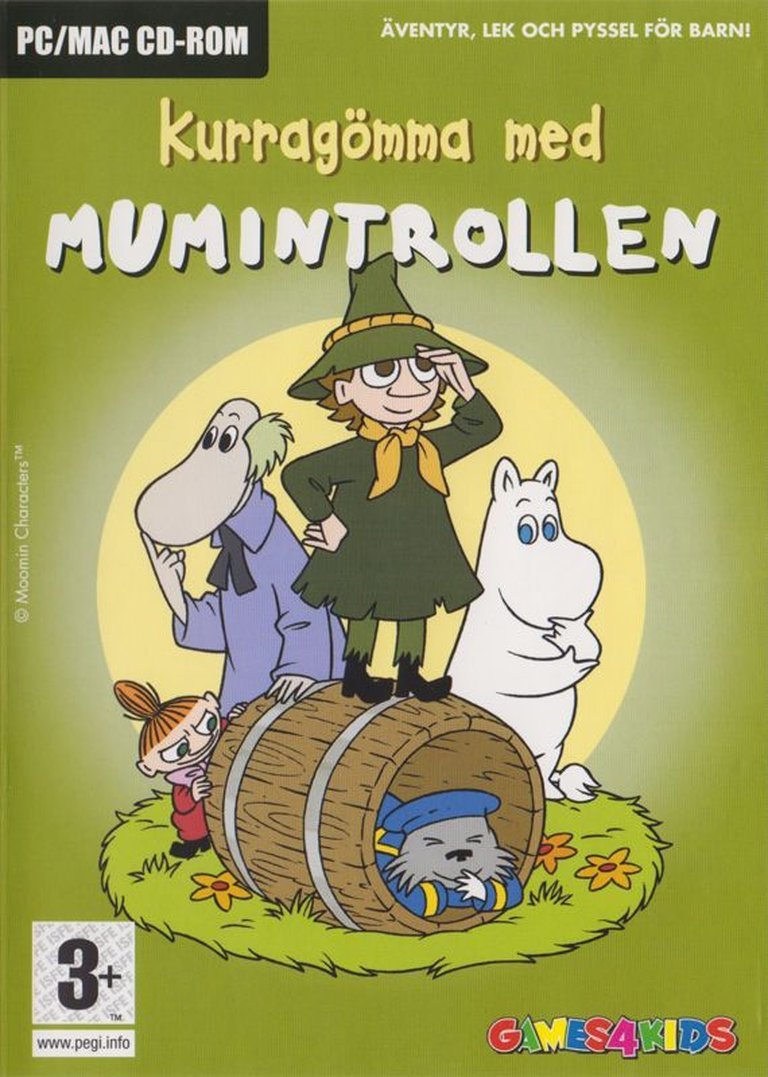
Muumit piilosilla is the first installment in the Moomin game series, released in 1995. Set in the whimsical Moominhouse, players embark on a 3rd-person point-and-select adventure to locate a mischievous character called Nibling (known as Klippdassen in Swedish and Tahmatassu in Finnish), who is hiding somewhere in the house while playing hide-and-seek with the beloved Moomin Trolls. The game centers on exploration and discovery within the iconic Moomin universe.
Gameplay Videos
Muumit piilosilla: Review
In the pantheon of video games inspired by beloved literary franchises, “Muumit piilosilla” stands as a unique and charming entry. Released in 1995, this point-and-click adventure game invites players into the whimsical world of the Moomins, a series of books created by Tove Jansson. The game’s legacy is one of nostalgia and simplicity, offering a glimpse into the early days of digital storytelling. This review will delve into the development history, narrative themes, gameplay mechanics, world-building, critical reception, and the enduring legacy of “Muumit piilosilla.”
Introduction
“Muumit piilosilla” is a hidden gem in the annals of video game history, a game that captures the essence of the Moomin universe with a blend of simplicity and charm. Developed by Bullhead AB and Norsk Strek AS, this point-and-click adventure game was released in 1995, a time when the gaming landscape was rapidly evolving. The game’s legacy lies in its ability to transport players into the enchanting world of the Moomins, where the simple joy of exploration and discovery reigns supreme. This review aims to provide an in-depth analysis of “Muumit piilosilla,” examining its development history, narrative depth, gameplay mechanics, and enduring impact on the gaming industry.
Development History & Context
The Studio and Creators’ Vision
“Muumit piilosilla” was developed by Bullhead AB and Norsk Strek AS, two studios that collaborated to bring the Moomin universe to life in digital form. The creators’ vision was to capture the whimsical and heartwarming spirit of Tove Jansson’s books, translating it into an interactive experience that would appeal to both children and adults. The game’s development was a labor of love, with a team of 22 individuals contributing to various aspects of the project, from animation and graphics to programming and sound production.
Technological Constraints of the Era
The mid-1990s was a time of significant technological advancement in the gaming industry. “Muumit piilosilla” was released on CD-ROM, a medium that allowed for higher-quality graphics and sound compared to earlier formats. The game’s 3D graphics and point-and-click interface were cutting-edge for the time, providing a more immersive experience than many of its contemporaries. However, the technological constraints of the era meant that the game’s visuals and mechanics were relatively simple by today’s standards.
The Gaming Landscape
In 1995, the gaming landscape was dominated by a mix of console and PC games. Point-and-click adventure games were particularly popular, with titles like “Myst” and “The Secret of Monkey Island” setting the standard for the genre. “Muumit piilosilla” entered this competitive market with a unique selling proposition: its charming and whimsical narrative, based on the beloved Moomin books. The game’s release was timed to capitalize on the growing interest in adventure games, offering players a fresh and engaging experience.
Narrative & Thematic Deep Dive
Plot
“Muumit piilosilla” translates to “Moomins Play Hide-and-Seek” in English. The game’s plot is simple yet engaging: players must find a character called Nibling (Klippdassen in Swedish and Tahmatassu in Finnish) who is playing hide-and-seek in Moominhouse. The game consists of nine mostly static screens, or rooms, where the player must click around to locate Nibling. Once found, Nibling runs away, and the player must find him again in a new room. This cycle continues, with each room offering new challenges and discoveries.
Characters
The game features a cast of characters from the Moomin universe, each with their unique personalities and quirks. The Moomin family, including Moominpappa, Moominmamma, and Little My, are central to the story. Other characters, such as Snufkin, Hemulen, and the Hattifatteners, make appearances, adding depth and charm to the narrative. The characters are brought to life through expressive animations and voice acting, enhancing the game’s immersive experience.
Dialogue
The dialogue in “Muumit piilosilla” is minimal, with characters communicating primarily through actions and expressions. This approach is consistent with the Moomin books, where the focus is on the characters’ interactions and the world around them rather than on lengthy conversations. The game’s narrative is driven by exploration and discovery, with players uncovering the story through their actions.
Themes
The game explores themes of friendship, curiosity, and the joy of discovery. The Moomin universe is known for its whimsical and heartwarming stories, and “Muumit piilosilla” captures this spirit beautifully. The game encourages players to explore and interact with the world, rewarding curiosity and perseverance. The themes of friendship and community are also prominent, with the Moomin family and their friends working together to solve the mystery of Nibling’s whereabouts.
Gameplay Mechanics & Systems
Core Gameplay Loop
The core gameplay loop of “Muumit piilosilla” is centered around exploration and discovery. Players navigate through nine static screens, each representing a different room in Moominhouse. The objective is to find Nibling, who is hiding in one of the rooms. Once found, Nibling runs away, and the player must find him again in a new room. This loop continues, with each room offering new challenges and discoveries.
Combat
There is no combat in “Muumit piilosilla.” The game is purely an adventure game, focusing on exploration and puzzle-solving. This approach is consistent with the Moomin books, which emphasize storytelling and character interactions over action and violence.
Character Progression
Character progression is not a significant aspect of “Muumit piilosilla.” The game is designed to be a linear adventure, with players progressing through the story by completing tasks and solving puzzles. There are no experience points, levels, or skill trees to manage.
User Interface
The user interface of “Muumit piilosilla” is simple and intuitive. The game uses a point-and-click interface, with players interacting with the world by clicking on objects and characters. The interface is designed to be accessible to players of all ages, with clear and concise instructions.
Innovative or Flawed Systems
One of the innovative aspects of “Muumit piilosilla” is its use of animation and sound effects to bring the Moomin universe to life. The game features a rich cast of characters, each with their unique animations and voice acting. The sound design is also noteworthy, with a variety of sound effects and a charming soundtrack that enhance the game’s immersive experience.
However, the game’s simplicity can also be seen as a flaw. The lack of combat, character progression, and complex puzzles may make the game feel too easy or unchallenging for some players. Additionally, the game’s static screens and linear progression may not appeal to players who prefer more open-ended or dynamic gameplay experiences.
World-Building, Art & Sound
Setting
The setting of “Muumit piilosilla” is the enchanting world of Moominvalley, a place filled with whimsical characters and magical adventures. The game takes place primarily in Moominhouse, a cozy and inviting home that serves as the hub for the story. The world of Moominvalley is brought to life through detailed backgrounds and expressive animations, creating an immersive and charming environment.
Atmosphere
The atmosphere of “Muumit piilosilla” is one of warmth and whimsy. The game’s visuals and sound design work together to create a sense of wonder and enchantment, transporting players into the magical world of the Moomins. The game’s pacing is relaxed, encouraging players to take their time and explore the world at their own pace.
Visual Direction
The visual direction of “Muumit piilosilla” is characterized by its use of 3D graphics and expressive animations. The game’s characters are brought to life through detailed and charming designs, while the backgrounds are richly detailed and immersive. The game’s visual style is consistent with the Moomin books, capturing the whimsical and heartwarming spirit of Tove Jansson’s stories.
Sound Design
The sound design of “Muumit piilosilla” is a key component of its immersive experience. The game features a variety of sound effects, from the rustling of leaves to the creaking of doors, that enhance the game’s atmosphere. The soundtrack is also noteworthy, with a charming and whimsical score that complements the game’s visuals and narrative.
Reception & Legacy
Critical and Commercial Reception
“Muumit piilosilla” received mixed reviews upon its release. Critics praised the game’s charming visuals and whimsical narrative, but some found the gameplay too simple or unchallenging. The game’s commercial reception was also modest, with a limited audience due to its niche appeal. However, the game has since gained a cult following among fans of the Moomin franchise and adventure games.
Evolution of Reputation
Over the years, “Muumit piilosilla” has come to be seen as a charming and nostalgic entry in the Moomin game series. The game’s simplicity and whimsical narrative have endeared it to a generation of players who grew up with the Moomin books and television shows. The game’s legacy lies in its ability to capture the essence of the Moomin universe, offering a unique and engaging experience that stands the test of time.
Influence on Subsequent Games and the Industry
“Muumit piilosilla” did not have a significant impact on the gaming industry as a whole, but it did contribute to the growing popularity of adventure games in the mid-1990s. The game’s use of 3D graphics and expressive animations was innovative for the time, and its whimsical narrative and charming visuals set it apart from many of its contemporaries. The game’s legacy can be seen in the numerous Moomin games that followed, each building on the foundation laid by “Muumit piilosilla.”
Conclusion
“Muumit piilosilla” is a charming and whimsical adventure game that captures the essence of the Moomin universe. Its simple gameplay mechanics, expressive animations, and immersive sound design create an engaging and enchanting experience that stands the test of time. While the game may not have had a significant impact on the gaming industry, it has endeared itself to a generation of players who grew up with the Moomin books and television shows. “Muumit piilosilla” is a testament to the power of storytelling and the enduring appeal of the Moomin franchise, a game that continues to delight and enchant players to this day. Its place in video game history is secure, a hidden gem that deserves to be rediscovered and appreciated by new generations of gamers.