
- Release Year: 2024
- Platforms: Windows
- Publisher: Flowing Dreams
- Developer: Flowing Dreams
- Genre: Adventure, Visual novel
- Perspective: 3rd-person
- Game Mode: Single-player
- Gameplay: Menu structures, Visual novel
- Setting: Fantasy, Romance
- Average Score: 80/100
- Adult Content: Yes
Description
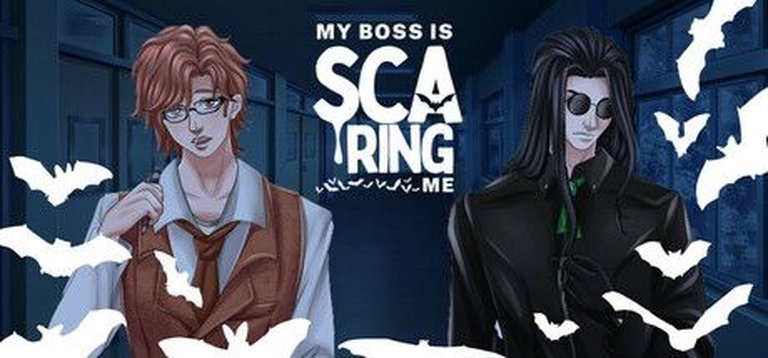
My Boss is Scaring Me is a short, linear BL (Boys’ Love) visual novel set in London, following Oliver, a young man from a small town who moves to the city to support his injured mother. Working at a newspaper, he uncovers his investigative talents while diving into a complex story, leading to late nights and growing interactions with his enigmatic, mysterious boss. The game explores themes of trust, relationships, and life choices, featuring two endings based on a single key decision, with original artwork and a reflective narrative.
Where to Buy My Boss is Scaring Me
PC
My Boss is Scaring Me Guides & Walkthroughs
My Boss is Scaring Me Reviews & Reception
store.steampowered.com (80/100): A triumphant return to form for the series.
raijin.gg (80/100): This places the game in the very positive category, indicating broad critical acclaim.
steambase.io (80/100): My Boss Is Scaring Me has earned a Player Score of 80 / 100.
My Boss Is Scaring Me: A Hauntingly Intimate Visual Novel
Introduction: A Tale of Trust and Terror
My Boss Is Scaring Me is a short but deeply affecting visual novel that blends romance, psychological tension, and gothic undertones into a tightly woven narrative. Released in November 2024 by indie studio Flowing Dreams, this free-to-play BL (Boys’ Love) game follows Oliver, a young journalist navigating the treacherous waters of ambition, trust, and an unsettling workplace dynamic. With its linear yet emotionally charged storytelling, the game carves out a niche in the visual novel landscape, offering a brief but impactful experience that lingers long after the credits roll.
At its core, My Boss Is Scaring Me is a character study—one that explores the fragility of human connection in the face of power imbalances and hidden truths. The game’s minimalist design, paired with its rich thematic depth, makes it a standout in the crowded visual novel genre. But does its brevity undermine its ambition? Or does its focused narrative deliver a punch that few longer games can match? This review dissects every facet of the game, from its development roots to its cultural impact, to determine its place in gaming history.
Development History & Context: The Birth of a Gothic Romance
The Studio Behind the Story: Flowing Dreams
Flowing Dreams is a small, independent development team specializing in narrative-driven experiences, particularly within the LGBTQ+ sphere. Their portfolio, while modest, reflects a commitment to storytelling that prioritizes emotional resonance over mechanical complexity. My Boss Is Scaring Me is their latest endeavor, following in the footsteps of titles like My Boss is Weird: Sponsorship Team (2021), which also explored workplace dynamics through a queer lens.
The game was developed using Visual Novel Maker, a tool that democratizes visual novel creation by providing pre-built assets and scripting frameworks. This choice allowed the team—comprising primarily B.G. Riccetto (screenplay, artwork) and M. Graymoon (general support)—to focus on narrative and aesthetic cohesion rather than engine development. The result is a polished, if technically straightforward, experience that leverages its constraints to deliver a mood-driven story.
The Gaming Landscape in 2024: A Renaissance of Visual Novels
2024 marked a resurgence of interest in visual novels, particularly those exploring mature themes and underrepresented perspectives. Games like Citizen Sleeper and Venba demonstrated that narrative-driven experiences could thrive in an industry often dominated by AAA spectacle. My Boss Is Scaring Me arrived in this climate, offering a niche but vital contribution: a BL visual novel that eschews fan service in favor of psychological depth.
The game’s free-to-play model also reflects a broader trend in indie gaming, where developers prioritize accessibility to reach wider audiences. By removing the paywall, Flowing Dreams ensured that their story could be experienced by anyone, regardless of financial barriers—a decision that aligns with the game’s themes of vulnerability and connection.
Technological Constraints & Creative Solutions
Given its use of Visual Novel Maker, My Boss Is Scaring Me operates within a fixed framework:
– Fixed/flip-screen perspective: The game does not employ dynamic camera movements, relying instead on static backgrounds and character sprites.
– Menu-driven interface: Player interaction is limited to dialogue choices, with no traditional gameplay mechanics.
– Anime/manga art style: The visuals are heavily influenced by Japanese visual novels, though the setting (London) grounds the story in a Western context.
These constraints could have stifled creativity, but the developers turned them into strengths. The lack of mechanical complexity forces players to engage deeply with the narrative, while the gothic-anime fusion creates a unique atmosphere that sets the game apart from more conventional romance visual novels.
Narrative & Thematic Deep Dive: Trust, Power, and the Monsters We Hide
Plot Summary: A Journalist’s Descent into Uncertainty
Oliver, a young man from a small town, moves to London to escape his past and support his ailing mother. He lands a job at a newspaper, where his investigative skills flourish—but so does his exhaustion. Late nights at the office lead to increased interaction with his boss, a man of few words whose dark, mysterious demeanor hints at something supernatural.
The central question—“Can he be trusted?”—drives the narrative forward. As Oliver uncovers fragments of his boss’s past, the line between professional admiration and personal obsession blurs. The story culminates in two possible endings, determined by a single, pivotal decision. This binary choice underscores the game’s themes of agency versus fate, asking players to weigh survival against emotional fulfillment.
Character Analysis: The Boss as Gothic Archetype
The boss is the game’s most compelling figure, embodying classic gothic tropes:
– The Byronic Hero: Charismatic yet morally ambiguous, he oscillates between mentor and predator.
– The Vampire Coded Antagonist: While never explicitly confirmed as a vampire, his stalking tendencies, threats, and nocturnal presence evoke vampiric imagery.
– The Unreliable Authority Figure: His power over Oliver is both professional and psychological, mirroring real-world workplace abuses.
Oliver, by contrast, is the everyman protagonist—vulnerable, determined, and increasingly paranoid. His glasses (a recurring visual motif) symbolize his desire to see clearly, yet the game constantly obscures the truth, forcing players to question what is real.
Themes: Power, Isolation, and Queer Anxiety
-
Workplace Exploitation & Power Dynamics
- The boss’s control over Oliver reflects broader societal issues, particularly in creative industries where overwork and emotional manipulation are rampant.
- The game critiques the “hustle culture” that glorifies self-sacrifice for career advancement.
-
Queer Relationships and Fear of Intimacy
- As a BL narrative, the game explores same-sex attraction in a high-stakes environment, where trust is both desired and dangerous.
- The boss’s ambiguous morality forces players to confront whether love can exist alongside fear.
-
The Gothic as a Lens for Modern Anxiety
- The game’s London setting—rain-slicked streets, dimly lit offices—evokes classic gothic literature (e.g., Dracula, The Picture of Dorian Gray).
- The supernatural undertones (vampirism, stalking) serve as metaphors for toxic relationships and gaslighting.
Dialogue & Writing: Brevity with Bite
The script, penned by B.G. Riccetto, is tight and evocative, with roughly 10,000 words delivering maximum impact. Key strengths include:
– Subtext-Heavy Exchanges: Conversations between Oliver and his boss drip with unspoken tension, making every line feel loaded.
– Minimalist Prose: The writing avoids purple prose, instead relying on short, punchy sentences to heighten unease.
– Ambiguity as a Tool: The game never confirms whether the boss is supernatural, leaving players to interpret his actions through their own biases.
However, the linear structure means that replayability is limited. While the two endings provide narrative closure, the lack of branching paths may disappoint players seeking a more interactive experience.
Gameplay Mechanics & Systems: A Visual Novel Stripped to Its Essence
Core Gameplay Loop: Reading as Participation
My Boss Is Scaring Me adheres to the kinetic novel subgenre, where player agency is minimal. The experience unfolds as follows:
1. Dialogue Progression: Players click through text, occasionally making a single critical choice that determines the ending.
2. CG (Computer Graphics) Unlocks: Original illustrations reward progression, though they are sparse.
3. Achievements: Three Steam achievements incentivize completion, though they are easily obtainable.
The Illusion of Choice: A Double-Edged Sword
The game’s single decision point is both its greatest strength and weakness:
– Strength: The weight of the choice feels monumental because it is the only one players make. This mirrors real-life dilemmas where one moment can define a relationship.
– Weakness: Some players may feel cheated by the lack of branching paths, especially in a genre where player agency is often a selling point.
UI & Accessibility: Functional but Unremarkable
- Menu Structures: The interface is clean and intuitive, with no unnecessary clutter.
- Language Support: Full English and Portuguese (Brazil) localization ensures accessibility for non-English speakers.
- No Save System: The game’s brevity (roughly 7 hours for completionists) means this omission is forgivable, but it may frustrate players who prefer to take breaks.
Innovation vs. Convention
While My Boss Is Scaring Me does not reinvent the visual novel wheel, it excels in atmospheric storytelling. Its greatest innovation lies in its thematic boldness—fusing BL romance with gothic horror in a way that feels fresh and unsettling.
World-Building, Art & Sound: Crafting an Unsettling London
Setting: A Gothic London Through Anime Eyes
The game’s London is not the tourist-friendly city of postcards but a shadowy, oppressive labyrinth:
– The Newspaper Office: Dim lighting, towering bookshelves, and cluttered desks create a sense of claustrophobic professionalism.
– The Streets at Night: Rain-soaked alleys and flickering streetlamps evoke film noir, reinforcing the boss’s vampiric aura.
Art Direction: Anime Meets Gothic Horror
- Character Designs:
- Oliver’s glasses and modest attire emphasize his vulnerability.
- The boss’s sharp features, dark clothing, and piercing gaze align with vampire aesthetics.
- Backgrounds: While some assets are pulled from Visual Novel Maker DLCs, the original CGs (particularly the dramatic close-ups) elevate key moments.
Sound Design: Silence as a Weapon
- Ambient Tracks: The soundtrack, sourced from Cynicmusic, Rony D.Kid, and OwlishMedia, leans into eerie piano melodies and low hums to build tension.
- Diegetic Sounds: The ticking of a clock, distant footsteps, and muffled conversations enhance the paranoid atmosphere.
- Voice Acting: Notably absent, which may disappoint some but strengthens the game’s literary feel—players “hear” the characters in their own voices.
Atmosphere: A Masterclass in Unease
The game’s minimalist presentation works in its favor, creating an immersive dread that lingers. The lack of music during key scenes forces players to sit with the weight of silence, making the boss’s rare outbursts all the more jarring.
Reception & Legacy: A Cult Classic in the Making?
Critical Reception: Positive but Niche
As of January 2026, My Boss Is Scaring Me holds:
– 80% Positive on Steam (15 reviews).
– 3.00/5 on VNDB (1 vote).
– No Metacritic score (likely due to its indie status).
Player feedback highlights:
✅ Praise:
– “A short but haunting experience” – Many players appreciate the tight storytelling and gothic romance.
– “The boss is terrifyingly compelling” – His moral ambiguity resonates with fans of dark romance.
– “Free and worth every second” – The no-cost entry lowers barriers, making it accessible.
❌ Criticism:
– “Too short for the price (even though it’s free)” – Some feel the 10k-word count is over too quickly.
– “Needs more choices” – The linearity frustrates players expecting a traditional visual novel.
– “The art is hit-or-miss” – While some CGs shine, the reused backgrounds feel generic.
Commercial Performance: A Slow Burn
- 686 units sold (Steambase, Jan 2026).
- 636 wishlists – Indicates steady interest but not mainstream appeal.
- No major marketing push – The game relies on word-of-mouth and Steam’s algorithm.
Legacy & Influence: Paving the Way for Darker BL Narratives
While My Boss Is Scaring Me may not redefine the visual novel genre, it contributes to a growing trend:
1. BL Games with Depth: It proves that queer romance can coexist with psychological horror, moving beyond purely romantic or erotic narratives.
2. Gothic Revival in Indies: Its success (modest as it may be) could inspire more gothic-themed visual novels.
3. The Power of Brevity: In an era of 100-hour RPGs, its short runtime demonstrates that impactful storytelling doesn’t require bloated content.
Comparisons to Similar Works
| Game | Similarities | Differences |
|---|---|---|
| Bossgame: The Boss Is My Heart (2022) | Workplace BL romance | More comedic, less gothic |
| My Boss is Weird (2021) | Office setting, queer themes | Focuses on humor, not horror |
| Doki Doki Literature Club! | Psychological horror in a VN | Meta-narrative, more interactive |
| Sweet Pool | Dark BL themes | More explicit, longer |
Conclusion: A Flawed but Unforgettable Experience
My Boss Is Scaring Me is not a game for everyone. Its linearity, brevity, and niche themes will alienate players seeking branching narratives or action. However, for those who crave atmospheric storytelling, gothic romance, and psychological tension, it is a gem.
Final Verdict: 7.5/10 – A Hauntingly Beautiful Bite-Sized Horror
✔ Pros:
– Tight, evocative writing that lingers in the mind.
– A compelling, morally ambiguous antagonist.
– Free-to-play with no paywalls or microtransactions.
– Unique blend of BL romance and gothic horror.
✖ Cons:
– Too short for players expecting a full-length VN.
– Linear structure limits replayability.
– Art and sound design are inconsistent in quality.
Who Should Play It?
- Fans of psychological horror and gothic romance.
- Players who enjoy short, impactful narratives (e.g., The House in Fata Morgana).
- BL enthusiasts looking for darker, more complex relationships.
Who Should Skip It?
- Those who require gameplay mechanics beyond reading.
- Players who dislike linear stories with minimal choices.
- Anyone expecting a traditional vampire tale (the supernatural elements are ambiguous).
Final Thoughts: A Small Game with Big Ideas
My Boss Is Scaring Me may not revolutionize gaming, but it carves out a space for intimate, unsettling storytelling in an industry often obsessed with scale. It is a testament to the power of indie development—proof that a small team with a clear vision can create something memorable, disturbing, and deeply human.
In the end, the game’s greatest strength is its unanswered questions. Like Oliver, players are left wondering, doubting, and haunted—long after the final line fades to black.
Play it. But don’t trust your boss.