
- Release Year: 2024
- Platforms: Windows
- Publisher: Unknown
- Developer: Unknown
- Genre: Action
- Perspective: Diagonal-down
- Game Mode: Single-player
- Gameplay: RPG elements
- Setting: Fantasy
Description
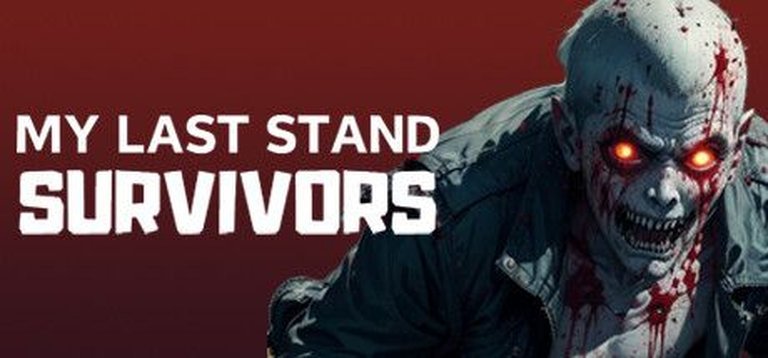
My Last Stand: Survivors is a dark fantasy action game blending RPG elements with intense survival mechanics. Set in a zombie-infested apocalypse, players control desperate survivors battling relentless undead hordes while scavenging resources, upgrading abilities, and making strategic decisions to prolong humanity’s last stand. Developed using Unity, the game emphasizes direct control combat and roguelike progression within a grim, decaying world.
Where to Buy My Last Stand: Survivors
PC
My Last Stand: Survivors: A Gritty, Barebones Descent into the Zombie Apocalypse
Introduction
In the oversaturated landscape of zombie survival games, My Last Stand: Survivors (2024) arrives with a defiantly minimalist pitch: strip away all pretenses and force players into a bleak, unrelenting fight for existence. Developed by solo creator Zhai Haoran (ZHR), this top-down action roguelite distills the genre to its rawest essentials—movement, shooting, and desperation. With no critic reviews as of mid-2025 and a muted player reception, the game exists in a curious limbo: a deliberate exercise in austerity that risks alienation, yet inadvertently serves as a fascinating case study in indie development philosophy. Its thesis? That true survival horror lies not in storytelling or spectacle, but in the gnawing dread of dwindling ammunition and the rhythmic march of the undead.
Development History & Context
The Solo Developer’s Gambit
My Last Stand: Survivors emerges from the shadow of Con Artist Games’ The Last Stand series—a franchise of Flash-era zombie defense games (2010–2021) renowned for their tense tower-defense hybrids. Unlike its predecessors, however, Survivors is an unofficial spiritual successor crafted by Zhai Haoran, an independent developer with no direct ties to the original series. Developed in Unity, the game began as an Early Access project in July 2024, with Haoran citing personal passion as the driving force: “I only create games that I enjoy playing and hope to share them with you” (Steam). This solo endeavor reflects the broader indie trend of “one-person studios” leveraging accessible engines and AI tools (Stable Diffusion for concept art, per Steam) to compete in a crowded market.
Technological and Genre Constraints
Released in an era dominated by polished AAA zombie epics (Dying Light 2) and viral roguelikes (Vampire Survivors), Survivors consciously rejects modern conventions. Its diagonal-down perspective and rudimentary 3D models evoke early 2010s browser games—a nostalgic nod to The Last Stand: Dead Zone (2013) but without the multiplayer depth. The game’s $3.99 price point and 2GB storage requirements signal a “small-scope” ethos, yet its demanding specs (GTX 1070 minimum) hint at unoptimized alpha-stage code common to solo projects.
Narrative & Thematic Deep Dive
A Vacuum of Hope
Survivors intentionally eschews traditional narrative. There are no characters with backstories, no dialogue beyond a loading screen quip (“Hold your position until the end of time”), and no environmental storytelling. Replace the zombie hordes with robots or demons, and the premise remains unchanged—a stark contrast to The Last Stand: Aftermath (2021), where players controlled infected survivors seeking redemption. Here, the only lore is existential futility: “You have lost all hope. The only way to survive is to carve out a path of blood” (Steam).
Thematic Resonance
The game’s minimalism is its theme. By dispensing with backstory and character development, Survivors mirrors the dehumanizing reality of its apocalypse: you are not a hero, just a body with a gun. This approach recalls Pathologic’s nihilism but without the philosophical scaffolding. Ironically, the narrative void amplifies the core tension—every decision feels transactional, rooted in pure survival calculus. A player’s emotional investment derives solely from their growing attachment to incremental upgrades and hard-won resources.
Gameplay Mechanics & Systems
The Core Loop: Movement, Shoot, Die, Repeat
Survivors operationalizes tension through three interlocking systems:
1. Ammo-as-Stamina: Firing drains a shared energy bar, forcing players to “save energy [and] shoot cautiously.”
2. Upgrade-Driven Progression: Killing zombies yields points to unlock abilities (e.g., faster reloads, damage boosts), though Early Access players report these feel “insufficiently impactful” (Steam review).
3. Ambient Threat Escalation: Enemies swarm in denser waves over time, demanding constant repositioning.
The game mixes top-down shooter controls with bullet-hell evasion, but its defining quirk is automatic targeting—hold right-click to lock onto the nearest foe, evoking Hotline Miami’s frantic pacing. This system works erratically, however, with players noting targeting often prioritizes distant zombies over immediate threats (Steam forum).
Critique of Systems
Flaws emerge in the execution:
– Roguelite Light: Permanent upgrades lack depth compared to genre standouts like Risk of Rain 2.
– UI Opacity: Critical information (ammo count, ability cooldowns) is buried or absent.
– Controller Woes: Despite patches adding gamepad support, input lag and deadzone issues persist (Steam user Marcus1503YT2).
Combat’s “exhilarating” promise is undermined by repetitive enemy behaviors and a lack of weapon variety. Unlike Soulstone Survivors’ dynamic builds, Survivors’ upgrades feel like statistical nudges rather than transformative powers.
World-Building, Art & Sound
Aesthetic Austerity
The game’s visuals reflect its stripped-back ethos. Stable Diffusion AI-generated concept art (per Steam disclosure) manifests as bleak, low-detail wastelands—barren plains littered with ruined cars and crumbling barriers. Zombie designs lack individuality, favoring generic shamblers over the original series’ mutated foes (e.g., Union City’s Chargers). The diagonal-down perspective, while functional, obscures environmental detail and creates camera blind spots during crowded encounters.
Soundscape of Desolation
Audio design follows minimalist principles: gunfire cracks with satisfying weight, while zombie groans adopt a monotonous, looped quality. Notably absent are music or ambient soundscapes—silence dominates between skirmishes, amplifying the loneliness of survival. This choice, while atmospheric, risks player fatigue over extended sessions.
Reception & Legacy
Launch Turbulence
Upon its Early Access debut, Survivors garnered negligible attention. With zero critic reviews (Metacritic, MobyGames) and only two Steam user reviews (both negative), it languished in obscurity. Players criticized its “unbalanced difficulty” and “barebones content,” with one lamenting, “I can’t beat the first stage” (Steam user omgilovesteak). The game’s refusal to ease players in—no tutorials, no difficulty options—alienated audiences conditioned to hand-holding.
Legacy Prospects
Yet Survivors may yet carve a niche. Its ruthlessness appeals to masocore enthusiasts, while its AI-assisted development provides a case study for solo creators. As a love letter to The Last Stand’s Flash-era roots, it honors the series’ legacy of simplicity, even as its lack of innovation undermines its staying power. Future updates could refine its systems, but in 2025, it remains a curious footnote—a game less “played” than “endured.”
Conclusion: A Stand Worth Taking?
My Last Stand: Survivors is a paradox: a game that succeeds precisely where it aims to barebones purity but fails to justify its existence in a genre bursting with richer alternatives. For $3.99, it delivers uncompromising tension and a fleeting rush of adrenaline, yet its lack of polish, narrative heart, and progression depth leave it stranded between homage and obsolescence. Haoran’s vision—unerring in its commitment to minimalism—offers a fascinating experiment in indie design philosophy. But in the harsh ecosystem of zombie survival, experiments rarely survive long. 2.5/5 – A proof of concept yearning to evolve, or destined to join the undead ranks of forgotten Early Access ventures.