
- Release Year: 2016
- Platforms: Windows
- Publisher: Icehouse, The
- Developer: Simon Says: Play!
- Genre: Adventure
- Perspective: First-person
- Game Mode: Single-player
- Gameplay: Graphic adventure, Point-and-click, Puzzle elements
- Setting: Futuristic, Sci-fi
- Average Score: 80/100
Description
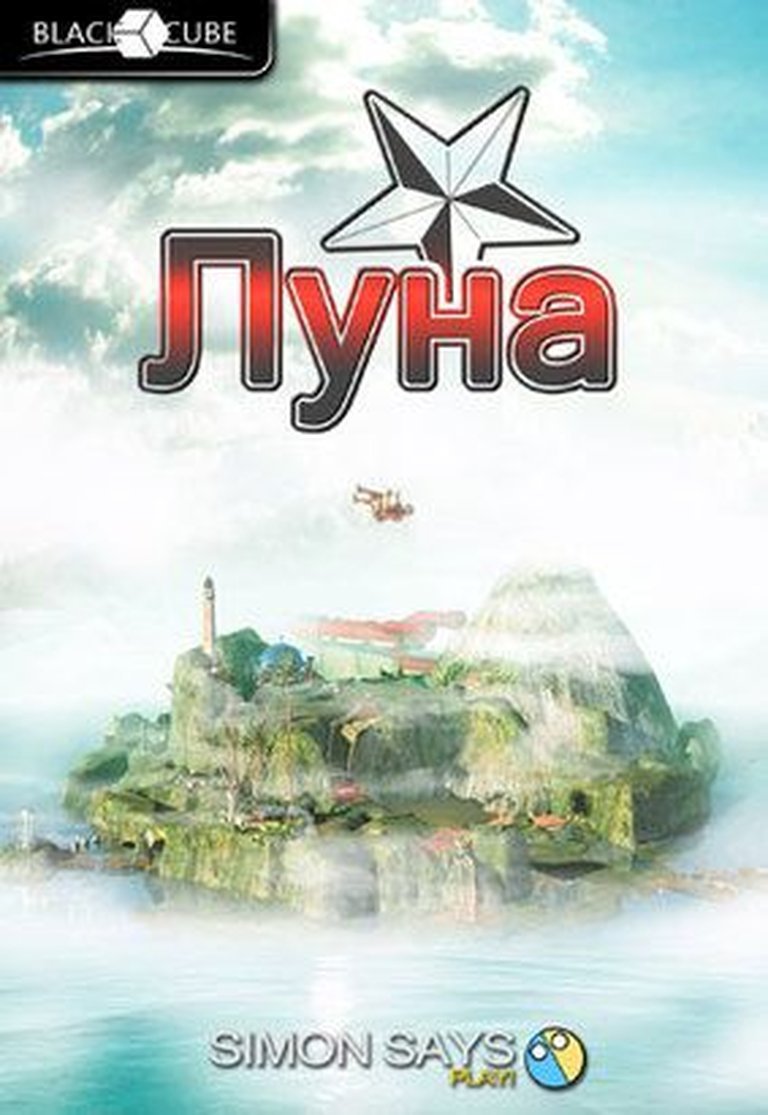
Myha is a short 1st-person point-and-click graphic adventure inspired by Myst, developed for the Myst Jam on itch.io. As part of The Black Cube series, players take on the role of a Tongolian cosmonaut investigating a distress signal who gets teleported to a mysterious island after touching a mysterious black cube. The game features static pre-rendered 360° environments, navigation between fixed points, logical puzzles, a small inventory system, and two divergent endings based on player choices.
Where to Buy Myha
PC
Myha Patches & Updates
Myha Guides & Walkthroughs
Myha Reviews & Reception
gameboomers.com : The game was a little directionless at times, but puzzles were not unfair.
moddb.com (80/100): Anyway the whole game is good, immersive and has a strange atmosphere, and I really liked it.
Myha: A Nostalgic Pilgrimage to Myst’s Shadow
Introduction
In the vast constellation of indie games, few tributes capture the essence of their muse as earnestly as Myha. Developed in a feverish 10-day sprint for the 2016 Myst Jam, this free-to-play adventure by Simon Mesnard and his micro-studio Simon Says: Play! stands as both a love letter to Cyan’s seminal Myst and a curious artifact of indie hustle. Framed within The Black Cube series—a sci-fi anthology exploring mysterious alien artifacts—Myha transports players to an eerie, isolated island where every rusted gear and fog-shrouded path whispers of a forgotten civilization. This review argues that while Myha stumbles under the weight of its ambition and technical constraints, it crystallizes the DIY spirit of game jams and the enduring allure of enigmatic, puzzle-driven storytelling.
Development History & Context
Born from the Myst Jam hosted by Sophie Houlden on itch.io, Myha was a passion project spearheaded by French developer Simon Mesnard, with collaborators Robert Neuendorf and Dejan Stanojevic contributing puzzle design and music. The team embraced a “retro by necessity” ethos, employing the aging Adventure Maker engine—a Visual Basic-based tool known for its slide-show navigation and cylindrical 360° panoramas. As Mesnard noted in his devlog, the choice was pragmatic: Adventure Maker enabled rapid iteration, albeit at the cost of modern polish.
The game’s development was a guerrilla effort. Pre-rendered 3D environments were crafted in 3ds Max, post-processed in After Effects to mimic Myst’s signature fog, and squeezed into a 1024×432 resolution. With no budget and a self-imposed deadline, the team prioritized atmosphere over detail, recycling assets like the protagonist’s spacesuit from their earlier title ASA: A Space Adventure. This scrappy approach yielded a 1–2 hour experience, complete with two endings—a testament to the efficiency of constraint.
Narrative & Thematic Deep Dive
Myha casts players as a Tongolian cosmonaut (a nod to Soviet-era aesthetics) dispatched to investigate a distress signal from Terra’s moon. The discovery of a sentient black cube—a recurring motif in the series—teleports the protagonist to a desolate island strewn with ruins, machinery, and cryptic diaries. The narrative is minimalist, conveyed through environmental clues and journal entries voiced by collaborator Rashko. Themes of isolation and cosmic insignificance permeate the world, echoing Myst’s existential quietude but lacking its depth.
The story bifurcates based on player choices, culminating in either a bittersweet escape or a hauntingly ambiguous conclusion. While these endings reinforce the series’ lore, they feel underdeveloped—a casualty of the game’s brevity. The plot serves more as a scaffold for puzzles than a compelling saga, yet its restraint amplifies the eerie ambience that defines the experience.
Gameplay Mechanics & Systems
True to its inspiration, Myha is a first-person point-and-click adventure with static nodes, a minimalist inventory, and logic-based puzzles. Navigation replicates Myst’s “jump-cut” movement, while 360° panoramic views—rendered at 4000×800 pixels—allow players to swivel freely within each node. This design creates a palpable sense of place, though the low resolution and Adventure Maker’s technical quirks (e.g., hitbox sensitivity) occasionally frustrate.
Puzzles revolve around deciphering numerical codes, aligning symbols, and manipulating machinery, with solutions often tied to environmental storytelling. A standout example involves restarting a crashed rocket by aligning thruster vectors—a challenge demanding spatial reasoning. However, some puzzles suffer from opacity, demanding trial-and-error or external guides. The inventory system, while functional, feels vestigial, reflecting the team’s focus on environmental interactivity.
World-Building, Art & Sound
Myha’s island is a chiaroscuro of jagged cliffs, soviet-industrial debris, and moss-clad ruins, all rendered in a grainy, pre-rendered style that evokes Myst’s 1993 aesthetic. The art direction leans into its limitations: fog-drenched vistas obscure low-poly geometry, while Z-depth passes simulate atmospheric haze. Though textures lack refinement (many sourced from CGTextures.com), the minimalist approach heightens the setting’s alien desolation.
Sound design is equally deliberate. Deki Stanojevic’s score—a blend of royalty-free tracks and original metal-tinged ambient pieces—underscores the isolation, while sparse environmental sounds (creaking metal, distant echoes) deepen immersion. Voice acting, though limited, lends humanity to the protagonist’s logs. The result is a world that feels simultaneously ancient and abandoned, a fitting tribute to Myst’s lonely grandeur.
Reception & Legacy
Upon release, Myha garnered muted but respectful attention. ModDB and IndieDB reviewers praised its “old-school atmosphere” and “nostalgic charm,” while noting its rough edges. A player review on ModDB encapsulated the consensus: “Great atmosphere… but outdated visuals.” The game’s freeware status shielded it from harsh criticism, positioning it as a curio for Myst devotees rather than a mainstream hit.
Yet Myha’s legacy endures. In 2019, Mesnard partnered with Denis Martin to release Myha: Return to the Lost Island, a full 3D remake in Unreal Engine—a tacit acknowledgment of the original’s cult appeal. Additionally, the game’s success in the Myst Jam cemented Simon Says: Play! as a studio committed to cerebral, atmospheric adventures, influencing later titles like Boinihi: The K’i Codex.
Conclusion
Myha is a paradoxical gem: a game that wears its limitations as badges of honor. Its rushed development and archaic tech yield a experience that’s undeniably rough yet disarmingly earnest. For modern players accustomed to slick indie darlings, its janky UI and pixelated vistas may prove jarring. But for those willing to meet it on its terms, Myha offers a poignant reminder of why Myst’s formula—isolation, intrigue, and intellect—remains timeless.
As both a historical footnote and a labor of love, Myha deserves recognition not for what it achieved, but for what it represents: the unyielding creativity of indie developers and the enduring power of a well-told enigma. In the annals of Myst clones, it is a humble but heartfelt entry—one that whispers, like its alien cube, of mysteries waiting to be unboxed.