
- Release Year: 2019
- Platforms: Windows
- Publisher: SakuraGame
- Developer: U-Secret Studio
- Genre: Action RPG, Hack and Slash, Role-playing (RPG)
- Perspective: Behind view
- Game Mode: Single-player
- Gameplay: Action RPG, Hack and Slash
- Setting: Fantasy
- Average Score: 65/100
- Adult Content: Yes
Description
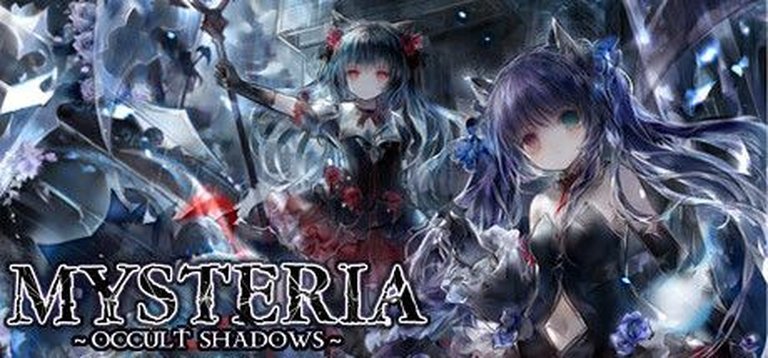
Mysteria: Occult Shadows is a 3D action RPG developed by U-Secret Studio, set in the dark fantasy world of Sulnas, where players guide the protagonist, Death Shadow, through a land corrupted by dark forces. The game features hack-and-slash combat with three weapon types, agile grappling mechanics, and over 40 unique enemies across 14 levels. With fully animated cutscenes, Japanese voice acting, and a mix of puzzles and myths, the game blends fast-paced action with a deep narrative. Players can customize their experience with free DLC outfits and weapon skins, while exploring forbidden zones to uncover the secrets of the Ferre civilization.
Gameplay Videos
Where to Buy Mysteria: Occult Shadows
PC
Mysteria: Occult Shadows Cracks & Fixes
Mysteria: Occult Shadows Mods
Mysteria: Occult Shadows Guides & Walkthroughs
Mysteria: Occult Shadows Reviews & Reception
steambase.io (65/100): Mysteria ~Occult Shadows~ has earned a Player Score of 65 / 100.
saveorquit.com : Considering the size, limited budget and skill level of the team behind Mysteria ~Occult Shadows~, the crew came up with a pretty decent offering.
raijin.gg (65/100): Mysteria ~Occult Shadows~ holds a 64.52% positive rating on Steam, based on 3,439 player reviews.
Mysteria: Occult Shadows – A Flawed but Fascinating Indie Gem
Introduction
Mysteria: Occult Shadows is a game that defies easy categorization. Developed by the indie studio U-Secret Studio and published by SakuraGame, it is a 3D action RPG that blends hack-and-slash combat with dark fantasy themes, anime aesthetics, and a surprisingly ambitious narrative. Released in 2019 after a period in Early Access, the game has garnered a mixed but passionate reception, with players and critics alike praising its visuals, combat depth, and atmospheric world-building while critiquing its technical flaws and narrative inconsistencies.
At its core, Mysteria: Occult Shadows is a game of contradictions. It is a title that looks and feels like a product of a much larger studio, yet it is marred by the telltale signs of its indie origins—translation errors, occasional bugs, and a camera system that can feel clunky. It is a game that promises a deep, dark tale of a world infested by supernatural forces, yet its storytelling is often undermined by awkward pacing and abrupt transitions. Despite these flaws, however, Mysteria manages to carve out a unique identity in the crowded action RPG space, offering a experience that is as frustrating as it is fascinating.
This review will delve deeply into every aspect of Mysteria: Occult Shadows, from its development history and narrative themes to its gameplay mechanics, world-building, and legacy. By the end, we will determine whether this game is a hidden gem worth uncovering or a flawed experiment that ultimately falls short of its ambitions.
Development History & Context
The Studio Behind the Shadows
U-Secret Studio is a relatively unknown indie development team, composed primarily of college students who came together to create Mysteria: Occult Shadows. This fact alone makes the game’s existence remarkable. The studio’s lack of prior experience in game development is evident in some of the game’s rough edges, but it is also a testament to their ambition and creativity. The game was developed using Unreal Engine 4, a powerful tool that allowed the team to craft a visually stunning world despite their limited resources.
The game’s publisher, SakuraGame, is known for its focus on anime-style games, often with mature themes. This partnership likely influenced Mysteria’s aesthetic direction, which blends dark fantasy with anime-inspired character designs. The result is a game that feels distinctly Eastern in its presentation, even as it draws from Western action RPG mechanics.
Early Access and the Road to Release
Mysteria: Occult Shadows began its life in Steam Early Access on August 22, 2019, before officially launching on September 29, 2020. The Early Access period was crucial for the developers, who used player feedback to refine the game’s mechanics, optimize performance, and expand its content. The final version of the game, labeled as “EA 4.0,” boasts a complete story, 14 levels, 10 maps, and a playtime of approximately 6-10 hours.
The developers were transparent about the game’s limitations, acknowledging in their Steam description that the game might still have bugs and that they were operating at the limits of their budget and abilities. This honesty is refreshing, but it also sets expectations for what Mysteria ultimately delivers: a game that is ambitious but imperfect, polished in some areas and rough in others.
The Gaming Landscape at Release
Mysteria: Occult Shadows entered a market dominated by established franchises and indie darlings alike. In 2019-2020, the action RPG genre was flourishing, with games like Sekiro: Shadows Die Twice, Code Vein, and Nioh 2 setting high standards for combat depth and narrative complexity. Meanwhile, indie titles like Hades and Blasphemous proved that smaller teams could craft experiences that rivaled those of AAA studios.
In this context, Mysteria faced an uphill battle. It lacked the marketing budget of a major release and the polish of a game like Hades, but it offered something unique: a dark, anime-inspired world with a focus on fast-paced combat and exploration. Its niche appeal—combining hack-and-slash gameplay with mature themes and a female protagonist—helped it stand out, even if it didn’t achieve mainstream success.
Narrative & Thematic Deep Dive
The World of Sulnas
Mysteria: Occult Shadows is set in the land of Sulnas, a world steeped in dark fantasy and supernatural horror. The game’s protagonist, Death Shadow, is a cat-girl (or “Ferre,” as the game’s lore describes her) who wields legendary powers to combat the dark forces that have corrupted the land. The story revolves around her quest to purge Sulnas of its occult shadows, uncovering the secrets of the Ferre civilization along the way.
The world of Sulnas is richly detailed, with a lore that blends mythology, horror, and fantasy. The game’s narrative is delivered through fully animated cutscenes, in-game dialogue, and environmental storytelling. However, the execution of this narrative is where Mysteria stumbles. The translation from its original language (likely Japanese or Chinese) to English is riddled with errors, leading to awkward phrasing, grammatical mistakes, and even incomplete sentences. This makes the story difficult to follow at times, which is a shame given the game’s ambitious themes.
Themes of Darkness and Redemption
At its heart, Mysteria: Occult Shadows is a story about corruption and redemption. The land of Sulnas is described as “heavily infested with dark power,” and Death Shadow’s mission is to “give yourself to the basic instincts and purge this world with light.” This duality—between darkness and light, corruption and purity—is a central theme of the game.
The game’s characters embody this duality as well. Death Shadow herself is a complex protagonist, wielding powers derived from darkness to fight against it. The enemies she faces are often grotesque, monstrous creatures, but they are also tragic figures, corrupted by forces beyond their control. The game’s bosses, in particular, are designed to evoke both fear and pity, with their backstories hinting at deeper layers of tragedy.
Character Development and Dialogue
The game’s characters are visually striking, with detailed designs that reflect their personalities and roles in the story. Death Shadow, for instance, is a fierce and agile warrior, her cat-like features emphasizing her speed and grace. Other characters, such as Aya and Hedes, are equally well-designed, though their development is often overshadowed by the game’s technical limitations.
The dialogue in Mysteria is a mixed bag. On one hand, the game features full Japanese voice acting, which adds a layer of authenticity to the characters. On the other hand, the English subtitles are poorly translated, leading to moments of confusion and unintentional humor. The game’s cutscenes are fully animated, but the awkward pacing and abrupt transitions can make them feel disjointed.
The Ferre Civilization and Lore
One of the most intriguing aspects of Mysteria’s narrative is its exploration of the Ferre civilization. The Ferre are a race of beast-like humanoids, and their history is intertwined with the dark forces that plague Sulnas. The game’s lore is delivered through environmental details, collectible notes, and dialogue, but it is often fragmented and difficult to piece together.
The game’s setting is a blend of dark fantasy and alternate mythology, with elements that feel inspired by both Eastern and Western folklore. The world is filled with ruins, ancient artifacts, and supernatural phenomena, all of which hint at a deeper history that the player is encouraged to uncover. However, the game’s lack of a codex or comprehensive lore system means that much of this history remains obscure, leaving players to fill in the gaps themselves.
Gameplay Mechanics & Systems
Combat: A Dance of Death
The combat in Mysteria: Occult Shadows is where the game truly shines. It is a fast-paced, hack-and-slash system that emphasizes agility, precision, and strategic weapon-switching. The game offers three primary weapons—chainblades, a sword, and a scythe—each with its own strengths and weaknesses.
- Chainblades: These are the game’s most dynamic weapons, offering long-range attacks and high mobility. They are ideal for players who prefer a aggressive, acrobatic playstyle. However, they do not allow for blocking, making dodging essential.
- Sword: The sword is the most balanced weapon, offering precision and versatility. It is ideal for players who prefer a more methodical approach to combat.
- Scythe: The scythe is a mid-range weapon that excels in crowd control. It is less accurate than the sword but deals significant damage, making it a good choice for players who like to keep their distance.
The combat system is designed to be challenging, with enemies that become increasingly aggressive as the game progresses. The game features four difficulty settings, with the highest promising unique rewards for those who can master its mechanics. The combat is further enhanced by Quick Time Events (QTEs), which allow players to execute stylish finishing moves on their enemies.
Character Progression and Customization
Mysteria offers a robust character progression system, allowing players to customize Death Shadow’s abilities and equipment. The game features a variety of outfits, weapons, and accessories, many of which are available as free DLC. These customization options are largely cosmetic, but they add a layer of personalization to the experience.
The game’s progression is tied to its exploration and combat systems. Players earn experience points by defeating enemies and completing objectives, which can then be used to unlock new abilities and upgrades. The game also features a variety of collectibles, including notes that expand on the lore and items that enhance Death Shadow’s abilities.
Exploration and Puzzle-Solving
Exploration is a key component of Mysteria’s gameplay. The game’s levels are designed to encourage players to search for hidden paths, solve puzzles, and uncover secrets. The puzzles are generally straightforward, involving tasks like melting ice to create bridges or using grappling hooks to reach high places. While these puzzles are not particularly challenging, they add variety to the gameplay and reward players with valuable loot.
The game’s levels are visually distinct, with environments that range from dark forests to ancient ruins. Each level is filled with details that hint at the world’s lore, encouraging players to take their time and explore thoroughly. However, the game’s camera system can make exploration frustrating at times, as it does not always follow the player’s movements smoothly.
UI and Controls
The game’s user interface is functional but unremarkable. It features standard elements like health bars, weapon indicators, and objective markers, but it lacks the polish of more established titles. The controls are responsive, but the camera can be unwieldy, requiring constant manual adjustment during combat.
One of the game’s most innovative features is its customizable cutscene system, which allows players to adjust the framing and pacing of certain scenes. This feature is a nice touch, but it is not enough to overcome the game’s other technical limitations.
World-Building, Art & Sound
A Dark and Beautiful World
Mysteria: Occult Shadows is a visually stunning game, with a dark, atmospheric art style that blends anime aesthetics with gothic horror. The game’s environments are richly detailed, with textures and lighting that create a sense of depth and immersion. The character designs are equally impressive, with Death Shadow and her allies and enemies all featuring unique, memorable appearances.
The game’s use of Unreal Engine 4 is evident in its visual fidelity. The environments are filled with small details, from the weathering on ancient ruins to the way light filters through dense forests. The game’s color palette is dominated by dark hues, but it is punctuated by bursts of color, particularly in the character designs and special effects.
Sound Design and Music
The game’s sound design is another standout feature. The background music, composed by the group ProjectLights, is atmospheric and immersive, with tracks that range from haunting melodies to intense battle themes. The voice acting, while not in English, is well-performed, adding emotional weight to the game’s cutscenes.
The sound effects are less impressive, with some of the combat sounds feeling generic and repetitive. However, the game’s overall audio design is strong, with a soundtrack that enhances the game’s dark, fantastical atmosphere.
Reception & Legacy
Critical and Commercial Reception
Mysteria: Occult Shadows has received a mixed reception from players and critics alike. On Steam, the game holds a “Mixed” rating, with 63% of its 278 English reviews being positive. Players have praised the game’s visuals, combat depth, and atmospheric world-building, but they have also criticized its technical flaws, awkward translations, and occasional bugs.
The game’s reception has been divided along linguistic lines, with Chinese players giving it a more positive rating than English-speaking players. This disparity highlights the game’s strengths and weaknesses: its visuals and gameplay are universally appealing, but its narrative and localization issues are more pronounced for non-native speakers.
Influence and Legacy
Despite its mixed reception, Mysteria: Occult Shadows has carved out a niche for itself in the indie game space. Its blend of dark fantasy, anime aesthetics, and hack-and-slash combat has inspired other indie developers to explore similar themes and mechanics. The game’s success on Steam, with over 100,000 units sold, is a testament to its appeal, even if it has not achieved mainstream recognition.
The game’s legacy is also tied to its community. The developers have been active in engaging with players, addressing bugs, and releasing updates. This ongoing support has helped to foster a dedicated fanbase, one that appreciates the game’s ambition and uniqueness despite its flaws.
Conclusion
Mysteria: Occult Shadows is a game of contradictions. It is a visually stunning, mechanically deep action RPG that is marred by technical flaws and narrative inconsistencies. It is a game that feels like the product of a much larger studio, yet it bears the hallmarks of its indie origins. It is a game that promises a dark, immersive world but often struggles to deliver its story effectively.
Despite these flaws, Mysteria is a game worth experiencing. Its combat is satisfying, its world is atmospheric, and its ambition is commendable. For players who can overlook its rough edges, it offers a unique and engaging experience that stands out in the crowded action RPG genre.
Final Verdict: 7/10 – A Flawed but Fascinating Indie Gem
Mysteria: Occult Shadows is not a perfect game, but it is a memorable one. It is a testament to what a small, ambitious team can achieve, and it deserves recognition for its creativity and boldness. While it may not be a classic, it is a game that action RPG fans should consider, especially those who appreciate dark fantasy and anime aesthetics. With continued support and refinement, Mysteria could evolve into something truly special. For now, it remains a flawed but fascinating gem, one that shines brightly despite its imperfections.