
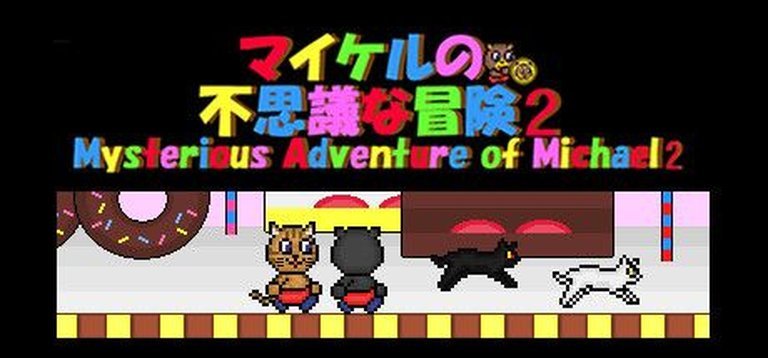
Description
Mysterious Adventure of Michael 2 is a 2D action-platformer where players guide Michael the bear through a fantasy world filled with challenges and enemies. Using jumping mechanics and special abilities gained by transforming into various animals via transformation blocks, players must navigate through stages, collect coins to unlock new levels, and find hidden stars. The game supports keyboard or controller inputs, features automatic and manual saving, and offers both English and Japanese language options.
Where to Buy Mysterious Adventure of Michael 2
PC
Mysterious Adventure of Michael 2 Guides & Walkthroughs
Mysterious Adventure of Michael 2 Reviews & Reception
steambase.io (67/100): Mysterious Adventure of Michael 2 has earned a Player Score of 67 / 100.
Mysterious Adventure of Michael 2: A Whimsical Yet Flawed Journey Through a Dreamlike World
Introduction: A Bear’s Quest in a Forgotten Genre
In an era dominated by open-world epics and hyper-realistic shooters, Mysterious Adventure of Michael 2 (2022) emerges as a charming anachronism—a love letter to the golden age of 2D platformers, wrapped in the warm embrace of pixel-art nostalgia. Developed and published by the enigmatic Japanese studio HUNTERS, this sequel to 2017’s Mysterious Adventure of Michael invites players into a surreal, dreamlike world where a bear named Michael embarks on a quest filled with transformation, exploration, and whimsy.
At first glance, the game appears to be a simple, unassuming indie title, but beneath its cutesy exterior lies a meticulously crafted homage to classic platformers like Super Mario Bros. and Wonder Boy, infused with a uniquely Japanese sensibility. Yet, for all its charm, Michael 2 struggles to carve out a distinct identity in a crowded market. Is it a hidden gem, or a well-intentioned but forgettable throwback? This review dissects every facet of the game—from its development history to its gameplay mechanics—to determine its place in the pantheon of modern retro-inspired platformers.
Development History & Context: The Enigma of HUNTERS
The Studio Behind the Bear
HUNTERS is a shadowy figure in the indie game development landscape. Little is known about the team behind Mysterious Adventure of Michael 2, save for their apparent dedication to reviving the spirit of 1980s and 1990s platformers. Their first foray into the Michael series, Mysterious Adventure of Michael (2017), was a modest success, garnering a small but devoted following. The sequel, released five years later, expands upon the original’s mechanics while refining its presentation.
The game’s development seems to have been a labor of love rather than a commercial powerhouse. With no major publisher backing and minimal marketing, Michael 2 relies almost entirely on word-of-mouth and Steam’s algorithmic visibility. Its $3.99 price point (often discounted to $2.39) positions it as an impulse buy—a low-risk experiment for fans of retro platformers.
Technological Constraints & Design Philosophy
Michael 2 is unapologetically old-school in its technical approach. Running on a lightweight engine, the game requires a mere 230 MB of storage and supports Windows 7 and above, making it accessible to virtually any modern PC. The decision to stick with 2D side-scrolling and pixel-art visuals is a deliberate rejection of contemporary trends, harkening back to the MSX, PC-88, and NES era—platforms that hosted the original What’s Michael? (1989), a spiritual precursor to this series.
The game’s direct control scheme (keyboard or controller) and simple UI reflect a design philosophy rooted in immediacy. There are no convoluted tutorials or hand-holding mechanics; players are expected to learn through experimentation, much like the classics that inspired it.
The Gaming Landscape in 2022: A Crowded Retro Revival
By 2022, the retro revival was in full swing. Games like Shovel Knight, Celeste, and Blasphemous had already proven that 2D platformers could thrive in the modern market by blending nostalgia with innovation. Michael 2, however, arrives without the fanfare or polish of its contemporaries. It lacks the metroidvania depth of Hollow Knight, the narrative weight of Celeste, or the mechanical precision of Super Meat Boy.
Instead, it occupies a niche within a niche—a pure, unadulterated platformer with no pretense of storytelling grandeur or roguelike replayability. In a world where even indie games are expected to deliver 30+ hours of content, Michael 2’s brevity (estimated 3-5 hours to completion) feels almost radical.
Narrative & Thematic Deep Dive: A Dream Without a Story
Plot: Minimalism to a Fault
Mysterious Adventure of Michael 2 is, at its core, a game about gameplay. The narrative is so barebones that it barely qualifies as a story:
“Michael the bear must traverse a dream world, collect stars, defeat bosses, and unlock new stages.”
There are no cutscenes, no dialogue (beyond a few text prompts), and no character development. The game’s Steam description hints at a larger purpose—“Clear all the stages to complete the big picture”—but this “big picture” is never explained. Are the stages fragments of Michael’s subconscious? A metaphor for personal growth? The game offers no answers, leaving players to project their own interpretations.
Themes: Whimsy, Transformation, and the Joy of Exploration
While the narrative is threadbare, the game’s thematic underpinnings are more compelling:
-
Transformation as Empowerment
- The ability to shape-shift into different animals (cat, rabbit, penguin, dog, etc.) is the game’s defining mechanic. Each form grants unique abilities:
- Cat: Higher jumps, wall-clinging.
- Rabbit: Faster movement, longer jumps.
- Penguin: Sliding on ice, underwater mobility.
- This mechanic echoes classic games like Altered Beast (1988) and Ganbare Goemon (1994), where transformation was both a gameplay tool and a narrative device. Here, it serves as a metaphor for adaptability—Michael must change to overcome obstacles, much like the player must adapt to the game’s challenges.
- The ability to shape-shift into different animals (cat, rabbit, penguin, dog, etc.) is the game’s defining mechanic. Each form grants unique abilities:
-
The Dreamlike Aesthetic
- The game’s world is a surreal, pastel-colored dreamscape, populated by floating islands, talking animals, and abstract enemies. The lack of a coherent narrative reinforces the dream logic—rules are fluid, and progression is intuitive rather than explained.
- This approach aligns with Japanese “dream games” like Yume Nikki (2004) and LSD: Dream Emulator (1998), where atmosphere and exploration take precedence over traditional storytelling.
-
The Joy of Collection
- The game’s star-collecting mechanic (two hidden in each stage) taps into the compulsion loop of classic platformers. There’s no in-game reward for finding them beyond unlocking new stages, yet the act of discovery is its own reward—a testament to the enduring appeal of pure, unadulterated gameplay.
Characters: Michael the Bear and His Silent World
Michael himself is a blank slate—a cute, round bear with no personality beyond his ability to transform. The game’s enemies are equally abstract:
– Floating eyeballs
– Bouncing mushrooms
– Giant, disembodied hands
The bosses (when they appear) are the only entities with distinct designs, but even they lack backstories or dialogue. This minimalism is both a strength and a weakness:
– Strength: The game avoids the pitfalls of over-explanation, trusting players to engage with its world on their own terms.
– Weakness: Without any emotional or narrative anchor, the experience can feel hollow—a series of mechanics without meaning.
Gameplay Mechanics & Systems: A Love Letter to the Past
Core Gameplay Loop: Jump, Transform, Repeat
Michael 2’s gameplay is elegant in its simplicity:
1. Traverse a stage (left to right, with some verticality).
2. Defeat enemies (by jumping on them or using animal abilities).
3. Collect coins (used to unlock new stages).
4. Find two hidden stars (optional but encouraged).
5. Reach the goal (a flagpole, because of course it is).
The game’s difficulty curve is gentle, making it accessible to casual players, but mastery comes from:
– Precision platforming (some jumps require pixel-perfect timing).
– Strategic transformation (knowing which animal form to use in each section).
– Exploration (stars are often hidden in out-of-the-way areas).
Combat & Enemy Design: Simple but Effective
Combat is basic but satisfying:
– Jumping on enemies (Mario-style) is the primary attack.
– Animal abilities add variety:
– The dog can bark to stun enemies.
– The penguin can slide into foes.
– Boss fights are pattern-based, requiring memorization rather than reflexes.
The enemy designs are whimsical but repetitive—expect to fight the same floating blobs and bouncing creatures across multiple stages. The lack of enemy variety is the game’s most glaring flaw, making later stages feel samey.
Character Progression: Unlocking the World
Progression is stage-based rather than character-based:
– Coins collected in stages are spent to unlock new levels (a nod to Super Mario Bros. 3’s world map).
– No traditional “leveling up”—Michael’s abilities are tied to transformation blocks, which are scattered throughout stages.
– No permanent upgrades—players must rely on skill rather than power-ups.
This design choice reinforces the game’s old-school ethos, but it may frustrate players accustomed to RPG-like progression.
UI & Controls: Functional but Uninspired
The user interface is minimalist to a fault:
– No map (players must memorize stage layouts).
– No health bar (Michael dies in one hit, Ghosts ‘n Goblins-style).
– No inventory system (abilities are tied to transformation blocks).
The controls are responsive but lack polish:
– Jumping feels slightly floaty, making precision platforming tricky.
– Transformation is tied to specific blocks, which can feel clunky when switching forms mid-stage.
Innovations & Flaws
Innovations:
✅ Animal transformation is a clever twist on classic platforming.
✅ Stage-unlocking via coins adds a light metroidvania-esque progression.
✅ Hidden stars encourage replayability.
Flaws:
❌ Repetitive enemy design saps long-term engagement.
❌ No difficulty options—the game is easy for veterans, punishing for beginners (one-hit deaths).
❌ Lack of checkpoints in longer stages can lead to frustration.
World-Building, Art & Sound: A Dream You Can Almost Touch
Setting & Atmosphere: A Pastel Wonderland
Michael 2’s world is a vibrant, surreal dreamscape, blending:
– Floating islands (reminiscent of Kirby’s Dream Land).
– Whimsical forests (evoking Donkey Kong Country).
– Abstract, almost Dali-esque backgrounds (clouds that look like faces, trees with eyes).
The lack of a coherent narrative works in the game’s favor here—the world feels like a living dream, where logic is secondary to visual and mechanical delight.
Visual Direction: Pixel Art with Personality
The pixel-art style is clean and colorful, with:
– Smooth animations (Michael’s transformations are fluid and satisfying).
– Distinct character silhouettes (each animal form is instantly recognizable).
– Subtle details (background elements like twinkling stars add depth).
However, the game lacks the hand-drawn charm of titles like Celeste or the gritty detail of Blasphemous. It’s competent but not groundbreaking.
Sound Design & Music: A Missed Opportunity
The audio experience is the game’s weakest link:
– Music: A handful of looping chiptune tracks that are pleasant but forgettable. None of the tunes have the earworm quality of Mario or Sonic’s iconic soundtracks.
– Sound effects: Basic and functional (jumps, coin pickups, enemy defeats). The lack of voice acting (even simple grunts or animal noises) makes the world feel sterile.
– Atmosphere: The game fails to use sound to enhance immersion. There are no ambient noises (wind, water, distant creatures) to make the dream world feel alive.
Reception & Legacy: A Cult Classic in the Making?
Critical & Commercial Reception: A Quiet Release
Mysterious Adventure of Michael 2 launched on March 10, 2022, with little fanfare:
– No major reviews from gaming outlets (IGN, GameSpot, etc.).
– No Metacritic score (as of 2026).
– Steam reviews: 67/100 (based on 3 user reviews—2 positive, 1 negative).
The lack of critical attention is both a curse and a blessing:
– Curse: The game remains obscure, overshadowed by higher-profile indie darlings.
– Blessing: It has avoided the backlash that often accompanies overhyped indie games.
Player Feedback: A Divided Audience
The Steam reviews reveal a polarized but small player base:
– Positive reviews praise:
– “Charming and relaxing” (ideal for short play sessions).
– “A great throwback to classic platformers.”
– “The transformation mechanic is fun and creative.”
– Negative reviews criticize:
– “Too short and repetitive.”
– “Lacks depth compared to modern platformers.”
– “Controls feel stiff.”
Legacy & Influence: Will It Be Remembered?
Michael 2 is unlikely to leave a lasting mark on the gaming industry, but it may find a niche audience among:
– Retro enthusiasts who crave unfiltered nostalgia.
– Speedrunners (the game’s simplicity makes it ripe for time-attacks).
– Indie devs studying minimalist game design.
Its true legacy may lie in its cult appeal—a game that a small but passionate group will cherish for years to come.
Conclusion: A Flawed but Charming Relic of a Bygone Era
Mysterious Adventure of Michael 2 is not a masterpiece, but it doesn’t aspire to be. It’s a humble, earnest love letter to the platformers of yesteryear, warts and all. Its strengths—whimsical transformation mechanics, dreamlike visuals, and unpretentious gameplay—are outweighed by its weaknesses—repetitive design, shallow narrative, and forgettable audio.
Final Verdict: 6.5/10 – “A Nostalgic Curio”
Who Should Play It?
✔ Fans of classic 2D platformers who miss the simplicity of Mario and Wonder Boy.
✔ Casual gamers looking for a short, charming distraction.
✔ Retro collectors who enjoy obscure indie gems.
Who Should Skip It?
❌ Players seeking deep storytelling or RPG mechanics.
❌ Those who demand polished, modern platforming (e.g., Celeste, Hollow Knight).
❌ Anyone expecting a long, content-rich experience.
Where Does It Stand in Gaming History?
Mysterious Adventure of Michael 2 is not a revolutionary game, nor is it likely to be remembered alongside the greats. But in its unapologetic retro simplicity, it offers something rare in today’s gaming landscape: a pure, unfiltered platforming experience, untethered from the pressures of open-world bloat or live-service monetization.
In that sense, it’s a small but meaningful rebellion—a reminder that sometimes, all a game needs to be is fun.
Final Score Breakdown:
– Gameplay: 7/10
– Visuals & Art Direction: 7/10
– Sound & Music: 5/10
– Narrative & Themes: 4/10
– Replayability: 6/10
– Overall: 6.5/10 – “A Flawed but Charming Throwback”
Mysterious Adventure of Michael 2 is not for everyone, but for those who yearn for the days when games were about jumping, exploring, and transforming into animals, it’s a brief but delightful escape into a dream.