
- Release Year: 2009
- Platforms: Windows
- Publisher: Viva Media, LLC
- Genre: Compilation
- Game Mode: Single-player
- Gameplay: Adventure, Hidden object, Puzzle
Description
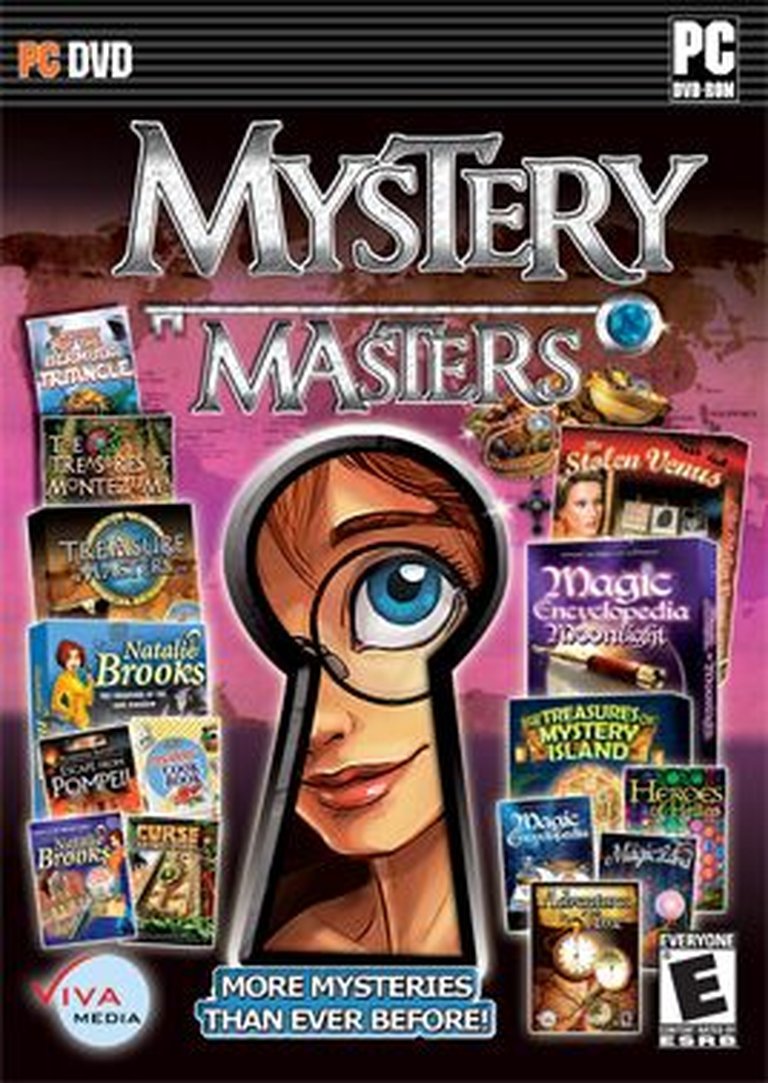
Mystery Masters is a comprehensive compilation released in 2009 for Windows, bundling 15 complete mystery-themed adventure games including Alabama Smith in Escape from Pompeii, Curse of Montezuma, Magic Encyclopedia: First Story, Treasure Masters, Inc., and Natalie Brooks: Secrets of Treasure House. The collection offers diverse hidden object challenges, puzzle-solving quests, and exploration across historical, fantastical, and treasure-hunting settings, all curated by publisher Viva Media, LLC.
Mystery Masters: Review
Introduction
In the crowded landscape of casual gaming compilations, few titles encapsulate the genre’s sheer breadth and accessibility quite like Mystery Masters. Released in 2009 by Viva Media, LLC, this ambitious package bundles 15 complete standalone games into a single DVD-ROM, offering players a gateway to diverse mystery-themed experiences. From archaeological adventures in Alabama Smith in Escape from Pompeii to supernatural investigations in Insider Tales: The Stolen Venus, the compilation serves as a time capsule of the hidden-object puzzle (HOG) and adventure boom that defined the late 2000s. Its legacy lies not in groundbreaking innovation but in its role as a quintessential sampler—a gateway drug for casual gamers and a testament to the genre’s commercial viability. This review deconstructs Mystery Masters through its historical context, narrative tapestry, mechanical cohesion, and enduring influence, arguing that while it lacks a singular identity, it succeeds as a curatorial artifact of a bygone era of accessible, story-driven gaming.
Development History & Context
The Studio and Vision
Viva Media, LLC, the brainchild behind Mystery Masters, operated as a prolific publisher of casual games during the late 2000s, capitalizing on the burgeoning market for HOGs and match-3 puzzles. Their vision for Mystery Masters was pragmatic: assemble a “large compilation” of proven titles to maximize value for consumers. The selection—spanning archaeology (Treasure Masters, Inc.), mythology (Curse of Montezuma), and whimsical fantasy (Sprill: The Mystery of the Bermuda Triangle)—reflects an effort to cater to varied tastes without unifying them under a singular narrative umbrella. This approach prioritized quantity over cohesion, mirroring the era’s trend of bundling mid-tier titles into budget-friendly packages.
Technological Constraints and Gaming Landscape
Developed in 2009, Mystery Masters emerged during a transitional period for PC gaming. While high-definition graphics defined AAA titles, casual games operated on simpler frameworks. The DVD-ROM format, already waning in favor of digital distribution, underscored the physical-media roots of casual compilations. Technologically, the games within the package were unremarkable—standard 2D environments, static character sprites, and basic point-and-click interfaces. Yet they thrived on accessibility: low system requirements meant they ran on aging hardware, aligning with Viva Media’s target audience of casual players seeking accessible escapism. The gaming landscape was dominated by the rise of digital storefronts like Steam, but compilations like Mystery Masters filled a niche for players wary of online transactions or preferring tangible media.
Narrative & Thematic Deep Dive
Plot and Character Diversity
Mystery Masters eschews a unified narrative in favor of 15 self-contained stories, each with distinct plots. Alabama Smith in Escape from Pompeii blends historical fiction with time-travel puzzles, while Insider Tales: The Stolen Venus artfully weaves art theft into a supernatural thriller. Characters range from treasure hunters (Natalie Brooks) to anthropomorphic protagonists (Sprill the fox), yet all share common traits: They are driven by curiosity, thrust into extraordinary circumstances, and defined by their roles as problem-solvers rather than deep personalities. Dialogue is functional—exposition-heavy and serviceable, prioritizing plot progression over character development.
Thematic Cohesion
Despite narrative fragmentation, unifying themes emerge: the allure of the unknown, the thrill of discovery, and the triumph of intellect over adversity. Games like Heroes of Hellas and The Treasures of Mystery Island frame exploration as a metaphor for curiosity, while Magic Encyclopedia titles treat knowledge as a magical force. This thematic consistency reinforces the compilation’s appeal: each game becomes a microcosm of the mystery genre’s core appeal—the satisfaction of unraveling secrets.
Gameplay Mechanics & Systems
Core Loops and Variety
Mystery Masters showcases three primary gameplay archetypes:
1. Hidden Object Scenes (HOGs): The backbone of titles like Insider Tales: The Stolen Venus, where players scour cluttered environments for listed items.
2. Match-3 Puzzles: Popularized by Curse of Montezuma, these require players to swap adjacent items to create matches, often with power-ups.
3. Adventure Puzzles: Games like Alabama Smith in Escape from Pompeii blend HOGs with inventory-based tasks (e.g., combining keys to unlock doors).
These loops are rarely innovative but are polished for accessibility. HOGs, for instance, feature contextual hints (e.g., highlighting an item’s silhouette) and replayable scenes, while match-3 games introduce cascading combos for added dynamism.
Innovations and Flaws
The compilation’s standout innovation is its breadth—each game’s mechanics complement others, offering players a palate-cleansing variety. For example, Sprill & Ritchie: Adventures in Time alternates between HOGs and physics-based puzzles, preventing monotony. However, flaws are glaring: repetition plagues HOGs, where item lists often feel arbitrary; and adventure games suffer from obtuse logic puzzles (e.g., Mystery Cookbook’s cryptic recipe combinations). The absence of a unified progression system also dilutes engagement, as players jump between unrelated worlds.
UI and Accessibility
Menus are minimalist, with large icons and clear navigation—a nod to casual players. Games support adjustable difficulty and hint systems, ensuring accessibility without hand-holding. Yet the DVD-ROM menu is clunky, requiring manual selection of each game, a relic of physical media that modern compilations would streamline.
World-Building, Art & Sound
Setting and Atmosphere
Mystery Masters transports players to 15 distinct worlds: the volcanic ruins of Pompeii (Alabama Smith), the enchanted realms of Holly 2: Magic Land, and the sunken depths of The Treasures of Montezuma. Settings are visually rich yet static—environments are rendered in vibrant 2D but lack interactivity beyond puzzle-solving. Atmosphere is achieved through thematic soundscapes: eerie orchestral scores in Insider Tales contrast with jaunty folk tunes in Natalie Brooks: The Treasures of the Lost Kingdom.
Art and Visual Design
Art direction is inconsistent yet charming. Heroes of Hellas employs painterly Greco-Roman aesthetics, while Sprill opts for cartoonish vibrancy. HOG scenes are meticulously detailed, with objects seamlessly integrated into dioramas (e.g., a cluttered library in Magic Encyclopedia: Moon Light). However, character animations are rudimentary—static portraits and repetitive gestures—limiting emotional resonance.
Sound Design
Sound design is functional rather than immersive. Ambient tracks (e.g., rustling leaves in The Treasures of Mystery Island) enhance atmosphere, but voice acting is sparse and stilted when present. Sound effects—coin clinks in Treasure Masters, Inc. or puzzle-solve chimes—are effective but generic.
Reception & Legacy
Critical and Commercial Reception
Upon release, Mystery Masters received little critical attention, with Metacritic listing no scores or reviews—a fate common for casual compilations. Commercially, it found success as a budget title, leveraging Viva Media’s distribution channels to penetrate retail shelves. Its legacy is best measured through its influence: it popularized the “super-compilation” model, with Viva Media releasing sequels like Mystery Masters: Mysteries of the Heart (2014) and Mystery Masters: Sagas of Shadow (2016). These later compilations refined the formula by grouping thematically similar games (e.g., supernatural mysteries), reflecting market feedback.
Influence on the Industry
Mystery Masters cemented the HOG/adventure hybrid as a viable genre, proving that gamers would embrace story-driven puzzles in accessible formats. Its success mirrored the broader trend of casual gaming’s rise, which would later inform mobile market trends. However, it also highlighted genre limitations: without innovation or narrative depth, compilations risked becoming disposable filler—a cautionary tale for publishers prioritizing quantity over quality.
Conclusion
Mystery Masters is neither a masterpiece nor a misfire; it is a curatorial artifact—a window into the casual gaming landscape of 2009. Its strength lies in its diversity: 15 distinct games offering hours of accessible, puzzle-driven entertainment. Yet its weakness is its fragmentation: no single thread ties the package together, leaving it feeling like a grab bag rather than a cohesive experience. Technologically unremarkable and narratively disjointed, it excels as a cultural document—a snapshot of an era when physical compilations and accessible HOGs dominated casual gaming. For historians, it illustrates the genre’s commercial zenith; for players, it remains a charming, if flawed, sampler of mystery-themed adventures. In the pantheon of video game history, Mystery Masters earns its place not as an innovator, but as an emblem of a time when mystery was less about narrative depth and more about the simple joy of discovery.