
- Release Year: 2012
- Platforms: Nintendo 3DS, Windows
- Publisher: Micro Application, S.A., Microvalue
- Developer: Virtual Playground Ltd.
- Genre: Adventure
- Perspective: 1st-person
- Game Mode: Single-player
- Gameplay: Hidden object, Puzzle elements
- Setting: Belle Époque, Church, City – London, Hotel, Monastery
- Average Score: 50/100
Description
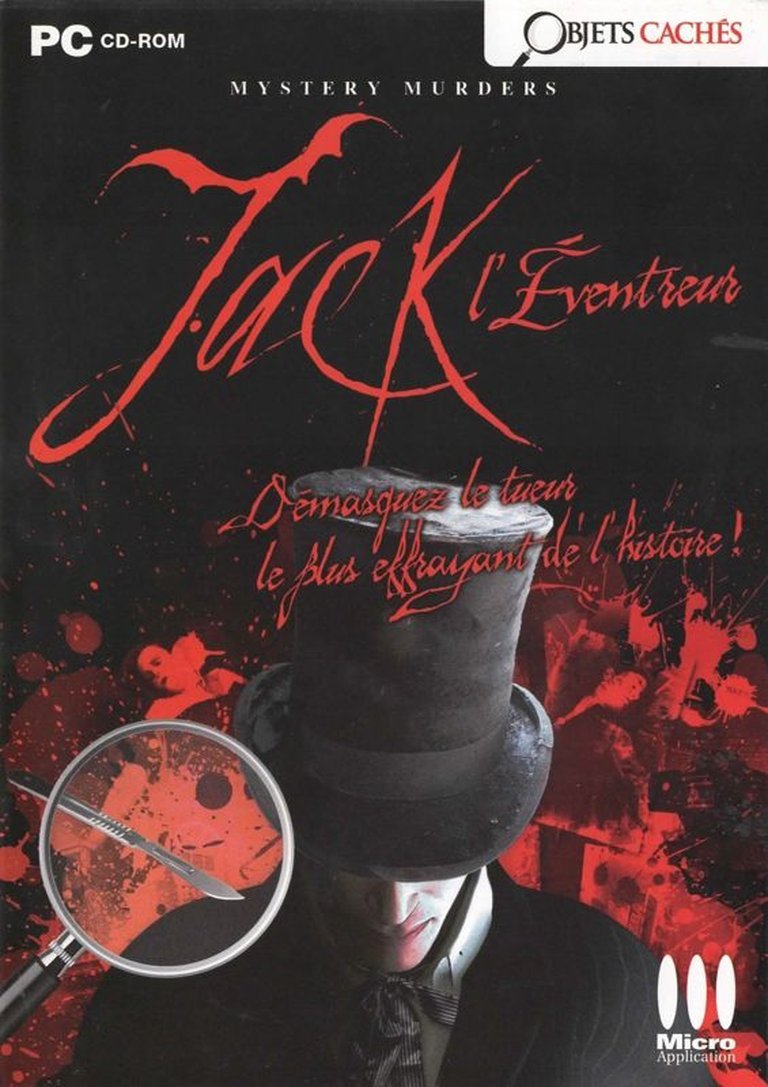
In Mystery Murders: Jack the Ripper, players assume the role of a female journalist or private investigator navigating the fog-shrouded streets of Victorian-era London to solve the infamous Jack the Ripper murders. Combining hidden object gameplay with puzzle-solving elements, the game immerses you in a detective narrative set against the atmospheric Belle Époque backdrop, challenging you to uncover clues and unmask the legendary serial killer through atmospheric locales like churches, hotels, and docklands.
Gameplay Videos
Mystery Murders: Jack the Ripper Guides & Walkthroughs
Mystery Murders: Jack the Ripper Reviews & Reception
metacritic.com (50/100): Mystery Murders: Jack the Ripper isn’t a particularly bad game, it’s just repetitive, unfocused – and if we’re being honest – somewhat mediocre.
nintendolife.com : Switching back-and-forth between these individuals helps to freshen things up throughout the campaign, but this method hurts the story a little in the form of its delivery.
maroonersrock.com : Overall, this game is good, but better for those who love different types of puzzles.
Mystery Murders: Jack the Ripper: A Detailed Review
Introduction
Mystery Murders: Jack the Ripper, released in 2012 by Virtual Playground Ltd., is a hidden object puzzle adventure game that plunges players into the grimy, fog-laden streets of Victorian London during the infamous “Autumn of Terror.” The game tasks players with unraveling the mystery of Jack the Ripper through the eyes of three distinct characters: Emma De Ville, a clairvoyant plagued by visions; Frank Hudson, a rookie journalist; and Inspector Frederick Abberline, a Scotland Yard detective. This review aims to dissect the game’s development, narrative, gameplay mechanics, world-building, reception, and legacy, ultimately determining its place in video game history.
Development History & Context
Developed by Virtual Playground Ltd. and published by Micro Application, S.A., Mystery Murders: Jack the Ripper was released on November 9, 2012, for Windows and later ported to the Nintendo 3DS in 2013. The game is part of the Mystery Murders series, which includes titles like Mystery Murders: The Sleeping Palace. The development team aimed to create an immersive experience that blended historical intrigue with engaging puzzle-solving mechanics, targeting fans of detective and mystery genres.
The technological constraints of the era limited the game’s graphical capabilities, resulting in a visual style that, while atmospheric, lacks the polish of modern titles. The gaming landscape in 2012 was dominated by casual puzzle games, and Mystery Murders: Jack the Ripper fit neatly into this niche, offering a blend of hidden object scenes and traditional puzzles. The game’s release coincided with a resurgence of interest in historical mysteries, making it a timely addition to the market.
Narrative & Thematic Deep Dive
The narrative of Mystery Murders: Jack the Ripper is structured around three protagonists, each offering a unique perspective on the case. Emma De Ville, the clairvoyant, experiences vivid dreams and visions that hint at the killer’s identity. Frank Hudson, the journalist, provides a grounded, investigative approach, while Inspector Abberline brings a law enforcement perspective to the story.
The game’s plot is loosely based on historical events, incorporating real-life figures and locations to enhance authenticity. The narrative is delivered through text-heavy segments interspersed with gameplay, which can feel disjointed at times. The dialogue and character interactions are serviceable but lack the depth and emotional resonance found in more polished narrative-driven games. The game’s themes revolve around justice, the supernatural, and the psychological toll of unsolved crimes, adding a layer of complexity to the otherwise straightforward mystery.
Gameplay Mechanics & Systems
Mystery Murders: Jack the Ripper is a first-person hidden object game with puzzle elements. Players navigate through various locations, searching for hidden items and solving puzzles to progress. The game features a point-and-select interface, with inventory management playing a crucial role in solving puzzles.
The hidden object scenes are randomized, ensuring replayability, but the core items remain consistent. Puzzles range from simple matching games to more complex tasks like developing photographs and mixing potions. The game offers two difficulty modes: Casual and Challenge. Casual mode provides highlighted areas of interest and faster hint regeneration, while Challenge mode requires more patient and methodical play.
One of the game’s standout features is its use of multiple protagonists, each with unique inventory and abilities. This approach adds variety to the gameplay but can also be confusing, as players must keep track of different items and objectives. The UI is functional but dated, with inventory items displayed along the bottom of the screen. The hint system is helpful but can be overused, potentially diminishing the challenge.
World-Building, Art & Sound
The game’s setting is a meticulously crafted recreation of Victorian London, complete with foggy streets, dimly lit alleys, and period-appropriate architecture. The art direction leans heavily into the game’s gothic aesthetic, with muted colors and shadowy environments that enhance the game’s eerie atmosphere. However, the graphics are not without flaws; some hidden objects are nearly indistinguishable from their surroundings, leading to frustration.
The sound design is equally atmospheric, with a haunting soundtrack that complements the game’s dark themes. Ambient sounds like distant whispers and creaking doors add to the immersion, while the lack of voice acting is a notable omission. The game’s use of historical references, such as real newspaper headlines and accurate crime scene depictions, adds a layer of authenticity that enhances the overall experience.
Reception & Legacy
Upon its release, Mystery Murders: Jack the Ripper received mixed reviews. Critics praised the game’s atmospheric setting and engaging puzzles but criticized its repetitive gameplay and lack of innovation. The game’s score on Metacritic is currently unavailable, but individual reviews, such as the one from Nintendo Life, highlight its mediocrity, describing it as “repetitive, unfocused – and if we’re being honest – somewhat mediocre.”
Commercially, the game performed modestly, appealing primarily to fans of the hidden object genre. Its legacy is somewhat overshadowed by more polished titles in the same vein, but it remains a notable entry in the Mystery Murders series. The game’s influence on subsequent titles is limited, but it contributed to the growing popularity of historical mystery games.
Conclusion
Mystery Murders: Jack the Ripper is a flawed but enjoyable hidden object game that captures the essence of its source material. While its narrative and gameplay mechanics are not groundbreaking, the game’s atmospheric setting and engaging puzzles make it a worthwhile experience for fans of the genre. Its legacy is that of a competent but unremarkable title, overshadowed by more innovative entries in the mystery genre.
In the grand tapestry of video game history, Mystery Murders: Jack the Ripper occupies a niche but memorable space. It serves as a testament to the enduring fascination with historical mysteries and the enduring appeal of puzzle-solving games. While it may not be a masterpiece, it is a solid entry in the Mystery Murders series and a worthy addition to any fan’s collection.