
- Release Year: 2011
- Platforms: Windows
- Publisher: Playrix Entertainment
- Genre: Compilation
- Game Mode: Single-player
- Average Score: 92/100
Description
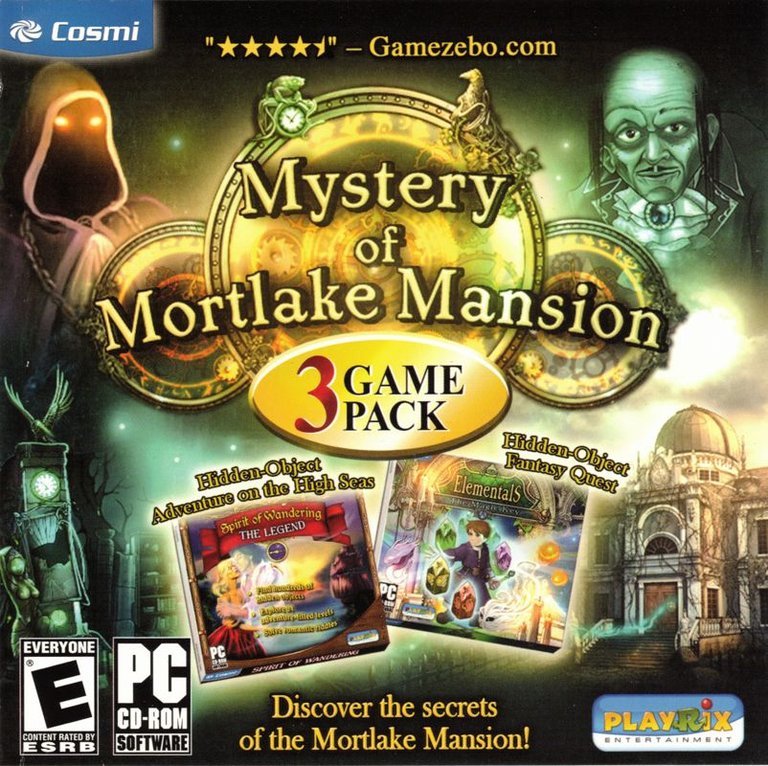
Mystery of Mortlake Mansion: 3 Game Pack is a compilation of three hidden-object adventure games, including the titular Mystery of Mortlake Mansion, Spirit of Wandering: The Legend, and Elementals: The Magic Key. Each game offers a unique mystery-solving experience, blending puzzles, exploration, and supernatural themes in eerie, atmospheric settings. Players uncover secrets, solve intricate puzzles, and interact with ghostly entities across these immersive narratives.
Mystery of Mortlake Mansion: 3 Game Pack Free Download
Mystery of Mortlake Mansion: 3 Game Pack Guides & Walkthroughs
Mystery of Mortlake Mansion: 3 Game Pack Reviews & Reception
ebay.com (92/100): I found it to be a compelling game you want to play it to the end. found it to be fun and entertaining
Mystery of Mortlake Mansion: 3 Game Pack: A Hidden Object Trilogy Reviewed
Introduction: A Compilation of Shadows and Secrets
The Mystery of Mortlake Mansion: 3 Game Pack is a curious artifact of the early 2010s hidden object adventure (HOA) boom—a budget-priced compilation that bundles three distinct games under a single, ominously themed umbrella. Released in 2011 by Playrix Entertainment, this collection includes Mystery of Mortlake Mansion (2011), Spirit of Wandering: The Legend (2008), and Elementals: The Magic Key (2009). While the packaging suggests a cohesive experience, the reality is a trio of standalone titles united more by genre than narrative or mechanical synergy. Yet, within this seemingly arbitrary assembly lies a fascinating snapshot of a genre in transition—one that bridges the gap between the static, inventory-heavy puzzles of the 2000s and the more cinematic, narrative-driven adventures that would dominate later in the decade.
This review will dissect the compilation’s components, analyze its place in the evolution of hidden object games, and evaluate whether the sum of its parts justifies its existence as a curated experience. Through a deep dive into its development context, narrative themes, gameplay systems, and artistic design, we’ll uncover why Mystery of Mortlake Mansion: 3 Game Pack remains a compelling, if flawed, relic of its era.
Development History & Context: Playrix and the Hidden Object Gold Rush
The Rise of Playrix and the HOA Genre
The early 2010s were a golden age for hidden object adventures, a subgenre that had exploded in popularity thanks to digital distribution platforms like Big Fish Games and the casual gaming market’s insatiable appetite for accessible, story-driven experiences. Playrix Entertainment, a Russian studio founded in 2004, was one of the key players in this space, specializing in visually rich, puzzle-heavy games that blended exploration, inventory management, and mini-games. By 2011, Playrix had already established itself with titles like 4 Elements and Fishdom, but the Mystery of Mortlake Mansion compilation represented a strategic pivot toward the burgeoning HOA market.
The compilation’s three games were developed by different teams under the Playrix umbrella, with Mystery of Mortlake Mansion itself credited to Stella Games, a subsidiary known for its atmospheric, first-person adventure titles. The decision to bundle these games was likely a marketing one—capitalizing on the success of Mortlake Mansion (which had been released earlier in 2011) by pairing it with two older, lesser-known titles to create a “value pack” for budget-conscious gamers. This was a common practice in the era, as publishers sought to maximize the lifespan of their back catalogs in an increasingly crowded marketplace.
Technological Constraints and Design Philosophies
The games in this compilation are products of their time, built with the technological limitations of early 2010s PC gaming in mind. Running on modest system requirements (Windows XP/Vista/7, 1GB RAM, and directX 9.0c), they prioritize pre-rendered 2D backgrounds and static, oil-painting-inspired visuals over real-time 3D rendering. This artistic choice was both a stylistic preference and a practical necessity, allowing developers to create lush, detailed environments without the computational overhead of 3D engines.
The gameplay design reflects the genre’s conventions of the era:
– Hidden Object Scenes (HOS): Players scour cluttered, static screens for items listed in a inventory, often with a “sparkle” hint system to guide them.
– Inventory-Based Puzzles: Classic adventure game mechanics, where players combine collected items to solve environmental challenges.
– Mini-Games: A mix of logic puzzles (e.g., match-3, jigsaw, rune-matching) that break up the exploration.
– Linear Progression: The games are divided into chapters, with each chapter culminating in a key puzzle that unlocks the next area.
The compilation’s lack of cohesive narrative or mechanical integration between its three games is telling. Unlike modern anthologies that attempt to weave disparate experiences into a unified whole (e.g., The Dark Pictures Anthology), Mortlake Mansion: 3 Game Pack makes no pretense of connectivity. It is, at its core, a digital equivalent of a triple-feature DVD set—a marketing strategy rather than a creative one.
The Gaming Landscape of 2011
To understand the compilation’s appeal, it’s essential to contextualize the gaming landscape of 2011. The casual gaming market was dominated by:
– Big Fish Games and similar platforms, which thrived on microtransactions and episodic content.
– The decline of physical media, as digital downloads became the norm for PC gaming.
– The rise of mobile gaming, which would soon siphon attention away from traditional HOAs.
In this environment, compilations like Mortlake Mansion served as a bridge between the “premium” HOA market (e.g., Mystery Case Files) and the emerging free-to-play model. They offered players a sense of value—three games for the price of one—while allowing publishers to monetize older titles. The inclusion of Mortlake Mansion as the “headliner” was a savvy move, as its gothic aesthetic and alchemical themes resonated with fans of darker, more narrative-driven HOAs.
Narrative & Thematic Deep Dive: Gothic Mysteries and Alchemical Intrigue
Mystery of Mortlake Mansion: A Dark Alchemical Tale
The centerpiece of the compilation, Mystery of Mortlake Mansion, is a first-person adventure that casts the player as an unnamed protagonist lured to the eponymous estate by a cryptic letter signed only as “R.” The mansion, a labyrinth of Victorian opulence and occult symbolism, is filled with trapped spirits, talking ravens, and a malevolent alchemist who has bound the estate in dark magic. The player’s goal is to uncover the mansion’s secrets, free its captives, and claim ownership of the property—a classic “haunted house” trope with a twist of alchemical mysticism.
Key Themes:
1. Alchemy and Transformation: The game’s puzzles and narrative revolve around alchemical processes, with the player gathering ingredients to craft potions and break curses. This theme is reinforced by the Book of Shadows, a recurring mechanic that guides the player through ritualistic key-forging sequences.
2. Isolation and Discovery: The mansion is a character in its own right, its rooms acting as self-contained puzzles that gradually reveal the history of its inhabitants. The lack of external characters (save for the raven and spirits) amplifies the sense of solitude and discovery.
3. Moral Ambiguity: The game’s antagonist, the “insidious lord,” is never fully fleshed out, leaving his motivations ambiguous. Is he a villain, or merely a guardian of forbidden knowledge? The narrative’s openness invites player interpretation.
Dialogue and Character Interaction:
The game’s writing is functional rather than poetic, with exposition delivered through diary entries, notes, and the occasional conversation with the raven. The dialogue is minimalist, often limited to cryptic hints or alchemical instructions. While this sparseness suits the game’s eerie atmosphere, it also highlights the genre’s reliance on environmental storytelling over deep characterization.
Spirit of Wandering: The Legend and Elementals: The Magic Key: The Supporting Cast
The compilation’s other two games, while mechanically similar, diverge thematically:
– Spirit of Wandering: The Legend (2008) leans into Slavic folklore, with the player aiding a restless spirit trapped between worlds. Its narrative is more linear and less ambiguous, focusing on redemption and the cyclical nature of curses.
– Elementals: The Magic Key (2009) is a lighter, more whimsical affair, with the player solving puzzles to restore balance to a magical realm. Its themes of harmony and elemental forces contrast sharply with Mortlake Mansion’s gothic dread.
The Compilation’s Thematic Disconnect:
The lack of narrative or thematic cohesion between the three games is the compilation’s most glaring weakness. While Mortlake Mansion thrives on atmosphere and mystery, Spirit of Wandering and Elementals feel like tonal whiplash—jarring shifts from gothic horror to folklore and fantasy. This disconnect underscores the compilation’s nature as a marketing product rather than a curated experience.
Gameplay Mechanics & Systems: The HOA Formula Deconstructed
Core Gameplay Loop
Each game in the compilation adheres to the classic HOA formula:
1. Exploration: Players navigate through pre-rendered environments, clicking on hotspots to trigger interactions or hidden object scenes.
2. Hidden Object Scenes (HOS): The player is given a list of items to find within a cluttered, static image. Some items are used immediately, while others are stored in the inventory for later use.
3. Inventory Puzzles: Collected items are combined or applied to environmental obstacles (e.g., using a key to open a door, mixing potions in a cauldron).
4. Mini-Games: Logic puzzles (e.g., match-3, jigsaw, rune-matching) serve as gateways to new areas or items.
5. Progression: Each chapter culminates in a “key puzzle,” where the player assembles alchemical ingredients to forge a key that unlocks the next section of the mansion.
Innovations and Flaws:
– The Book of Shadows: A standout mechanic in Mortlake Mansion, this in-game grimoire provides hints for alchemical puzzles, adding a layer of narrative integration to the gameplay. However, its use is limited to specific sequences, making it feel underutilized.
– Difficulty Settings: The games offer adjustable difficulty, with “expert mode” removing sparkle hints and increasing puzzle complexity. This was a progressive feature for the time, catering to both casual and hardcore players.
– Repetitive Mini-Games: The over-reliance on match-3 and rune-matching puzzles grows tedious, especially in Elementals, where they feel like padding.
– Linear Design: The lack of non-linearity or player agency is a double-edged sword. While it ensures a tightly controlled experience, it also makes the games feel railroaded, with little room for experimentation.
UI and Quality-of-Life Features
The compilation’s UI is functional but unremarkable, with a standard point-and-click interface. Notable features include:
– Hint System: A rechargeable hint button (with cooldowns based on difficulty) helps players stuck on HOS or puzzles.
– Map Navigation: In lower difficulty modes, players can instantly travel between unlocked rooms, a welcome convenience.
– Diary/Journal: Tracks objectives and lore, though its entries are often sparse.
Technical Limitations:
– No Save Slots: The games use a single autosave slot, a frustrating omission that forces players to commit to a playthrough.
– Fixed Inventory: The inventory system is clunky, with no sorting or organization options, leading to unnecessary scrolling.
– Lack of Voice Acting: While the games feature ambient sound and music, the absence of voice acting (even for the raven) makes the world feel less immersive.
World-Building, Art & Sound: Gothic Aesthetics and Atmospheric Design
Visual Direction: Oil Paintings and Occult Symbolism
The standout feature of Mortlake Mansion is its visual design, which draws heavily from Victorian-era oil paintings. The mansion’s interiors are rendered in rich, muted tones, with intricate details that reward close inspection. The art style is reminiscent of Mystery Case Files but with a darker, more oppressive palette. Key visual motifs include:
– Alchemical Symbols: Runes, pentagrams, and astrological signs adorn walls and puzzles, reinforcing the game’s occult themes.
– Gothic Architecture: Towering bookshelves, ornate chandeliers, and decaying tapestries create a sense of grandeur and decay.
– Surreal Touches: The “shadow world” sequences, where the mansion’s true nature is revealed, use distorted perspectives and eerie lighting to unsettle the player.
Contrast with the Other Games:
– Spirit of Wandering opts for a more pastoral, folk-art aesthetic, with rustic cottages and misty forests.
– Elementals embraces a brighter, almost storybook style, with vibrant colors and whimsical creature designs. The shift in art direction between games is jarring, further emphasizing the compilation’s lack of cohesion.
Sound Design: Ambience Over Music
The games’ audio design is understated but effective, prioritizing ambient sounds over melodic scores:
– Mortlake Mansion: Creaking floorboards, distant whispers, and the flutter of the raven’s wings create an immersive atmosphere. The soundtrack is minimal, relying on droning, dissonant tones to evoke tension.
– Spirit of Wandering: Features more traditional folk instrumentation, with flutes and strings accompanying its rural setting.
– Elementals: Uses light, celestial chimes and harp melodies, aligning with its fantastical tone.
Voice Acting and Dialogue:
The absence of voice acting is a missed opportunity, particularly in Mortlake Mansion, where the raven and spirits could have been compelling characters. The text-based dialogue, while serviceable, lacks the emotional weight that voice performance could have provided.
Reception & Legacy: A Niche Classic or Forgotten Relic?
Critical and Commercial Reception
The Mystery of Mortlake Mansion: 3 Game Pack received little critical attention upon release, a common fate for budget compilations in the HOA genre. User reviews on platforms like eBay and GameFAQs are overwhelmingly positive, with players praising the games’ atmosphere, puzzle design, and value for money. Common criticisms include:
– Repetitive Gameplay: The overuse of match-3 and HOS sequences grows stale, particularly in the latter halves of each game.
– Technical Quirks: The lack of save slots and occasional buggy puzzles frustrate some players.
– Lack of Innovation: By 2011, the HOA genre was evolving toward more narrative-driven experiences (e.g., The Raven: Legacy of a Master Thief), making Mortlake Mansion feel dated in hindsight.
Commercial Performance:
The compilation’s sales figures are difficult to ascertain, but its continued availability on platforms like eBay and GOG suggests a dedicated niche audience. Its inclusion in Playrix’s back catalog has ensured its longevity, even as the studio has shifted focus to mobile games like Homescapes and Fishdom.
Influence and Industry Impact
While Mortlake Mansion did not revolutionize the HOA genre, it exemplifies several trends of its era:
1. The Rise of Compilations: The success of bundles like this one paved the way for similar collections, such as The Hidden Object Show series.
2. Atmospheric Storytelling: Its emphasis on environmental narrative and gothic aesthetics influenced later titles like Dark Arcana: The Carnival and Grim Legends: The Forsaken Bride.
3. The Decline of Pure HOAs: The compilation’s reliance on static HOS and inventory puzzles highlights the genre’s limitations, pushing developers toward more dynamic, hybrid experiences.
Legacy in the Modern Era:
Today, Mortlake Mansion is remembered fondly by fans of classic HOAs but is largely overshadowed by more ambitious titles. Its lack of modern conveniences (e.g., multiple save slots, voice acting, widescreen support) makes it a tough sell for contemporary audiences. However, its atmospheric design and alchemical themes ensure its place as a cult favorite among enthusiasts of gothic adventure games.
Conclusion: A Flawed but Fascinating Time Capsule
The Mystery of Mortlake Mansion: 3 Game Pack is a product of its time—a budget-friendly compilation that delivers three distinct but mechanically similar hidden object adventures. While its lack of narrative cohesion and repetitive gameplay mechanics prevent it from being a masterpiece, its strengths lie in its atmospheric world-building, gothic aesthetics, and the sheer variety of puzzles it offers.
Final Verdict:
– For HOA Enthusiasts: A must-play for fans of the genre, particularly those who appreciate gothic themes and alchemical puzzles. The compilation’s value proposition (three games for the price of one) makes it a worthwhile investment.
– For Casual Gamers: A solid but unremarkable experience. The games are accessible and engaging, but their linear design and repetitive mini-games may grow tedious.
– For Modern Adventure Fans: A fascinating time capsule of early 2010s HOA design, but its lack of modern amenities (voice acting, widescreen support, multiple saves) may frustrate those accustomed to contemporary standards.
Score: 7.5/10 – A Niche Classic with Enduring Charm
The Mystery of Mortlake Mansion: 3 Game Pack is not a revolutionary title, but it is a compelling snapshot of a genre in transition. Its gothic atmosphere, intricate puzzles, and budget-friendly appeal ensure its place in the pantheon of hidden object adventures—a flawed but fascinating relic of a bygone era.