
- Release Year: 2022
- Platforms: Windows
- Publisher: 8floor Ltd.
- Developer: Somer Games
- Genre: Strategy, Tactics
- Perspective: Fixed / flip-screen
- Game Mode: Single-player
- Gameplay: Point and select
- Average Score: 75/100
Description
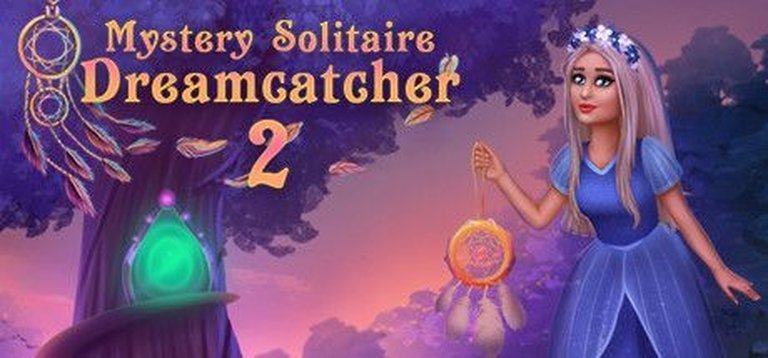
In Mystery Solitaire: Dreamcatcher 2, a young girl plunges into the boundless and enigmatic world of dreams and visions to uncover hidden secrets, only to discover it’s far more complex and perilous than imagined. Players master various solitaire puzzles amid colorful, atmospheric dreamscapes filled with magic, emotions, and mystery in this casual card game sequel.
Gameplay Videos
Where to Buy Mystery Solitaire: Dreamcatcher 2
PC
Mystery Solitaire: Dreamcatcher 2 Reviews & Reception
steambase.io (75/100): Player Score of 75 / 100 from 4 total reviews.
Mystery Solitaire: Dreamcatcher 2: Review
Introduction
Imagine slipping into a realm where dreams twist into perilous labyrinths, guarded by malevolent spirits, and your only weapon is a deck of cards shuffled into intricate puzzles. Mystery Solitaire: Dreamcatcher 2, released in August 2022, beckons players into this ethereal domain, blending the timeless allure of solitaire with a whisper of narrative adventure. As the second installment in the Dreamcatcher sub-series within the broader Mystery Solitaire franchise—following the 2021 original and nestled among titles like Grimm’s Tales and Powerful Alchemist—it inherits a legacy of accessible, themed card games from developer Somer Games and publisher 8floor Ltd. These budget-friendly gems have carved a niche in the casual gaming market, offering bite-sized escapism amid Steam’s vast library. My thesis: While Dreamcatcher 2 faithfully refines the formula of its predecessors with vivid dreamscapes and escalating challenges, it remains a modest triumph of cozy solitaire craftsmanship, emblematic of 2020s indie casual gaming’s quiet persistence in an era dominated by AAA spectacles.
Development History & Context
Somer Games, a modest studio specializing in puzzle-card hybrids, crafted Mystery Solitaire: Dreamcatcher 2 as a swift follow-up to the 2021 original, releasing it on August 14, 2022 (with MobyGames listing August 15), exclusively for Windows via Steam at a humble $4.99. Publisher 8floor Ltd., known for prolific output in the casual space—including siblings like Pirate’s Solitaire 2 and Knight Solitaire 2—handled distribution, bundling it into value packs like the Mystery Solitaire: Dreamcatcher Bundle 3-in-1 (50% off at $7.47). The game’s MobyGames entry, added in late 2022 by contributor BOIADEIRO ERRANTE, underscores its obscurity: no full credits list, no approved description beyond the Steam blurb, and genres tagged as “Strategy/Tactics” with fixed/flip-screen visuals and point-and-select interface.
Development likely occurred under tight constraints typical of 8floor’s pipeline—low system requirements (512 MB RAM minimum, DirectX 9, 60 MB storage) harking back to early 2010s tech, runnable on Windows XP SP3. This reflects a vision of maximal accessibility: no need for modern GPUs or high-end rigs, positioning it for family-friendly play on aging hardware. The 2022 gaming landscape was a paradox—blockbusters like Elden Ring and God of War Ragnarök overshadowed indies, yet Steam’s casual surge (fueled by pandemic habits) favored quick, thematic puzzlers. Solitaire variants thrived amid “cozy games” like Unpacking or Stardew Valley, but Dreamcatcher 2 targeted undemanding audiences with its series’ formula: themed levels unlocking story beats. No public dev logs or interviews exist, but its rapid succession post-Grimm’s Tales 6 suggests a templated engine, prioritizing volume over innovation in a market where casual titles like these sustain via bundles and sales.
Narrative & Thematic Deep Dive
At its core, Mystery Solitaire: Dreamcatcher 2 weaves a lightweight yet evocative tale of subconscious peril. The protagonist—a nameless “sleeping girl”—plunges into a “boundless and dangerous” dream world to unearth hidden secrets, risking eternal entrapment among evil spirits. Players act as her guardian, solving solitaire puzzles to “protect” her, explore “fantastic locations,” and unravel mysteries. This setup echoes folklore of dreamcatchers as talismans against nightmares, thematizing vulnerability, awakening, and the blurred line between reverie and reality.
Plot Structure and Pacing
The narrative unfolds across levels as an “unforgettable adventure,” with progression gating story snippets. Early stages introduce the dive into visions; mid-game escalates with spirit confrontations; climaxes demand mastery to “wake up in time.” No branching paths or dialogue trees—it’s linear, propelled by interstitial cutscenes or loading screens revealing lore. The Steam blurb hints at escalating dread: dreams aren’t “simple,” demanding “effort” to escape.
Characters and Dialogue
The girl is a cipher—cute, ethereal, perhaps wide-eyed in artwork—symbolizing innocence amid chaos. Antagonists are archetypal “evil spirits,” shadowy foes repelled via card clears. No voiced lines or deep interactions; dialogue is sparse, motivational prompts like “Prove yourself!” or “Let the fun take over!” Themes probe psychological depth lightly: dreams as metaphors for unresolved fears, solitaire as mindful therapy against subconscious traps. Emotional tags (user-applied on Steam) nod to this intimacy, evoking quiet introspection over bombast.
Underlying Themes
Psychoanalytic undertones permeate—Freudian id vs. ego in spirit battles, Jungian archetypes in dream locales. Yet it’s family-friendly escapism: magic tempers horror, emphasizing empowerment (“do your best to complete all levels!”). Critiques might note shallowness—no character arcs or moral ambiguity—but thematically, it coheres as a fable of resilience, aligning with the series’ mythic motifs (alchemy, ravens, grimm tales).
Gameplay Mechanics & Systems
Core Gameplay Loops
Dreamcatcher 2 elevates standard solitaire into a strategic chain-builder: “collect chains of cards” in “complicated card layouts” across “super exciting levels.” Likely a variant of Klondike or FreeCell with match-3 influences, players clear boards by sequencing descending chains (e.g., King-to-Ace suits), tackling escalating layouts. Loops cycle through level selection, puzzle-solving, reward collection—proving oneself via completion.
Power-Ups, Progression, and Challenges
Jokers accelerate clears; combo multipliers boost coin earnings for retries or bonuses. Progression unlocks locations/levels, with “special tasks” and 15+ “colorful trophies” for mastery (e.g., perfect clears, speed runs). Coins fund upgrades, fostering replayability. UI is point-and-select, intuitive for casuals—fixed screens minimize overwhelm.
Innovations and Flaws
Innovations shine in thematic integration: dream “visions” manifest as unique layouts, blending tactics with narrative. No combat per se—puzzles proxy battles. Flaws? Repetitiveness risks dull moments, despite “never a dull moment” claims; low ownership (0-20K SteamSpy) suggests steep difficulty spikes. Yet, family-sharing and singleplayer polish make it addictive for short bursts.
| Mechanic | Strengths | Weaknesses |
|---|---|---|
| Card Chains | Fluid, combo-driven satisfaction | Predictable patterns post-familiarity |
| Jokers/Combos | Risk-reward depth | Paywall-lite if coins gate progress |
| Levels/Tasks | 100s of varieties implied | Lacks procedural generation |
| UI | Clean, colorful | Flip-screen limits immersion |
World-Building, Art & Sound
The dream world is a vibrant tapestry of “fantastic locations”—surreal vistas blending whimsy and menace, from starry voids to spirit-haunted webs. Atmosphere evokes wonder laced with unease, dreamcatchers as motifs warding evil.
Visually, “vivid graphics” dominate: cute, colorful art (user tags: Cute, Colorful, Atmospheric) with magical flourishes—glowing cards, ethereal effects. Fixed/flip-screen suits quick play, enhancing coziness.
Sound design perplexes: a “Pirate soundtrack” (Steam blurb anomaly amid dream theme) suggests jaunty shanties clashing with mood—perhaps evoking adventure, or a localization quirk. No full audio noted, likely ambient chimes for clears, underscoring emotional pull.
Collectively, elements forge immersion: art captivates, sound energizes (if mismatched), world-building invites fantasy without overload.
Reception & Legacy
Launch reception was muted—no MobyScore, zero critic reviews on MobyGames/Steam (as of sources). Steam tallies 4 user reviews: 3 positive, 1 negative (75/100 Steambase score), praising casual fun amid complaints of repetition. Ownership hovers low (SteamSpy: 0-20K), peak CCU ~2, reflecting niche appeal—collected by 1 MobyGames user.
Commercially, bundles sustain it in 8floor’s ecosystem (Solitaire Collection 1 packs 18 titles). Reputation evolved minimally: user tags (Casual, Solitaire, Magic) affirm cozy status, but obscurity limits discourse. Influence? Incremental in casual solitaire—refines series formula, inspiring Dreamcatcher 3—yet no industry ripples amid 2022’s deluge (309K+ MobyGames titles). It exemplifies “invisible indies”: culturally footnotes, but vital for genre preservation.
Conclusion
Mystery Solitaire: Dreamcatcher 2 distills solitaire’s meditative essence into a dream-woven package—narrative hooks propel mechanics, vivid art/sound envelop loops, all accessible yet challenging. Development thriftiness mirrors its unpretentious charm, reception underscores casual gaming’s underbelly, and legacy cements it as series filler. Verdict: A solid 7.5/10—not historic, but a worthy historical footnote, ideal for rainy afternoons chasing trophies in the subconscious. In video game history, it humbly upholds solitaire’s throne among the cozy crowd, proving simple cards conquer boundless dreams.