
- Release Year: 2006
- Platforms: Windows
- Publisher: MumboJumbo, LLC
- Developer: SpinTop Games
- Genre: Card, Patience, Puzzle, Solitaire, Tile game
- Perspective: 1st-person, Top-down
- Game Mode: Single-player
- Gameplay: Cards, Hidden object, Tiles
- Average Score: 86/100
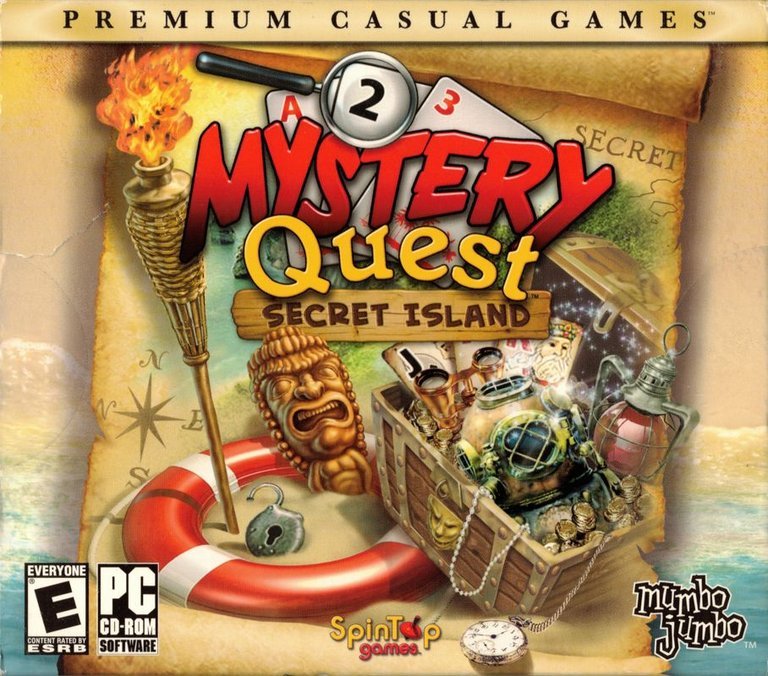
Description
Mystery Solitaire: Secret Island is a puzzle game that blends solitaire card mechanics with an adventure narrative. Players find themselves stranded on a mysterious island and must explore 12 distinct locations to uncover clues by solving solitaire rounds and hidden object challenges. The game features a mix of card-matching gameplay and seek-and-find segments, all set against a relaxing atmosphere with appealing visuals and music.
Gameplay Videos
Mystery Solitaire: Secret Island Free Download
Mystery Solitaire: Secret Island Guides & Walkthroughs
Mystery Solitaire: Secret Island Reviews & Reception
mobygames.com (80/100): A solitaire card game with a storyline where you solve a mystery on a secret island.
download-free-games.com (93/100): Play solitaire games and collect clues through hidden object games to find your way off the Secret Island!
Mystery Solitaire: Secret Island – A Hidden Gem of Narrative-Driven Card Gaming
Introduction: The Allure of the Unknown
Few games manage to blend the methodical satisfaction of solitaire with the immersive pull of a mystery adventure. Mystery Solitaire: Secret Island (2006), developed by SpinTop Games and published by MumboJumbo, is one such rarity—a title that transcends its casual puzzle roots to deliver an experience that is as much about storytelling as it is about card-matching. At its core, it’s a game about isolation, discovery, and the quiet thrill of piecing together a forgotten history.
Stranded on a lush, enigmatic island, players must navigate through 12 distinct locations, each guarded by increasingly complex solitaire puzzles. The twist? Progress is gated not just by card-matching prowess but by hidden object challenges, where keen observation unlocks the next clue in an overarching mystery. With over 60 unique solitaire layouts, a hauntingly atmospheric soundtrack, and a narrative that unfolds like a lost journal, Secret Island stands as a pioneering example of how traditional card games can evolve into something far more compelling.
This review will dissect Mystery Solitaire: Secret Island in exhaustive detail—exploring its development history, narrative depth, gameplay mechanics, artistic direction, and lasting legacy. By the end, we’ll determine whether this 2006 title remains a forgotten classic or a relic of its time.
Development History & Context: The Rise of Hybrid Casual Games
The Studio Behind the Mystery: SpinTop Games
SpinTop Games, though not a household name, was a key player in the mid-2000s casual gaming boom. Specializing in puzzle and card-based titles, the studio carved a niche by infusing traditional gameplay with light narrative elements—a trend that would later dominate the mobile gaming landscape. Mystery Solitaire: Secret Island was one of their earliest forays into story-driven solitaire, a subgenre that would eventually spawn sequels like Mystery Solitaire: Dreamcatcher (2021) and Mystery Solitaire: Powerful Alchemist (2022).
The Casual Gaming Landscape of 2006
The mid-2000s were a golden age for downloadable casual games, with platforms like Big Fish Games, GameHouse, and MumboJumbo’s own storefront thriving. Titles like Bejeweled, Peggle, and Diner Dash dominated the market, but there was a growing appetite for narrative-driven experiences that didn’t require the time investment of full-fledged adventures.
Secret Island arrived at a pivotal moment:
– Hidden object games (HOGs) were surging in popularity (Mystery Case Files: Huntsville had just revolutionized the genre in 2005).
– Solitaire variants were a staple, but most lacked depth beyond high-score chasing.
– Hybrid gameplay (mixing card games with other mechanics) was still experimental.
SpinTop Games seized this opportunity, crafting a title that merged solitaire’s accessibility with the intrigue of a mystery adventure.
Technological Constraints & Design Philosophy
Developed for Windows XP/Vista, Secret Island was built with the limitations of early-2000s casual gaming in mind:
– Fixed/flip-screen visuals (no 3D acceleration).
– Point-and-click interface optimized for mouse input.
– Modest system requirements (128MB RAM, minimal GPU demands).
Despite these constraints, the game’s art direction and sound design pushed the boundaries of what a “simple” card game could achieve. The developers prioritized:
1. Atmospheric immersion (via hand-drawn environments and ambient audio).
2. Replayability (through varied solitaire layouts and hidden object scenes).
3. Accessibility (with optional hints and multiple card designs).
The result was a game that felt richer than its technical limitations suggested—a testament to clever design over raw processing power.
Narrative & Thematic Deep Dive: The Island’s Forgotten Tale
Plot Overview: A Castaway’s Quest
The premise is deceptively simple: You wash ashore on a mysterious island with no memory of how you got there. A tattered journal serves as your only guide, hinting at a lost civilization, hidden treasures, and a dark secret buried within the island’s ruins. Your goal? Uncover the truth and find a way home.
The narrative unfolds in 12 distinct chapters, each tied to a specific island location:
– Abandoned campsites (hinting at past explorers).
– Crumbling temples (suggesting an ancient culture).
– Hidden grottos (where relics and clues are stashed).
Themes: Isolation, Discovery, and the Weight of History
While Secret Island lacks the character depth of a Monkey Island or Syberia, its strength lies in environmental storytelling. The island itself is the protagonist—a place where every card matched and every object found feels like a step toward unraveling a larger mystery.
Key themes include:
1. The Unknown as Both Threat and Allure – The island is beautiful but perilous, inviting but guarded.
2. The Passage of Time – Ruins, faded journal entries, and rusted artifacts suggest a forgotten history waiting to be rediscovered.
3. Persistence in the Face of Adversity – The solitaire puzzles grow harder, mirroring the player’s struggle against the island’s secrets.
Dialogue & Journal Entries: Minimalist but Effective
The game’s written narrative is sparse but impactful. Journal entries update after each major discovery, offering cryptic hints like:
“The temple’s markings don’t match any known language… but the symbols repeat. A pattern? A warning?”
While there’s no voice acting, the text-based storytelling is enhanced by:
– Handwritten font styles (giving the journal a personal, aged feel).
– Gradual reveals (new entries only appear after completing hidden object challenges).
– Ambiguous endings (leaving some mysteries unsolved, inviting player interpretation).
Characterization: The Player as the Silent Protagonist
You play as an unnamed castaway, a deliberate choice that immerses the player rather than imposing a predefined personality. This blank-slate protagonist approach works because:
– The focus is on exploration and discovery, not dialogue trees.
– The island’s history (not the player’s backstory) drives the intrigue.
– The lack of NPCs reinforces the sense of isolation.
Gameplay Mechanics & Systems: Solitaire Meets Adventure
Core Gameplay Loop: Cards, Clues, and Hidden Objects
Secret Island structures its progression in a three-phase cycle:
1. Solitaire Challenge – Clear a unique card layout to unlock a new island location.
2. Hidden Object Search – Scour a detailed scene for clues to progress the story.
3. Journal Update – Receive a new entry, hinting at the next destination.
This loop ensures that no two play sessions feel identical, as the solitaire layouts and hidden object scenes vary in complexity.
Solitaire Mechanics: Beyond Klondike
Unlike traditional solitaire games, Secret Island employs a matching pairs system rather than foundation-building. Key mechanics include:
– Elaborate card spreads (some resembling Mahjong tile arrangements).
– Limited shuffles (forcing strategic card removal).
– Power-up cards (e.g., magnets to attract matches, jokers as wildcards).
– Time pressure (in later levels, adding urgency).
The game gradually increases difficulty by:
– Introducing blocked cards (which must be freed before matching).
– Reducing available moves (some layouts have only one valid path).
– Adding multi-tiered boards (where clearing one layer reveals another).
Hidden Object Segments: A Breath of Fresh Air
After completing 2-3 solitaire rounds, players enter a “Seek and Find” mode, where they must:
– Locate 10-15 objects in a cluttered scene (e.g., a jungle clearing, a shipwreck).
– Click on items from a checklist (some cleverly hidden or camouflaged).
– Use zoom functionality to inspect small details.
These segments serve as palate cleansers, breaking up the solitaire grind while advancing the narrative.
Progression & Replayability
- 12 island locations, each with 5+ solitaire levels.
- Three card designs (including a family-friendly “picture cards” mode).
- Star ratings for perfect clears (encouraging replays).
- No strict fail state—hints are available, but overuse penalizes your score.
UI & Accessibility
The interface is clean and intuitive, with:
– Mouse-only controls (no keyboard required).
– A hint system (reveals a valid match when stuck).
– Auto-save functionality (preventing progress loss).
However, some UX quirks hold it back:
– No undo button (a missed click can ruin a near-perfect run).
– Occasional object-hunt ambiguity (some items blend too well into backgrounds).
World-Building, Art & Sound: Crafting an Island of Secrets
Visual Design: A Tropical Mystery
The game’s art style is its strongest asset—a hand-painted, storybook aesthetic that evokes:
– Lush jungles (vibrant greens, cascading vines).
– Ancient ruins (carved stone, moss-covered relics).
– Shipwrecks and caves (dark blues, flickering torchlight).
Key artistic choices:
– Three distinct card backs (each reflecting the island’s themes).
– Dynamic lighting (sunset hues in later levels).
– Subtle animations (swaying palm trees, flickering fireflies).
Soundtrack & Ambience: The Island’s Voice
The audio design is minimalist but immersive, featuring:
– A looping ambient score (soft piano, tropical percussion).
– Environmental sounds (waves crashing, distant bird calls).
– Subtle UI feedback (card flips, object-click sounds).
While not orchestral or dynamic, the soundtrack enhances the mood without overwhelming the player.
Atmosphere: The Power of Isolation
The game’s greatest achievement is its sense of place. The island feels:
– Alive (through animations and sound).
– Mysterious (via cryptic journal entries).
– Rewarding (as each clue brings you closer to escape).
Reception & Legacy: A Cult Classic in the Making?
Critical Reception (2006-2008)
- GameZebo (2008): 80/100 – Praised its “fun, challenging, and relaxing” blend of solitaire and hidden objects.
- Player Scores (MobyGames): 3.2/5 – Mixed but generally positive, with fans appreciating its unique twist on solitaire.
Commercial Performance & Longevity
While not a blockbuster hit, Secret Island found a niche audience among:
– Casual gamers seeking narrative depth.
– Solitaire enthusiasts craving variety.
– Hidden object fans who enjoyed the hybrid format.
Its success led to:
– Sequels (Mystery Solitaire: Dreamcatcher, Powerful Alchemist).
– A lasting influence on later hybrid games (Crime Solitaire, Legends of Solitaire).
Legacy: A Blueprint for Narrative Puzzle Games
Secret Island proved that solitaire could be more than a time-killer—it could be:
– A vehicle for storytelling.
– A gateway to adventure.
– A test of both logic and observation.
Modern games like The Room and Obduction owe a debt to its environmental puzzle design, while mobile titles like Solitaire Stories continue its narrative-driven card-game tradition.
Conclusion: A Secret Worth Uncovering
Mystery Solitaire: Secret Island is a flawed but fascinating experiment—a game that dares to ask what solitaire can be when paired with mystery, exploration, and atmosphere. It’s not perfect:
– The hidden object segments can feel repetitive.
– The solitaire mechanics lack the depth of Spider or FreeCell.
– The narrative is light compared to full adventure games.
Yet, its ambition and charm elevate it above its peers. For players who enjoy:
✅ Relaxing but engaging puzzle games
✅ Atmospheric storytelling without heavy dialogue
✅ A mix of card-matching and hidden object challenges
…Secret Island remains a hidden gem—one that deserves rediscovery in an era where narrative-driven casual games dominate the market.
Final Verdict: 7.5/10 – “A Mysterious Delight”
Pros:
✔ Unique blend of solitaire and adventure.
✔ Gorgeous hand-drawn visuals and immersive sound.
✔ Gradual difficulty curve keeps players engaged.
Cons:
✖ Hidden object scenes can feel samey.
✖ Solitaire mechanics lack depth for hardcore fans.
✖ Narrative is more atmospheric than substantive.
Who Should Play It?
– Fans of story-driven puzzle games (The Witness, Gorogoa).
– Casual gamers who want more than just high-score chasing.
– Solitaire veterans looking for a fresh twist.
Where Does It Stand in Gaming History?
While not a revolutionary masterpiece, Mystery Solitaire: Secret Island is a pioneering title that helped bridge the gap between casual and narrative gaming. Its legacy lives on in modern hybrids, proving that even the simplest mechanics can tell a compelling story when paired with creativity and atmosphere.
Final Thought:
If you’ve ever wondered what Myst would look like as a solitaire game, Secret Island is the closest you’ll get—and that’s a mystery worth solving.
Now, go shuffle the deck and uncover the island’s secrets. 🃏🏝️