
- Release Year: 2022
- Platforms: Windows
- Publisher: 8floor Ltd.
- Developer: Melon Games
- Genre: Puzzle
- Perspective: Fixed / flip-screen
- Game Mode: Single-player
- Gameplay: Cards, Point and select, Tiles
- Average Score: 67/100
Description
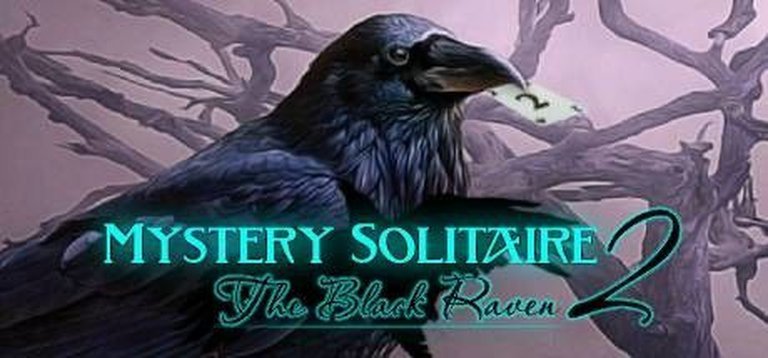
Mystery Solitaire: The Black Raven 2 is a casual card game that blends solitaire gameplay with a dark, gothic narrative inspired by Edgar Allan Poe’s iconic poem ‘The Raven.’ Players unravel a mysterious storyline while solving challenging solitaire puzzles set against eerie, atmospheric visuals. Developed by Melon Games and published by 8floor, this sequel continues the haunting adventure with new levels and themes, offering a mix of relaxation and mystery for fans of narrative-driven card games.
Where to Buy Mystery Solitaire: The Black Raven 2
PC
Mystery Solitaire: The Black Raven 2 Reviews & Reception
steambase.io (67/100): A continuation of the solitaire game based on the famous mystical poem ‘The Raven’ by Edgar Allan Poe.
store.steampowered.com : A continuation of the solitaire game based on Edgar Allan Poe’s famous mystical poem, The Raven. A work that perfectly reflects Edgar’s inner world, his life and creativity. Mystical, dark and extraordinary!
playtracker.net : The Popularity Score uses data like the amounts of total players and active players to summarize how popular a game is in short numerical fashion.
mobygames.com : Play the sequel to the solitaire game based on Edgar Allan Poe’s famous mystical poem, The Raven. A work that perfectly reflects Edgar’s inner world, his life and creativity. Mystical, dark and extraordinary!
Mystery Solitaire: The Black Raven 2: Review
A Gothic Card Odyssey That Honors Poe’s Legacy While Sticking Close to Formula
Introduction
In the crowded landscape of casual solitaire games, Mystery Solitaire: The Black Raven 2 stands out for its bold embrace of gothic melancholy. Released in 2022 by Ukrainian studio Melon Games and publisher 8Floor, this sequel to the 2019 original seeks to deepen its connection to Edgar Allan Poe’s seminal poem The Raven while refining its card-based puzzle loop. But does it transcend its genre trappings to become a memorable homage, or does it merely iterate on well-worn mechanics? This review delves into the game’s atmospheric ambition, mechanical execution, and legacy within the hidden-object and solitaire revival of the 2020s.
Development History & Context
Studio Vision & Technological Constraints
Melon Games, a prolific developer in the casual puzzle space (with credits spanning Mystery Solitaire: Grimm’s Tales and Cthulhu Mythos spinoffs), operates within a tightly defined niche. The team of five — led by producer Ivan Parkhomenko and composer Maxim Ermolaev (a veteran of 114+ titles) — specializes in iterative sequels optimized for low-spec PCs. Released during the COVID-19 pandemic’s twilight phase, The Black Raven 2 targeted an audience seeking comfort gaming: straightforward mechanics, bite-sized sessions, and thematic escapism.
The 2022 Gaming Landscape
The game arrived amid a resurgence of narrative-driven solitaire hybrids (Card Shark, Inscryption), yet Melon Games doubled down on traditionalism. Built for Windows XP-era hardware (minimum specs: 512MB RAM, 1500MHz CPU), it prioritized accessibility over innovation. This design philosophy mirrored the wider casual market’s reliance on proven formulas during an era of economic uncertainty.
Narrative & Thematic Deep Dive
Plot as Poetic Ambiance
Unlike story-heavy peers, The Black Raven 2 uses Poe’s work as atmosphere rather than plot. Players navigate 20 gorgeously morose locales — decaying mansions, moonlit forests — but the “narrative” is largely impressionistic. Trophies and unlocks reference Poe’s lexicon (“Nevermore,” “Lenore”), yet character development and dialogue are absent. The absence of a tangible protagonist or antagonist may disappoint literary purists, but the focus remains on mood: loneliness, obsession, and the supernatural seep through every card flip.
Thematic Execution
The game’s greatest success lies in translating Poe’s existential dread into gameplay loops. Each of the 200 levels feels like a stanza in a larger elegy, with combos (“multiplier chains”) evoking the poem’s relentless refrain. However, the lack of textual depth — no excerpts, no voice acting — leaves the connection to Poe surface-level. This is a mood board, not a narrative adaptation.
Gameplay Mechanics & Systems
Core Loop & Innovations
The gameplay adheres to classic solitaire rules: clear the board by matching cards in ascending/descending sequences. Melon Games introduces two key twists:
1. Joker-Powered Combos: Landing successive matches with a joker card multiplies coin rewards, encouraging riskier plays.
2. Trophy Progression: Collecting 15 “mystical rewards” (e.g., raven feathers, lockets) adds metagame incentives.
While polished, these systems feel iterative rather than revolutionary. The absence of new modes (e.g., timed challenges) or variant rules (e.g., spider solitaire) limits long-term engagement.
UI & Progression
The interface excels in clarity, with intuitive drag-and-drop controls and a minimalist HUD. However, level design suffers from repetition: by Level 50, players report déjà vu in board layouts. The “complexity” promised in Steam blurbs often translates to RNG-dependent card placement rather than strategic depth.
World-Building, Art & Sound
Visual Direction
Artist Mihail Marushev crafts a lush gothic aesthetic. Cards feature ornate, Poe-inspired backings (12 styles total), while backgrounds blend painted silhouettes with subtle animations (flickering candles, drifting fog). The fixed-screen presentation limits exploration but reinforces claustrophobia — a smart thematic choice.
Sound Design
Maxim Ermolaev’s score is the game’s standout feature. Haunting piano melodies and ambient whispers evoke Poe’s psychological unease. Unfortunately, the lack of dynamic tracks (each location recycles 1–2 themes) undermines immersion over extended playthroughs.
Reception & Legacy
Launch Reception
At release, the game garnered modest attention. With only nine Steam user reviews (six positive, three negative), impressions leaned mixed:
– Praise: “Perfect for Poe fans” (Jxt09), “Relaxing yet eerie” (El Patito).
– Criticism: “Repetitive layouts” (Steam user), “No story payoff” (Steam user).
No major critics covered the title, reflecting the broader invisibility of budget casual games in mainstream discourse.
Industry Impact & Evolution
The Black Raven 2 exemplifies the “safe sequel” model dominating the casual market. Its legacy lies in reinforcing 8Floor’s strategy of rapid-fire, thematically linked sequels (The Black Raven 3 launched just months later). While it didn’t innovate, its success (bundled in 14 Steam packs) proved the viability of literary-niche solitaire.
Conclusion
Mystery Solitaire: The Black Raven 2 is a competently crafted, aesthetically coherent entry in Melon Games’ oeuvre. Its devotion to Poe’s atmosphere elevates it above asset-flip solitaire clones, but mechanical stagnation and narrative thinness prevent it from achieving greatness. For casual fans seeking gothic ambiance, it’s a worthy $1.49 sale pickup; for those craving innovation, it’s a melancholic “Nevermore.” In the annals of video game history, it remains a footnote — albeit one penned with elegant, raven-dark ink.
Final Verdict: A 7/10 for execution within constraints, but a missed opportunity for deeper literary engagement.