
- Release Year: 2010
- Platforms: Windows
- Publisher: Intenium GmbH
- Genre: Compilation
- Perspective: First-person
- Game Mode: Single-player
- Gameplay: Hidden object
- Setting: Fantasy
Description
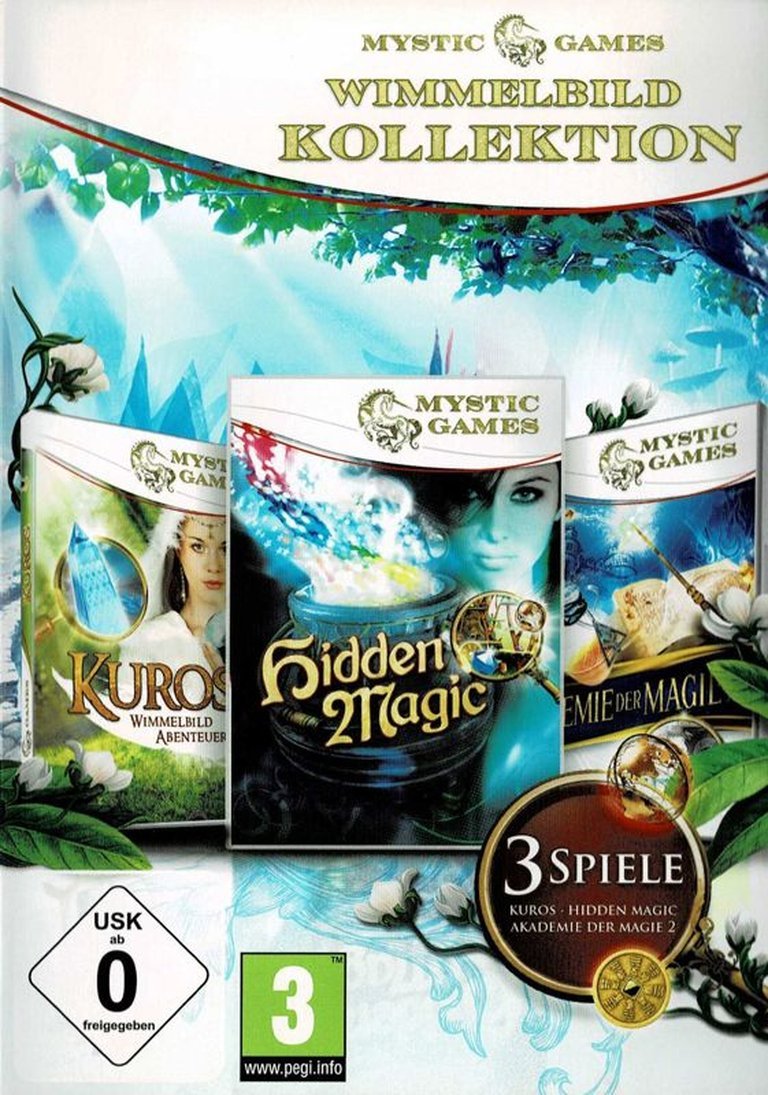
Mystic Games: Wimmelbild Kollektion is a 2010 Windows-based compilation of hidden object games published by Intenium GmbH. The collection includes three titles—Hidden Magic, Magic Academy II, and Kuros—offering players a variety of immersive puzzle-solving and exploration experiences. Suitable for all ages with a PEGI 3 rating, the commercial CD-ROM bundle caters to fans of casual, detail-oriented gameplay typical of the Wimmelbild (hidden object) genre.
Mystic Games: Wimmelbild Kollektion: A Niche Gem in Casual Gaming’s Golden Age
Introduction
In the bustling landscape of early 2010s casual gaming, Mystic Games: Wimmelbild Kollektion emerged as a quiet yet enduring contender—a compilation that distilled the essence of Germany’s beloved Wimmelbild (hidden-object) genre into a single, budget-friendly package. Released at a time when digital storefronts were eclipsing physical media, this anthology from Intenium GmbH stood as a testament to the enduring appeal of tactile, meditative puzzle-solving. While lacking the bombast of AAA titles, Wimmelbild Kollektion carved out a legacy as a comforting, accessible portal into fantastical worlds—a relic of an era when “casual” gaming was redefining audiences.
Development History & Context
Studio Vision: Intenium GmbH, founded in 1999, specialized in casual and family-friendly titles, capitalizing on Germany’s affinity for puzzle and adventure genres. By 2010, the studio had honed its expertise in Wimmelbildspiele—games centered on densely illustrated scenes where players hunt for specific items—leveraging a low-risk, high-reward model of bundling existing titles into themed compilations.
Technological Landscape: Released in November 2010, the compilation arrived at the twilight of CD-ROM dominance. Designed for Windows XP/Vista/7, its modest specs (1 GB RAM, 64 MB GPU) reflected accessibility over ambition. The choice of physical media (CD-ROM) targeted older demographics and regions with slower internet adoption, yet its business model (“Commercial”) prioritized retail over emerging free-to-play trends.
Gaming Climate: Against the backdrop of Angry Birds and FarmVille, Wimmelbild Kollektion offered a counter-narrative: offline, narrative-driven experiences requiring patience. It tapped into a flourishing European casual market dominated by publishers like Big Fish Games, albeit with distinctly Germanic storytelling sensibilities.
Narrative & Thematic Deep Dive
The compilation bundles three titles, each weaving self-contained tales of mystery and folklore:
-
Hidden Magic: A rescue mission to save a child kidnapped by a vengeful witch, blending fairy-tale tropes with environmental puzzles. The narrative arc—centered on maternal courage and light-versus-darkness—echoes Germanic folklore’s preoccupation with familial bonds and supernatural threats.
-
Magic Academy II: A school for sorcery besieged by chaos, tasking players with restoring order through object-finding puzzles. Themes of mentorship and institutional decay mirror the “magical academy” subgenre popularized by Harry Potter, albeit with a more whimsical, less serialized approach.
-
Kuros: The outlier, delving into Japanese-inspired mythology (Kuros translates to “black” or “darkness”). Players confront a soul-stealing entity within an abandoned amusement park—a narrative that fuses yōkai folklore with eerie, decaying Americana. While tonally dissonant, it showcases the anthology’s experimental reach.
Dialog and Characterization: Minimal voice acting and text-driven exposition prioritize functionality over depth. Protagonists are archetypal (the determined mother, the novice wizard) but serve their purpose: anchoring players in worlds where environmental storytelling—a crumpled note, a hidden locket—drives engagement.
Gameplay Mechanics & Systems
Core Loop: Each game follows a rigid formula:
– Scene Exploration: Navigate static, painterly backdrops via point-and-click.
– Object Hunting: Find listed items within time limits or thematic constraints (e.g., “broken artifacts”).
– Puzzle Integration: Occasional mini-games (jigsaws, tile-matching) break monotony but lack complexity.
Innovations and Flaws:
– Atmosphere Over Challenge: Difficulty stems from visual clutter, not mechanical depth. Scenes teem with “red herring” objects, rewarding observational acuity.
– Repetition: Minimal progression systems—no skill trees or meta-currencies—restrict long-term investment. Completing scenes unlocks new locales but lacks narrative payoff.
– UX Design: Functional but dated. Contextual hints are sparse, and menus feel perfunctory—a relic of pre-touchscreen casual design.
World-Building, Art & Sound
Visual Design: The anthology’s strength lies in its hand-drawn dioramas. Hidden Magic’s gothic castles and Kuros’ rusted ferris wheels exude meticulous detail, blending Edward Gorey-esque whimsy with painterly realism. Each scene is a Where’s Waldo?-style tableau, encouraging players to “live” within its textures.
Soundscape: Ambient tracks—haunting pianos in Hidden Magic, discordant carnival melodies in Kuros—heighten immersion without overpowering. Sound effects (a chime for found objects, a raspy crow’s caw) are tactile but unvaried.
Cultural Specificity: Localized entirely in German, the compilation embraces regional aesthetics—woodcut-inspired borders, Hessian village backdrops—making it a cultural artifact as much as a game.
Reception & Legacy
Launch Reception: No critic reviews survive, reflecting the genre’s niche status in gaming journalism. Commercial performance is inferred from Intenium’s prolific sequels (Kollektion 3 in 2011, Kollektion 5 by 2012), suggesting profitability among casual audiences.
Long-Term Influence: While Mystic Games left no seismic industry impact, it epitomized the Wimmelbild genre’s resilience. Its DNA persists in mobile hits like June’s Journey and Hidden Folks, though stripped of its Germanic narrative weight. Intenium’s later compilations (Wildnis Kollektion, Krimi Kollektion) expanded themes but retained the core formula.
Collector Status: Today, physical copies trade among European retro enthusiasts for €15–25 (per eBay/Amazon listings), prized as artifacts of pre-F2P casual gaming.
Conclusion
Mystic Games: Wimmelbild Kollektion is neither revolutionary nor flawed—it is competent. For genre devotees, it offers a cozy, undemanding retreat into richly imagined worlds. For historians, it exemplifies a fleeting moment when physical compilations bridged casual and traditional markets. Its legacy is quiet but enduring: proof that games need not reinvent mechanics to resonate, so long as they honor their audience’s desire for discovery. In the pantheon of hidden-object titles, it remains a minor but heartfelt ode to looking closer.
Final Verdict: A time capsule of early 2010s casual design—best appreciated by genre loyalists and nostalgia seekers.