
- Release Year: 2013
- Platforms: Linux, Macintosh, Windows
- Publisher: Cyanide Tea, Kawa Soft
- Developer: Cyanide Tea
- Genre: Adventure, Visual novel
- Perspective: 1st-person
- Game Mode: Single-player
- Gameplay: Moral choices, Visual novel
- Setting: Contemporary, Europe
- Average Score: 73/100
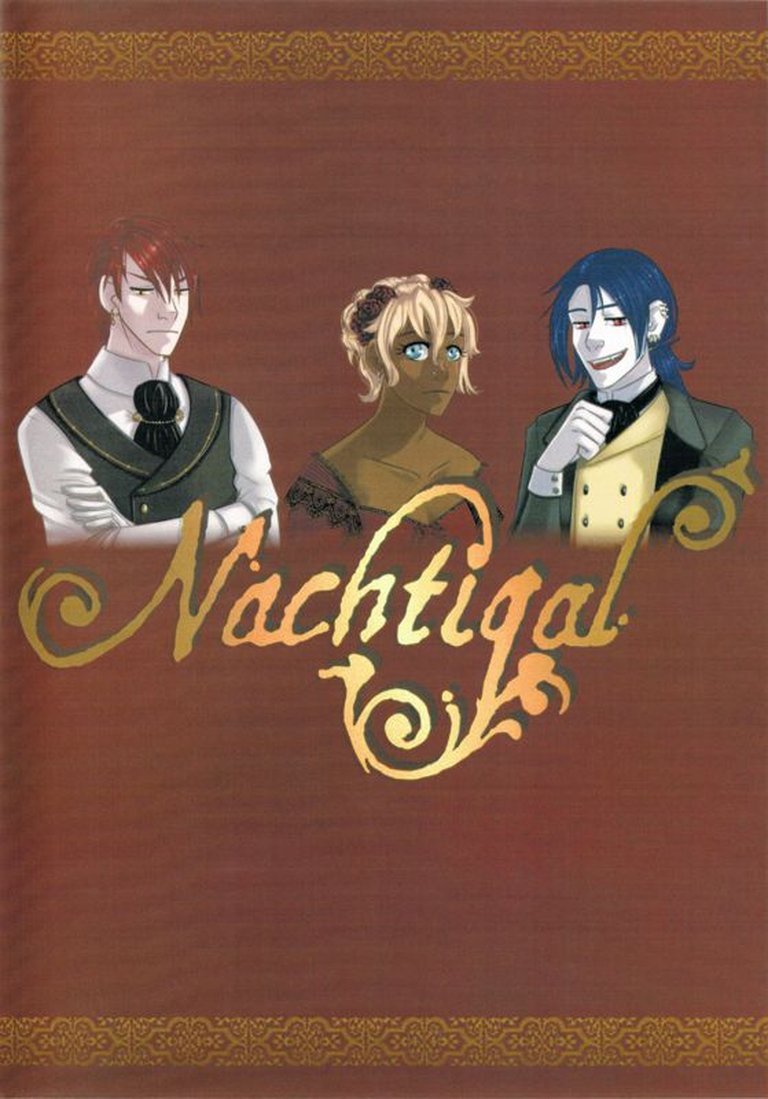
Description
Nachtigal is a visual novel set in contemporary Europe, where the protagonist Miranda, a college student on a study trip to Belgium, becomes lost in the woods and stumbles upon a castle inhabited by vampires. Captured by Adrian and Luca, two vampires who defer her fate until their family returns in two weeks, Miranda’s survival hinges on the player’s choices, leading to eight possible endings—ranging from befriending a vampire to a grim demise. The game blends romance, survival, and horror elements, with a waxing moon tracking the passing days until the family’s return.
Nachtigal Guides & Walkthroughs
Nachtigal Reviews & Reception
jayisgames.com (86/100): A triumphant return to form for the series.
pixelpacas.com (60/100): Nachtigal is anywhere from 1 to 3 hours depending on how quickly you read and if you play through more than once.
vnsnow.weebly.com : Nachtigal is an ambitious title from Cyanide Tea.
Nachtigal: A Gothic Romance with Bite
Introduction
In the crowded landscape of visual novels, Nachtigal (2013) stands as a hauntingly beautiful anomaly—a gothic romance that dares to blend horror, survival, and otome tropes into a single, unforgettable experience. Developed by the indie studio Cyanide Tea, this game is a study in contrasts: it is both charming and chilling, romantic and ruthless, a tale of captivity that somehow feels like freedom. With its anime-inspired art, branching narratives, and a protagonist who refuses to be a mere victim, Nachtigal carves out a niche that few games have dared to explore. This review will dissect the game’s development, narrative depth, gameplay mechanics, and lasting legacy, arguing that Nachtigal is not just a visual novel—it’s a bold reimagining of what the genre can achieve.
Development History & Context
The Studio Behind the Shadows
Cyanide Tea, the small but ambitious indie studio behind Nachtigal, was already making waves in the visual novel community with titles like Ristorante Amore and The Elevator. Founded by Lorelei Nguyen (credited as Camille/Lorelei), the studio specialized in blending romance with darker themes, a tradition that Nachtigal would continue with gusto. The game was developed using Ren’Py, a popular engine for visual novels, which allowed the team to focus on storytelling and art without the constraints of more complex engines.
A Vision of Gothic Romance
The creators’ vision for Nachtigal was clear: they wanted to craft a vampire story that felt classical yet fresh, one that drew from the gothic horror of Bram Stoker and Anne Rice while embracing the modern sensibilities of otome games. The result is a game that feels both timeless and contemporary, a balance that few visual novels achieve. The decision to set the game in a Belgian castle, complete with waxing moon mechanics and a ticking clock of impending doom, was a stroke of genius, grounding the supernatural elements in a tangible sense of dread.
Technological Constraints and Innovations
Released in 2013, Nachtigal was constrained by the technological limitations of its time. The game’s fixed/flip-screen perspective and first-person viewpoint were necessities rather than choices, but they ultimately served the narrative well. The waxing moon mechanic, which tracks the days until the vampire family’s return, is a simple yet effective way to build tension. The game’s art, handled by Stephanie Moss (Auro-Cyanide), is a standout feature, with detailed character sprites and haunting CGs that elevate the gothic atmosphere.
The Gaming Landscape of 2013
At the time of its release, the visual novel genre was experiencing a renaissance, thanks in part to the rise of indie developers and platforms like itch.io. Games like Katawa Shoujo and Analogue: A Hate Story had proven that visual novels could be both commercially viable and critically acclaimed. Nachtigal entered this landscape as a free-to-play title, a bold move that paid off in spades. Its pay-what-you-want model allowed it to reach a wider audience, and its gothic themes set it apart from the more lighthearted otome games of the era.
Narrative & Thematic Deep Dive
Plot Overview: A Tale of Captivity and Choice
Nachtigal follows Miranda Namatgira, a college student studying European history and architecture, who finds herself lost in the Belgian woods and stumbles upon a castle inhabited by vampires. Captured by Adrian and Luca, two vampires who are temporarily in charge of the estate, Miranda is given a grim ultimatum: she must survive until the rest of the vampire family returns in two weeks, at which point her fate will be decided. The game’s narrative is driven by Miranda’s choices, which determine not only her survival but also the nature of her relationships with her captors.
Characters: The Vampires and Their Prey
-
Miranda Namatgira: The protagonist is a refreshing departure from the typical damsel-in-distress trope. She is sharp-witted, sarcastic, and resourceful, using her intelligence and perception to navigate the dangerous dynamics of the castle. Her optimism is tempered by a survivalist’s pragmatism, making her one of the most compelling protagonists in the otome genre.
-
Adrian van de Nachtigal: The youngest of his vampire siblings, Adrian is a study in contradictions. He is confident, playful, and utterly fascinated by Miranda, yet his playful demeanor masks a darker, more predatory side. His relationship with Miranda is one of the game’s most complex, oscillating between genuine affection and outright manipulation.
-
Luca Faveaux: Adrian’s stoic guardian, Luca is the embodiment of duty and restraint. His dry wit and cold demeanor make him the perfect foil to Adrian’s exuberance. Over time, his opinion of Miranda evolves from seeing her as a threat to viewing her as a potential ally—or even something more.
Themes: Survival, Consent, and the Illusion of Choice
Nachtigal is a game that grapples with heavy themes, chief among them the nature of consent in a captive relationship. Miranda’s interactions with Adrian and Luca are fraught with tension, as her survival often hinges on her ability to navigate their whims. The game does not shy away from the darker implications of this dynamic, particularly in scenes where Miranda is forcibly fed upon. These moments are unsettling, but they serve a narrative purpose: they force the player to confront the uncomfortable reality of Miranda’s situation.
The game also explores themes of survival and adaptation. Miranda’s ability to thrive in a hostile environment is a testament to her resilience, and her relationships with the vampires are a study in the blurred lines between captivity and companionship. The waxing moon mechanic reinforces this theme, serving as a constant reminder of the ticking clock and the looming threat of the vampire family’s return.
Dialogue and Writing: A Masterclass in Tension
Lorelei Nguyen’s writing is a standout feature of Nachtigal. The dialogue is sharp, witty, and often laced with double meanings, reflecting the complex power dynamics at play. Miranda’s voice is particularly well-crafted, balancing humor and vulnerability in a way that makes her feel like a real person rather than a mere avatar for the player. The game’s branching narrative is equally impressive, with each choice feeling meaningful and impactful.
Gameplay Mechanics & Systems
Core Gameplay Loop: Choices and Consequences
Nachtigal is a visual novel at its core, but it distinguishes itself through its emphasis on player agency. The game’s branching narrative is driven by a series of choices, each of which can lead to one of eight different endings. These choices range from mundane (e.g., where to explore in the castle) to life-altering (e.g., whether to trust a vampire with your life). The waxing moon mechanic serves as a constant reminder of the stakes, with each passing day bringing Miranda closer to her potential doom.
Combat and Character Progression: A Study in Survival
While Nachtigal is not a traditional RPG, it does feature elements of character progression. Miranda’s relationships with Adrian and Luca evolve based on the player’s choices, and these relationships can have a profound impact on the game’s outcome. The lack of traditional combat is a deliberate choice, one that reinforces the game’s focus on survival and adaptation rather than brute force.
UI and Innovation: Simplicity with Purpose
The game’s UI is minimalist but effective, with a clean, intuitive design that allows players to focus on the narrative. The waxing moon mechanic is a particularly innovative feature, serving as both a narrative device and a gameplay element. The game’s use of hotkeys for saving and loading is a nod to its indie roots, but it is implemented in a way that feels natural and unobtrusive.
Flawed Systems: The Limits of Choice
While Nachtigal’s branching narrative is one of its strongest features, it is not without its flaws. Some of the game’s endings feel rushed, particularly the romantic routes, which struggle to fully flesh out the relationships between Miranda and her captors. The game’s short length (most playthroughs take around 1-3 hours) also limits its ability to explore its themes in depth. These flaws are minor, however, and do little to detract from the overall experience.
World-Building, Art & Sound
Setting: A Castle of Secrets
The game’s setting is one of its most compelling features. The Belgian castle is a character in its own right, a labyrinth of secrets and dangers that Miranda must navigate. The castle’s gothic architecture is beautifully rendered, with detailed backgrounds that evoke a sense of both wonder and dread. The waxing moon mechanic reinforces the castle’s oppressive atmosphere, serving as a constant reminder of the looming threat.
Visual Direction: A Feast for the Eyes
Stephanie Moss’s art is a standout feature of Nachtigal. The character sprites are detailed and expressive, with Miranda’s animations being particularly impressive. The game’s CGs are equally stunning, with a gothic aesthetic that perfectly complements the narrative. The use of color is particularly effective, with the castle’s red and white hallways evoking a sense of both beauty and danger.
Sound Design: A Symphony of Dread
The game’s sound design is equally impressive. The music, composed by Tsuki ni Tsukareta Pierrot, is haunting and atmospheric, perfectly complementing the game’s gothic themes. The sound effects are equally effective, with the creaking of the castle’s doors and the howling of the wind serving as constant reminders of the game’s oppressive atmosphere.
Reception & Legacy
Critical and Commercial Reception
Nachtigal was released to widespread acclaim, with critics praising its narrative depth, character development, and gothic atmosphere. The game’s pay-what-you-want model also contributed to its success, allowing it to reach a wider audience than many indie visual novels. While the game’s short length and rushed endings were noted as flaws, they did little to detract from the overall positive reception.
Evolution of Reputation
In the years since its release, Nachtigal has developed a cult following, with many players praising its bold narrative choices and complex characters. The game’s themes of survival and consent have also sparked discussions within the visual novel community, with some critics arguing that the game’s portrayal of captive relationships is problematic. These discussions have only served to cement Nachtigal’s status as a thought-provoking and controversial work.
Influence on Subsequent Games
Nachtigal’s influence can be seen in a number of subsequent visual novels, particularly those that blend romance with darker themes. Games like Diabolik Lovers and Code: Realize owe a debt to Nachtigal’s willingness to explore the complexities of captive relationships. The game’s pay-what-you-want model has also inspired other indie developers, proving that free-to-play visual novels can be both critically acclaimed and commercially successful.
Conclusion
Nachtigal is a masterclass in gothic storytelling, a game that dares to explore the darker side of romance and survival. Its narrative depth, complex characters, and haunting atmosphere make it a standout work in the visual novel genre. While its short length and rushed endings are minor flaws, they do little to detract from the overall experience. Nachtigal is a game that lingers in the mind long after the credits roll, a testament to its power as a story and its place in video game history.
Final Verdict: 9/10 – A Gothic Masterpiece
Nachtigal is not just a visual novel—it’s a bold reimagining of what the genre can achieve. Its blend of horror, romance, and survival makes it a unique and unforgettable experience, one that deserves a place in the pantheon of great visual novels. Whether you’re a fan of gothic romance, otome games, or simply great storytelling, Nachtigal is a game that demands to be played.