
- Release Year: 2013
- Platforms: Macintosh, Windows
- Publisher: Her Interactive, Inc.
- Developer: Her Interactive, Inc.
- Genre: Adventure
- Perspective: 1st-person
- Game Mode: Single-player
- Gameplay: Puzzle elements
- Setting: Detective, Mystery
- Average Score: 82/100
Description
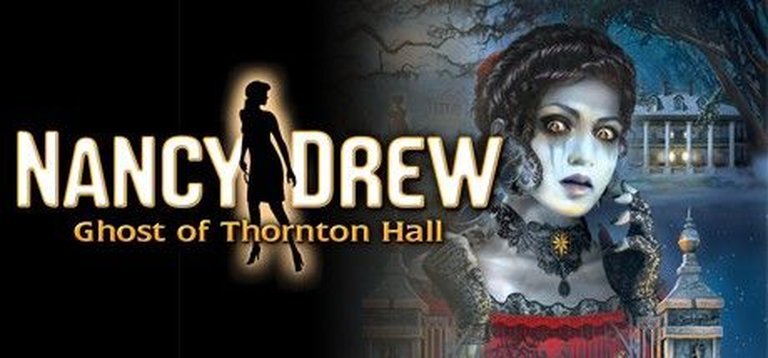
In ‘Nancy Drew: Ghost of Thornton Hall,’ players step into the shoes of the iconic amateur sleuth to investigate the mysterious disappearance of Jessalyn Thornton, a young heiress, on Blackrock Island off the coast of Georgia. The game unfolds in a haunting abandoned southern manor shrouded in eerie legends and supernatural rumors, where Nancy must interrogate suspects, solve intricate puzzles, and uncover hidden clues to unravel the Thornton family’s dark secrets. With its spooky atmosphere, Spanish moss-draped setting, and first-person point-and-click gameplay, this 28th installment in the series blends mystery and adventure while challenging players to separate fact from spectral fiction.
Gameplay Videos
Where to Buy Nancy Drew: Ghost of Thornton Hall
PC
Nancy Drew: Ghost of Thornton Hall Patches & Updates
Nancy Drew: Ghost of Thornton Hall Mods
Nancy Drew: Ghost of Thornton Hall Guides & Walkthroughs
Nancy Drew: Ghost of Thornton Hall Reviews & Reception
familyfriendlygaming.com (74/100): I believe Nancy Drew Ghost of Thornton Hall is the darkest and most difficult Nancy Drew game I have ever played from Her Interactive.
community.herinteractive.com (90/100): FINAL SCORE: Strong (9/10)
metacritic.com (73/100): Overall, the story was interesting, the puzzles had just the right mix of challenge and logic, and I enjoyed almost every minute of playing.
gameboomers.com : The time you spend in unrelentingly dark grayish environments permeates the game without respite — not a bad idea for a ghost story.
Nancy Drew: Ghost of Thornton Hall: A Haunting Legacy of Southern Gothic Intrigue
Introduction
In the pantheon of interactive mystery games, few franchises have endured with the tenacity of Her Interactive’s Nancy Drew series. Released in 2013 as the 28th installment, Ghost of Thornton Hall (GTH) stands as a masterclass in atmospheric storytelling, weaving Southern Gothic dread with familial tragedy. This review argues that GTH represents both a high watermark for the series’ tonal ambition and a testament to the creative resilience of its developers, who transformed technological limitations into a hauntingly immersive experience. Its blend of cryptic puzzles, layered characters, and spine-chilling ambiance secures its place as a cult classic—a game that dares to interrogate the shadows lurking beneath genteel Southern facades.
Development History & Context
Studio Vision & Technological Constraints
Her Interactive, founded in 1995, carved a niche by adapting Carolyn Keene’s iconic sleuth into interactive adventures aimed at nurturing critical thinking in young audiences—primarily girls aged 10+. By 2013, the studio faced mounting pressure to modernize while retaining its core point-and-click identity. GTH emerged during a transitional era: budgets were modest, yet expectations soared following critically acclaimed entries like Shadow at the Water’s Edge (2010). Built on the aging Adventure Maker engine, GTH’s first-person slideshow navigation and pre-rendered environments risked obsolescence in an industry pivoting toward 3D open worlds. Yet, these constraints birthed ingenuity. The team embraced a “less is more” philosophy, leveraging static backdrops to amplify tension—every creaking floorboard and flickering shadow feels deliberate.
Gaming Landscape of 2013
The early 2010s saw indie adventure games (Gone Home, Kentucky Route Zero) redefining narrative depth, while mainstream titles prioritized action. Against this backdrop, GTH doubled down on cerebral, environment-driven storytelling. Its release coincided with a resurgence of nostalgia for classic puzzles, yet its mature themes (grief, institutional greed) marked a departure from the series’ traditionally lighter tone. Her Interactive’s gamble paid off: GTH became a commercial success, selling 150,000+ copies and cementing the studio’s reputation as a torchbearer for narrative-driven adventures.
Narrative & Thematic Deep Dive
Plot & Characters: A Southern Gothic Tapestry
Nancy is summoned to Blackrock Island, Georgia, to investigate the disappearance of heiress Jessalyn Thornton during a pre-wedding séance at her family’s decaying manor. The Thornton clan—matriarch Clara, ex-convict cousin Wade, eccentric Harper, and fiancé Colton—are prisoners of their past, haunted by the “ghost” of Charlotte Thornton, who perished in a fire on her 21st birthday in 1989. The narrative unfolds through:
– Nonlinear revelations: Diary entries, epitaphs, and spectral whispers piece together Charlotte’s tragic demise and Jessalyn’s fate.
– Moral ambiguity: Each character harbors guilt. Clara’s corporate ruthlessness mirrors Wade’s vigilante justice, while Harper’s “madness” masks razor-sharp insight.
– Themes: The game critiques legacy capitalism (the Thorntons’ wealth stems from a deadly cotton gin accident) and the erosion of identity under societal expectations. Charlotte’s ghost—whether literal or psychological—symbolizes repressed trauma.
Dialogue & Voice Acting
While the script occasionally veers into melodrama (“Some families keep deadly secrets!”), the voice cast delivers career-defining performances. Keri Healey’s Harper oscillates between vulnerability and menace, evoking Gillian Flynn-esque complexity. Jeff Pierce’s Wade imbues grit and pathos, though Dave Rivas’ Colton feels underdeveloped—a rare misstep in an otherwise stellar ensemble.
Gameplay Mechanics & Systems
Core Puzzle Design
GTH’s puzzles are thematically cohesive, often rooted in Thornton history:
– Tombstone epitaph decryption: Requires cross-referencing dates and symbols across the family cemetery.
– Kaleidoscope locket puzzle: A tactile highlight, blending art and astronomy.
– EMF Meter mini-game: Repurposed from The Deadly Device, used to detect “supernatural” activity (later revealed as clever misdirection).
Critics praised the balance of challenge and logic, though some tasks (e.g., assembling a battery from fruit) felt contrived.
UI & Innovation
- Dual difficulty modes: “Amateur Sleuth” offers hint-heavy task lists; “Master Sleuth” removes cues, appealing to veterans.
- Fast-Forward Dialogue: A new feature allowing players to accelerate conversations—a QoL improvement for replayability.
- Inventory System: Streamlined but plagued by a glaringly bright UI bar that clashed with the game’s murky aesthetic.
Flaws
- Pacing: Mid-game lulls occur when backtracking through limited environments.
- Combat: Nonexistent—threats are environmental (collapsing ceilings, toxic gas), reliant on quick-time reactions.
World-Building, Art & Sound
Visual Design: Decay as Character
Thornton Hall is a masterpiece of environmental storytelling. Inspired by Louisiana’s Oak Alley Plantation and Savannah’s Wormsloe Historic Site, the manor’s ruined grandeur—peeling wallpaper, water-stained portraits, overgrown gardens—serves as a metaphor for familial rot. The Artists’ meticulous detailing extends to:
– Ghostly apparitions: Charlotte’s specter, rendered with ethereal translucence, materializes through photobashing techniques.
– Lighting: Dynamic shadows amplify unease; flashlight beams pierce dust motes in cellar sequences.
Sound Design: A Symphony of Dread
Composer Kevin Manthei’s score melds mournful piano motifs with discordant strings, evoking The Others (2001). Key auditory elements:
– Diegetic sounds: Wind whistling through cracked windows, distant singing (a nod to Charlotte’s lore).
– Voice layering: Ghostly murmurs overlap during hallucinations, disorienting the player.
The soundscape’s brilliance lies in its restraint—a sudden silence before a jump-scare proves more unsettling than any cacophony.
Reception & Legacy
Critical & Commercial Response
GTH holds a 72% aggregate score on MobyGames and Steam’s “Very Positive” user rating (93% of 311 reviews):
– Praise: “A dark southern mystery full of fun puzzles” (Adventure Gamers); “The scariest Nancy Drew game” (Family Friendly Gaming).
– Criticism: “Uneven pacing and underdeveloped subplots” (Hooked Gamers).
Sales exceeded expectations, funding Her Interactive’s pivot to mobile ports (iOS/Android) in 2014.
Cultural Impact
GTH influenced later horror-adventure hybrids like Oxenfree (2016) and What Remains of Edith Finch (2017) with its:
– Ambiguous supernaturalism: The game’s climax reveals the “ghost” as Harper orchestrating psychological revenge.
– Multi-ending structure: Player choices determine Jessalyn’s fate—a narrative flexibility rare in the series.
Despite franchise stagnation post-Midnight in Salem (2019), GTH remains a benchmark for indie horror, revered in Let’s Plays and speedrun communities.
Conclusion
Nancy Drew: Ghost of Thornton Hall is a paradox—a game constrained by budget and technology yet transcendent in its artistry. It marries the genre’s puzzle-solving rigor with literary weight, inviting players to confront the specters of guilt and greed that haunt America’s aristocratic past. While its mechanics show age and its pacing falters, GTH endures as Her Interactive’s boldest outing: a Southern Gothic elegy that proves fear, like family, lingers long after the credits roll. For historians, it’s a vital artifact of early 2010s indie ingenuity; for players, an unforgettable descent into darkness. 8/10 – Superior.