
- Release Year: 2014
- Platforms: Windows, Xbox 360
- Publisher: Tchagata Games
- Developer: Tchagata Games
- Genre: Action, Scrolling shoot ’em up
- Perspective: Side view
- Game Mode: Single-player
- Gameplay: Bullet hell, Shoot ’em up, Shooter
- Setting: Classical, Fantasy, Japan (Ancient, Medieval)
- Average Score: 69/100
Description
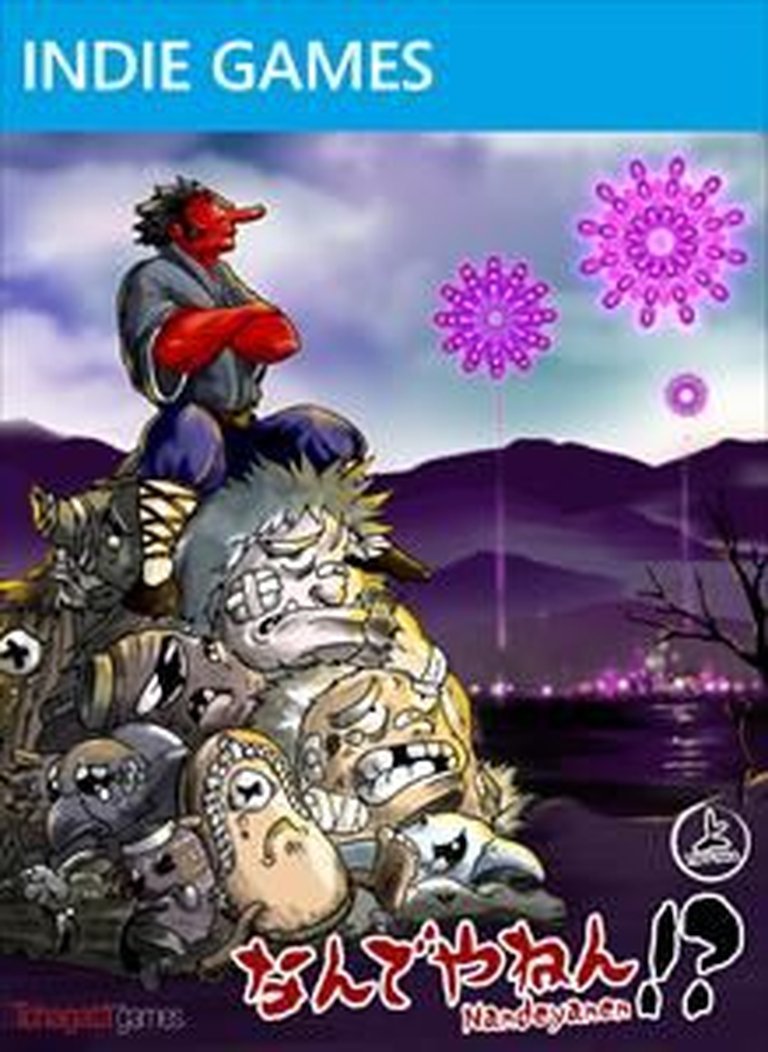
Nandeyanen!?: The 1st Sûtra is a horizontal 2D shoot ’em up set in a fantastical ancient Japan, where players control Tenguman, a long-nosed goblin awakened from a thousand-year slumber to defend the land against an army of mythical pranksters. The game blends challenging bullet hell gameplay with a homage to Japanese folklore and creative level design, featuring mechanics like bullet counters and blast pods across stages such as Mountain, Forest, and Temple.
Gameplay Videos
Nandeyanen!?: The 1st Sûtra Reviews & Reception
store.steampowered.com (70/100): All and All, Nandeyanen!? The 1st Sútra is a very solid game that deserves a good hard look, despite its woefully short stage set.
Nandeyanen!?: The 1st Sûtra: A Swiss Tribute to Japanese Shmup Mastery
Introduction: An Obscure Gem with a Long Nose
In the vast, crowded archives of indie gaming, certain titles whisper rather than shout, their existence a testament to personal passion over market trends. Nandeyanen!?: The 1st Sûtra—translated colloquially as “What the hell!?”—is precisely such a title. Released in 2014 by the quintet Tchagata Games from Lausanne, Switzerland, this horizontal shoot ’em up (shmup) is not merely a game but a love letter, meticulously folded and delivered from the Alps to the heart of Japanese arcade culture. It is a project born from a four-year odyssey of “passion and stubbornness,” aiming to capture the manic, beautiful difficulty of a bygone era. My thesis is this: Nandeyanen!? is a fascinating, flawed artifact—a game whose profound respect for its inspirations and innovative, risk-based mechanics are ultimately held back by a crippling lack of content, transforming what could have been a genre classic into a tantalizing “what if.” It stands as a crucial case study in the limits of passion-driven development and the specific challenges of reviving a hyper-niche, skill-based genre for a modern audience.
Development History & Context: Four Years in the Swiss Alps
The story of Nandeyanen!? is fundamentally the story of Tchagata Games: five friends, entirely self-taught, bonding over “video games, Japanese culture, and low cost foie gras paste.” Their venture into game development was not a business calculation but a creative imperative. They chose the shoot ’em up genre initially because it “appeared (at first…) easier to program and design,” a classic indie misapprehension that belies the genre’s notorious complexity in balancing bullet patterns, enemy AI, and player feedback.
The technological context was the twilight of the Xbox Live Indie Games (XBLIG) marketplace and the burgeoning accessibility of PC platforms like Steam and itch.io. The team utilized XNA, a framework that democratized Windows and Xbox 360 development but had clear performance and visual limitations. Their constraints were not just technical but existential: as a first project, they had no brand, no budget beyond their own pockets, and no audience beyond the shrinking, hardcore shmup community. This fostered a design philosophy of purity—removing all power-ups to create a “precise and demanding” experience focused entirely on mastering the core mechanics. This dogmatic approach is both the game’s greatest strength and its most significant weakness.
Their guiding light was the 1991 PC-Engine title Hanatakadaka!? (“Super Long-Nose Goblin”), a relatively obscure but influential dôjin-style shooter. This homage extends to the game’s visual language, narrative premise, and commitment to the “cute but deadly” aesthetic of early 90s Japanese arcade games. The team also drew from the Ganbare Goeon series (for its whimsical Japanese mythos), Treasure and Cave shooters (for kinetic action and bullet hell design), and Vanillaware’s Oboro Muramasa (for its lush, hand-drawn style). The result is a game that feels meticulously researched yet deeply personal, a Swiss interpretation of a Japanese art form.
Narrative & Thematic Deep Dive: A Yôkai’s Thousand-Year Grudge
The plot is elegantly simple: Tenguman, a karasu-tengu (crow-goblin), awakens from a millennial slumber to find his mountain home overrun by an “army of mythical pranksters.” His quest is to reclaim his foxy lady (implied to be a kitsune) and restore order. This is not a story told through lengthy cutscenes but through environmental storytelling, enemy designs, and the game’s very title—”Nandeyanen!?” is an exasperated Japanese exclamation, perfectly capturing Tenguman’s indignant fury.
Thematically, the game is a collage of Japanese folklore and artistic history. The adversaries are not generic aliens or soldiers but yôkai (supernatural beings) and creatures drawn from Shinto-Buddhist mythology, filtered through the lens of modern manga and ukiyo-e woodblock prints. The developers explicitly cite Hokusai, Lafcadio Hearn, and Shigeru Mizuki as visual and narrative inspirations. Each stage—Mountain, Forest, Temple—is a pilgrimage through a classic Japanese landscape, visually rendered with soft lines, pastel colors, and a contemplative stillness that contrasts with the explosive gameplay. This juxtaposition of serene, traditional beauty with frenetic, modern bullet hell is the game’s core artistic tension.
The narrative’s homage is twofold: it honors the specific premise of Hanatakadaka!? and participates in a broader Japanese cultural practice of * folklore reinvention*. By having a Swiss team engage in this act, the game becomes a meta-commentary on the global permeability of Japanese pop culture. The multilingual support (English, Japanese, French, Korean) further cements this, suggesting a desire to make this niche Japanese-style experience accessible beyond its cultural origins, a gesture of respect from one gaming community to another.
Gameplay Mechanics & Systems: The Architecture of Danger
Nandeyanen!? is a manic shooter, a subgenre defined by extreme bullet density and screen-clearing player firepower. Its genius and frustration are baked into its two revolutionary, intertwined systems: the Bullet Counter and the Blast Pods.
-
The Bullet Counter (The “SFIII: Third Strike” Mechanic): This is the game’s defining innovation. By holding the “Pod” button, Tenguman deploys a small aura. Any enemy bullet that enters this aura can be “countered” by tapping the control stick forward. A successful counter destroys the bullet, damages the enemy it came from, and charges Tenguman’s main weapon. This is not a bomb; it is an active, risk-reward parry. It transforms the shmup’s fundamental “dodge and shoot” loop into a “dodge, engage, and counter” rhythm. The player must read bullet patterns, decide which threats to absorb for offense, and position themselves dangerously close to danger. This creates a unique, adrenaline-fueled “danger/courage” feeling the developers sought, directly echoing the tension of a fighting game’s parry system.
-
The Blast Pods (Mini-Tengu Partners): Tenguman has three miniature tengu acolytes (Karasu-Tengu) on a HUD cooldown. Tapping the “Pod” button places one on screen; after three seconds, it unleashes a powerful, piercing violet beam. Holding the button for three seconds makes Tenguman himself fire this beam. These beams are crucial for breaking enemy shields: blue shields are broken by countered bullets, while yellow shields require the violet beam. This creates a dynamic tactical layer where players must manage their pod resources and choose the correct tool for the enemy type before them.
-
Support Systems:
- Standard Shot: A continuous, non-upgradable stream. Its simplicity keeps focus on the pod and counter mechanics.
- Bomb: A screen-clearing, invincibility-granting bullet attractor that deals no damage. It is a pure survival tool, not an offensive one, reinforcing the skill-based design.
- Siddham Drops: Hidden collectibles (5 per stage) that grant an ultra-powerful shot against the stage boss, offering a reward for exploration and perfect runs.
The progression system is pure skill. There are no experience points, no upgrades, no shops. The only progression is the player’s mastery of bullet patterns, shield mechanics, and stage layouts. The difficulty is “not targeted at beginners,” a warning that is both honest and a barrier to entry. The UI is clean but minimal, with the pod HUD being the critical element. The game strongly recommends a gamepad or arcade stick, as the precise directional taps for counters and the simultaneous management of movement, shooting, and pod deployment demand analog precision that a keyboard struggles to provide.
Innovation vs. Flaw: The counter mechanic is a genuinely fresh take on shmup design, worthy of deeper exploration. However, the decision to remove all power-ups and provide only the base weapon means the player’s offensive capability never evolves. Coupled with only three stages, this leads to mechanical stagnation. The player learns the systems perfectly within the first 15 minutes, leaving the remaining playtime as a pure execution test with no new tactical layers introduced. The brilliance of the core idea is not sufficiently built upon.
World-Building, Art & Sound: Ukiyo-e Meets Bullet Hell
Visually, Nandeyanen!? is a masterclass in cohesive aesthetic homage. The team used manga-style character art for its inimitable expressiveness, while the backgrounds are painstakingly crafted to evoke ukiyo-e prints. The mountains are misty and serene, forests are dense with stylized foliage, and temples feature traditional architecture under dramatic skies. This creates a painterly, contemplative atmosphere that makes the chaotic bullet patterns feel like violent defacements of a sacred space—a perfect thematic match for Tenguman’s rage.
The color palette is soft and traditionally Japanese—lots of pastel greens, earth tones, and muted blues—which ironically makes the brightly colored enemy bullets and the player’s violet beams pop with exceptional clarity. This is crucial for readability in a bullet hell game. The animation is smooth and charming, from Tenguman’s idle flap to the yôkai’s quirky movements. The sound design is sparse but effective: satisfying pings for counters, a deep hum for the violet beam, and a traditional-sounding soundtrack that mixes taiko drums with melodic motifs, available in full on the developer’s YouTube channel.
Together, these elements create a unique sensory experience. The game looks and feels like a living ukiyo-e scroll under assault, marrying a historical artistic style with the high-pressure kinetics of a modern arcade shooter. It is “easy on the eyes” precisely because its beauty provides a stark, meaningful contrast to the violence of its gameplay.
Reception & Legacy: A Cult Classic in the Making
Nandeyanen!? emerged into a quiet market. Its launch on Xbox Live Indie Games (XBLIG) in August 2014 was a brave move into a platform known for discoverability problems but with a dedicated niche audience. A Windows release followed on Steam in July 2015, priced at a mere $1.99, signaling its developers’ passion-over-profit ethos.
Critical reception was measured and respectful, averaging 60% (based on the single aggregated critic score from MobyGames). Reviews consistently praised its artistic vision and core mechanics. “theXBLIG” noted it was “one of the better Bullet Hell shooters I’ve played on the marketplace, especially for the rich visual style and folk history,” explicitly crediting the team’s respect for the source material. “Indie Game Reviewer” called it a “good shoot ’em up” but hammered its “brevity” and “narratively unappealing” nature as fatal flaws for all but the most dedicated genre fans.
Player reception is more positive but nuanced. Steam data shows 81% positive reviews (20 out of 29) with a community hub score of ~69/100. Common praise echoes the critics: the art is beautiful, the counter mechanic is brilliant and engaging. Common complaints are universal: ” woefully short stage set,” “needs more content,” “feels like a demo.” The average playtime on sites like RAWG is listed as 1 hour, which starkly contrasts with the dozens of hours a proper shmup from Cave or Treasure would command. The game is repeatedly framed as a promising first effort (“It’s off to a strong start”) rather than a finished product.
Its legacy is primarily as a cult curiosity and a successful homage. It was a nominee for the Ludicious SGDA Swiss Game Awards 2014 and was featured in the Neuchatel Museum of Ethnography’s “Imagine Japan” Exhibition, a significant accolade that validated its artistic and cultural intent beyond gaming circles. It证明了 that a small, foreign team could authentically engage with and reinterpret a deeply Japanese genre.
Its influence on the industry is subtle but present. It serves as a data point for Western indie developers attempting to work within the tight constraints of retro genres. Its most lasting contribution may be the Bullet Counter mechanic, a concept that, in a more expanded form, could inspire future designers. However, its commercial and critical footprint is minimal; it is not cited as a direct influence by major studios and remains a beloved secret among shmup enthusiasts who value artistic presentation and novel mechanics over content volume.
Conclusion: A Beautiful, Incomplete Sutra
Nandeyanen!?: The 1st Sûtra is a game of profound contradictions. It is a technically proficient, artistically rich, and mechanically bold creation born from pure love. Its core loop—dodging, countering, shield-breaking with pods—is one of the most satisfying and innovative in the horizontal shmup space. The fusion of ukiyo-e beauty with manic bullet hell creates an atmosphere unmatched in the genre.
Yet, this beautiful machine is housed in a skeleton. With only three stages, no power-ups, and no evolving mechanics, the game feels less like a completed chapter and more like an extended, exceptionally high-quality proof-of-concept. The developers’ dogma (“no power-ups”) and their budget (“four years of passion”) created a product that brilliantly demonstrates its ideas but fails to develop them. You do not play Nandeyanen!? to go on a long journey; you play it to experience a brilliant, fleeting moment of design genius, over and over, until its brevity becomes a source of frustration.
Its place in history is secure, albeit in a niche wing. It is not a lost classic that defines an era, but a significant “artifact of intent.” It is a Swiss manifesto on Japanese game design, a testament to what a small, dedicated team can achieve with clear vision and technical skill, and a cautionary tale about the importance of content scope. For the shmup historian, it is essential study: a game that perfectly captures the form and feeling of a classic era while attempting, with partial success, to stake its own claim in the genre’s evolution. It is, in the end, a beautiful, incomplete sutra—a set of profound principles and beautiful characters waiting for a longer story to be written.
Final Verdict: 3.5/5 – A brilliant, short-lived engagement with a novel and respected mechanic, wrapped in stunning art. An essential experience for genre devotees, a curious curio for others, and a poignant lesson in the economics of passion.