
- Release Year: 1999
- Platforms: Windows
- Publisher: Empire Interactive Entertainment
- Developer: Empire Interactive Entertainment
- Genre: Simulation
- Perspective: 1st-person
- Game Mode: Single-player
- Gameplay: Real-time, Resource Management, Turn-based, War simulation
- Setting: Historical events, Napoleonic Wars
- Average Score: 50/100
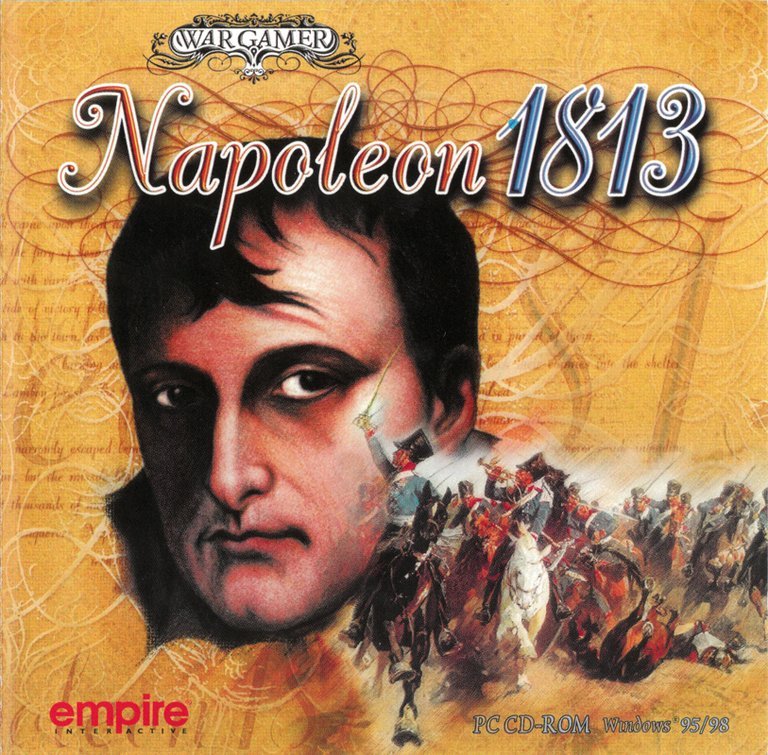
Description
Napoleon 1813 is a historical war simulation game set during France’s 1813-1814 campaign under Napoleon I. Players can take on the role of France or one of the allied nations (Prussia, Austria, Russia, or Sweden) in a detailed strategy experience. The game features real-time or turn-based gameplay, emphasizing factors like troop morale, supply lines, and exhaustion, with battles visualized through overhead maps and statistical screens. Originally released in 1999, it was later open-sourced in 2001.
Where to Buy Napoleon 1813
PC
Napoleon 1813 Free Download
Napoleon 1813 Patches & Updates
Napoleon 1813 Guides & Walkthroughs
Napoleon 1813 Reviews & Reception
oldpcgaming.net : For all its failings, Napoleon 1813 does have its interesting concepts, but it marred by an army of mishandled designs and bugs.
mobygames.com (50/100): The game simulates a lot of war factors which are important in a real battle too, e.g. exhaustion, morale or supply lines.
ign.com : Napoleon 1813 shows a lot of promise but there’s still much room for improvement.
Napoleon 1813: A Flawed but Ambitious Foray into Real-Time Napoleonic Warfare
Introduction: The Chaos of Battle, Digitized
Napoleon 1813 (1999) is a game that dared to blend the meticulous strategy of wargaming with the unpredictable frenzy of real-time combat. Developed by Empire Interactive Entertainment, it sought to simulate the sprawling, chaotic battles of the Napoleonic Wars—where exhaustion, morale, and supply lines were as critical as the placement of a single regiment. Yet, for all its ambition, Napoleon 1813 remains a fascinating relic: a game that promised revolution but delivered frustration, a concept so bold it outpaced its own execution.
This review dissects Napoleon 1813 in its entirety—its development, its mechanics, its reception, and its legacy—as both a historical artifact and a cautionary tale in game design. Was it a pioneering masterpiece ahead of its time, or a bug-riddled misfire? The truth, as with many things in war, lies somewhere in the fog.
Development History & Context: Empire’s Gamble on the Napoleonic Frontier
The Studio and the Vision
Empire Interactive Entertainment, a British developer and publisher, was no stranger to strategy games. By the late 1990s, the studio had carved a niche in simulation and wargaming titles, often targeting a dedicated audience of history buffs and grognards. Napoleon 1813 was part of a broader push to modernize the wargame genre, which had long been dominated by turn-based, hex-grid systems (e.g., SSI’s Panzer General series).
The game’s lead designer, Benedict Wilkins, envisioned a hybrid experience: a grand strategic campaign layer where players managed armies, supply lines, and reinforcements, seamlessly transitioning into real-time tactical battles. This was a radical departure from the norm. Most Napoleonic wargames at the time—such as The Operational Art of War or Battleground Waterloo—were firmly turn-based. Empire’s bet was that real-time combat could capture the fluid, unpredictable nature of 19th-century warfare, where orders were miscommunicated, units broke ranks, and the fog of war was ever-present.
Technological Constraints of the Era
Released in 1999, Napoleon 1813 was constrained by the hardware of its time. The game’s system requirements—a 486/33 CPU and 8MB of RAM—reflect an era when 3D acceleration was still a luxury. The visual presentation, as critics noted, was “nüchtern” (sober) at best, resembling “a planning table with animated figures” (PC Action). The hexagonal map, while functional, lacked the polish of contemporaries like Age of Empires II (also 1999), which had already set a new standard for RTS aesthetics.
The interface, too, was a product of its limitations. Scrolling was cumbersome, unit management was clunky, and the game’s reliance on text-based reports (a barrage of divisional messages) overwhelmed players. Empire attempted to mitigate this with a pause feature, but the absence of a true “we-go” or incremental time system— reportedly cut during development—left players drowning in chaos.
The Gaming Landscape in 1999
Napoleon 1813 arrived in a crowded year for strategy games. Age of Empires II dominated the RTS scene, while Sid Meier’s Alpha Centauri redefined 4X strategy. Wargames, however, were a niche within a niche. Empire’s target audience—hardcore history enthusiasts—was small but passionate. The problem? Napoleon 1813 demanded too much of casual players while frustrating grognards with its bugs and lack of depth.
The game’s release also coincided with the rise of the internet as a gaming platform. Yet, Napoleon 1813 was a solitary experience, lacking multiplayer or modding support at launch. It wouldn’t be until 2001, when the game was released as open-source, that the community could begin to salvage its potential.
Narrative & Thematic Deep Dive: The Weight of History
The Campaign: A War of Attrition
Napoleon 1813 places players in the final, desperate phase of the Napoleonic Wars. After the catastrophic Russian campaign of 1812, Napoleon’s once-invincible Grande Armée is a shadow of its former self—composed of raw conscripts, reluctant allies, and exhausted veterans. The Allies (Prussia, Austria, Russia, and Sweden) sense blood in the water. The game’s campaign mode tasks players with either halting the French juggernaut or crushing it once and for all.
The strategic layer is where Napoleon 1813 shines thematically. Players must grapple with:
– Supply Lines: Armies starve without them.
– Morale: Troops rout if pushed too hard.
– Reinforcements: New units arrive slowly, and not always where you need them.
– Allied Coordination: The Coalition’s factions have competing interests (e.g., Prussia’s eagerness vs. Austria’s caution).
This is a war of logistics as much as tactics—a rare and commendable focus for a game of this era.
The Battle Game: Chaos by Design
When armies clash, the game shifts to real-time tactical combat. Here, the fog of war is thick. Units are represented by abstract counters (infantry squares, cavalry wedges) moving across a hexagonal grid. Combat is resolved automatically, with outcomes determined by factors like:
– Formation (line, column, square)
– Terrain (forests, rivers, hills)
– Fatigue (units tire after marching or fighting)
– Commander Quality (Napoleon’s presence boosts morale)
The intent was to simulate the confusion of battle. In practice, it often felt too confusing. Players were bombarded with messages from division commanders—many of which were irrelevant or indecipherable. Without a way to delegate authority to corps commanders, micromanagement became a nightmare. Large battles, such as the titular Battle of Leipzig (1813), devolved into unmanageable chaos.
Themes: The Cost of Glory
Napoleon 1813 is, at its core, a meditation on the fragility of empire. The French campaign is a fight against inevitability—Napoleon’s genius against the sheer weight of numbers and exhaustion. The Allied campaign, meanwhile, is about exploiting that exhaustion, but also managing the fragile egos of monarchs and generals.
The game’s greatest thematic strength is its refusal to romanticize war. There are no heroic last stands or cinematic charges—just the grim calculus of attrition. This was a bold choice in an era where RTS games like Command & Conquer glorified spectacle.
Gameplay Mechanics & Systems: Innovation vs. Execution
Core Gameplay Loop
Napoleon 1813 operates on two levels:
1. Strategic Campaign: A turn-based (or real-time) overview where players move armies, manage supply depots, and plan invasions.
2. Tactical Battle: Real-time combat where players issue orders to divisions and regiments.
The transition between these layers was seamless in theory but jarring in practice. The strategic map was functional but bland, while the tactical battles, though innovative, suffered from poor feedback.
Combat and Unit Control
Combat in Napoleon 1813 is deterministic but opaque. Players issue orders (e.g., “Charge,” “Form Square,” “Retreat”), but the outcomes are calculated behind the scenes. There’s no visual feedback to explain why a unit routed or why a cavalry charge failed. This lack of transparency frustrated players, as noted by Computer Gaming World: “Units disappear or switch sides with no explanation.”
The absence of a proper chain of command was another critical flaw. Players had to manually issue orders to every unit, with no option to assign objectives to higher-level commanders. This made large battles unplayable without excessive pausing—a band-aid solution to a fundamental design problem.
UI and UX: A Case Study in Frustration
The user interface was Napoleon 1813’s Achilles’ heel. Critics universally panned it:
– Scrolling: “Cumbersome” (CGW), relying on scrollbars “like in a generic office program” (Power Play).
– Unit Selection: No clear visual hierarchy; units blended into the map.
– Information Overload: A constant stream of irrelevant messages cluttered the screen.
– Lack of Tutorial: “No tutorial for this complex game” (PC Games Germany).
The game’s manual, while thorough, failed to clarify basic mechanics, leaving players to decipher systems through trial and error.
Innovations and Missed Opportunities
Despite its flaws, Napoleon 1813 introduced several ideas that would later become staples of the genre:
– Real-Time Wargaming: A rare attempt to blend RTS pacing with grognard depth.
– Supply and Morale Systems: More detailed than most contemporaries.
– Historical Asymmetry: The French and Allies played fundamentally differently, a design choice that modern games like Ultimate General would later refine.
Yet, for every innovation, there was a missed opportunity:
– No Multiplayer: A glaring omission in 1999.
– No Mod Support at Launch: The open-source release in 2001 came too late.
– No “We-Go” System: The absence of simultaneous turns made the strategic layer feel sluggish.
World-Building, Art & Sound: The Austerity of War
Visual Design: Function Over Form
Napoleon 1813’s art direction was utilitarian. The hexagonal maps, while historically accurate, lacked charm. Unit sprites were functional but uninspired—”animierte Figuren” (PC Action) that failed to convey the grandeur of Napoleonic warfare. The strategic map fared slightly better, but the tactical battles were a visual slog.
The game’s minimalism was likely a technical necessity, but it also reflected its thematic focus: war as a bureaucratic, almost clinical endeavor. There are no sweeping vistas or dramatic lighting—just the cold geometry of battle.
Sound Design: Beethoven’s Fifth and Cannon Fire
The game’s audio is sparse but effective. The most memorable element is its use of Beethoven’s Fifth Symphony—a nod to the era’s cultural milieu. Battlefield sounds (cannon fire, musket volleys, drum rolls) are serviceable but repetitive. There’s no voice acting, reinforcing the game’s abstract, almost board-game-like presentation.
Atmosphere: The Fog of War
Napoleon 1813 excels in creating a sense of uncertainty. The lack of clear feedback, the overwhelming messages, the sudden routs—all contribute to a feeling of being a commander in over their head. This was intentional, but it often crossed the line from immersive to frustrating.
Reception & Legacy: A Game Ahead of Its Time, But Not Its Execution
Critical Reception: A Divided Front
Napoleon 1813 received mixed-to-negative reviews, with an average critic score of 50% (MobyGames). Praise was reserved for its ambition and historical depth, while criticism focused on its bugs, interface, and lack of polish.
Positive Notes:
– Innovative Concept: “Long on innovation” (GameSpot), “solid on concept” (IGN).
– For Hardcore Fans: “Geschichts- und Zinnsoldatenfans können soliden Freizeitspaß erleben” (Power Play).
– Historical Depth: “Etliche historische Schlachten… bis ins Detail nachgestellt” (PC Action).
Negative Notes:
– Buggy and Unpolished: “Marred by poor interface and unfixed bugs” (GameSpot), “crashes are not uncommon” (CGW).
– Terrible UI: “Unübersichtliche Debakel” (PC Player Germany), “grottige Technik” (GameStar Germany).
– Niche Appeal: “Nur für die allra meisten inbitna skrivbordskrigarna” (Spel för Alla).
Commercial Performance and Open-Source Revival
Napoleon 1813 was not a commercial success. Its niche appeal and technical issues limited its audience. However, its 2001 open-source release on SourceForge gave it a second life. Modders and historians could now tinker with its systems, fixing bugs and expanding its scope. This post-launch community support is a testament to the game’s underlying potential.
Legacy and Influence
Napoleon 1813’s influence is subtle but detectable in later wargames:
– Real-Time Wargames: Titles like Ultimate General: Gettysburg (2014) and Scourge of War (2015) refined the real-time tactical battle concept.
– Supply and Morale Systems: Modern strategy games, from Total War to Hearts of Iron, owe a debt to Napoleon 1813’s emphasis on logistics.
– Historical Asymmetry: The idea of factions playing fundamentally differently is now a staple of the genre.
Yet, Napoleon 1813 remains a cautionary tale—a reminder that innovation without polish is doomed to obscurity.
Conclusion: A Noble Failure, a Lesson in Design
Napoleon 1813 is a game of contradictions. It was ambitious but flawed, innovative but unpolished, deep but inscrutable. It dared to merge the precision of wargaming with the chaos of real-time strategy, and in doing so, it stumbled into a no-man’s-land between two audiences.
Final Verdict: 6/10 – A Flawed Pioneer
For hardcore Napoleonic enthusiasts willing to endure its jank, Napoleon 1813 offers a uniquely challenging experience. For everyone else, it’s a fascinating historical footnote—a game that tried to change the rules but couldn’t escape its own limitations.
Its true legacy lies not in its sales or scores, but in its ideas. Napoleon 1813 proved that real-time wargaming was possible, that logistics could be as compelling as combat, and that history could be more than just a backdrop. It was a game ahead of its time, but not ahead of its own execution. And in the annals of strategy gaming, that’s a fate worse than defeat.
Should You Play It Today?
Only if you’re a grognard with patience for jank—or a historian curious about the evolution of wargames. For everyone else, Ultimate General: Napoleon (2022) is the spiritual successor Napoleon 1813 deserved.
Final Thought:
Napoleon 1813 is the gaming equivalent of a brilliant but doomed cavalry charge—bold, reckless, and ultimately broken against the realities of its era. And like all great failures, it’s worth studying, if only to understand what not to do.