
- Release Year: 2013
- Platforms: Android, iPad, iPhone, Windows
- Publisher: Mengasoft
- Developer: Mengasoft
- Genre: Action
- Perspective: Diagonal-down
- Game Mode: Single-player
- Gameplay: Dodging, One-button, Path selection, Star collection, Timer-based
- Setting: Desert, Graveyard, Ice
Description
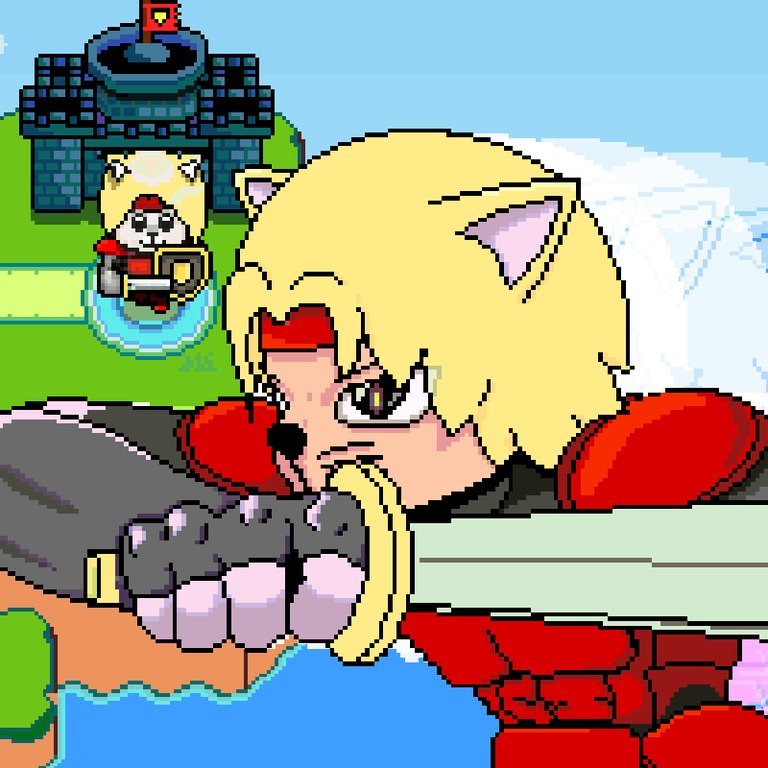
Neko Land is a minimalist one-button arcade game where players control NekoChan as she traverses a world map, pressing a single button to move between points while dodging obstacles and enemies. Each new stage resets a fifteen-second timer, awarding points for remaining time and costing lives on collisions or timeouts, across themed worlds like deserts, ice realms, and graveyards, with two modes: Arcade and Star Collector, which adds hidden stars to find.
Gameplay Videos
Neko Land Guides & Walkthroughs
Neko Land: Review
Introduction: A Purr-plexing Relic of Indie Simplicity
In the vast, ever-expanding digital archives of video game history, certain titles exist not as landmarks, but as intriguing footnotes—curious artifacts that offer a glimpse into a specific moment of creative focus, unburdened by mainstream expectations. Neko Land, a 2013 release from the Italian solo developer Mengasoft (aka mcm85_85), is precisely such a title. It is a game that strips the platformer down to its barest narrative and mechanical essence, presenting a world map as both stage and challenge. Its legacy is not one of commercial blockbuster status or critical darling acclaim, but of a pure, almost meditative, exercise in minimalist design. This review posits that Neko Land’s significance lies in its radical reductionism: it is a game less about doing and more about choosing, a quiet counterpoint to the increasingly complex systems of its era. By analyzing its deceptively simple mechanics, its place within the nascent indie mobile scene of 2013, and its curious position within the wider “Neko” franchise, we can appreciate it not as a failed masterpiece, but as a successful and focused piece of interactive art.
Development History & Context: A Solo Vision in the Age of Accessibility
The Creator and the Engine: Neko Land was the brainchild of a single developer operating under the Mengasoft banner. This was a period of tremendous democratization in game development, thanks to accessible tools like the Clickteam Fusion engine (explicitly cited in release info), which allowed a solo programmer to create, package, and distribute a game across iOS, Android, and Windows with relative ease. The developer’s moniker, mcm85_85, and the game’s visual style suggest a deep affection for 16-bit era aesthetics, particularly the vibrant, character-driven platformers of Nintendo’s Super Mario World—a connection explicitly noted by ModDB user “Mr.Blue” in a comment.
Technological and Market Context (2013): The game’s simultaneous multi-platform release (iPhone, iPad, Android, Windows via Desura) in July 2013 highlights the strategic realities of the time. The iPhone had been a dominant gaming platform for five years, but the Android ecosystem was fiercely competitive and fragmented. Releasing on PC via a service like Desura (later incorporated into the “NekoChan Hero Collection” on Steam) was a common tactic for indie developers seeking a more traditional, “hardcore” audience. The game’s specifications—”Diagonal-down” perspective, “2D scrolling,” “Arcade” gameplay—are a deliberate embrace of retro genres, but its core input mechanism (a single button/click) aligns it with the burgeoning “hyper-casual” mobile trend, despite its more deliberate pace. The post-launch support (versions 2.0 adding “Star Collector” mode in August 2013, and 2.5 adding Xbox controller and keyboard spacebar support shortly after) demonstrates a responsive, community-engaged development cycle typical of successful indie projects of the era.
The NekoChan Series Context: Neko Land is not an isolated creation. It exists within the “NekoChan series,” a lineage that includes NekoChan Baby HERO (2013) and Neko Land 3D (2015), and is often bundled with Ninja World 1 & 2 in compilations like the NekoChan Hero Collection. This series identity, marketed with an “Anime” theme and a ninja kitty protagonist, suggests Mengasoft was building a recognizable brand around a charming mascot. Neko Land thus serves as a peculiar interlude—a diversion in gameplay style from what appears to be more traditional platformers in the series, functioning almost as a minigame or puzzle-exercise within the larger franchise.
Narrative & Thematic Deep Dive: The Story of a Path
The Plot (or Lack Thereof): Curiously, for a game titled Neko Land, there is no traditional narrative. The provided source material contains zero mention of a story, plot, characters with motivations, or dialogue. The “NekoChan” is a pure avatar, a silent cursor given feline form. The worlds—desert, ice, graveyard—are generic platformer tropes, devoid of contextual explanation. The “teleporting on to the next world” is a mechanical transition, not a story beat. This absence is itself a profound statement. In an industry obsessed with cinematic narratives and lore, Neko Land makes a case for pure gameplay as narrative. The story is the player’s journey: the tension of the ticking timer, the relief of dodging an obstacle, the frustration of a mistimed click. The theme is agency within constraint.
Thematic Analysis: Agency, Anxiety, and the Existential Timer:
* The World Map as Existential Battlefield: Conventionally, a world map is a menu, a safe space between levels. Neko Land perverts this. The map is the level. This creates a unique psychological pressure. The player is not navigating a contained challenge but is perpetually “in transit,” exposed. The 15-second timer, which resets upon reaching a new “spot,” is the game’s central thematic engine. It externalizes the anxiety of progression. Every path choice must be weighed against the clock. Do you take the shorter, riskier route for more remaining time and points, or the longer, safer one? The theme becomes one of risk assessment under duress.
* Minimalism as Philosophy: The one-button control scheme is not a gimmick but a philosophical reduction. It removes all complexity of movement, jumping, or combat. The only skill is prediction and timing. This focuses the player’s entire mental energy on the spatial puzzle of the path and the temporal puzzle of the clock. It’s a game about intuition and cold calculation, stripped of dexterity. The “obstacles and enemies” are abstract hazards—they have no identity, no purpose, they simply are as impedances to the goal.
* The “Star Collector” Mode as Metaphor: Version 2.0’s added mode introduces a layer of exploration and hidden knowledge. “Finding hidden stars by choosing the right path” transforms the game from a pure test of timing into a test of memory and mapping acuity. It encourages the player to learn the topology of each world map, rewarding those who internalize the space. This mode subtly introduces the theme of discovery and mastery, suggesting that true expertise in Neko Land means knowing the landscape better than the dangers within it.
Gameplay Mechanics & Systems: The Architecture of a Click
Core Loop and Structure: The gameplay loop is brutally simple:
1. A world map screen appears, with a start point and an end point.
2. The player clicks/taps/presses anywhere on the map.
3. The NekoChan character automatically travels along the shortest path to that point, moving from grid-node to grid-node.
4. If the path intersects with an obstacle or enemy grid, a life is lost instantly.
5. Upon reaching a new node, the timer resets to 15 seconds.
6. The process repeats until the final end-point is reached, triggering a teleport to the next, more complex world map.
7. The game ends when all three lives are lost (via timer depletion or collisions).
Systems Breakdown:
* The One-Button Pathfinding System: This is the game’s singular innovation. The input is a destination, not a command. The AI pathfinding is straightforward (likely Manhattan or grid-based), making the player’s challenge one of spatial foresight. You must visualize the entire path from point A to your chosen point B before clicking, checking for hidden hazards around corners. It’s a real-time spatial puzzle.
* The Tyranny of the Timer: The 15-second countdown is a rigid global constraint. It applies regardless of path length, creating a brutal economy. A short path might leave 12 seconds, granting high points but little margin for error on the next leg. A long path might leave only 2 seconds, scoring poorly but setting up a safer next move. This system forces a fascinating risk-reward calculus every single click.
* Lives and Permadeath Tension: With only three lives and no way to earn more, the game has a permadeath-like tension. A single miscalculation can cripple a run. This amplifies the importance of each click, making the experience intensely focused.
* Progression Through World Topology: “Progression” is not character-based (no power-ups, stats, or upgrades) but environmental. The worlds—desert, ice, graveyard—are not just cosmetic. According to the description, they feature “new obstacles,” meaning the hazard placement algorithms and types become more complex and deceptive as the player advances. The difficulty curve is baked into the map design itself.
* Innovation & Flaws: The innovation is the core mechanichic—the world-as-level-select. Its flaw is its极限的 niche appeal. The game offers no room for mastery of character control, only of map knowledge. For players seeking dynamic action, it will feel static and frustrating. The reliance on a hidden pathfinding algorithm can also feel unfair if an obstacle is obscured by art. The 2013-era touch controls on small phone screens would have added a layer of physical imprecision to the mental puzzle.
World-Building, Art & Sound: Atmosphere Through Suggestion
Visual Direction and Atmosphere: With no story, the world-building must occur through aesthetic cues. The “desert world,” “ice world,” and “graveyard world” are instantly recognizable platformer biomes rendered in a simple, colorful 2D anime style. The “NekoChan” is a cute, silent protagonist. The art doesn’t tell a story, but it efficiently sets a mood. The desert implies heat and desolation; the ice suggests slipperiness and cold; the graveyard implies spookiness and decay. This is classic genre shorthand. The “Diagonal-down” perspective creates a distinctive, somewhat flattened view, emphasizing the grid-like nature of the maps and reinforcing the puzzle-game feel over a platformer’s sense of depth.
Sound Design: The source material provides no specifics on sound, but user comments offer a crucial clue. ModDB user “sashusambar” states: “This is really nice, especially the music make me feel like a child again.” This is telling. The music is not described as epic or ambient, but as nostalgic. It likely employs chiptune or melodic, upbeat tunes evocative of the Super Nintendo or Sega Genesis era. This sound design choice powerfully reinforces the game’s core retro charm and its thematic link to childhood gaming memories. It provides the emotional counterweight to the tense, silent clicking gameplay—a cheerful soundtrack underscoring a tense puzzle.
Synthesis: The art and sound work in concert to create a feeling rather than a place. They evoke the nostalgic comfort of 90s platformers while the gameplay subverts their very nature. The cute aesthetic (“Anime” theme) jars playfully with the game’s merciless timer, creating a dissonance that is central to its identity. You are not a powerful hero jumping through a world; you are a little cat desperately clicking to survive a hostile map.
Reception & Legacy: The Curious Fate of a Neko
Critical and Commercial Reception (Launch): By any conventional metric, Neko Land was a commercial and critical non-event. It has no critic reviews on Metacritic. Its MobyGames page shows a single player rating averaging 2.2/5, though this likely reflects a tiny sample size. Its commercial performance is unknown but presumably modest, given its developer scale and distribution through niche platforms like Desura alongside mobile stores. It existed in the great, noisy flood of 2013 indie mobile games, most of which vanished without a trace.
Community Reception and Evolving Reputation: The more telling data comes from ModDB and IndieDB, which show a Community Rating of 7.2/10 from 6 votes—a significant divergence from the MobyGames score. The comments are sparse but positive, praising its inspiration (“took inspiration from Super Mario World”), its nostalgic music, and its cute protagonist (“Neko Neko! I love Neko’s Q.Q.”). This suggests it found a small, affectionate audience that appreciated its specific, retro-minimalist charm. Its reputation has solidified as a cult curiosity—a game remembered by a few for its unique premise and tight execution within its narrow scope. It is not remembered for its depth, but for its audacious simplicity.
Influence and Industry Impact: Neko Land’s direct influence on the industry is negligible. It did not spawn a genre. However, it can be seen as a心智 precursor or cousin to the “reverse platformer” or “pathfinding puzzle” sub-genre, alongside titles like The Floor is Jelly (in spirit of simple physics) or more directly, minimalistic navigational games. More broadly, it is a case study in the “single mechanic” design philosophy that powered the early indie scene. It demonstrates how a single, well-executed idea (click to pathfind on a map with a timer) can be stretched across multiple worlds and modes (Arcade, Star Collector) to create a complete, if brief, experience. It is a testament to the power of constraint in design, a principle championed by indie luminaries but rarely executed with such purity as in Neko Land. Its bundling into the NekoChan Hero Collection on Steam later in its lifecycle is its most significant legacy act, ensuring it is preserved and occasionally discovered by retro platformer enthusiasts.
Conclusion: A Quiet Triumph of Constraint
Neko Land is not a great game by the common metrics of scope, narrative, or mechanical depth. It is, however, a perfectly realized game for what it sets out to be. It takes a single, fascinating premise—”what if the world map was the entire game?”—and builds a tight, challenging, and oddly atmospheric experience around it. Its genius is in its deletion of the unnecessary. There is no story to confuse, no complex control scheme to master, no upgrade tree to contemplate. There is only the map, the clock, and your next click.
Its place in video game history is not on a pedestal, but in a showcase glass case labeled “Curiosities of Minimalist Design.” It is a valuable artifact demonstrating that even within the crowded 2013 indie landscape, a solo developer could create a game with a uniquely compelling core loop. It respects the player’s intelligence by forcing pure spatial-temporal calculation, and it respects the legacy of 16-bit platformers by evoking their aesthetic while innovating on their fundamental structure. For those patient enough to engage with its stark, ticking-clock rhythm, Neko Land offers a brief, intense, and surprisingly thoughtful meditation on choice, risk, and navigation—all wrapped in the cute, nostalgic package of a little cat’s journey through a beautifully hostile world map.
Final Verdict: 7.5/10 — A brilliant, niche design exercise. Its appeal is intensely specific, but within that niche, it is executed with flawlessly focused intent. A must-play for students of game design and connoisseurs of minimalist interactivity.