
- Release Year: 1996
- Platforms: DOS, SEGA Saturn, Windows
- Publisher: Electronic Arts Victor, Inc., Shouei System, Sir-tech Software, Inc., Virgin Interactive Entertainment, Inc.
- Developer: Sirtech Canada Ltd.
- Genre: Adventure, Role-playing (RPG)
- Perspective: 1st-person
- Game Mode: Single-player
- Gameplay: Magic Spells, Point-and-click, Puzzle elements, Real-time combat, Weapon skill development
- Setting: Fantasy
- Average Score: 72/100
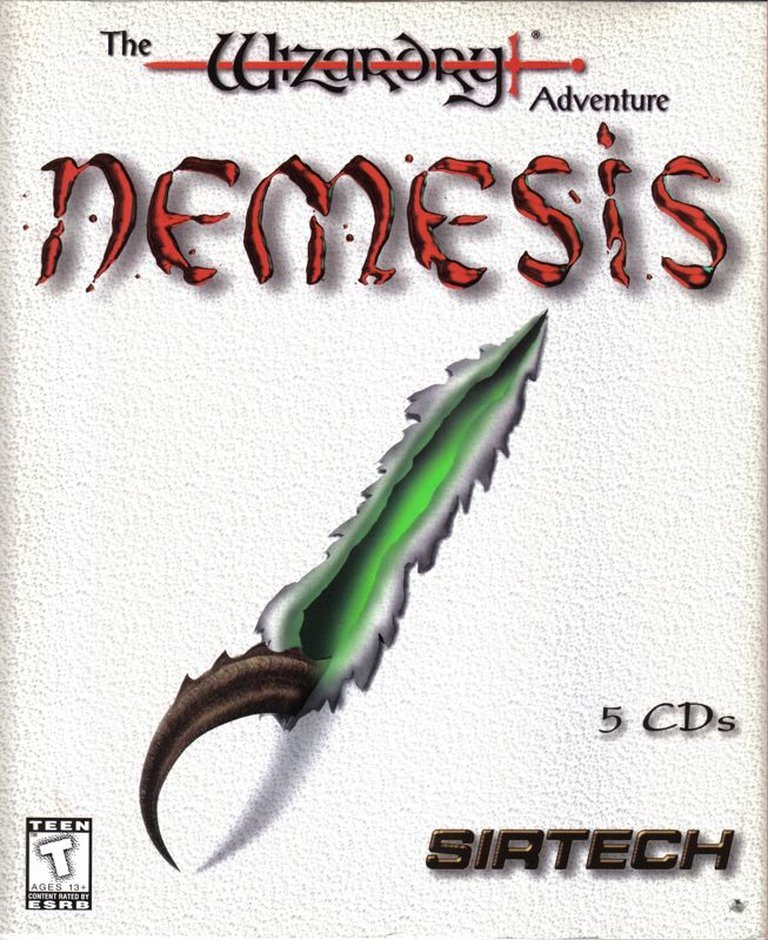
Description
Nemesis: The Wizardry Adventure is a fantasy RPG-adventure hybrid set in a world threatened by the sinister Nithos Shadow, which has corrupted the Nitherin Mages and manifested as seven destructive talismans. As a young hero from Galican, the player embarks on a quest to uncover the talismans and halt the impending chaos, unraveling a personal connection to the mages along the way. The game blends first-person exploration with pre-rendered environments, real-time combat, and puzzle-solving, offering a lighter RPG experience compared to the main Wizardry series, with weapon skill progression and spellcasting as key mechanics.
Gameplay Videos
Nemesis: The Wizardry Adventure Free Download
Nemesis: The Wizardry Adventure Guides & Walkthroughs
Nemesis: The Wizardry Adventure Reviews & Reception
en.wikipedia.org (74/100): A decent graphic adventure, but if you’re dying to play more Wizardry games, you’re bound to be disappointed.
mobygames.com (71/100): A hybrid game that incorporates elements of both puzzle-solving adventure and role-playing.
oldpcgaming.net : It won’t take long until the RPG parts creep in.
hardcoregaming101.net : The environments look good for their time and offer a lot of interesting sights and sufficient variety.
Nemesis: The Wizardry Adventure: A Hybrid Experiment in Fantasy Gaming
Introduction: A Bold Departure from Tradition
In the mid-1990s, the Wizardry series stood as a titan of dungeon-crawling RPGs, renowned for its punishing difficulty, grid-based combat, and labyrinthine design. Yet in 1996, developer Sir-Tech Canada dared to defy expectations with Nemesis: The Wizardry Adventure—a radical reinvention that fused the franchise’s fantasy roots with the burgeoning point-and-click adventure genre. Marketed as “the only adventure worthy of the Wizardry name,” Nemesis was a high-stakes gamble: a real-time, first-person hybrid that traded party-based dungeon delving for a solo hero’s quest, swapping turn-based tactics for Myst-inspired puzzles and pre-rendered 3D environments.
This review dissects Nemesis as both a historical artifact and a flawed masterpiece—a game that divided critics, alienated purists, and yet remains a fascinating case study in genre-blending. Through an exhaustive analysis of its development, narrative, mechanics, and legacy, we’ll determine whether Nemesis was a visionary leap forward or a misguided detour for one of gaming’s most venerable franchises.
Development History & Context: The Birth of a Hybrid
Sir-Tech’s Evolution and the Rise of the Adventure-RPG
By 1996, Sir-Tech Software had spent over a decade cementing Wizardry as a cornerstone of computer RPGs. From Proving Grounds of the Mad Overlord (1981) to Crusaders of the Dark Savant (1992), the series had evolved from ASCII dungeons to VGA graphics, but its core remained unchanged: a brutal, numbers-driven crawl through procedurally generated mazes. However, the gaming landscape was shifting. Myst (1993) had revolutionized adventure games with its immersive 3D environments and atmospheric storytelling, while Diablo (1996) proved that real-time action could coexist with RPG mechanics.
Enter Linda Currie, Sir-Tech’s project leader and the creative force behind Nemesis. As the younger sister of company founders Robert and Norman Sirotek, Currie had cut her teeth producing Jagged Alliance (1994), a tactical RPG that blended strategy with character-driven narratives. For Nemesis, she envisioned a game that would “not be intimidating or complex”—a deliberate pivot to attract the influx of casual PC gamers who found traditional Wizardry titles impenetrable.
Technological Constraints and Design Challenges
Nemesis was built on a proprietary engine that rendered its world in pre-rendered 3D backgrounds, akin to Myst but with animated transitions during movement. This approach allowed for richly detailed environments—from the misty forests of Galican to the oppressive dungeons of the Nitherin Mages—but came with significant limitations:
- Hardware Demands: The game shipped on five CD-ROMs, a rarity for 1996, and required frequent disc swaps. Players with slower CD drives suffered from painful load times, a common complaint in contemporary reviews.
- Real-Time Combat vs. Step-Based Movement: Currie’s team struggled to reconcile Nemesis’s real-time combat with its grid-like navigation. Enemies moved fluidly, while the player’s movement was tied to discrete steps, creating a disjointed rhythm that frustrated some players.
- The “Click-Click-Click” Dilemma: Currie wanted combat to offer “something more than click-click-click,” but the final implementation often devolved into exactly that—a frantic mouse-mashing contest against overly aggressive foes.
A Marketing Gamble: The Wizardry Name as a Double-Edged Sword
Sir-Tech faced a paradox: Nemesis was not a traditional Wizardry game, yet it bore the franchise’s name to leverage its brand recognition. In interviews, Currie emphasized that the game retained “the qualities that Wizardry stands for: an epic story, intrigue, mystery, and arsenals of unique items.” However, this messaging backfired. Hardcore fans expected a dungeon crawler; adventure gamers were wary of the Wizardry label’s association with complexity.
The game’s E3 1996 debut alongside Realms of Arkania: Shadows over Riva showcased its ambition, but the final product—released on October 17, 1996—arrived in a crowded holiday season, competing with Diablo, Tomb Raider, and Quake.
Narrative & Thematic Deep Dive: A Tale of Shadows and Talismans
Plot Overview: A Hero’s Burden
Nemesis opens in the city of Galican, where the protagonist—a pre-generated hero with no backstory—is ambushed by a Nithos Shadow, a spectral creature tied to an ancient curse. The High Council reveals that the Nitherin Mages, a secretive order, have unleashed dark forces by tampering with seven talismans, each embodying a different aspect of chaos. The hero’s quest: recover the talismans before they trigger an apocalypse.
The narrative unfolds through environmental storytelling, NPC dialogues, and a journal system that tracks objectives. However, the plot suffers from:
- A Slow, Vague Start: Early reviews criticized the game’s lack of clear direction. Players often wandered aimlessly, unsure of their next objective.
- Underdeveloped Characters: Unlike Wizardry’s party dynamics, Nemesis features a lone hero, limiting emotional investment. NPCs are functional rather than memorable.
- Thematic Depth: The game explores corruption, destiny, and the cost of power, but these themes are buried beneath convoluted puzzle logic.
Dialogue and Writing: A Mixed Bag
The script, co-written by Linda Currie and Brenda Romero (née Brathwaite, a legendary game designer in her own right), is competent but unremarkable. Dialogues are expository, often serving as hint dispensers for puzzles rather than character-building moments. The game’s voice acting—a rarity for 1996 RPGs—is stiff and uneven, with some lines delivered with the enthusiasm of a tax auditor.
The Talismans: A MacGuffin with Potential
Each of the seven talismans is tied to a different elemental or conceptual force (e.g., fire, illusion, time). While this could have been a rich lore opportunity, the talismans ultimately feel like checklist items rather than meaningful artifacts. Their backstories are relegated to scrolls and environmental clues, requiring players to piece together the lore themselves—a design choice that rewards exploration but frustrates those seeking a cohesive narrative.
Gameplay Mechanics & Systems: The Hybrid Experiment
Core Gameplay Loop: Adventure Meets Action-RPG
Nemesis’s greatest innovation—and its most contentious feature—is its dual identity:
- Adventure Mode: The game’s primary state, where players explore pre-rendered environments, solve puzzles, and interact with objects via a point-and-click interface.
- Combat Mode: Triggered by enemy encounters, this shifts the game into real-time, first-person swordplay and spellcasting.
Adventure Mechanics: Puzzles and Exploration
- Puzzle Design: Nemesis’ puzzles are inventive but inconsistent. Some require logical deduction (e.g., aligning mirrors to redirect light), while others rely on obscure item combinations or pixel-hunting.
- Inventory System: A limited inventory forces players to prioritize items, adding tension but also frustration when critical objects are discarded.
- Navigation: Movement is node-based, with the player clicking edges of the screen to turn or advance. While intuitive, the lack of free movement feels restrictive compared to contemporaries like Tomb Raider.
Combat: A Flawed but Ambitious System
Combat in Nemesis is real-time and reflex-based, a stark departure from Wizardry’s turn-based roots. Key features include:
- Weapon Proficiency: The hero’s skills with swords, axes, maces, and ranged weapons improve through use, encouraging specialization.
- Spellcasting: Spells are learned progressively and tied to runes found throughout the world. However, the clunky interface—requiring players to select spells from a menu mid-combat—makes magic feel cumbersome.
- Enemy AI: Foes are aggressive and fast, often overwhelming players in tight corridors. The lack of a dodge or block mechanic turns many fights into frantic clicking marathons.
Character Progression: A Streamlined Approach
Unlike traditional Wizardry games, Nemesis features:
- Pre-Determined Stats: The hero’s strength, dexterity, and intelligence are fixed, removing the depth of character creation.
- Skill-Based Growth: Only weapon proficiencies and spell knowledge improve, making progression feel shallow compared to contemporary RPGs like Diablo.
UI and Quality-of-Life Issues
- Disc Swapping: The game’s five-CD structure leads to frequent, jarring interruptions, especially during critical moments.
- Save System: Nemesis uses a limited save system, forcing players to rely on fixed save points—a punishing design choice for an adventure game.
- Technical Bugs: Early versions suffered from crashes, clipping issues, and pathfinding glitches, particularly in the Windows 95 port.
World-Building, Art & Sound: A Feast for the Senses
Visual Design: Pre-Rendered Grandeur
Nemesis’s pre-rendered 3D backgrounds (created using 3D Studio) were ahead of their time, offering:
- Diverse Environments: From the gothic spires of the Nitherin Tower to the lush, misty forests of Galican, each location has a distinct aesthetic.
- Atmospheric Lighting: The game’s use of dynamic shadows and flickering torches creates a haunting, immersive mood.
- Animation: Unlike Myst’s static images, Nemesis features subtle animations (e.g., swaying trees, flowing water) that enhance immersion.
However, the lack of true 3D movement means that environments occasionally feel like painted backdrops rather than living spaces.
Sound Design: A Mixed Symphony
Composed by Eric Heberling, Nemesis’ soundtrack is orchestral and moody, evoking the game’s dark fantasy tone. The MIDI-based music holds up well, though it lacks the dynamic adaptability of modern scores.
- Ambient Sounds: The game excels in environmental audio—dripping water, howling wind, and distant echoes enhance the atmosphere.
- Voice Acting: As mentioned earlier, the voice work is uneven, with some NPCs delivering lines with wooden monotony.
Atmosphere: A World of Mystery and Danger
Nemesis’s greatest strength is its oppressive, mysterious tone. The game drips with foreboding, from the eerie whispers of the Nithos Shadows to the cryptic warnings of the Nitherin Mages. However, the lack of NPC depth and underdeveloped lore prevent the world from feeling truly alive.
Reception & Legacy: A Divisive Masterpiece
Critical Reception: Praise and Backlash
Nemesis received mixed-to-positive reviews, with critics praising its ambition and atmosphere while lamenting its flaws:
| Publication | Score | Key Praise | Key Criticism |
|---|---|---|---|
| Gamezilla | 85% | “A fun hybrid of RPG and adventure” | “Lacks replay value” |
| Coming Soon Magazine | 84% | “Beautiful graphics, solid mood” | “Some puzzles too obscure” |
| Computer Games Magazine | 80% | “Impressive dungeons, enjoyable mix” | “Hardcore fans may dislike genre blend” |
| GameSpot | 74% | “Handsome adventure with combat” | “Not a true RPG” |
| PC Gamer UK | 45% | — | “User-unfriendly, buggy” |
| Computer Gaming World | Unscored | — | “Mediocre plot, weak combat” |
Common Praise:
– Visuals and atmosphere were universally lauded.
– Puzzle design was called inventive (though often too cryptic).
– The hybrid genre approach was seen as bold and refreshing.
Common Criticisms:
– Combat was shallow and repetitive.
– Technical issues (crashes, disc swapping) marred the experience.
– Fans of traditional Wizardry felt betrayed by the lack of party mechanics.
Commercial Performance and Long-Term Impact
Nemesis was not a commercial blockbuster, but it found a niche audience among adventure gamers. Its Japanese Sega Saturn port (1998) fared better, thanks to the console’s strong RPG fanbase.
Legacy:
– Influence on Hybrid Games: Nemesis paved the way for later adventure-RPG hybrids like The Elder Scrolls’ puzzle-heavy dungeons and King’s Quest: Mask of Eternity (1998).
– A Cautionary Tale: Its divisive reception taught developers the risks of alienating a core fanbase while chasing trends.
– Cult Following: Today, Nemesis is remembered as a flawed gem—a game that dared to innovate in an era of safe sequels.
Conclusion: A Flawed but Essential Experiment
Nemesis: The Wizardry Adventure is a game of contradictions:
– It is beautiful but buggy.
– It is innovative but inconsistent.
– It is ambitious but flawed.
Final Verdict: 7.5/10 – A Bold, Imperfect Masterpiece
Nemesis is not the best Wizardry game, nor is it the best adventure game of 1996. However, it remains one of the most fascinating experiments in genre-blending from the mid-90s—a game that pushed boundaries even as it stumbled over them.
For Whom Is It Worth Playing Today?
– Adventure gamers who appreciate atmospheric puzzles and pre-rendered worlds.
– RPG historians interested in the evolution of the Wizardry series.
– Retro enthusiasts willing to overlook its jank for its ambition and beauty.
Nemesis is a time capsule—a reminder of an era when developers took bold risks, even if those risks didn’t always pay off. In the pantheon of Wizardry games, it stands as the black sheep: misunderstood, underappreciated, but undeniably unique.
Final Thought: If Wizardry is a dungeon, then Nemesis is the secret passage—one that leads not to treasure, but to a mirror reflecting the future of gaming.