
- Release Year: 2002
- Platforms: Windows
- Publisher: CDV Software Entertainment AG
- Developer: reaktor.com
- Genre: Action, Role-playing (RPG)
- Perspective: 1st-person
- Game Mode: MMO
- Gameplay: Character Creation, Economy, PvP Combat, Questing
- Setting: Futuristic, Post-apocalyptic, Sci-fi
- Average Score: 71/100
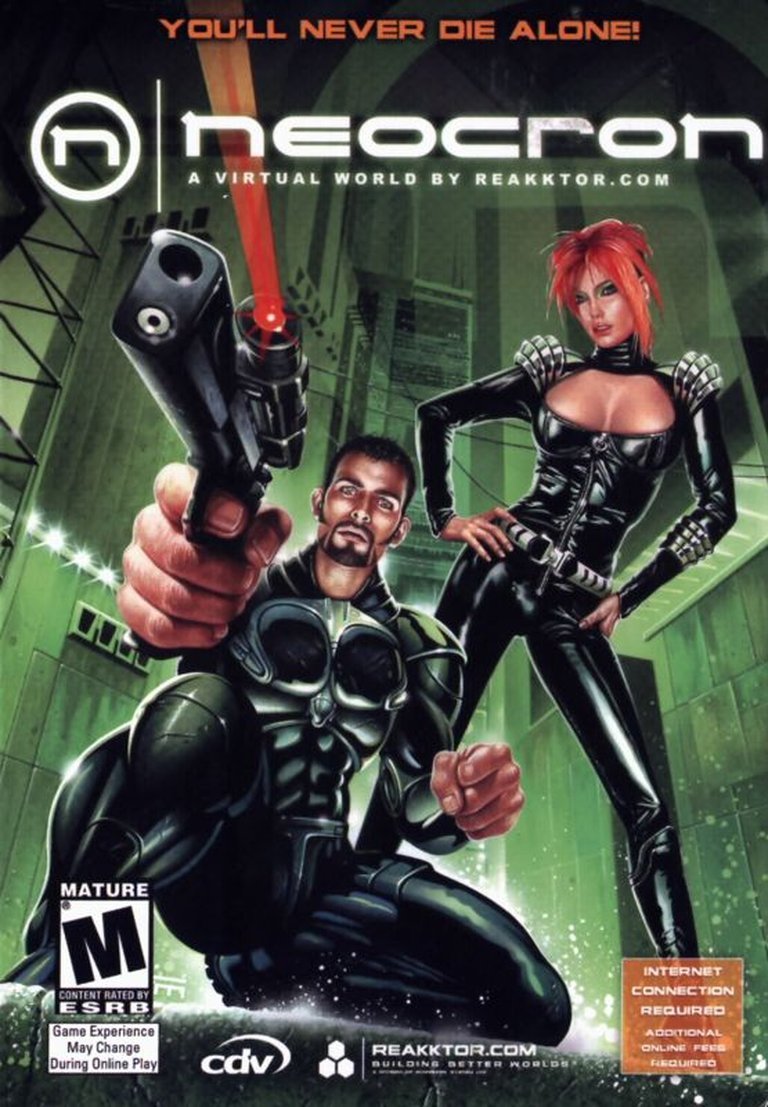
Description
Set in a post-apocalyptic 28th century Earth ravaged by pollution, war, and radiation, Neocron is a massively multiplayer online role-playing game where players become citizens of protected mega cities like Neocron. This dystopian cyberpunk world offers first-person exploration, persistent gameplay, and the freedom to pursue adventures or a virtual life while coexisting with thousands of online players in a toxic, mutated environment.
Neocron Free Download
Neocron Mods
Neocron Guides & Walkthroughs
Neocron Reviews & Reception
ign.com (85/100): That aside, Neocron feels fresh, exciting, engrossing and atmospheric. It’s a long way from being perfect, but we see great things ahead for this title.
gamespot.com : While the promise of political intrigue in a futuristic setting will draw you into the game, Neocron’s inability to make a significant impact will push you away.
gamesreviews2010.com (75/100): Neocron is a landmark MMORPG that helped to define the cyberpunk genre. Its unique blend of genres, immersive world, and innovative gameplay set it apart from other games of its time, and it remains a classic of the genre today.
Neocron Cheats & Codes
Neocron
Enter the following commands in the chat console or command line.
| Code | Effect |
|---|---|
| /set ctrl_hudallowmove 0|1 | Enables or disables basic movement (forward, back, strafe) in R.P.O.S. mode; 1 = enable, 0 = disable. |
| /set ctrl_mousefac |
Sets mouse sensitivity; |
| /set ctrl_mouseinvert 0|1 | Inverts the vertical mouse axis; 1 = inverted, 0 = normal. |
| /set ctrl_mouselock 0|1 | Locks the render buffer every frame to fix mouse lag; 1 = lock, 0 = release. |
| /set ctrl_bob |
Controls the bobbing effect while walking or running; |
| /quit | Exits the game immediately. |
| /set kill_self 1 | Instantly kills the player. |
| /set reset_position 1 | After a 120‑second delay, resets the player’s position to a predefined location; disables most movement except jumping, crouching, and item usage during the reset period. |
Neocron: Review
Introduction
In the crowded landscape of early 2000s massively multiplayer online role-playing games (MMORPGs), dominated by fantasy epics like EverQuest and Anarchy Online, Neocron emerged as a defiant outlier. Developed by Germany’s Reakktor Media and released in 2002, this cyberpunk/post-apocalyptic MMORPG dared to swap elves and magic for chrome, corruption, and corporate espionage. As the first game to explicitly merge the immersive world of MMORPGs with the visceral, real-time combat of first-person shooters (FPS), Neocron promised a gritty, adult-oriented alternative to the genre’s established norms. Its legacy, however, is one of unfulfilled potential and cult adoration—a testament to its bold vision and persistent community. This review deconstructs Neocron through its ambitious design, execution, and enduring impact, arguing that despite its flaws, it remains a landmark experiment in virtual world-building that presaged the cyberpunk MMOs of today.
Development History & Context
Neocron was the brainchild of Martin J. Schwiezer, the CEO and creative force of Reakktor Media GmbH based in Hannover, Germany. A devout cyberpunk enthusiast, Schwiezer conceived the project in the late 1990s as an antidote to the “No more Elves” mantra—a direct rejection of the fantasy-dominated MMO landscape. His vision was to create a morally ambiguous, technologically saturated world where players navigated dystopian urban sprawls and toxic wastelands. Technologically constrained by the era’s capabilities, Reakktor utilized the Genesis3D engine (a DX7-based middleware) to deliver a persistent world optimized for dial-up connections. This forced ingenuity resulted in impressive stability for the time, with minimal lag even on 56k modems—a claim few contemporaries could match.
The gaming landscape in 2002 was pivotal. EverQuest and Anarchy Online had proven the viability of subscription-based MMORPGs, but innovation was stalling. Neocron arrived as a breath of neon-lit smoke, promising a fusion of FPS action and RPG depth. Its development was not without hurdles; beta delays and publisher CDV Software’s limited marketing muscle hampered its global reach. Yet, Reakktor’s unwavering commitment to its dystopian ethos—evident in the inclusion of adult themes like a red-light district—set it apart. This context explains Neocron’s dual identity: a technical marvel struggling against market indifference, and a cult favorite that defied industry conventions.
Narrative & Thematic Deep Dive
Neocron’s narrative unfolds across a meticulously crafted, post-apocalyptic timeline. In the mid-22nd century, escalating tensions between a Chinese Empire and the Federation of the Free World culminate in a nuclear holocaust on February 17, 2143—one of the shortest, most devastating wars in history. Earth becomes a toxic wasteland, mutated by radiation and environmental collapse. Humanity’s sole refuge lies within the walled mega-cities of Neocron and Dome of York, rebuilt 300 years later thanks to the military repurposing of the “Ceres Project,” an MIT initiative to digitize human knowledge. This backstory, detailed in the manual and lore, elevates Neocron beyond typical MMO fare, weaving themes of corporate greed, political intrigue, and existential survival.
The game’s factions—such as the mercenary CityMercs, the techno-religious Brotherhood of Crahn, and the syndicate Tsunami—reflect this complexity. Players align with groups whose histories interlace with global conspiracies, like the mass exodus to the colony planet Irata III. Dialogue and missions emphasize moral ambiguity: players might broker arms deals, hack rival databases, or assassinate targets for profit. The mature tone, epitomized by Pepper Park’s district of shadowy clubs and illicit trade, was revolutionary. As art director Holger Nathrath argued, such elements were essential to the “Blade Runner” authenticity Neocron sought, even if they alienated more conservative markets. Ultimately, the narrative’s strength lies in its world-building, though its execution in-game—via repetitive quests—often failed to leverage its rich potential.
Gameplay Mechanics & Systems
Neocron’s core innovation lay in blending MMO character progression with FPS-style combat. Players chose from four archetypal classes: the GenTank (genetically enhanced juggernaut), Spy (stealthy infiltrator), Psi Monk (psionically adept mystic), and Private Eye (versatile jack-of-all-trades). Beyond class, players specialized in “jobs”—hacker, engineer, or combatant—by allocating skill points into abilities like Rifles, Research, or Droning. This flexibility allowed for deep customization, though it also overwhelmed newcomers.
Combat was real-time and visceral, requiring manual aiming and weapon management. Pistols, rifles, and rocket launchers offered tactile satisfaction, but enemies often exhibited simplistic AI, reducing engagements to repetitive “bug hunts” in sewers or wastelands. Quests, delivered via the CityCom terminal, mirrored this monotony: errands like delivering packages or recycling trash dominated early gameplay. The Soul Light system attempted to balance PvP by penalizing player-killers with bounty hunters and vendor rejection, but it proved easily exploitable.
Flaws abounded. High-end items like hovercosts cost hundreds of thousands of credits, forcing grindy repetition. The UI, while functional, was cluttered, and the nav-ray system’s dotted-line guidance felt antithetical to exploration. Yet Neocron shone in social features: player housing offered personal sanctuaries for storage and decoration, while faction-based “Balance of Power” mechanics fostered political maneuvering. Holomatch arenas provided PvP without permanent consequences, a precursor to modern MOBAs. These systems, though uneven, demonstrated Neocron’s ambition to create a living, breathing world.
World-Building, Art & Sound
Neocron’s world was a masterpiece of atmospheric design. The city of Neocron comprised five distinct districts: the opulent Plaza and Via Rosso, the gritty Pepper Park red-light district, the industrial Outzone, and the militarized Sector 4. Each district’s architecture, lighting, and NPCs reinforced its identity—from the neon-drenched chaos of Pepper Park to the sterile corporate sterility of Plaza. The wastelands beyond the city walls, teeming with mutated creatures and ancient ruins, offered a stark contrast, emphasizing humanity’s fragility.
Artistically, Neocron embraced cyberpunk’s aesthetic of decay and decadence. Textures were detailed for the time—rust-streaked walls, rain-slicked streets, and towering skyscrapers—but character models suffered from limited variety, creating “clone armies” of identical avatars. The Genesis3D engine’s limitations were evident in rigid animations and simplistic terrain, yet art director Holger Nathrath’s vision of a neon-drenched, rain-slicked dystopia prevailed.
Sound design amplified the immersion. Industrial soundscapes by Max Corbacho, Steve Roach, and Ian Boddy underscored the game’s noir tension, while the city’s public address system delivered urgent news and warnings, reinforcing the sense of a living metropolis. Gunfire echoed with visceral weight, and creature roars added dread to wasteland exploration. Together, audio and visual elements crafted a world that felt oppressive yet alluring—a cybernetic labyrinth where every alley held promise or peril.
Reception & Legacy
At launch, Neocron received mixed reviews that mirrored its dichotomous strengths and weaknesses. Critics lauded its atmosphere and FPS integration; PC Zone awarded it 85%, praising its “fresh, exciting, engrossing” world. The Adrenaline Vault hailed it as the “only online RPG worth buying for one month,” comparing it to Deus Ex meets Morrowind. Yet others criticized its repetitive content; GameSpot lamented that its “interesting story elements… mean little when all you do is stomp bugs,” scoring it 6.6/10. Computer Gaming World was harsher, dismissing it as “confused, bored, and lonely” (40%). Players, too, were divided, with MetaCritic’s user score (7.8) indicating steady if niche appeal.
Commercially, Neocron underperformed due to CDV’s limited marketing and its mature content—which necessitated censorship in the U.S. version—alienating family-friendly audiences. Its legacy, however, is more nuanced. The 2004 sequel Neocron 2: Beyond Dome of York addressed many flaws, upgrading to a DX9 engine and adding new cities, but the original game’s servers closed in 2004. Yet, the community refused to let it die. In 2016, fans launched Neocron Evolution, a volunteer-driven overhaul that reworked systems and introduced modern features. Today, Neocron endures as the longest-running German MMORPG and a cult classic, influencing titles like The Matrix Online and proving that niche cyberpunk worlds could thrive with community passion. Its DNA persists in games that blend shooter mechanics with RPG depth, cementing its status as a misunderstood pioneer.
Conclusion
Neocron stands as a flawed but audacious milestone in MMO history. Its greatest achievement was forging a cohesive cyberpunk universe that prioritized atmosphere and consequence over formulaic fantasy tropes. The fusion of FPS combat with RPG progression was revolutionary, even if execution faltered in mission design and technical consistency. Yet, it was Neocron’s unyielding commitment to its dystopian vision—its morally gray factions, adult themes, and player-driven politics—that ensured its legacy. Though overshadowed by contemporaries like World of Warcraft, its community’s stewardship of Neocron Evolution attests to its enduring appeal. In the end, Neocron is more than a game; it is a time capsule of 2000s innovation, a testament to the power of niche worlds, and a reminder that history remembers the bold, even when they stumble. For all its imperfections, Neocron remains an essential artifact—one that deserves a place in the pantheon of genre-defining experiments.