
- Release Year: 1996
- Platforms: DOS, Windows
- Publisher: Virgin Interactive Entertainment, Inc.
- Developer: Ronin Entertainment
- Genre: Action
- Perspective: 1st-person
- Game Mode: Single-player
- Gameplay: Puzzle solving, Quasi-linear progression, Resource managing
- Setting: Futuristic, Sci-fi
- Average Score: 47/100
Description
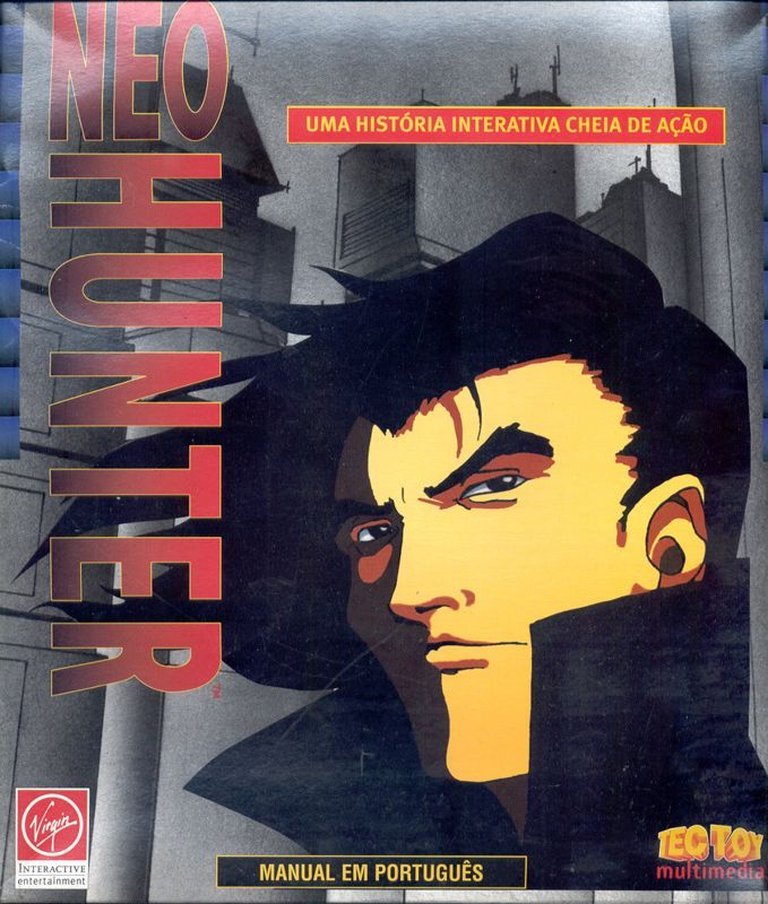
NeoHunter is a sci-fi action game set in the futuristic, independent state of Calia, which seceded from the U.S. after a meteor strike. Players take on the role of Rick Cage, a hunter seeking revenge for his father’s murder while uncovering conspiracies in a corrupt, corporate-controlled society. The game blends first-person shooting with light puzzle-solving and resource management, offering a quasi-linear experience as Rick arrests criminals to climb the ladder of Calia’s underworld.
Gameplay Videos
NeoHunter Free Download
PC
NeoHunter Reviews & Reception
en.wikipedia.org (20/100): This is an awful game. Look at the box, you might not think so. […] But don’t be fooled.
myabandonware.com (90/100): A haphazard mismatch of different gameplay elements that never quite come together.
squakenet.com : Stylish but ultimately unsatisfying Virtua Cop-style action
NeoHunter: A Cyberpunk Ambition Undone by Its Own Reach
Introduction
In the mid-1990s, the cyberpunk genre was a fertile ground for video game experimentation, blending dystopian futures with high-tech aesthetics and noir storytelling. NeoHunter, developed by Ronin Entertainment and published by Virgin Interactive in 1996, emerged as an ambitious attempt to fuse the kinetic energy of light-gun shooters with the depth of narrative-driven adventure games. Set in a futuristic, secessionist California—now the independent state of Calia—the game casts players as Rick Cage, a bounty hunter unraveling a conspiracy tied to his father’s murder. With a script penned by Ender’s Game author Orson Scott Card, striking anime-inspired visuals, and a mix of shooting, puzzles, and resource management, NeoHunter promised a unique hybrid experience. Yet, despite its lofty aspirations, the game ultimately faltered under the weight of its own contradictions, leaving behind a legacy as a fascinating but flawed relic of its era.
This review dissects NeoHunter in exhaustive detail, exploring its development history, narrative ambitions, gameplay mechanics, artistic direction, critical reception, and lasting influence. By examining both its strengths and its failings, we can understand why NeoHunter remains a cult curiosity rather than a celebrated classic.
Development History & Context
The Birth of Ronin Entertainment and the LucasArts Connection
NeoHunter’s origins trace back to Calia 2095, a project initially developed under the auspices of LucasArts. The game’s lead designer, Edward Kilham, was a veteran of LucasArts’ acclaimed Star Wars flight simulators, having co-designed X-Wing (1993) and TIE Fighter (1994). His departure from LucasArts to form Ronin Entertainment in 1995 allowed him to take the Calia 2095 concept with him, rebranding it as NeoHunter. This transition was reportedly amicable, as Ronin would later collaborate with LucasArts on Star Wars: Force Commander (2000).
The game’s development team was a mix of industry veterans and fresh talent. Kalani Streicher co-designed the game alongside Kilham, while Harrison Fong, an artist with credits on Super Star Wars (1992) and Full Throttle (1995), served as art director. The involvement of Orson Scott Card, a renowned science fiction author, as the game’s writer was a major selling point, promising a narrative depth rarely seen in action games of the era.
Technological Constraints and Design Challenges
NeoHunter was developed during a transitional period in PC gaming. The mid-1990s saw the rise of 3D acceleration, with games like Quake (1996) pushing the boundaries of real-time 3D rendering. However, NeoHunter opted for a 2.5D approach, using pre-rendered backgrounds with sprite-based characters and dynamic camera zooms to create a sense of depth. This choice was likely influenced by both technological limitations and artistic vision—the game’s anime-inspired aesthetic lent itself well to hand-drawn backdrops.
The game’s Smacker Video middleware (used for FMV sequences) and CD-ROM distribution were standard for the time, but the reliance on mouse-controlled shooting in an era dominated by keyboard-and-mouse FPS games like Doom (1993) and Duke Nukem 3D (1996) was a risky gamble. The developers attempted to bridge the gap between arcade-style light-gun shooters (e.g., Virtua Cop, 1995) and PC action games, but the execution proved divisive.
The Gaming Landscape of 1996
NeoHunter arrived in a crowded market. The cyberpunk genre was experiencing a renaissance, with games like System Shock (1994), Blade Runner (1997), and Deus Ex (2000) redefining immersive storytelling in sci-fi settings. Meanwhile, rail shooters and light-gun games were thriving in arcades, with House of the Dead (1996) and Time Crisis (1995) setting new standards for interactive action.
NeoHunter’s hybrid design—blending shooting, puzzles, and narrative—positioned it as a potential innovator. However, its repetitive combat, clunky controls, and disjointed pacing struggled to compete with the tighter, more focused experiences of its contemporaries.
Narrative & Thematic Deep Dive
Plot Summary: A Cyberpunk Noir
NeoHunter’s story unfolds in 2095, in the newly independent state of Calia (formerly California), which seceded from the United States after a catastrophic meteor strike. The game opens with the assassination of Senator McAllister, a close ally of Rick Cage’s late father. As Rick, players must navigate Calia’s corrupt underworld, taking on contracts to hunt down hackers, drug lords, and corporate conspirators while uncovering the truth behind his father’s murder.
The narrative is structured as a quasi-linear detective story, with players choosing which contracts to pursue on a city map. Each mission advances the overarching plot while revealing fragments of the larger conspiracy. The game’s cyberpunk themes—corporate dominance, political corruption, and technological surveillance—are familiar tropes, but Card’s writing attempts to elevate them with sharp dialogue and futuristic slang.
Characters and Dialogue
- Rick Cage: The protagonist is a classic cyberpunk antihero—a morally ambiguous bounty hunter with a personal vendetta. His character is defined more by his actions than his personality, which remains underdeveloped.
- Senator McAllister: His murder serves as the inciting incident, but his role is largely symbolic.
- Various Contract Targets: Drug lords, hackers, and corporate executives populate the game’s roster of antagonists, though few leave a lasting impression.
The dialogue, while occasionally witty, suffers from over-exposition and uneven pacing. The game’s futuristic slang (detailed in the manual) adds flavor but can feel forced. Cutscenes, rendered in-engine rather than as FMV, are visually striking but often disrupt the flow of gameplay.
Themes: Power, Corruption, and Identity
NeoHunter explores themes common to cyberpunk:
– Corporate Control: Calia’s independence is a facade, with megacorporations pulling the strings.
– Technological Surveillance: Rick’s use of DNA analyzers and hacking tools reflects the game’s preoccupation with data as power.
– Personal Vendetta vs. Justice: Rick’s quest for revenge blurs the line between vigilantism and justice.
However, these themes are underdeveloped, serving more as window dressing than substantive commentary. The game’s narrative ambition clashes with its gameplay reality—players spend more time shooting than engaging with the story.
Gameplay Mechanics & Systems
Core Gameplay Loop: Shooting and Puzzles
NeoHunter’s gameplay is divided into two primary modes:
1. Combat Missions: First-person shooting sequences where players navigate environments, battling enemies with a variety of weapons.
2. Puzzle Segments: Mini-games and logic puzzles that advance the plot or unlock new areas.
Combat Mechanics
- Weapon System: Players wield two weapons (left and right mouse buttons), with options including pistols, shotguns, and machine guns. Ammo regenerates over time, encouraging strategic pauses.
- Shield System: A rechargeable shield absorbs damage, adding a layer of resource management.
- Targeting: The game employs a lock-on mechanic, which can be toggled off but often feels unwieldy in fast-paced encounters.
Issues with Combat:
– Repetitive Enemy Waves: The game’s reliance on quantity over quality leads to tedium.
– Clunky Controls: The mouse-based shooting lacks the precision of contemporary FPS games.
– Camera Zooms: While visually impressive, the dynamic camera often obscures enemies or disorients players.
Puzzle Mechanics
NeoHunter features several mini-games:
– Netrunner: A hacking puzzle where players navigate a node-based network to implant viruses.
– Spectrum Analyzer: A light-refraction puzzle requiring players to align beams to bypass security.
– DNA Decoder/Splicer: Logic puzzles involving genetic sequencing (essentially Mastermind and jigsaw variants).
Puzzle Critique:
– Innovative but Frustrating: The puzzles are creative but often poorly integrated into the gameplay flow.
– Difficulty Spikes: Some puzzles are unintuitively difficult, breaking immersion.
Progression and Exploration
- City Map: Players select missions from a non-linear map, allowing some freedom in progression.
- Upgrade System: Credits earned from missions can be spent on weapons, shields, and ammo upgrades.
- Apartment Hub: Rick’s apartment serves as a hub for mini-games, saving, and equipment management.
Progression Issues:
– Grind-Heavy: The need to replay missions for credits feels like padding.
– Lack of Meaningful Choices: The quasi-linear structure is illusionary, as most paths converge on the same narrative beats.
World-Building, Art & Sound
Setting: Calia’s Cyberpunk Aesthetic
NeoHunter’s vision of future San Francisco is a blend of neon-noir and anime futurism. The game’s environments—from seedy alleyways to corporate high-rises—are rendered in bold, cartoonish strokes, evoking the aesthetic of Akira (1988) or Ghost in the Shell (1995).
Strengths:
– Distinct Visual Identity: The anime-inspired art direction stands out in an era dominated by gritty realism.
– Atmospheric Lighting: The use of neon hues and dynamic shadows creates a moody, immersive world.
Weaknesses:
– Technical Limitations: The pre-rendered backgrounds become blurry during camera zooms, breaking immersion.
– Sprite Clashing: Enemy sprites often fail to blend with the environments, creating a jarring visual disconnect.
Sound Design and Music
- Voice Acting: The game features full voice acting, a rarity for mid-90s PC games. While the performances are serviceable, they lack the polish of later cyberpunk titles.
- Soundtrack: The synth-heavy score complements the cyberpunk setting but is forgettable.
- Sound Effects: Gunfire and environmental sounds are functional but unremarkable.
Reception & Legacy
Critical Reception: A Divisive Failure
NeoHunter was panned by critics, with an average score of 32% on MobyGames and scathing reviews from major outlets:
– Computer Gaming World (40%): “You kill 50 guys. Listen to some witty dialogue. Kill 50 more guys. Ad nauseam.”
– PC Player (Germany) (40%): “A half-baked mix of manga and literature that induces repetitive stress injuries.”
– Netjak (17%): “This is yet another example of something that sounds so bad on paper, it should have died in a design meeting.”
Common Criticisms:
– Repetitive Gameplay: The endless waves of enemies and lack of variety wore out players.
– Technical Issues: Bugs, poor controls, and performance problems plagued the experience.
– Disjointed Design: The mismatch between narrative ambition and gameplay execution left critics cold.
Player Reception and Cult Status
Despite its flaws, NeoHunter has developed a small but dedicated following. Fans appreciate:
– Its unique art style.
– The ambition of its hybrid design.
– The nostalgic charm of its mid-90s cyberpunk aesthetic.
However, most players acknowledge its fundamental shortcomings, relegating it to obscurity rather than reverence.
Legacy and Influence
NeoHunter’s legacy is one of missed potential. It attempted to bridge multiple genres—shooter, adventure, puzzle—but succeeded in mastering none. Its failures highlight the challenges of hybrid game design, a lesson later titles like Deus Ex (2000) would learn from.
Influences:
– Cyberpunk Aesthetics: Its visual style prefigured later anime-inspired cyberpunk games like Cyberpunk 2077 (2020).
– Narrative in Action Games: Its attempt to weave storytelling into action foreshadowed later successes like Half-Life (1998).
Conclusion: A Flawed but Fascinating Experiment
NeoHunter is a game of contradictions—a cyberpunk epic with shallow gameplay, a narrative-driven experience with repetitive action, and a visual masterpiece with technical limitations. It stands as a testament to ambition unfulfilled, a game that dared to blend genres but ultimately collapsed under the weight of its own aspirations.
Final Verdict:
– For Historians and Cyberpunk Enthusiasts: NeoHunter is a worthwhile curiosity, offering a glimpse into the experimental spirit of mid-90s gaming.
– For Modern Players: Its clunky controls, repetitive combat, and frustrating puzzles make it a hard sell outside of nostalgic or academic interest.
Score: 5.5/10 – A bold failure that remains more interesting in concept than execution.
NeoHunter is not a lost classic, but it is a fascinating artifact—a reminder of a time when developers were willing to take risks, even if those risks didn’t always pay off. In the pantheon of cyberpunk games, it occupies a unique, if unenviable, position: a footnote rather than a landmark, but a footnote worth reading.