
- Release Year: 2023
- Platforms: Android, Linux, Macintosh, Windows
- Publisher: Choice of Games LLC
- Developer: Choice of Games LLC
- Genre: Adventure
- Perspective: Text-based / Spreadsheet
- Game Mode: Single-player
- Gameplay: Interactive fiction, RPG elements, Text adventure
- Setting: Fantasy
- Average Score: 15/100
Description
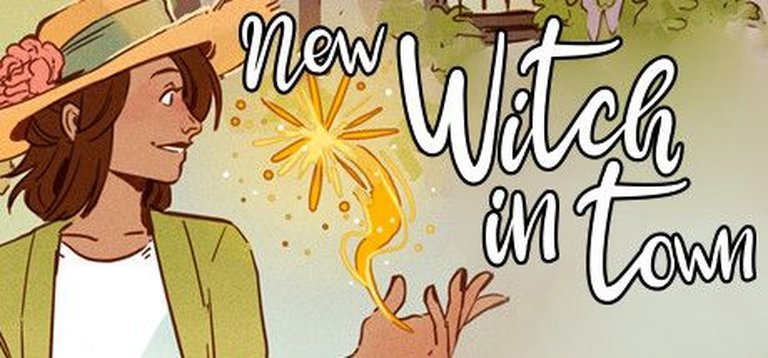
New Witch in Town is a ChoiceScript interactive fiction game where you play as a young witch of any gender, raised in the forest by your grandmother after fleeing your childhood hometown of Silvertree. Now 19, you’re sent back to investigate a mysterious threat to the forest, reconnect with old friends, uncover secrets of the shady Alberobello Development Company, participate in town activities, hone your nature magic, tend a garden, interact with magical spirits, and pursue romances in a cozy fantasy setting reminiscent of Stardew Valley, laced with eerie undertones and multifaceted plots encouraging multiple playthroughs.
Where to Buy New Witch in Town
PC
New Witch in Town Mods
New Witch in Town Reviews & Reception
reddit.com : Sweet and cozy setting with multifaceted plot, but overly long-winded writing and repetitive monologues.
steambase.io (15/100): Negative
New Witch in Town: Review
Introduction
In the quaint, shadowed fringes of interactive fiction, where words weave spells more potent than pixels, New Witch in Town emerges as a 750,000-word behemoth of young adult fantasy—a text-based odyssey that transplants a nature-attuned witch into the heart of a decaying small town teetering between progress and preservation. Released in January 2023 by Choice of Games, this ChoiceScript-powered interactive novel invites players to navigate the cozy yet uncanny streets of Silvertree, petting every animal in sight, unraveling generational mysteries, and deciding the fate of a magical forest. Drawing parallels to Stardew Valley‘s rural idyll laced with Night in the Woods‘ eerie undercurrents, it promises friendship, romance, and activism amid arcane threats. Yet, for all its ambitious scope, the game’s legacy hinges on a central tension: a richly layered world burdened by verbose prose and narrative railroading. My thesis? New Witch in Town is a heartfelt debut that captivates with its multifaceted mysteries and thematic sincerity but stumbles under the weight of its own loquacity, cementing Grace Card’s potential as a storyteller while highlighting the pitfalls of unchecked authorial voice in interactive media.
Development History & Context
Choice of Games LLC, a prolific publisher of choice-driven narratives since the early 2010s, has carved a niche in browser-based and downloadable interactive fiction, leveraging the open-source ChoiceScript engine invented by Dan Fabulich—one of the five credited contributors here, alongside writer Grace Card, managing editor Rebecca Slitt, copy editor Kara Aisenbrey, and artist Shazleen Khan. Card’s debut marks a significant milestone: in her author interview, she describes it as her first major project, born from a desire to explore “culture shock” for a forest witch entering small-town life, inspired by real-world locales blending pretty neglect with isolation. Lacking prior fantasy experience, Card drew from nature’s awe-inspiring vastness—likening magic to an ocean or forest—and pop culture touchstones like Spirited Away‘s mundane mysticism and Night in the Woods‘ blend of supernatural unease with everyday anxieties.
Developed amid the 2022-2023 indie boom, where text adventures thrived on platforms like Steam and itch.io (priced at $8.99 with a demo), New Witch faced no graphical constraints—it’s purely textual, sans sound or visuals—but grappled with ChoiceScript’s syntax. Card, a newcomer to coding and IF, spent weeks mastering commands, reveling in “creative” logic puzzles while trimming endings to prioritize depth over breadth. Health struggles exacerbated the process, with Choice of Games staff aiding editing. Released January 26, 2023, across Windows, Mac, Linux, Android (and browser), it arrived in a landscape dominated by visual novels and RPGs like Stardew Valley (2016), whose cozy farming vibes it echoes, but in a post-pandemic era craving escapist communities. Technological limits were nil—ChoiceScript’s menu-driven interface ensured accessibility on Steam Deck (verified)—yet the era’s emphasis on replayability and achievements exposed gaps, as this title forgoes the latter.
Narrative & Thematic Deep Dive
At its core, New Witch in Town chronicles a 19-year-old protagonist (male, female, non-binary; any orientation) returning to childhood home Silvertree after forest apprenticeship with witch-grandma. Tasked with minding her house and crow-familiar amid her mysterious absence, players confront a rundown town: potholed streets, empty lots, quirky punny shops, and a shadowy magical forest besieged by the Alberobello Development Company. Mysteries abound—a spontaneous Main Street tree, strange dreams, town archive secrets, familial rifts—interwoven with daily life: town fairs, protests, gardening, spirit communions. Each chapter spans one meticulously detailed day, fostering immersion but risking tedium.
Thematically, it’s a YA tapestry of identity (“Magic is a part of you… figuring out who you are”), productivity pressures (“You are a human being, not a human doing”), and environmental activism (“Preserve the forest or make way for progress?”). Politics feel organic—council speeches, newspaper letters, demos—urging “Your voice is important.” Eerie horror punctures the coziness: horrifying plot strings amid Stardew-like inheritance and petting sprees. Romances with four genderflippable options—Tobias/Taylor/Tabitha (childhood friend), Nic (tattooed animal lover), Marlowe (journalist), Robin (history student)—explore introverted loner archetypes struggling for purpose, blending friendship and chaste passion. Yet, critiques ring true: long-winded inner monologues railroading a “sweet, caring, environmentalist teenage girl” archetype undermine agency, with “show, don’t tell” lapses and uniform voices turning characters into authorial mouthpieces. Multifaceted plots demand replays for full mysteries, but pacing sags as resolutions yield to introspection, diluting stakes despite sweet motivations.
Gameplay Mechanics & Systems
Standard Choice of Games fare dominates: stat-heavy RPG elements (magic, social skills, etc.) with frequent, mostly fair checks—growable via opportunities, though some prove punishingly hard. Core loops revolve around daily choices: befriend townsfolk (beyond ROs for lively verisimilitude), cast nature magic covertly or boldly, pet copious animals (dog/cat/owl familiar included), engage politics/romances, or probe archives. Innovative touches shine—a stats-screen “read the news” feature chronicles Silvertree events with archives, enhancing immersion. No combat per se; “battles” are narrative, like magical duels or debates.
UI is textbook ChoiceScript: point-and-select menus, keyboard shortcuts (J/K for options, Q for stats), clean but graphics-free. Branching encourages replays—uncover all riddles, romances, endings—but lacks achievements, a missed hook for puzzle-hounds. Flaws abound: railroading funnels apolitical MCs into activism; tame romances blur friend/lover paths with childlike hesitance (“I gulp… chaste hug”). Still, mystery depth—riddles, storylines—compels multiples, balancing stats’ opacity with meaningful agency in forest/town dichotomies.
World-Building, Art & Sound
Silvertree pulses with lived-in charm: generous neighbors, proud council, magical spirits, overgrown gardens evoking cozy horror. The forest looms as a “beautiful, vast, potentially dangerous” entity—magic’s natural metaphor—juxtaposed against urban decay and developer encroachment, grounding fantasy in “realistic” stakes (tech-magic interplay implied). Atmosphere thrives on text: welcoming idylls turn uncanny, blending whimsy (punny shops) with dread (horrifying threads).
Art is minimalist—Shazleen Khan’s contributions likely cover promos/UI, but core experience is ink-free, “fueled by imagination.” No sound design; silence amplifies introspection, though shortcuts aid navigation. These absences heighten textual potency—cozy vibes immerse via prose alone—but risk monotony sans auditory cues, distinguishing it from multimedia IF like 80 Days.
Reception & Legacy
Launch reception skews negative: Steam’s 12-13 reviews yield 16% positive (2/12-13), decrying pacing/wordiness; MobyGames lacks scores/reviews; Metacritic has none. A detailed Reddit critique (6/10) lauds mysteries/replays but lambasts monologues, similar voices, railroading, tame ROs—yet admits compulsive replays for Robin’s arc. No critic aggregation; niche IF status limits buzz. Commercially modest ($5.93-$8.99, bundled in Choice of Games’ 188-title megabundle), collected by few.
Legacy? As Card’s debut in Choice of Games’ vast catalog (Dan Fabulich: 374 credits; Slitt: 52), it signals promise—Patreon bonuses expand lore—amid IF’s evolution toward inclusivity (LGBTQ+ themes, flexible identities). Influences Stardew/Night in the Woods; may inspire cozy-mystery hybrids. Evolving rep could grow via word-of-mouth for petting/puzzles, but flaws temper impact—no industry shaker, yet a footnote in YA IF’s push for emotional realism.
Conclusion
New Witch in Town enchants with Silvertree’s cozy-eerie tapestry, replayable mysteries, and earnest themes of self-discovery and stewardship, Grace Card’s debut a testament to ChoiceScript’s power for vast narratives. Yet, its verbosity, character homogeneity, and agency-eroding monologues hobble momentum, transforming potential masterpiece into frustrating also-ran. In video game history, it occupies a curious limbo: not revolutionary like Choice of the Dragon (2007), but a sincere YA artifact for IF enthusiasts craving depth over polish. Verdict: 6.5/10—play for the riddles and animals, replay selectively, and await Card’s concise future works. A spell worth casting, if trimmed.