
- Release Year: 2010
- Platforms: Windows
- Publisher: Freeware / Free-to-play / Public Domain
- Developer: Sunset Sundowner
- Genre: Adventure, Graphic adventure
- Perspective: 3rd-person
- Game Mode: Single-player
- Gameplay: No inventory, Point and select
- Setting: Detective, Fantasy, Mystery
Description
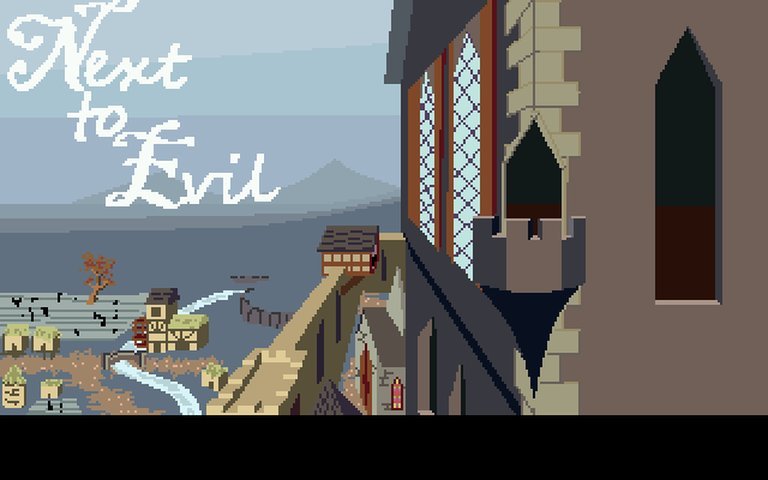
Next to Evil is a free 2D point-and-click adventure game set in a fantasy world. The player takes on the role of Duet, who resides in the castle of The Worldwide Monarchy alongside her sister Avarice, the queen, and her brother Frost. The story unfolds when a mysterious hooded figure appears on the balcony, seeking Duet’s help in assassinating the queen. The game features a simple mouse-controlled interface with no inventory system, focusing on exploration and interaction within its fixed/flip-screen visual style.
Next to Evil Free Download
PC
Next to Evil: A Forgotten Gem in the Shadows of Survival Horror
Introduction: The Enigma of Next to Evil
In the vast, blood-soaked landscape of survival horror, where franchises like Resident Evil and Silent Hill cast long, imposing shadows, Next to Evil (2010) emerges as a curious footnote—a game so obscure that it has virtually vanished from the collective memory of the gaming community. Developed as a freeware title using the Adventure Game Studio (AGS) engine, Next to Evil is a 2D point-and-click adventure that dares to tread the well-worn path of gothic horror, royal intrigue, and moral ambiguity. Yet, despite its modest ambitions, the game’s near-total absence from critical discourse and commercial recognition raises a compelling question: What happens when a game is released into the void, devoid of fanfare, marketing, or even a traceable legacy?
Next to Evil is not a masterpiece, nor does it aspire to be. It is, however, a fascinating artifact—a game that exists at the periphery of the survival horror genre, offering a glimpse into the creative possibilities of indie development in the late 2000s. With no inventory system, a barebones interface, and a narrative that unfolds like a dark fairy tale, it stands as a testament to the power of atmosphere and storytelling, even when constrained by technological and financial limitations. This review seeks to resurrect Next to Evil from obscurity, examining its development, narrative, gameplay, and the eerie silence that has surrounded it since its release.
Development History & Context: A Game Born in Obscurity
The Studio and the Vision
Next to Evil was developed by an unknown indie team, with the only traceable credit being its addition to MobyGames by a user named Sunset Sundowner in 2024—fourteen years after its initial release. The game’s development history is shrouded in mystery, with no surviving interviews, post-mortems, or even a dedicated website. What little can be gleaned comes from its MobyGames entry, which reveals that it was built using Adventure Game Studio (AGS), a popular tool for creating 2D point-and-click adventures.
The choice of AGS is telling. In the late 2000s and early 2010s, AGS was a haven for indie developers looking to craft narrative-driven experiences without the need for extensive programming knowledge. Games like The Blackwell Legacy (2006) and Gemini Rue (2011) demonstrated the engine’s potential for delivering compelling stories with minimal resources. Next to Evil, however, appears to have been a passion project—perhaps even a solo endeavor—created by developers who were more interested in experimenting with gothic horror tropes than in chasing commercial success.
Technological Constraints and the Indie Landscape
Released on October 2, 2010, Next to Evil arrived at a time when the indie game scene was undergoing a seismic shift. The late 2000s had seen the rise of digital distribution platforms like Steam and Desura, which democratized game development by allowing small teams to reach global audiences. Yet, Next to Evil was not distributed through these channels. Instead, it was released as freeware, likely hosted on now-defunct websites or niche forums.
The game’s technical limitations are evident from its MobyGames specs:
– Genre: Adventure
– Perspective: 3rd-person (Other)
– Visual: 2D scrolling, fixed/flip-screen
– Gameplay: Graphic adventure
– Interface: Point-and-select
– Setting: Fantasy
– Narrative: Detective/mystery
These specifications paint a picture of a game that is deliberately retro, eschewing the 3D graphics and complex mechanics of contemporary survival horror titles in favor of a simpler, more intimate experience. The absence of an inventory system—a staple of point-and-click adventures—suggests a design philosophy focused on streamlined storytelling rather than convoluted puzzle-solving.
The Gaming Landscape in 2010
To understand Next to Evil’s place in history, it’s essential to consider the gaming landscape of 2010. That year saw the release of several high-profile horror games, including:
– Amnesia: The Dark Descent (August 2010), which redefined psychological horror with its sanity mechanics and immersive first-person perspective.
– Deadly Premonition (February 2010), a cult classic that blended survival horror with Twin Peaks-esque surrealism.
– Castlevania: Lords of Shadow (October 2010), a reimagining of the classic franchise with a darker, more cinematic tone.
In this context, Next to Evil was a whisper in a room full of screams. It lacked the marketing muscle, the graphical fidelity, and the mechanical innovation of its contemporaries. Yet, its very obscurity makes it a compelling subject of study—a game that exists outside the mainstream, untouched by the pressures of commercial success or critical validation.
Narrative & Thematic Deep Dive: A Tale of Betrayal and Moral Decay
Plot Summary: The Queen Must Die
Next to Evil places players in the role of Duet, a young woman living in the castle of The Worldwide Monarchy alongside her sister, Avarice (the queen), and her brother, Frost. The game’s opening is abrupt and ominous: while standing on the castle balcony, a hooded figure appears and asks Duet for her assistance in assassinating the queen. This premise immediately establishes the game’s central conflict—a tale of sibling rivalry, political intrigue, and moral ambiguity.
The narrative unfolds through a series of interactions and choices, with Duet navigating the castle’s labyrinthine corridors, uncovering secrets about her family’s dark past, and ultimately deciding the fate of the queen. The game’s brevity—it can be completed in under an hour—belies the weight of its themes, which include:
– The Corruption of Power: Avarice’s reign is depicted as tyrannical, with hints of cruelty and oppression lurking beneath the castle’s gilded surface.
– The Burden of Loyalty: Duet’s relationship with her siblings is fraught with tension, forcing players to question where her allegiances truly lie.
– The Illusion of Choice: While the game presents Duet with decisions, the linear nature of the narrative suggests that her fate—and the fate of the monarchy—may already be sealed.
Characters: Shadows in a Gothic Tapestry
The cast of Next to Evil is small but effectively drawn, with each character serving as a symbol of the game’s central themes:
– Duet: The protagonist, whose name evokes harmony and discord, is a passive figure swept up in forces beyond her control. Her lack of agency mirrors the game’s deterministic narrative.
– Avarice: The queen, whose name is synonymous with greed, embodies the corrupting influence of power. Her dialogue drips with condescension, reinforcing her role as the story’s primary antagonist.
– Frost: Duet’s brother, whose name suggests coldness and detachment, serves as a foil to Avarice’s overt villainy. His true motivations remain ambiguous, adding to the game’s air of mystery.
– The Hooded Figure: A mysterious stranger who sets the plot in motion, this character is never fully explained, leaving players to speculate about their true identity and motives.
Dialogue and Atmosphere: The Power of Suggestion
Next to Evil’s dialogue is sparse but effective, relying on implication and subtext to convey its themes. The game’s writing is reminiscent of gothic literature, with its emphasis on decay, secrets, and the inescapable weight of the past. Key exchanges, such as the hooded figure’s initial plea for help, are delivered with a sense of urgency that propels the narrative forward.
The game’s atmosphere is equally crucial to its storytelling. The castle setting, with its towering spires and shadowy corridors, evokes the oppressive grandeur of classic gothic horror. The fixed camera angles and 2D visuals, while primitive by modern standards, contribute to a sense of claustrophobia and isolation. The absence of music or sound effects further amplifies the game’s eerie silence, forcing players to rely on their imagination to fill in the gaps.
Themes: The Darkness Beneath the Crown
At its core, Next to Evil is a meditation on the moral compromises required to maintain power. The game’s title itself is a play on words, suggesting both proximity to evil and the idea that evil is an inherent part of the monarchy’s legacy. Key themes include:
– The Cycle of Violence: The game implies that Avarice’s reign is merely the latest chapter in a long history of tyranny, with Duet’s actions—whether she chooses to kill the queen or not—doomed to perpetuate the cycle.
– The Illusion of Free Will: Despite presenting players with choices, the game’s linear structure suggests that Duet’s fate is predetermined, reinforcing the idea that she is a pawn in a larger, more sinister game.
– The Cost of Rebellion: The hooded figure’s request for Duet’s assistance frames the narrative as a rebellion against tyranny, but the game never clarifies whether this rebellion is justified or merely another form of violence.
Gameplay Mechanics & Systems: Simplicity as a Virtue
Core Gameplay Loop: Point, Click, and Ponder
Next to Evil’s gameplay is stripped down to its essentials. As a point-and-click adventure, the game tasks players with exploring the castle, interacting with objects, and engaging in dialogue with other characters. The absence of an inventory system—a radical departure from the genre’s norms—means that players are never burdened with item management. Instead, the focus is squarely on narrative progression and atmospheric immersion.
The game’s interface is equally minimalist, with a mouse-driven control scheme that allows for intuitive navigation. Players can click on objects to examine them, click on characters to initiate dialogue, and click on doors to move between areas. The lack of puzzles or combat ensures that the gameplay remains accessible, though some may argue that it borders on tedium.
Combat and Progression: The Absence of Conflict
One of the most striking aspects of Next to Evil is its complete lack of combat. In a genre defined by tension and survival mechanics, the game’s refusal to engage with these conventions is both refreshing and jarring. There are no zombies to fend off, no monsters to outrun—only the quiet, creeping dread of Duet’s predicament.
Character progression is similarly nonexistent. Duet does not gain new abilities, uncover hidden strengths, or accumulate resources. Her journey is purely narrative, with her growth as a character tied to the choices she makes rather than any mechanical upgrades. This design philosophy reinforces the game’s thematic focus on moral ambiguity and the illusion of agency.
UI and Accessibility: A Study in Minimalism
The game’s user interface is a masterclass in minimalism. There are no health bars, no ammo counters, no maps—only the stark, unadorned reality of the castle and its inhabitants. This lack of clutter forces players to engage with the game on its own terms, relying on their wits and intuition rather than on-game prompts or tutorials.
While this approach enhances the game’s atmospheric qualities, it also presents challenges. The absence of a map, for instance, can make navigation confusing, particularly in the castle’s more labyrinthine sections. Similarly, the lack of feedback for player actions—such as whether a choice has any meaningful impact—can lead to frustration.
Innovative or Flawed Systems?
Next to Evil’s most innovative—and potentially flawed—aspect is its narrative structure. By presenting players with choices that ultimately lead to the same outcome, the game subverts the expectation of player agency that is central to most adventure games. This design choice is thematically appropriate, reinforcing the idea that Duet is trapped in a cycle of violence and betrayal. However, it also risks alienating players who expect their decisions to have tangible consequences.
The game’s brevity is another double-edged sword. On one hand, the short runtime ensures that the narrative remains tight and focused, with no padding or filler. On the other hand, it leaves little room for exploration or replayability, making Next to Evil a fleeting experience rather than a game to be savored.
World-Building, Art & Sound: Crafting a Gothic Nightmare
Setting: The Castle as a Character
The castle in Next to Evil is more than just a backdrop—it is a character in its own right, a labyrinth of secrets and lies that mirrors the moral decay of its inhabitants. The game’s 2D visuals, while limited in scope, effectively convey the castle’s oppressive grandeur. Towering spires, crumbling stonework, and flickering torchlight create an atmosphere of gothic dread, evoking the works of Edgar Allan Poe and Mary Shelley.
The castle’s layout is deliberately disorienting, with winding corridors and hidden passages that reinforce the sense of being lost in a nightmare. The fixed camera angles—reminiscent of classic survival horror games like Resident Evil—add to the claustrophobic tension, forcing players to confront the unknown at every turn.
Visual Direction: The Beauty of Limitations
Next to Evil’s visual style is a testament to the power of constraint. The game’s 2D graphics, while primitive by modern standards, are used to great effect, with a muted color palette and stark lighting that emphasize the castle’s decay. The character sprites are simple but expressive, conveying emotion through subtle animations and facial expressions.
The game’s use of shadow and light is particularly noteworthy. Dark corridors and dimly lit chambers create a sense of unease, while the occasional burst of sunlight—such as the scene on the balcony—serves as a fleeting reminder of the world beyond the castle’s walls. This contrast between light and darkness mirrors the game’s central conflict, with Duet caught between the oppressive rule of her sister and the uncertain promise of rebellion.
Sound Design: The Silence of the Damned
One of the most striking aspects of Next to Evil is its near-total absence of sound. There is no music, no ambient noise, no voice acting—only the eerie silence of the castle and the occasional creak of a door or the rustle of fabric. This deliberate lack of audio enhances the game’s atmospheric qualities, forcing players to rely on their imagination to fill in the gaps.
The silence is not merely an absence of sound—it is a narrative device, reinforcing the isolation and despair of Duet’s predicament. In a genre where jump scares and ominous soundtracks are the norm, Next to Evil’s quietude is both unsettling and refreshing. It invites players to listen closely, to pay attention to the unspoken tensions between characters, and to confront the horror of the unknown.
Reception & Legacy: The Game That Time Forgot
Critical and Commercial Reception: A Whisper in the Dark
Next to Evil’s reception—or lack thereof—is one of the most intriguing aspects of its history. The game was released as freeware in 2010, with no marketing, no press coverage, and no presence on major gaming platforms. As a result, it slipped into obscurity almost immediately, leaving behind virtually no trace of its existence.
A search for reviews or critical analysis yields almost no results. The game’s MobyGames page, created in 2024, is one of the few remaining records of its release. There are no Metascores, no user reviews, no Let’s Plays—only the faintest echoes of a game that was never given a chance to be heard.
This lack of reception raises important questions about the nature of obscurity in gaming. What does it mean for a game to exist without an audience? Can a game that no one played still be considered a part of gaming history? Next to Evil challenges our assumptions about the relationship between art and recognition, suggesting that some games are destined to remain hidden, their stories untold.
Evolution of Reputation: From Obscurity to Myth
In the years since its release, Next to Evil has taken on an almost mythical quality among those few who are aware of its existence. Its obscurity has become a point of fascination, with some viewing it as a lost artifact of indie game development—a relic of a time when games could be created purely for the sake of expression, without the pressure of commercial success.
The game’s recent addition to MobyGames in 2024 suggests that there is still interest in preserving its legacy, however minor. Yet, without a dedicated community or a cult following, Next to Evil remains on the periphery of gaming history—a footnote in the annals of survival horror.
Influence on Subsequent Games: The Ghost in the Machine
Given its obscurity, it is unlikely that Next to Evil had any direct influence on subsequent games. However, its existence serves as a reminder of the creative possibilities of indie development, particularly in the realm of narrative-driven experiences. Games like The Cat Lady (2012) and Fran Bow (2015), which explore similar themes of psychological horror and moral ambiguity, can be seen as spiritual successors to Next to Evil’s gothic tale.
Moreover, the game’s minimalist design philosophy—its focus on atmosphere over mechanics, its rejection of conventional gameplay tropes—anticipates the rise of “walking simulators” like Gone Home (2013) and What Remains of Edith Finch (2017). In this sense, Next to Evil can be viewed as a precursor to a genre that values storytelling and immersion above all else.
Conclusion: The Haunting Beauty of the Unseen
Next to Evil is not a great game by conventional standards. Its gameplay is simplistic, its narrative is linear, and its visuals are rudimentary. Yet, it possesses a haunting beauty—a quiet, unassuming power that lingers long after the credits roll. It is a game that exists in the shadows, untouched by the glare of commercial success or critical acclaim, and it is all the more fascinating for it.
In an industry obsessed with blockbusters and franchises, Next to Evil stands as a testament to the value of obscurity. It is a reminder that not every game needs to be a masterpiece, that not every story needs to be heard by millions. Sometimes, the most compelling narratives are the ones that remain hidden, waiting to be discovered by those willing to venture off the beaten path.
Final Verdict: Next to Evil is a forgotten gem—a brief, atmospheric journey into the heart of gothic horror. While its gameplay and narrative may not break new ground, its commitment to mood and mystery makes it a worthy curiosity for fans of indie adventure games. It is not a game that will change the industry, but it is one that deserves to be remembered.
Score: ★★★☆☆ (3/5) – A flawed but fascinating experiment in minimalist storytelling.