
- Release Year: 2004
- Platforms: Macintosh, Windows
- Publisher: SEGA Europe Ltd., SEGA of America, Inc.
- Developer: Sports Interactive Limited
- Genre: Simulation, Sports, Strategy, Tactics
- Perspective: Text-based / Spreadsheet
- Game Mode: LAN
- Gameplay: Business simulation, Managerial
- Setting: 2000s
- Average Score: 72/100
Description
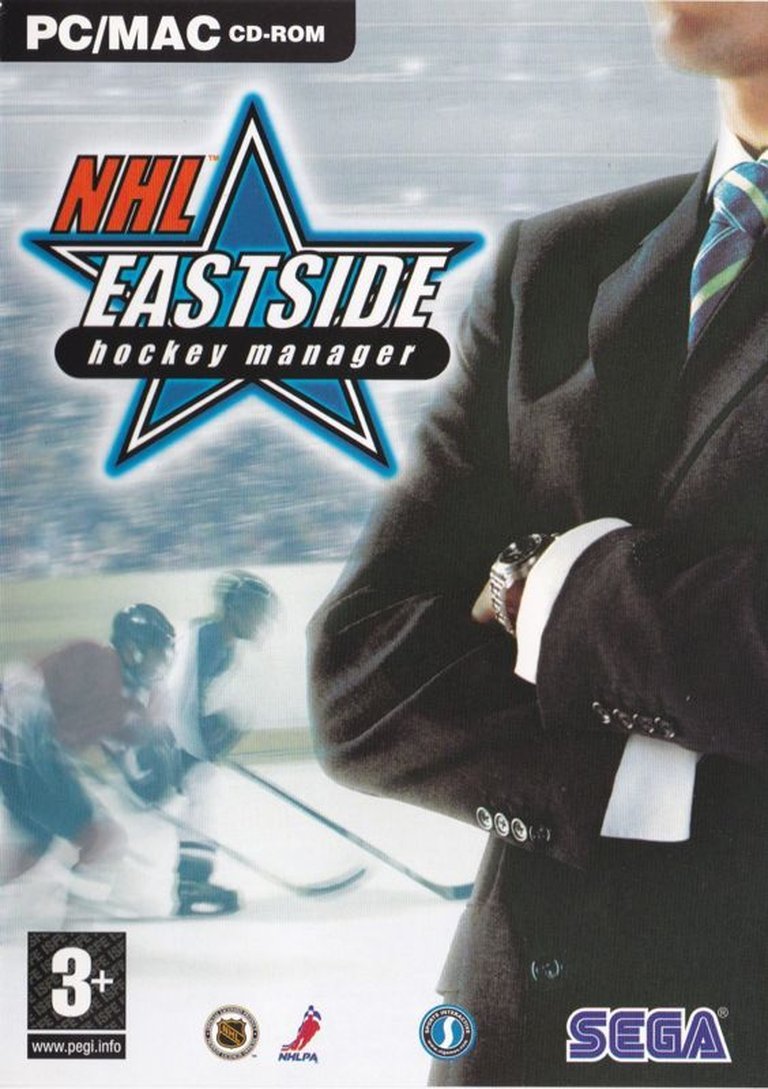
NHL Eastside Hockey Manager is a hockey management simulation game developed by Sports Interactive Limited and published by SEGA. Released in 2004, the game allows players to manage a hockey team, handling tasks such as setting up practices, negotiating contracts, scouting players, and interacting with the media. The game features a detailed in-game engine that provides play-by-play commentary and in-depth statistics, enabling players to guide their team to success and build their reputation in the world of hockey.
Gameplay Videos
NHL Eastside Hockey Manager Free Download
NHL Eastside Hockey Manager Cracks & Fixes
NHL Eastside Hockey Manager Patches & Updates
NHL Eastside Hockey Manager Mods
NHL Eastside Hockey Manager Guides & Walkthroughs
NHL Eastside Hockey Manager Reviews & Reception
metacritic.com (77/100): One of the best sports management games on the market.
ign.com : That hockey sim was great!
NHL Eastside Hockey Manager: Review
Introduction
In the pantheon of sports management simulators, NHL Eastside Hockey Manager (2004) stands as a cult classic—a deeply granular, unapologetically complex dive into the world of hockey franchise stewardship. Developed by Sports Interactive (SI), the studio behind the legendary Championship Manager series, EHM transplanted its football-centric DNA onto the ice, offering hockey enthusiasts a chance to micromanage every facet of a team’s operations. Released against the backdrop of the 2004–05 NHL lockout, the game became a lifeline for fans deprived of real-world hockey. This review posits that NHL Eastside Hockey Manager is a masterclass in simulation depth, albeit one that sacrifices accessibility for authenticity, cementing its legacy as a niche darling rather than a mainstream hit.
Development History & Context
Born from the freeware passion project Eastside Hockey Manager (2001) by Finnish programmer Risto Remes, the commercial iteration marked SI’s first foray into hockey. Leveraging the Championship Manager 3 engine, SI expanded Remes’ vision into a licensed product under Sega’s publishing banner. The early 2000s were a turbulent time for hockey games: EA’s NHL series dominated the action-sim market, but managerial sims were virtually nonexistent. EHM filled that void, targeting stat-obsessed fans hungry for strategic depth.
Technological constraints of 2004 limited EHM’s presentation—it relied on text-based interfaces and spreadsheet-style menus—but its ambition lay in its database: over 15,000 players across 18 global leagues, from the NHL to Sweden’s Allsvenskan. SI’s focus was on realism, even as the NHL lockout threatened to render the game’s data obsolete (a challenge addressed via post-launch patches). The gaming landscape, meanwhile, was shifting toward cinematic experiences, making EHM’s no-frills design a bold counterpoint.
Narrative & Thematic Deep Dive
As a management sim, EHM lacks a traditional narrative. Instead, it weaves its stories through emergent gameplay: the rise of a draft prodigy, the gut-wrenching trade of a franchise icon, or the media firestorm after a playoff collapse. Themes of legacy, power, and attrition permeate the experience.
The game’s “characters” are its players, each modeled with 50+ attributes (e.g., aggression, faceoff skill, loyalty) that influence their behavior. A disgruntled star might demand a trade, while a rookie’s growth can hinge on your coaching decisions. The media system adds drama, with pundits critiquing your lineup choices and rumors swirling about your job security. While there’s no scripted plot, the emotional weight of building a dynasty—or crashing into irrelevance—creates a narrative uniquely your own.
Gameplay Mechanics & Systems
EHM’s core loop is a labyrinth of decisions:
- Team Management: Set practice regimens, negotiate contracts, and scout prospects. The draft system is particularly robust, mimicking the NHL’s seven-round structure.
- Tactics: Adjust lines, assign power-play units, and tweak strategies (e.g., dump-and-chase vs. puck possession). Games play out via text commentary, with a rudimentary 2D engine added in later patches.
- Economy: Balance salary caps, revenue from ticket sales, and owner expectations. Financial mismanagement can lead to bankruptcy—or a pink slip.
The UI, while functional, is dense. Menus bury critical options, and newcomers may drown in spreadsheets. Yet, this complexity is deliberate: EHM rewards patience, offering unparalleled control for those willing to learn its systems.
Critics praised its depth but noted flaws. GameSpot lauded its “remarkably compelling hockey experience,” while PC Zone criticized its “bland presentation” and steep learning curve. The 2004 lockout also created oddities, like players frozen at pre-strike stats until roster updates arrived.
World-Building, Art & Sound
EHM’s world is built on data, not visuals. Team logos and player photos lend a veneer of authenticity, but the atmosphere derives from its obsessive detail—every pass, penalty, and playoff series is logged statistically. The game’s “texture” comes from its database: real (and fictional) players with histories, preferences, and potential.
Art direction is minimalistic, favoring clean menus over flashy graphics. Sound design is equally sparse, with ambient crowd noise and whistle effects during matches. This austerity reinforces the sim’s “serious” tone, though it risks alienating those craving sensory engagement.
Reception & Legacy
EHM earned mixed-to-positive reviews at launch (Metacritic: 77/100; GameRankings: 75.18%). Critics like Computer Gaming World (80%) called it “the next best thing” to live hockey, while Jeuxvideo.com (60%) deemed it “confusing” for newcomers. Commercial performance was hampered by piracy and Sega’s limited marketing, leading SI to shelve the series after 2007’s installment.
Yet, EHM’s legacy endured. Its modding community kept it alive with roster updates and league expansions, while its DNA influenced later sports sims like Franchise Hockey Manager. In 2015, SI revived the series with Eastside Hockey Manager 1, proving the demand for niche, detail-driven management games.
Conclusion
NHL Eastside Hockey Manager is a paradox: a game so meticulously crafted that it borders on intimidating, yet so immersive that it captivates those who brave its depths. It lacks the polish of modern sports titles, but its unrivaled simulation fidelity makes it a masterpiece for hockey purists. While not for everyone, EHM remains a benchmark for sports management games—a testament to the power of数据 over dazzle. For historians and hardcore fans, it’s an essential artifact; for casual players, a fascinating relic. In the annals of video game history, EHM earns its place as the ultimate armchair GM experience.
Final Verdict: A cult classic that trades accessibility for authenticity, NHL Eastside Hockey Manager is the hockey sim’s answer to Dwarf Fortress—impenetrable, profound, and utterly unique.