
- Release Year: 2006
- Platforms: Macintosh, Windows
- Publisher: SEGA Europe Ltd.
- Developer: Sports Interactive Limited
- Genre: Simulation, Sports, Strategy, Tactics
- Perspective: Text-based / Spreadsheet
- Game Mode: Hotseat, Online PVP
- Gameplay: Business simulation, Managerial
- Setting: 2000s
- Average Score: 83/100
Description
NHL Eastside Hockey Manager 2007 is a deep managerial simulation game that puts players in the role of a hockey team manager, offering expanded tactical options, a revamped 2D game engine, and a massive database of over 45,000 players and staff across 3,000 teams. The game features enhanced trade mechanics, salary cap controls, and a fantasy draft mode, allowing players to build their dream team while navigating the complexities of team management, player development, and in-game strategy.
Gameplay Videos
NHL Eastside Hockey Manager 2007 Free Download
NHL Eastside Hockey Manager 2007 Cracks & Fixes
NHL Eastside Hockey Manager 2007 Patches & Updates
NHL Eastside Hockey Manager 2007 Mods
NHL Eastside Hockey Manager 2007 Guides & Walkthroughs
NHL Eastside Hockey Manager 2007 Reviews & Reception
metacritic.com (89/100): A fantastic game, and the best in its genre.
mobygames.com (77/100): Getting better every year. The 2D match engine is awesome and the only thing the game still needs is real-time line changes.
insidemacgames.com : This game will rock your understanding of the word depth.
ggame.wordpress.com : With a simulation as good as NHL Eastside Hockey Manager 2007, you might not need the real NHL anymore.
NHL Eastside Hockey Manager 2007: A Deep Dive into the Pinnacle of Hockey Management Simulation
Introduction
In the pantheon of sports management simulations, few titles have achieved the cult status and enduring legacy of NHL Eastside Hockey Manager 2007 (EHM 2007). Developed by Sports Interactive and published by Sega, this game represents the zenith of hockey management simulation, blending unparalleled depth, strategic complexity, and an almost obsessive attention to detail. Released in 2006, EHM 2007 was not just a game—it was a labor of love, a testament to the passion of its developers and the dedication of its fanbase. This review will explore the game’s development history, its intricate gameplay systems, its reception, and its lasting impact on the genre.
Development History & Context
The Studio and the Vision
Sports Interactive (SI), the studio behind EHM 2007, was already a titan in the sports management genre, thanks to its Championship Manager series. The studio’s foray into hockey management began with the freeware title Eastside Hockey Manager, created by Finnish programmer Risto Remes. The success of this project caught the attention of SI, leading to a collaboration that would eventually produce the commercial NHL Eastside Hockey Manager series.
EHM 2007 was the third installment in this series, following NHL Eastside Hockey Manager (2004) and NHL Eastside Hockey Manager 2005. The game was built on the same engine as Championship Manager 3, leveraging SI’s expertise in creating deep, data-driven management simulations. The vision for EHM 2007 was clear: to create the most realistic and immersive hockey management experience possible, catering to hardcore fans of the sport and management simulations alike.
Technological Constraints and Innovations
The mid-2000s were a period of transition in gaming, with digital distribution still in its infancy. EHM 2007 was one of the first major titles to be released exclusively via digital download, a bold move that reflected SI’s confidence in the game’s appeal. However, this decision also contributed to its commercial struggles, as digital distribution was not yet widely adopted by consumers.
Technologically, EHM 2007 pushed the boundaries of what was possible in a text-based management simulation. The game featured a new 2D match engine, a significant upgrade over its predecessors, which allowed players to visualize games in real-time. This was a major step forward, as previous iterations relied heavily on text-based match reports. The inclusion of sliders for tactical adjustments and a revamped user interface (UI) made the game more accessible while retaining its depth.
The Gaming Landscape
In 2006, the sports management genre was dominated by SI’s own Football Manager series, with few competitors offering the same level of depth. Hockey management games were even rarer, making EHM 2007 a niche product. The game’s release coincided with the post-lockout era of the NHL, a time when the league was regaining its footing after the 2004-05 season was canceled. This context added a layer of realism to the game, as players could engage with the NHL’s new rules and salary cap system, which were introduced in the 2005-06 season.
Narrative & Thematic Deep Dive
The Plot: A Manager’s Journey
EHM 2007 is not a game with a traditional narrative in the sense of a linear story or scripted characters. Instead, it offers a dynamic, emergent narrative driven by the player’s decisions. The “plot” is the journey of a hockey manager, from the humble beginnings of taking over a struggling team to the pinnacle of winning championships and building a dynasty.
The game’s depth lies in its ability to simulate the complexities of managing a hockey team. Players must navigate the intricacies of the NHL’s salary cap, negotiate contracts, scout and develop talent, and make tactical decisions that can make or break a season. The narrative is not scripted but emerges from the player’s interactions with the game’s systems, creating a unique story for each playthrough.
Characters and Dialogue
The characters in EHM 2007 are the players, coaches, and staff that populate the game’s vast database. With over 45,000 players and staff and 3,000 teams, the game offers an unprecedented level of detail. Each player is not just a set of statistics but a dynamic entity with attributes that evolve over time, influenced by training, injuries, and morale.
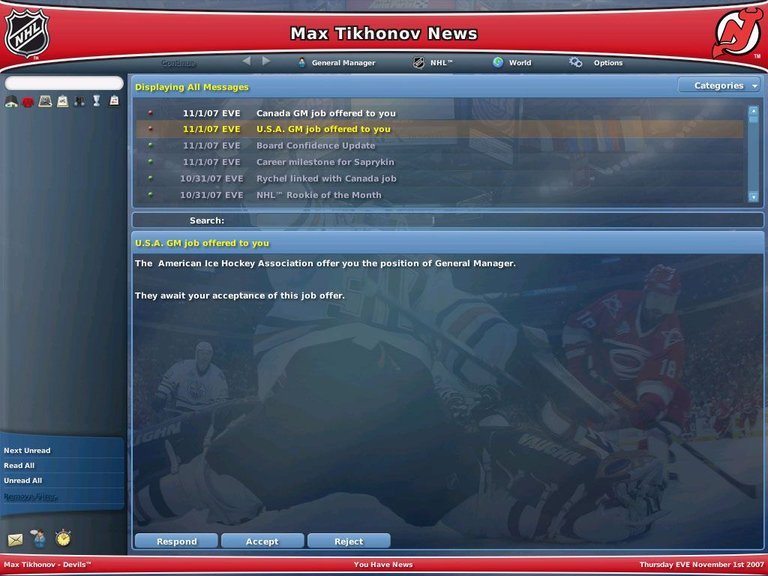
Dialogue in EHM 2007 is minimal, as the game relies on text-based interactions for negotiations, press conferences, and team meetings. While not as immersive as fully voiced interactions, these text-based exchanges are functional and effective, conveying the necessary information without detracting from the gameplay experience.
Underlying Themes
At its core, EHM 2007 is a game about strategy, management, and the pursuit of excellence. It explores themes of leadership, decision-making, and the consequences of one’s actions. The game challenges players to think critically about every aspect of managing a hockey team, from the macro-level decisions of team strategy to the micro-level details of individual player development.
The game also touches on the business side of hockey, with the salary cap system and financial management playing a crucial role. Players must balance the desire to build a winning team with the realities of budget constraints, making tough decisions about which players to sign, trade, or release.
Gameplay Mechanics & Systems
Core Gameplay Loops
EHM 2007 is a managerial simulation at its heart, and its core gameplay loop revolves around the cycle of planning, executing, and reviewing. Players begin by setting up their team, hiring staff, and scouting players. From there, they must manage training, set tactics, and make in-game decisions during matches. After each game, players review performance, adjust strategies, and make necessary changes to the roster or tactics.
The game’s depth is evident in its myriad systems, each of which can be tweaked and optimized to gain a competitive edge. Whether it’s adjusting line combinations, setting power play strategies, or managing player morale, every decision has consequences that ripple through the season.
Combat and Tactics
While EHM 2007 does not feature traditional combat, the tactical depth of the game is where the “battle” takes place. The game’s 2D match engine allows players to visualize their tactical decisions in real-time, providing feedback on how well their strategies are working. Players can adjust tactics on the fly, changing line combinations, defensive strategies, and offensive plays to counter the opponent’s strengths.
The game’s tactical options are extensive, with sliders and menus allowing for granular control over every aspect of the team’s playstyle. From forechecking intensity to defensive zone coverage, players can fine-tune their approach to match their vision for the team.
Character Progression
Character progression in EHM 2007 is a slow, deliberate process that mirrors the real-world development of hockey players. Players start as raw prospects with potential that must be nurtured through training, coaching, and game experience. Attributes such as skating, shooting, and defensive awareness can be improved over time, but progress is not guaranteed—injuries, poor morale, or lack of playing time can stunt a player’s growth.
The game’s training system is robust, allowing players to focus on specific areas of development for individual players or the team as a whole. Coaches play a crucial role in this process, with their attributes influencing how effectively players develop.
UI and Innovative Systems
The UI in EHM 2007 is a significant improvement over its predecessors, with a more intuitive layout and better organization of information. The game’s menu structures are designed to provide quick access to the most important data, whether it’s player stats, team performance, or financial information.
One of the game’s most innovative systems is the fantasy draft mode, which allows players to build their dream team from scratch. This mode is a testament to the game’s depth, as players must consider not just the talent of individual players but also how they fit together as a team. The fantasy draft adds a layer of strategy and replayability, as players can experiment with different team compositions and strategies.
Another standout feature is the game’s trade system, which is more nuanced than in previous iterations. Players can negotiate trades with other teams, considering factors such as salary cap implications, player potential, and team needs. The system provides feedback on trade offers, helping players make informed decisions.
World-Building, Art & Sound
Setting and Atmosphere
EHM 2007 is set in the world of professional hockey, with a focus on the NHL and other major leagues around the world. The game’s setting is grounded in reality, with accurate representations of teams, players, and leagues. The atmosphere is one of professionalism and competition, with the pressure of managing a team in a high-stakes environment.
The game’s 2D match engine, while not as visually impressive as modern 3D engines, does an admirable job of conveying the excitement and intensity of a hockey game. The top-down perspective allows players to see the flow of the game, with player movements and interactions clearly visible.
Visual Direction
The visual direction of EHM 2007 is functional rather than flashy. The game’s UI is clean and efficient, with a focus on providing information rather than aesthetic appeal. The 2D match engine is simple but effective, with clear representations of players, pucks, and rinks. The game’s visuals are not its strongest suit, but they serve their purpose well, allowing players to focus on the strategic and managerial aspects of the game.
Sound Design
The sound design in EHM 2007 is minimal, with no voice acting or ambient sound effects. The game relies on text-based feedback and simple audio cues to convey information. While this may seem sparse by modern standards, it is in keeping with the game’s focus on strategy and management rather than immersion.
Reception & Legacy
Critical and Commercial Reception
EHM 2007 was met with generally positive reviews from critics, who praised its depth, realism, and attention to detail. The game’s average critic score of 77% reflects its strong reception, with reviewers highlighting its tactical depth and comprehensive database. However, the game’s niche appeal and digital-only distribution limited its commercial success.
Critics at FZ and FiringSquad lauded the game’s tactical options and realism, with FZ calling it “an excellent game that has everything you could want from a management game.” FiringSquad praised the game’s value, noting that “at $35, it is too good to pass up.” However, Out Of Eight and Inside Mac Games were more critical, citing the game’s steep learning curve and slow pace as potential drawbacks.
Evolution of Reputation
Despite its initial commercial struggles, EHM 2007 has developed a cult following over the years. The game’s depth and realism have made it a favorite among hardcore hockey fans and management simulation enthusiasts. The fan community has kept the game alive through mods, updates, and online leagues, ensuring its continued relevance even years after its release.
The game’s reputation has also been bolstered by its influence on subsequent titles. The Eastside Hockey Manager series was resurrected in 2015 with the release of Eastside Hockey Manager, which built on the foundation laid by EHM 2007. The 2015 release incorporated many of the features and systems introduced in EHM 2007, demonstrating the lasting impact of the 2007 iteration.
Influence on the Industry
EHM 2007’s influence extends beyond its own series. The game’s emphasis on realism, depth, and player agency has set a standard for sports management simulations. Its innovative features, such as the fantasy draft and advanced tactical options, have been adopted by other games in the genre, including SI’s own Football Manager series.
The game’s digital-only distribution model, while initially a hindrance, also foreshadowed the future of game distribution. As digital platforms like Steam became more prevalent, EHM 2007’s early adoption of digital distribution proved to be ahead of its time.
Conclusion
NHL Eastside Hockey Manager 2007 is a landmark title in the sports management genre, offering an unparalleled level of depth, realism, and strategic complexity. While its visuals and sound design may not have aged as well as its gameplay, the game’s core systems remain impressive even by modern standards. Its influence on subsequent titles and its enduring fanbase are testaments to its quality and innovation.
For fans of hockey and management simulations, EHM 2007 is a must-play. Its steep learning curve and niche appeal may deter casual players, but for those willing to invest the time, the game offers a rewarding and immersive experience. In the annals of video game history, EHM 2007 stands as a testament to the power of deep, data-driven gameplay and the passion of its developers and community.
Final Verdict: A masterclass in sports management simulation, EHM 2007 is a cult classic that continues to inspire and challenge players to this day.