
- Release Year: 2015
- Platforms: Macintosh, Windows
- Publisher: Anuman Interactive SA
- Developer: TiconBlu srl
- Genre: Adventure
- Perspective: 3rd-person (Other)
- Game Mode: Single-player
- Gameplay: Graphic adventure, Puzzle elements
- Setting: Europe, Medieval
- Average Score: 43/100
Description
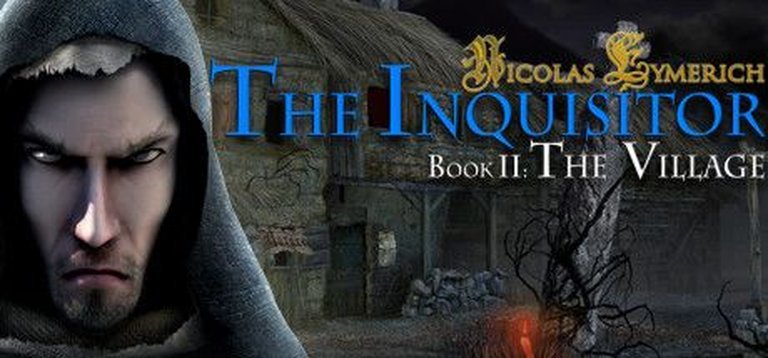
Nicolas Eymerich: The Inquisitor – Book II: The Village is a point-and-click graphic adventure game set in medieval Europe, where players control the ruthless inquisitor Nicolas Eymerich as he investigates an outbreak of evil and heresy in the remote village of Calcarès, employing puzzle-solving and his uncompromising methods to thwart fiendish plans threatening the community.
Gameplay Videos
Where to Buy Nicolas Eymerich: The Inquisitor – Book II: The Village
PC
Nicolas Eymerich: The Inquisitor – Book II: The Village Reviews & Reception
adventuregamers.com (40/100): The Inquisitor loses its way through The Village with a poorly designed, technically weak sequel that fails to capitalise on the strengths of its brazen story and brutal, brilliant title character.
Nicolas Eymerich: The Inquisitor – Book II: The Village: Review
Introduction
In the shadowed annals of adventure gaming, few protagonists embody unyielding fanaticism quite like Nicolas Eymerich, the 14th-century Dominican inquisitor drawn from Valerio Evangelisti’s acclaimed historical-fantasy novels. Nicolas Eymerich: The Inquisitor – Book II: The Village (2015) plunges players deeper into this grim world, where heresy festers in the plague-ravaged hamlet of Calcares, and demonic forces—manifesting as twisted pagan goddesses—threaten Christendom. Building on the cult curiosity of its 2014 predecessor, Book I: The Plague, this Unity-powered point-and-click sequel promises an “epic and action-packed adventure” amid over 31 detailed environments and 25+ puzzles. Yet, as a historian of the genre, my thesis is clear: while Eymerich’s brutal charisma endures, The Village stumbles as a technically frail, poorly clued misfire that squanders its narrative potential, marking it as a flawed footnote in indie adventure revivalism rather than a standout sequel.
Development History & Context
Developed by Italian studio TiconBlu srl (later collaborating as IV Productions and Trinity Team srl), Book II emerged from a modest ambition to adapt Evangelisti’s Eymerich saga—a blend of historical Inquisition lore, occult horror, and speculative fiction—into interactive form. TiconBlu, known for niche adventures like the first Eymerich title, leveraged the accessible Unity engine to craft realtime 3D visuals on shoestring specs (2GHz CPU, 512MB VRAM minimum), targeting PC, Mac, iOS, and Android amid the 2015 indie boom. Publishers Anuman Interactive, Microïds, and Plug In Digital handled distribution, with Steam launch on January 22, 2015, at a budget $9.99 price.
The 2010s adventure landscape was fertile yet crowded: Unity democratized development post-Machinarium (2009) and Botanicula (2012), fueling Amanita Design’s whimsy and Wadjet Eye’s noir revivals. TiconBlu’s vision—hewing to Evangelisti’s anti-hero, where Eymerich’s zealotry blurs heroism and villainy—fit the era’s taste for morally ambiguous narratives (The Walking Dead, Papers, Please). Constraints abounded: limited budget yielded glitchy assets, while localization (English, French, Italian, German, Spanish) prioritized Evangelisti’s Italian readership. No Book III materialized, stalling the tetralogy adaptation amid tepid sales, underscoring indie risks in a post-Monkey Island genre chasing AAA spectacle.
Narrative & Thematic Deep Dive
The Village seamlessly continues Book I‘s 1364 timeline: Eymerich, now Inquisitor General with papal ring and bull, arrives in cursed Calcares after visions of huntress Diana herald a plague sparing women but devouring men. The plot unfolds in seven parts—”Aurore,” “Plague Ridden Village,” “The Rosary of Death,” etc.—exposing a Satanic cult worshiping Demeter, Diana, and Medusa as “twins” birthing two-faced abominations. Eymerich allies uneasily with drunken Dominican Father Jacinto Corona, uncovering Cistercian monks’ complicity, tax scams via bailiff Roland Chevalier, and demonic pacts fueling the apocalypse.
Core Plot Breakdown:
– Inn & Village Exploration: Eymerich breakfasts amid sobs (Sophie, grieving a monstrous child), deciphers a gem amulet revealing abbey demons, burns the village with tar-catapult.
– Rosary of Death: Desecrates pilloried corpses for teeth/fingers, forges a heretical rosary from berries/crucifixes, confronts Sophie (cultist killer).
– Dream Realms & Temptation: Switches to Corona for serpentine trials resisting Medusa’s seduction via self-flagellation/prayer; portal-hopping forests/menhirs yield elemental balls.
– Goddess Confrontation: “Marries” illusions, summons stag sacrifices, banishes projections to breach the monastery.
Themes probe Inquisition brutality: Eymerich’s remorseless acts—poisoning guards, corpse mutilation, village immolation—mirror historical zealotry, critiquing fanaticism’s collateral horrors. Dialogue crackles with Evangelisti’s erudition (Homeric hymns, Cathar consolamentum), but subplots falter: Corona’s guilt-ridden arc feels tacked-on, women’s cult lacks depth beyond “fiendish secrets.” Eymerich shines—coldly taunting heretics, absolving none—yet the narrative’s pagan-Christian clash devolves into fetch-quests, diluting thematic bite.
Gameplay Mechanics & Systems
Classic point-and-click fare: contextual actions (look/talk/take) on hotspots (TAB reveals), inventory drag-combos, notebook for objectives (lens) /notes (feather, voiced), map-teleport, divine cross (hints/skips, score penalty). Character-switching adds tandem play, but clunky UI plagues it.
Core Loops Deconstructed:
– Puzzle Design: 25+ enigmas vary—logical (rag-piecing Cathar codes, gem-lionhead locks) to macabre (rosary from teeth/berries/finger; catapult gears/horsehair). Dream sequences innovate: apple-pit portals cycle realms, menhir ball-placements evoke alchemy. Walkthroughs reveal trial-error (random locks, pixel-hunts like squirrel-trap).
– Progression: No combat/stats; “progression” via notebook unlocks. Brotherhood mode (Book II addition) implies co-op-lite, but solo focus reigns.
– Flaws Exposed: Poor clues waste hours (e.g., obscure gem notches, untelegraphed corpse exams block progress). Bugs abound—stuck puzzles, unresponsive hotspots, corpse glitches—echoing Adventure Gamers’ “technically weak” verdict. UI irritants: finicky drag-drops, no autosave mid-mazes.
| Mechanic | Strengths | Weaknesses |
|---|---|---|
| Inventory/Combos | Intuitive drag (talisman catalyst) | Pixel-perfect failures |
| Puzzles | Thematic ties (heretical rosary) | Obscure/random (chest keys) |
| Switching | Fresh tandem (Corona’s caves) | Unbalanced screen time |
| Hints | Divine help scales difficulty | Score punitive |
Innovative? Marginally—corpse abuse as puzzles pushes gore-boundaries—but execution falters, alienating casuals.
World-Building, Art & Sound
Calcares evokes medieval squalor: 31+ realtime 3D scenes blend illustrated realism—smoke-belching monasteries, lava-seeping springs, corpse-strewn squares. Atmospheric highs: fiery visions, dream caverns with pulsating hearts/menhirs. Yet dated Unity visuals glitch (clipping, low-poly models), per critics’ “glitchy graphics.”
Visual Direction: Stylish cuts (Eymerich’s silhouette against plagues) contribute immersion, but static camera frustrates navigation. Easter eggs (rubber chicken, dancing monks) nod whimsy.
Sound Design: Immersive orchestral score swells demon encounters; multilingual VO (Latin nods?) sells Eymerich’s gravitas. SFX excel—crackling pyres, gurgling plagues—elevating dread despite muddled mixing.
Elements synergize for occult tension, but technical woes undermine: fog obscures hotspots, audio loops stutter.
Reception & Legacy
Launch reception soured the saga: Steam’s 47% (21 reviews) cites bugs/frustration; Adventure Gamers (40%, 2/5) laments “poorly designed” sequel failing Eymerich’s “brutal brilliance”; Metacritic/Ragequit.gr (25%) dub it a “black spot” versus Book I’s modest praise. Commercial dud—no sequels, sparse sales (GOG Dreamlist obscurity)—amid 2015’s Her Story/Soma triumphs.
Evolving Reputation: Niche cult endures via walkthroughs (GameBoomers’ exhaustive guide), Steam forums (glitch pleas). Influences? Nil directly—Unity adventures pivoted to Oxenfree-style narratives. As historian, it’s emblematic: ambitious IP adaptation crushed by inexperience, echoing Gabriel Knight 3‘s 3D pitfalls. No industry quake, but preserves Evangelisti’s Inquisitor for posterity.
Conclusion
Nicolas Eymerich: The Inquisitor – Book II: The Village tantalizes with its heretic-hunting anti-hero and occult lore, delivering sporadic puzzle highs and atmospheric chills amid medieval rot. Yet buggy mechanics, opaque quests, and unpolished tech render it a laborious trek, unfit for genre pantheon. In video game history, it resides as a cautionary indie sequel—Eymerich’s fire snuffed by design embers. Verdict: 4/10—for diehards only; play Book I first, brace for frustration. A bolder engine remaster could redeem it, but as-is, heresy triumphs.