
- Release Year: 2010
- Platforms: Windows
- Publisher: eGames, Inc.
- Genre: Compilation
- Game Mode: Single-player
- Average Score: 80/100
Description
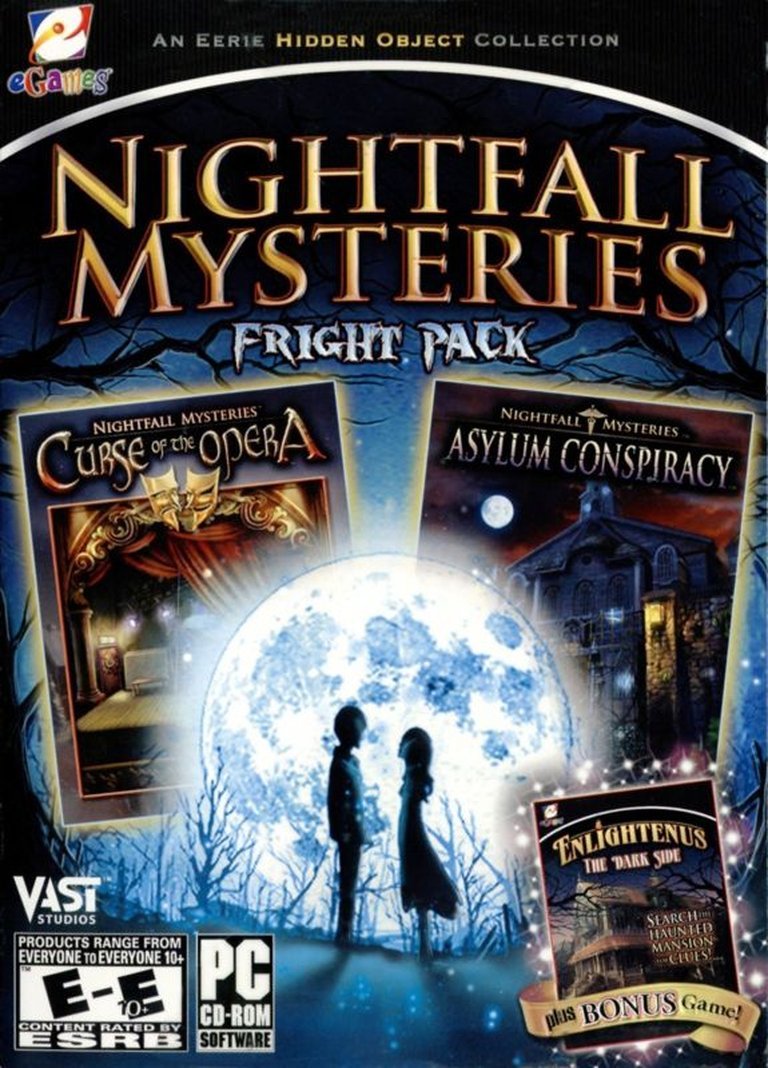
Nightfall Mysteries: Fright Pack is a compilation of hidden object adventure games set in gothic horror atmospheres, featuring Nightfall Mysteries: Curse of the Opera, where a stagehand investigates murders plaguing an opera troupe in a fog-enshrouded village hosted by the sinister Count Vladd Vansig; Nightfall Mysteries: Asylum Conspiracy, in which Christine uncovers a family conspiracy while rescuing her grandfather from the abandoned Ashburg Asylum; and the bonus title Enlightenus: The Dark Side.
Nightfall Mysteries: Fright Pack: Review
Introduction
Imagine stumbling upon a fog-shrouded village where an opera troupe is systematically slaughtered, or infiltrating a derelict asylum teeming with mad scientists and family secrets—welcome to the shadowy realm of Nightfall Mysteries: Fright Pack, a 2010 compilation that bundles two cornerstone entries in Vast Studios’ gothic hidden-object series alongside a bonus title. Released during the peak of casual gaming’s hidden-object (HO) explosion on platforms like Big Fish Games, this pack captures the eerie allure of point-and-click adventures laced with Phantom of the Opera vibes and Lovecraftian conspiracies. As a historian of the genre, I see it as a time capsule of early-2010s browser-to-downloadable transitions, where accessibility met atmospheric dread. My thesis: Fright Pack is an essential, value-packed gateway to a underrated series, excelling in narrative twists and puzzle variety despite dated mechanics, cementing its place as a cult favorite for HO enthusiasts craving serialized horror.
Development History & Context
Vast Studios, a Canadian indie developer specializing in casual adventures, birthed the Nightfall Mysteries series amid the hidden-object gold rush of the late 2000s. Titles like Curse of the Opera (February 2010) and Asylum Conspiracy (July 2010) were crafted for Big Fish Games’ premium download model, emphasizing quick-session play with premium editions offering extras like soundtracks and concept art. eGames, Inc., handled the physical CD-ROM and digital compilation release later that year, bundling these with Enlightenus: The Dark Side (2009, a bonus from a related HO series) to appeal to bargain hunters.
The era’s technological constraints shaped its DNA: targeting Windows XP with Pentium III CPUs, 512MB RAM, and DirectX 9.0c, it prioritized 2D static scenes over 3D flair. This mirrored the casual gaming landscape dominated by flash-to-PC ports, where Big Fish and PopCap ruled, and hidden-object games outsold AAA titles in volume. Vast’s vision—interconnected tales of the cursed Vansig family—differentiated it from standalone puzzlers like Mystery Case Files, leveraging serial storytelling in an episodic format. Budget limitations meant pre-rendered art and simple scripting, but it allowed tight, replayable loops. No major patches noted, but its MobyGames entry (added 2012) highlights preservation efforts amid a flood of similar titles.
Narrative & Thematic Deep Dive
Fright Pack‘s storytelling prowess lies in its serialized gothic horror, weaving revenge, betrayal, and familial curses across its trio of games, with Curse of the Opera and Asylum Conspiracy forming a stealth prequel-sequel duo.
Curse of the Opera kicks off with you as the nameless “Stagehand,” crashing into a ghost town to perform for the reclusive Count Vladd Vansig III. Murders ensue—chandeliers crush, freezers claim the gluttonous diva Hilda, and cables hang the electrician Giles—revealing a revenge saga. Tropes abound: Asshole Victims like Hilda (a prima donna with a tragic Big Eater backstory) and Tiberius perish ironically, frozen for their fiery past sins against Carolina’s family. The plot crescendos in Patricide and Hypno Pendulum hypnosis, ending in a Downer Ending where killers Carolina, Vincent, and Charles escape, brainwashing the protagonist. Themes of Destructive Romance (Vincent’s bastard origins) and Best Served Cold revenge underscore class warfare in opera’s cutthroat world.
Asylum Conspiracy, the prequel, shifts to Christine (revealed as adult Carolina) seeking her grandfather Charles at derelict Ashburg Asylum. A Bedlam House of horrors unfolds: Mad Scientist Victor (Viggo/Vincent’s half-brother) experiments on patients like the eternally childlike Alice for a “curse” cure. Dead Man Writing tapes from doomed detective wives and Destination Defenestration escapes build dread, culminating in The Reveal tying back to the Vansig lineage. Subtle Foreshadowing (Christine Daaé nod) and Dramatic Irony (Viggo’s naive tapes) elevate it, exploring Never Grew Up angst and Reluctant Mad Scientist ethics.
The bonus Enlightenus: The Dark Side diverges slightly, offering a lighter HO romp with enlightenment-themed puzzles, but fits thematically as a palate cleanser. Dialogue is sparse but flavorful—arrogant divas skewer priorities amid slaughter—while overarching Vansig motifs (demons, dark magic) promise series longevity (Black Heart, Haunted by the Past). Flaws? Continuity snarls (childhood flashbacks vs. adult meetings) and predictable tropes, yet the multi-generational conspiracy delivers addictive Sequel Hook inversion.
Gameplay Mechanics & Systems
Core to Fright Pack is the classic hidden-object loop: scour cluttered scenes for inventory items, solve inventory puzzles, and tackle mini-games. HOPs vary—standard lists, silhouette hunts, pair-matching—yielding tools like lockpicks or axes. Progression is linear but branchy, with Broken Bridges (cut phones, fog) gating exploration.
Core Loops: Point-and-click navigation through atmospheric locales (inns, churches, asylums), blending 80% HOPs with 20% puzzles. Innovative systems include hint gems (recharging slowly) and morphing objects for bonuses. Combat? Absent—tension via timed escapes or moral choices (e.g., freeing patients). Character progression is narrative-driven: Stagehand evolves from grunt to reluctant hero; Christine gains allies like Viggo.
UI & Flaws: Clean, intuitive interface with zoomable scenes, but dated—clunky drag-and-drop, repetitive HOPs (some listless), and pixel-hunting frustrations. Mini-games shine: gear rotations, symbol sequences, piano melodies (randomized for replayability). Enlightenus adds word-searches, diversifying the pack. Pacing falters in Asylum’s tape-collecting, but skip options mitigate. Overall, accessible for newcomers (Everyone 10+), with keyboard/mouse controls suiting casual play.
World-Building, Art & Sound
The pack’s strength is immersive gothic decay. Curse‘s ghost town—iced-over shops, chandeliered churches—evokes isolation via Cut Phone Lines and Falling Chandelier of Doom. Asylum‘s crumbling halls, surgical masks hiding Butter Face horrors, amplify Abandoned Hospital dread. Art direction: Hand-painted 2D scenes burst with detail—rotting food in Hilda’s lair, dartboards of hate—using shadows and fog for atmosphere. Roses frame interfaces in sequels, nodding Something about a Rose.
Sound design leans minimalist: Creaking doors, ominous stings, and sparse voiceovers (e.g., Vincent’s cold-blood monologues) heighten paranoia. No full OST noted, but ambient winds and heartbeats pulse tension. These elements synergize, transforming static HOPs into living nightmares, though low-res textures betray 2010 origins.
Reception & Legacy
Launch reception was muted—no MobyScore, zero critic reviews, just one player rating (4/5)—typical for casual compilations overshadowed by Mystery Case Files. Commercial success via Big Fish sales fueled the series (Black Heart 2012, Haunted by the Past 2015), spawning collector’s editions and iPad ports. Legacy endures in preservation sites (MobyGames, Adventure Gamers) and fan wikis, influencing HOG serials like Shadow Wolf Mysteries with family curse arcs.
Its impact? Subtle but pivotal: Pioneered prequel twists in casuals, blending TV Tropes-heavy horror with puzzles, paving for Midnight Mysteries. In HO history, it’s a bridge from flash experiments to narrative depth, collected by niche players today.
Conclusion
Nightfall Mysteries: Fright Pack distills Vast Studios’ macabre vision into a compelling trifecta, blending razor-sharp plots, puzzle ingenuity, and atmospheric chills that outpunch its era’s limitations. While UI creaks and reception whispers, its serialized Vansig saga endures as a hidden gem for genre historians. Verdict: 8.5/10—A must-play compilation securing the series’ niche in video game history as casual horror’s shadowy heir to Phantasmagoria. Seek it on digital archives; the fog awaits.