
- Release Year: 2023
- Platforms: Windows
- Publisher: TeamCS1 Ltd
- Developer: TeamCS1 Ltd
- Genre: Role-playing
- Perspective: Top-down
- Game Mode: Single-player
- Gameplay: Turn-based combat
- Setting: Futuristic, Japan, Modern
Description
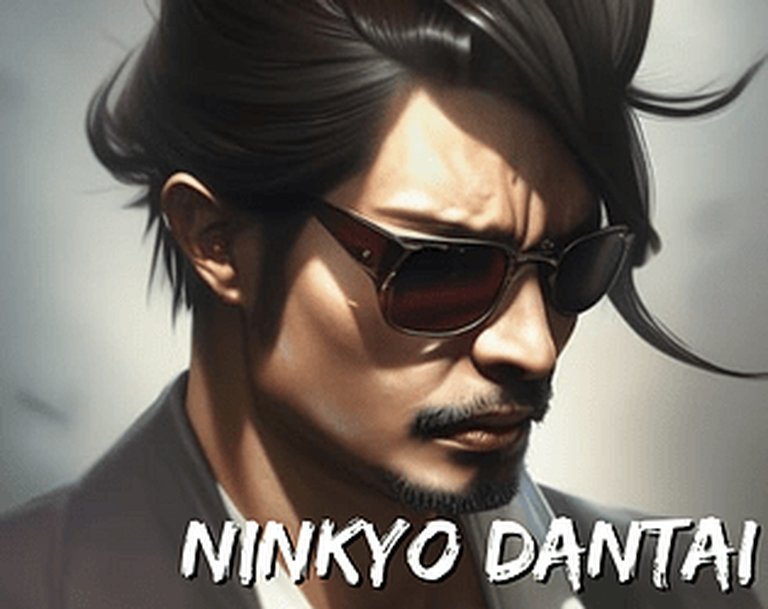
Ninkyo Dantai is a turn-based Japanese role-playing game set in the modern/futuristic town of Buruwasu, Japan. Players control Shinji, an ex-street racer sent to the town for his past crimes, who becomes embroiled in a mystery after encountering a protest about an unsolved murder. With the help of a detective, he must investigate, collect evidence, and solve the case to restore justice to the once peaceful community.
Ninkyo Dantai: A Cult Indie’s Ambitious, Flawed Homage to Yakuza and Classic GTA
Introduction: The Ghost in the Machine of Modern Indie RPGs
In the crowded digital storefronts of 2023, where algorithmic recommendations often drown out passion projects, Ninkyo Dantai exists as a quiet, defiant anomaly. This is not a game born of a million-dollar Kickstarter or a veteran studio’s nostalgia cash-in. Instead, it is the culminating vision of a single, decade-long developmental odyssey by a small UK-based team, TeamCS1, seeking to synthesize the soul of Sega’s Yakuza with the open-world mischief of DMA Design’s seminal 2D Grand Theft Auto titles, all filtered through the constrained, idiosyncratic lens of GameMaker Studio. The title itself—Ninkyō Dantai (任侠団体), translating to “Organization of Chivalry” or “Honorable Gang”—immediately signals its thematic core: a meditation on honor, redemption, and institutional failure within a modern Japanese setting. This review argues that Ninkyo Dantai is a profoundly important, if deeply flawed, artifact of contemporary indie game development. It represents a breathtakingly ambitious attempt to merge disparate genres and narrative tones on a shoestring budget, creating a game whose technical roughness is inseparable from its earnest, heartfelt, and occasionally brilliant design. Its legacy is not one of mainstream acclaim, but of a potent, unfiltered creative will that offers crucial lessons on the tensions between scope, execution, and vision in the indie ecosystem.
Development History & Context: A Solo Odyssey in GameMaker
The Architect: TeamCS1’s Long Haul
TeamCS1’s history, as documented on its official site, is the story of a developer inverting the typical indie trajectory. Founded in early 2016 by an individual (whose name is not publicly credited) “while still a college student,” the studio’s origins lie in parody and meme games, a common proving ground. However, a “passion for a particular art form” and a singular idea—Ninkyo Dantai—fully consumed the project’s direction. This was not a quick pivot but a slow, deliberate evolution. The team incorporated as “TeamCS1 Ltd” in 2023, the same year the first mainline title finally saw release, but the core development span was approximately seven years. This timeline is critical to understanding the game: it is a product of sustained, iterative passion, not a calculated market entry. The developer’s own words confirm the stylistic debt: in a community comment on IndieDB, they explicitly state the game’s concept is “a hybrid of Yakuza and 2D era GTA.”
Technological Constraints: GameMaker’s 3D Frontier
The choice of GameMaker Studio (GMS) as the engine is both the project’s greatest limitation and its most fascinating technical achievement. Historically, GMS was revered for 2D sprite-based games and had limited, often cumbersome, 3D capabilities. The developer’s devlogs reveal a monumental technical undertaking. The v1.0.0 update in January 2023 focused on implementing a custom lighting engine from scratch—a fundamental systems-level addition for a 3D game. Subsequent updates (v1.0.3 “Overhauled,” v1.0.4 “Battle Update,” v1.0.5 “Calendar & Optimisations”) read like a chronicle of someone pushing GMS to its absolute limit: adding a calendar week system, enemy HUDs with levels and gang affiliations, LODs (Level of Detail) for props like money bags and dumpsters, and memory cleaner scripts to manage the strain of navigating between districts. The v1.0.6 update’s release of a custom map editor built within GMS is perhaps the most staggering feat, a tool that blurs the line between in-game content and development software, allowing for what the team calls “hand-crafted” locales (Buruwasu, Ichihara, Konan, Yokyohama, Nagasegai) to be meticulously designed. This is not a game using an engine; it is a game against an engine, a testament to the developer’s stubborn ingenuity.
Gaming Landscape of 2023
Ninkyo Dantai arrived in a post-Yakuza: Like a Dragon world, where the mainstream perception of the genre had shifted irrevocably toward turn-based combat. However, its DNA is more aligned with the earlier Yakuza (Kiwami, 0) and the classic top-down GTA 1 and 2. In the indie sphere, 2023 was dominated by narrative RPGs like Sea of Stars and action titles like Hades II. Ninkyo Dantai had no direct competitor. It carved a niche so specific it essentially created its own category: a low-poly, top-down, Japanese-set, detective-themed, turn-based “Bぞく (Bōzoku) RPG,” a genre of one. Its release on itch.io as a “name your own price” title (ultimately free) positioned it not as a commercial product but as a shareable piece of a developer’s journey, a blueprint for others to study and admire.
Narrative & Thematic Deep Dive: Redemption in a Broken Town
Plot Structure: The Protagonist as Catalyst
The narrative premise is deceptively simple, as outlined in official descriptions: Shinji, an ex-street racer with a criminal past, is sent to the fictional coastal town of Buruwasu as part of his rehabilitation. He soon encounters a protest over an unsolved murder and partners with a local detective to uncover the conspiracy. This structure establishes Shinji as the classic “fish out of water” and “redeemable rogue” archetype. His past as a bōsōzoku (street racer/gang member) provides immediate street credibility and combat justification, while his sentence in Buruwasu frames him as an instrument of a flawed justice system—he is both a criminal and a potential instrument of justice. The partnership with a detective (name unmentioned in sources) creates the classic buddy cop dynamic but with a crucial asymmetry: the detective represents formal, perhaps gridlocked, law enforcement, while Shinji represents extra-legal, grassroots action. Their quest to “bring justice to the once peaceful town” positions the narrative as a procedural mystery within a social context.
Underlying Themes: The “Ninkyo” Ideal vs. Modern Decay
The title is the thesis. Ninkyo (任侠) refers to the traditional Japanese concept of Ninkyō—chivalry, helping the weak, and upholding a personal code of honor outside official structures. Dantai (団体) means organization or group. The game, therefore, is about the search for or reformation of an “honorable organization.” The setting of Buruwasu, described as “once peaceful” but now “troubled,” is the physical manifestation of societal decay. The “unsolved murder” is not just a crime but a symptom of a deeper corruption, likely involving organized crime (yakuza) and corporate/political malfeasance, given the Yakuza inspiration. Shinji’s journey is thus a dual one: his personal redemption through acting on a ninkyo code, and the broader social redemption of his adopted town by exposing and purging its corrupting elements. The protest he stumbles upon is the inciting incident because it represents the community’s cry for justice, a collective action that aligns perfectly with the ninkyo spirit of protecting the public good. Thematically, the game explores how institutional failure (police, local government) creates a vacuum that forces honorable individuals—even former criminals—to form their own “dantai” for justice.
Dialogue & Character Potential
Official materials lack specific dialogue samples, but the systems described imply a narrative delivery method. The “randomly generated AI” for NPC communication suggests a systemic, perhaps emergent, approach to storytelling, where clues and information are scattered across a dynamic social web rather than locked in scripted sequences. This is a bold, risky narrative device. It could create a profound sense of a living, breathing town where information flows organically, but it also risks diluting narrative cohesion and character depth. The over 100 hand-crafted side quests mentioned on itch.io and IndieDB are where the thematic core will likely deepen. These quests are where the ninkyo ideal will be tested in mundane scenarios—helping a shopkeeper, resolving a neighborhood dispute, investigating petty thefts—building Shinji’s relationship with the town and its people on a granular level. The player’s choices in these quests presumably feed back into the town’s state and Shinji’s reputation, a morality system not of “good/evil” but of “honorable/corrupt/indifferent.”
Gameplay Mechanics & Systems: A Hybrid in Practice
Core Loop: Investigate, Interact, Battle
The gameplay loop is a triad:
1. Investigation & Exploration: A top-down, 3D perspective allows players to navigate the five hand-crafted locales. The core tool is evidence gathering, interacting with the “randomly generated AI” to find clues, witness statements, and items. The calendar system (added in v1.0.5) introduces time-based events, meaning some clues or NPCs are only available on certain days, adding a Persona-like scheduling layer to the detective work.
2. Social & Side Content: With over 100 side quests, players engage in the town’s life—mini-games (implied by later entries in the series featuring bowling, fishing, etc.), shopping, and likely part-time jobs (a feature promised for Ninkyo Dantai II). This builds resources (money, items) and potentially unlocks new investigation paths.
3. Turn-Based Combat: When conflicts escalate (and the description’s “beat * up!” confirms they will), the game shifts to a *turn-based JRPG battle system. This is where the Yakuza inspiration meets classic RPG form.
Combat System: From Clubbing to Calculated Brawls
The battle system has seen significant iteration, as detailed in the v1.0.4 and v1.0.5 patch notes. Key features include:
* Melee Focus: Players use melee weapons (likely pipes, bats, knives, perhaps iconic items like the koshirae sword hinted at in the sequel’s 1980s setting). The “beat * up!” phrasing suggests a visceral, physical combat style, contrasting with the methodical investigation.
* *Systemic Depth: Enemies now have gang affiliations and levels. This implies a scrapbook-like compendium system where understanding gang territories and hierarchies becomes part of the investigation. Level differences create a clear power curve, encouraging players to engage with side content to grow strong enough for main story confrontations.
* UI & Presentation: The addition of an Enemy HUD displaying health, name, level, and type is a crucial quality-of-life and tactical improvement. It transforms opaque encounters into strategic puzzles where identifying a high-level enemy from a specific gang (perhaps a lieutenant) is the first step to victory.
* Architectural Shift: The dev note about moving “core battle logic to a separate controller” suggests a maturation of the codebase, making future balancing and expansion (new skills, weapon types) more sustainable.
Innovation & Flaws: The Indie Double-Edged Sword
Innovation: The most significant innovation is the genre-blending core premise itself. A turn-based JRPG where the “combat” is literal, street-level brawling that directly results from a detective investigation is rare. The systemic link between gang territories, evidence found in specific districts, and the enemies encountered there (e.g., finding evidence in Ichihara leads to fights with the local Ichihara gang) is a theoretically brilliant fusion of world-building and gameplay. The integrated calendar and dynamic NPCs could create a truly Reactive town.
Flaws (Inferred from Technical Notes): The constant updates fixing bugs—”Resume button not working,” “overflow error,” “incorrect lamp placement”—paint a picture of a game operating at the very edge of the GameMaker engine’s memory and logic limits. The need for “memory cleaner scripts when navigating between Cities” is a glaring red flag for performance and stability. The “randomly generated AI” for clues is a massive design gamble; if not perfectly tuned, it could lead to frustratingly vague or illogical clue placement, breaking the investigative momentum. The user interface, especially in a top-down 3D space with a turn-based menu overlay, likely suffers from clutter and imprecision—a common issue in DIY 3D implementations on 2D-focused engines.
World-Building, Art & Sound: Atmosphere Through Constraint
Setting: A Fractured, Familiar Japan
The world of Ninkyo Dantai is a stylized, low-poly recreation of a modern Japanese townscape. The five locales (Buruwasu, Ichihara, Konan, Yokyohama, Nagasegai) suggest a region with distinct personalities—perhaps a central town, industrial zone, commercial district, residential area, and a red-light or docks district (Nagasegai, with “gai” meaning “street” or “district,” often used in manga for entertainment quarters). The setting is the game’s protagonist as much as Shinji. Its state—”troubled” and “once peaceful”—is the central conflict. The atmosphere is built through environmental storytelling: protest signs, boarded-up shops, graffiti tagging gang territories, the contrast between serene temples and grimy back alleys. The top-down perspective is crucial, as it allows players to survey the social landscape (crowd density, police presence, gang loitering) as a strategic map.
Visual Direction: Functional, Not Fabulous
Given the GameMaker constraint and solo-dev/limited-team context, the art is low-poly 3D with simple textures. The focus is on readability and functional design. The patch notes about adding “5 new texture LODs for Bag of Money – 64 to 1024” reveal a pragmatic, performance-driven art pipeline. The world is not meant to be photorealistic but to communicate information: a dark alley is dangerous, a bright park is safe (maybe), a gang member’s color-coded clothes indicate allegiance. The “atmospheric city design” praised by a community member on IndieDB suggests successful use of lighting (the v1.0.0 update) and fog/weather effects to create mood—a stormy night in Nagasegai feels different from a sunny afternoon in Konan. The “Chicken Lickin'” restaurant added in v1.0.3 hints at a desire for mundane, recognizable brand parody to ground the world, a technique the Yakuza series masters.
Sound Design: The Unanswered Question
The source material is completely silent on sound design. There are no credits listing composers, no descriptions of music or sound effects. This is a major omission. For a game so heavily inspired by Yakuza, which is famous for its dynamic score that shifts from serene exploration melodies to hard-hitting battle rock, the absence of this information is glaring. It is likely the game uses stock or publicly available sound libraries, free music, or placeholder tracks. This would be a significant detriment to its goal of emotional and tonal shift between investigation and combat. The “synthetic experience” and “complete voice-acted lines” promised for Ninkyo Dantai II (set in the 1980s) highlight how the first game’s audio-visual presentation is probably its most primitive element. The atmosphere, therefore, is built almost entirely on visual design and gameplay systems, a risky bet that relies on player imagination to fill the auditory void.
Reception & Legacy: The Quiet Triumph of the Cult Artifact
Critical & Commercial Reception: The Statistics of Obscurity
By any traditional metric, Ninkyo Dantai is a non-entity in the critical sphere. MobyGames shows a “n/a” Moby Score and zero critic reviews. It is listed as having “5.0 out of 5 stars” on itch.io, but this is based on only 2 total ratings—an insufficient sample for any meaningful analysis. The CriticalPixel link shows zero reviews and zero users. Its commercial model is “name your own price,” and it is effectively free. Sales figures are nonexistent and irrelevant. It has not been featured on major outlets, YouTubers, or streamers in any documented way. Its presence on Lutris and IndieDB indicates a small, dedicated audience aware of its existence, but it remains a deeply obscure title.
Community Response: The Devlog as Dialogue
The true reception is found in the devlog comments and the game’s own promotional spaces. The comment from “Bit.Byte” on IndieDB—”Soooo, the original top down GTA games mixed with the world of Yakuza? Basically? This is awesome!”—is the quintessential, and perhaps only, critical response. It confirms that the developer’s core pitch lands perfectly for those who discover it. The developer’s responsive, humble, and grateful engagement (“Spot on… Really do appreciate the kind words :D”) creates a personal, community-focused relationship that is the antithesis of corporate marketing. The game’s status as “In development” (on its own itch.io page, despite a 2023 release) and the detailed, frequent devlogs through 2025 indicate it is a perpetual work-in-progress, a living document of a developer’s learning process. Players who engage are not consuming a finished product but becoming patrons of an ongoing experiment.
Influence & Industry Position: A Blueprint for Ambitious Modesty
Ninkyo Dantai‘s influence will not be measured in clones or sales. Its legacy is as a case study in audacious scope within severe limitations. It demonstrates that the fusion of complex, systemic detective gameplay with traditional turn-based JRPG combat is possible—even in GameMaker. The custom map editor is a monumental achievement that empowers the developer and could, if released, empower a modding community (though none exists yet). The game stands as a direct rebuttal to the idea that certain genres require AAA budgets. It argues that a deep, niche love for a specific aesthetic (the gritty, urban Japanese underworld) and a willingness to rebuild core systems (lighting, battle logic, LODs) from the ground up can yield a uniquely personal experience, even if that experience is janky and opaque to all but the most determined players.
Its relationship to its clear inspirations is also key. It is not trying to be Yakuza; it is trying to be the 2D GTA version of Yakuza your mind might have imagined in the late 1990s. In that sense, it is a pastiche and a love letter, not a competitor. Its potential influence lies in showing other small developers that an obsessive, years-long focus on a hyper-specific hybrid genre can produce a viable, distributable project that finds its audience not through marketing, but through the sheer force of its singular vision communicated via transparent development blogs.
Conclusion: A Flawed Gem in the Rough
Ninkyo Dantai is not a great game by conventional standards. Its graphics are rudimentary, its sound design is presumably minimal, its UI likely clunky, and its narrative delivery system (random AI clues) is unproven and risky. It is almost certainly riddled with the bugs and performance issues documented in a years-long string of patch notes. Yet, to dismiss it on these grounds is to miss its profound significance. It is the video game equivalent of an outsider artist’s epic mural—technically imprecise, structurally unconventional, but vibrating with a visionary intensity that polished corporate products often lack.
This game’s triumph is not in its execution, but in its existence. It is the physical manifestation of a developer’s decade-long dialogue with their influences, wrestling a beloved but complex set of genres (Japanese crime drama, open-world mayhem, turn-based RPG) into a single, coherent (if messy) package using tools not designed for the task. It offers a challenging, atmospheric, and系统ically ambitious (if opaque) experience for the small subset of players who crave a detective RPG with the soul of a street brawler.
In the grand canon, Ninkyo Dantai will not be taught alongside Chrono Trigger or The Witcher 3. Its place is in a different, equally vital chapter: the history of obsessive indie development. It is a benchmark for what one person (or a tiny team) can force a game engine to do. It is a testament to the enduring appeal of the Yakuza/GTA fantasy. And it is a living, updated artifact that continues to evolve, reminding us that for some creators, a game is never truly “finished”—it is merely the latest iteration of a lifelong conversation with the medium. For that courageous, unwavering, and deeply flawed ambition, Ninkyo Dantai earns its place as a cult landmark and a beacon for the stubbornly independent developer. It is a game you play not for polish, but for purpose.