
- Release Year: 2004
- Platforms: Windows
- Developer: Britton O’Toole
- Genre: Adventure
- Perspective: 3rd-person (Other)
- Game Mode: Single-player
- Gameplay: Graphic adventure, Puzzle elements
- Setting: Contemporary
- Average Score: 81/100
Description
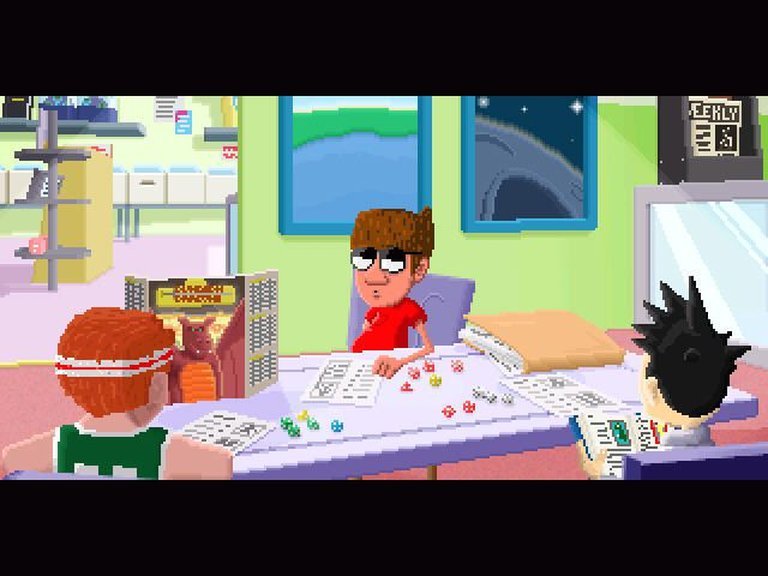
No-Action Jackson is a humorous 2D point-and-click adventure game where players control Jackson, a D&D-obsessed teenager determined to sneak out of his house to join his friends for a gaming session. Trapped at home during a visit from his grandparents, Jackson must creatively solve puzzles, interact with quirky characters, and evade his mother’s watchful eye. Set in a contemporary household, the game features a classic SCUMM-inspired interface with verb-based interactions and an inventory system, blending slapstick comedy with nostalgic gameplay mechanics.
Gameplay Videos
No-Action Jackson Free Download
No-Action Jackson Reviews & Reception
squakenet.com : No Sam and Max but well, you can still enjoy it!
goldenageofgames.com : A freeware masterpiece that no adventure gamer should ignore
old-games.com : A freeware masterpiece that no adventure gamer should ignore
No-Action Jackson: A Love Letter to Classic Point-and-Click Adventures
Introduction
In 2004, as the commercial point-and-click adventure genre lay dormant, a freeware gem emerged from the shadows to embody the spirit of LucasArts’ golden age while carving its own niche in gaming history. No-Action Jackson, a solo-developed passion project by Britton O’Toole, defied expectations with its razor-sharp wit, meticulously crafted puzzles, and visuals that paid homage to giants like Day of the Tentacle. This review posits that No-Action Jackson is not merely a nostalgia act but a vital artifact of the indie renaissance—a game whose labor-of-love ethos and subversive humor cemented its legacy as a cult classic.
Development History & Context
The Indie Alchemist: Britton O’Toole and the AGS Revolution
Developed during the early 2000s indie explosion, No-Action Jackson was born from Adventure Game Studio (AGS), a toolkit democratizing game creation amid dwindling commercial support for narrative-driven adventures. O’Toole, operating without a team or budget, leveraged AGS’ SCUMM-like scripting to resurrect the genre’s tactile verb-inventory interface. Released on May 19, 2004, the game arrived in an era dominated by 3D action titles, making its commitment to 2D pixel-art aesthetics both a defiance of trends and a love letter to dormant classics.
Technological Constraints as Creative Fuel
Limited to 640×480 resolution and a 256-color palette, O’Toole transformed constraints into strengths. The crosshair cursor—a subtle innovation—minimized pixel-hunting frustrations endemic to early ’90s adventures. Yet, the game’s single-save slot (a relic of AGS’ beta-era limitations) drew minor criticism, emphasizing its grassroots origins.
Narrative & Thematic Deep Dive
Plot as Geek Manifesto
Players embody Jackson, a D&D-obsessed teen under house arrest during his grandparents’ visit, tasked with escaping his mundane prison to attend a critical gaming session. The premise weaponizes adolescent angst and nerd-culture defiance, framing household chores as boss battles and parental authority as the ultimate antagonist.
Subtextual Rebellion
Beneath the slapstick surface lies a thematic critique of performative familial duty. Jackson’s mother weaponizes guilt (“Help me, or disappoint your grandparents!“), while his grandparents embody oblivious nostalgia—a dynamic mirrored in puzzles requiring Jackson to exploit generational gaps (e.g., tricking his grandfather with retro tech).
Dialog as Weaponized Wit
Every object interaction bursts with personality. Examining a mundane mop prompts Jackson’s lament: “My future as a janitor awaits.” NPC dialogues skewer RPG tropes, from a friend trapped in a “level-grinding nightmare” of piano practice to a comic-shop owner parodying toxic gatekeeping.
Gameplay Mechanics & Systems
SCUMM Reborn, Refined
The UI clones LucasArts’ verb coin but streamlines it: eight context-sensitive verbs (e.g., Use, Talk, Look) replace the classic nine, reducing clutter without sacrificing depth. Inventory interactions shine—combining a fake beard with a mirror to impersonate a janitor exemplifies O’Toole’s puzzle design philosophy: logical, humor-driven, and devoid of moon-logic.
Structure as Narrative Pacing
The game segments into three acts:
1. House Escape: Claustrophobic, item-driven puzzles (e.g., disabling a CCTV-like TV monitor).
2. Friend Rescue: Non-linear exploration across suburban locales, each friend representing a unique puzzle strand.
3. Climactic D&D Session: A meta-commentary on escapism, resolving narrative threads through dice rolls.
Flaws in the Armor
Pixel-hunting persists (critics noted the “diabolical” TV cable puzzle), and the lack of multi-save support risked progress loss—a quirk forgiven by its “no dead-ends” design. AGS engine bugs occasionally soft-locked interactions, demanding player patience.
World-Building, Art & Sound
Visual Nostalgia as Art Direction
O’Toole’s hand-drawn, VGA-style art emulates Day of the Tentacle’s cartoonish exuberance. Jackson’s bedroom overflows with geek ephemera: dice towers, Lord of the Rings posters, and a conspicuously placed Dragon Magazine. Exterior environments—a rain-soaked street, a neon-lit comic store—evoke pixel-art melancholy reminiscent of Sam & Max’s Americana.
Sound Design: Minimalism with Maximal Impact
Absent voice acting, the game relies on environmental soundscapes: ticking clocks amplify parental oppression; thunderclaps underscore escape attempts. The D&D finale’s orchestral fanfare—a MIDI masterpiece—rewards players with auditory catharsis.
Reception & Legacy
Critical Adoration
Boasting an 81% aggregate critics’ score, reviewers lauded its “LucasArts-caliber polish” (Abandonia Reloaded) and “pitch-perfect humor” (The Freehare). Detractors targeted uneven pacing and undercooked secondary characters, with AGS Ezine noting its “script [needing] an overhaul”—a rare critique in otherwise rapturous appraisals.
Awards and Indie Immortality
Nominated for seven 2004 AGS Awards (including Best Game and Best Puzzles), it lost to genre heavyweight Gibbage yet solidified O’Toole as a scene luminary. Its freeware status fueled grassroots distribution, amassing cult reverence among Adventure Gamers’ forum devotees.
The Ripple Effect
No-Action Jackson inspired a generation of AGS auteurs, proving indie adventures could rival commercial titans. Games like Ben Jordan: Paranormal Investigator and Gemini Rue owe debts to its blueprint—proof that heartfelt design trumps budget.
Conclusion
Verdict: A Forgotten Masterpiece of Indie Craftsmanship
No-Action Jackson transcends its freeware roots to deliver a poignant, uproarious ode to adventure gaming’s heyday. While rough edges betray its solo-dev origins, its strengths—laugh-out-loud writing, inventive puzzles, and wistful artistry—elevate it to canonical status. Two decades later, it remains essential play for genre historians and a testament to passion’s power over profit. In Jackson’s quest to roll virtual dice, we find gaming’s enduring truth: the greatest escapes are often the ones we engineer ourselves.