
- Release Year: 2005
- Platforms: PlayStation 2, PlayStation 3, Windows
- Publisher: KOEI Co., Ltd., KOEI Corporation, Sony Computer Entertainment America LLC, Taiwan Koei Entertainment Software, Inc., Tecmo Koei Games Co., Ltd.
- Developer: KOEI Co., Ltd.
- Genre: Strategy, Tactics
- Perspective: Top-down
- Game Mode: Single-player
- Gameplay: Diplomacy, Grand strategy, Historical events, Resource Management, Turn-based
- Setting: Ancient, Classical, Historical, Japan, Medieval
- Average Score: 78/100
Description
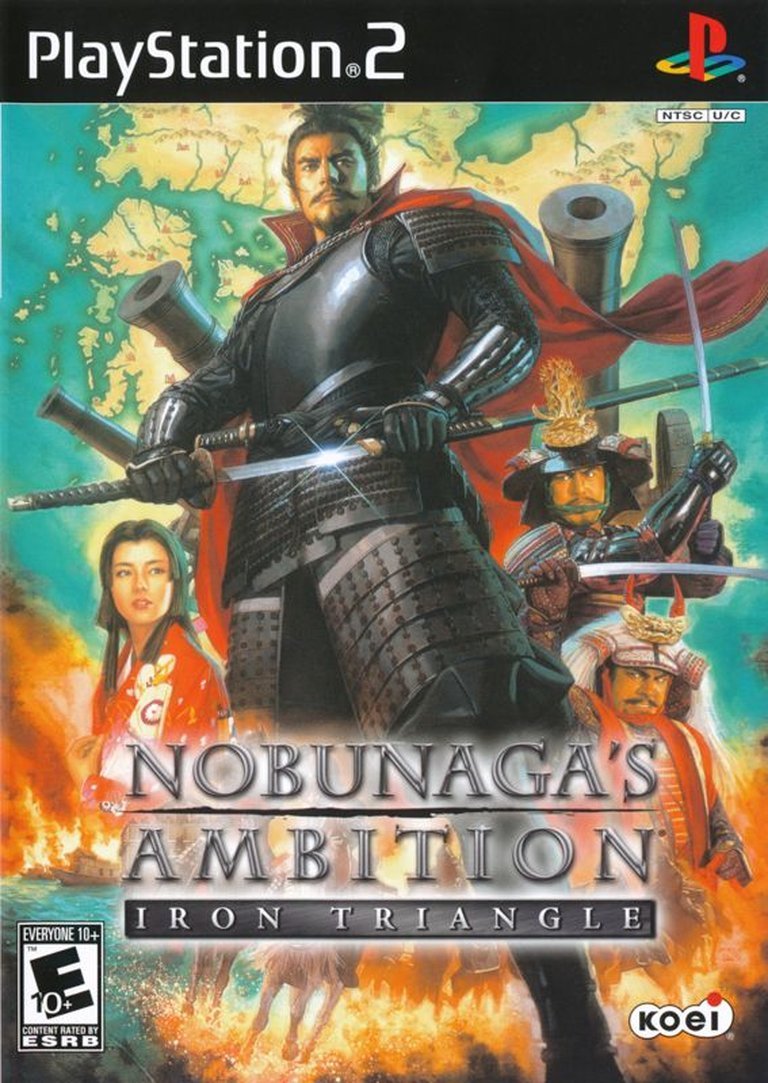
Nobunaga’s Ambition: Iron Triangle is a grand strategy game set during Japan’s Sengoku period, where players take on the role of a feudal lord. The game features a top-down 3D view of the landscape, allowing players to manage cities, personnel, military, diplomacy, and resources through a menu-driven interface. Seasons affect gameplay mechanics, and historical events are integrated into the timeline, offering a blend of strategic depth and historical immersion.
Gameplay Videos
Nobunaga’s Ambition: Iron Triangle Reviews & Reception
metacritic.com (76/100): A triumphant return to form for the series.
gamesradar.com (80/100): Holy crap, this is the TWELFTH Nobunaga’s Ambition, and yet not a whole lot has really changed since the old NES days.
Nobunaga’s Ambition: Iron Triangle – A Masterclass in Historical Grand Strategy
Introduction: The Unyielding Legacy of a Sengoku Epic
Few video game franchises have maintained such a relentless focus on a single historical period as Nobunaga’s Ambition. Since its debut in 1983, Koei’s grand strategy series has meticulously chronicled the tumultuous Sengoku period of feudal Japan, where warlords clashed in a brutal struggle for dominance. Nobunaga’s Ambition: Iron Triangle (2005), the twelfth entry in the series, stands as a pivotal evolution—a bold departure from turn-based tradition into real-time strategy while retaining the franchise’s signature depth and historical fidelity.
This review dissects Iron Triangle as both a standalone experience and a critical juncture in the series’ evolution. We’ll explore its development context, narrative ambition, mechanical innovations, and enduring legacy, arguing that it represents Koei’s most audacious attempt to modernize its formula without sacrificing the hardcore appeal that defines Nobunaga’s Ambition.
Development History & Context: Koei’s Strategic Gambit
The Studio’s Pedigree and Vision
Koei, under the leadership of Kou Shibusawa (credited as General Producer on Iron Triangle), had spent over two decades refining the Nobunaga’s Ambition formula. By the mid-2000s, the studio was a juggernaut of historical strategy, with Romance of the Three Kingdoms and Dynasty Warriors cementing its reputation. Yet, the Nobunaga series faced a crossroads: how to innovate without alienating its niche but devoted fanbase.
Iron Triangle’s development was a direct response to this challenge. The game’s Japanese subtitle, Kakushin (革新, “Innovation”), was no mere marketing flourish—it signaled a fundamental shift. For the first time, the series embraced real-time gameplay for both its strategic map and tactical battles, a radical departure from the turn-based structure that had defined the franchise since 1983.
Technological Constraints and Design Philosophy
Released in 2005 for Windows and later ported to PlayStation 2 (2006) and PlayStation 3 (2013), Iron Triangle leveraged the era’s hardware to deliver a 3D-rendered overhead map—a stark contrast to the 2D hex grids of prior entries. The PlayStation 2 version, in particular, demonstrated Koei’s commitment to accessibility, bringing the series to consoles with a control scheme optimized for gamepads.
The game’s design philosophy centered on the “Iron Triangle” concept:
1. Technology – Research and development of military and civilian advancements.
2. Governance – Managing resources, infrastructure, and peasant loyalty.
3. Military Might – Raising armies, conducting diplomacy, and waging war.
This triad wasn’t just thematic; it was mechanically intertwined. Players could no longer brute-force victories through sheer military strength—economic and technological dominance became prerequisites for conquest.
The Gaming Landscape of 2005
Iron Triangle arrived in a crowded strategy market. Total War: Shogun 2 (2011) was still years away, but Rome: Total War (2004) had set a new standard for hybrid turn-based/real-time strategy. Meanwhile, Civilization IV (2005) and Age of Empires III (2005) dominated the RTS and 4X spaces.
Koei’s challenge was clear: differentiate Nobunaga’s Ambition from Western grand strategy while preserving its identity. Iron Triangle’s solution was to double down on historical authenticity—every clan, officer, and battle was rooted in Sengoku-era records, complete with in-game historical notes triggered by real-world events.
Narrative & Thematic Deep Dive: The Sengoku Period as a Character
Plot and Historical Fidelity
Iron Triangle eschews a linear campaign in favor of sandbox-style historical simulation. Players choose from multiple scenarios spanning the Sengoku period (1560–1582), each offering a snapshot of Japan’s fractious political landscape. The ultimate goal—unifying Japan under a single daimyo—remains constant, but the path varies dramatically based on starting conditions.
The game’s narrative strength lies in its emergent storytelling. Unlike scripted RTS campaigns, Iron Triangle’s drama unfolds organically:
– Alliances fracture when a clan grows too powerful.
– Betrayals occur when a vassal senses weakness.
– Peasant revolts erupt if taxes are too high or food too scarce.
These systems create a living history, where players don’t just witness the Sengoku period—they reshape it.
Characters and Personality Systems
Every officer in Iron Triangle is a historical figure, complete with statistics, traits, and loyalty values. Oda Nobunaga, Takeda Shingen, and Tokugawa Ieyasu are more than mere avatars; their AI behaviors reflect their historical reputations:
– Nobunaga is aggressive, prioritizing military expansion.
– Shingen is methodical, favoring defensive fortifications.
– Ieyasu is patient, biding his time for opportune strikes.
The loyalty system adds another layer of depth. Officers may defect if neglected, and clans can splinter if internal factions grow too powerful. This creates a political chessboard where diplomacy and intrigue are as critical as battlefield tactics.
Themes: Power, Legacy, and the Cost of Ambition
Iron Triangle grapples with themes that resonate beyond its historical setting:
– The Burden of Leadership: Every decision—raising taxes, conscripting peasants, executing prisoners—has moral and mechanical consequences.
– The Fragility of Power: Even the mightiest clans can collapse if their economy falters or their people rebel.
– The Illusion of Control: The real-time systems ensure that no plan survives contact with the chaos of war.
The game’s historical notes, triggered by in-game events, reinforce these themes. A player who unifies Japan in 1575 might receive a note about how, in reality, Nobunaga’s ambition was cut short by betrayal—a sobering reminder that history is written by survivors.
Gameplay Mechanics & Systems: The Art of War, Refined
Core Gameplay Loop: Strategy in Real-Time
Iron Triangle’s most radical innovation is its dual-phase system:
1. Pause Mode: Players issue orders (construct buildings, move armies, negotiate treaties) while time is frozen.
2. Active Mode: Time resumes, and orders execute in real-time. Seasons change, armies march, and battles unfold dynamically.
This hybrid approach solves a key problem in grand strategy: the tedium of micromanagement. Players can plan meticulously in Pause Mode, then watch their empire evolve in Active Mode, intervening only when necessary.
Combat: Tactical Depth Meets Real-Time Urgency
Battles in Iron Triangle are real-time affairs, a departure from the series’ turn-based roots. Armies clash on 3D battlefields, with terrain, unit types, and officer abilities playing crucial roles. However, the game’s abstraction sets it apart from traditional RTS titles:
– No direct unit control: Players issue broad orders (e.g., “Attack,” “Defend,” “Flank”), and officers execute them based on their stats.
– Morale and fatigue: Troops weaken over time, and routing armies can turn the tide.
– Supply lines: Armies starve without food, adding logistical depth.
This system rewards strategic positioning over twitch reflexes, aligning with the series’ grand-strategy ethos.
Economic and Diplomatic Systems
Iron Triangle’s economy is a delicate ecosystem:
– Rice and gold are primary resources, tied to seasonal harvests.
– Buildings (farms, markets, academies) must be balanced to avoid shortages.
– Peasant loyalty fluctuates based on taxes, food distribution, and military conscription.
Diplomacy is equally nuanced:
– Alliances can be forged or broken with a single betrayal.
– Technology trading becomes a currency—clans exchange military secrets for gold or non-aggression pacts.
– Marriage alliances secure long-term stability but may limit future expansion.
UI and Accessibility: A Double-Edged Sword
The game’s menu-driven interface is a testament to Koei’s design philosophy: depth over flash. Every action—from recruiting officers to researching tech—is buried in nested menus. While this ensures unparalleled control, it also creates a steep learning curve.
The tutorial is inadequate, a recurring critique in reviews. Newcomers are dumped into a sea of mechanics with little guidance, while veterans appreciate the lack of hand-holding. This divide underscores Iron Triangle’s identity: a game for the patient and the obsessive.
World-Building, Art & Sound: The Sengoku Period in Pixels and Polyphony
Visual Design: A Living Map
Iron Triangle’s 3D-rendered map is a technical marvel for 2005. Castles, rivers, and forests are more than decorative—they affect gameplay:
– Mountains slow armies.
– Rivers act as natural choke points.
– Castles provide defensive bonuses.
The seasonal cycle is visually striking:
– Spring brings lush greenery and bountiful harvests.
– Winter blankets the map in snow, halting military campaigns.
While the graphics are functional rather than flashy, they serve the game’s immersive simulation.
Sound Design: The Symphony of War
The soundtrack blends traditional Japanese instruments (shakuhachi, taiko drums) with orchestral arrangements, evoking the grandeur and brutality of the Sengoku period. Battle cries, clashing steel, and the haunting melody of the “Nobunaga’s Ambition” theme (a series staple) heighten the atmosphere.
Sound effects are minimalist but effective:
– The clatter of hooves as armies march.
– The distant thunder of cannons in siege battles.
– The silent tension of a paused diplomatic negotiation.
Atmosphere: The Weight of History
Iron Triangle’s greatest strength is its immersive historical atmosphere. Every clan banner, officer portrait, and event notification is steeped in authentic Sengoku iconography. The game doesn’t just simulate history—it feels like history.
Reception & Legacy: The Hardcore’s Triumph
Critical Reception: A Niche Masterpiece
Iron Triangle received generally favorable reviews, with critics praising its depth but noting its inaccessibility:
– IGN (8/10): “Nothing revolutionary, no, and more than a little familiar to fans of the series, but still very, very good.”
– GameZone (7.5/10): “For the hardcore gamer willing to take on all strategy games, not just mainstream hits.”
– GamesRadar (7/10): “We were amazed at how much time the game swallowed.”
The Metacritic score of 76 reflects its status as a cult classic—beloved by strategy aficionados but overlooked by the mainstream.
Commercial Performance and Longevity
While sales figures are scarce, Iron Triangle’s legacy is evident in its enduring fanbase. The game’s Power Up Kit expansion (2007) added new scenarios and refinements, proving Koei’s commitment to post-launch support.
Its influence is seen in later Nobunaga’s Ambition titles:
– Sphere of Influence (2014) refined the real-time systems.
– Taishi (2017) and Awakening (2022) expanded on the 3D map and diplomatic depth.
Industry Impact: The Koei Blueprint
Iron Triangle reinforced Koei’s reputation as the masters of historical strategy. Its success proved that niche games could thrive if they catered unapologetically to their audience. The series’ lack of Western localization for some entries (e.g., Tendō) underscores its cult status—a franchise for the dedicated, not the casual.
Conclusion: A Monument to Strategic Depth
Nobunaga’s Ambition: Iron Triangle is not a game for everyone. It is a game for those who crave complexity, who relish the slow burn of empire-building, and who find beauty in historical authenticity over spectacle.
Its real-time innovation was a gamble that paid off, bridging the gap between turn-based tradition and modern strategy. While later entries in the series would refine its systems, Iron Triangle remains a pivotal moment—the point where Nobunaga’s Ambition shed its old skin and emerged as a grand strategy powerhouse.
Final Verdict: 8.5/10 – A Masterpiece of Niche Design
For the patient and the strategic, Iron Triangle is one of the deepest, most rewarding historical simulations ever made. It is not a game to be conquered, but a world to be lived in—one season, one battle, one betrayal at a time.
Post-Script: The Iron Triangle’s Enduring Challenge
Even today, Iron Triangle stands as a testament to Koei’s uncompromising vision. In an era where strategy games often prioritize accessibility, it remains a bastion of hardcore design—a reminder that depth, not flash, is the soul of strategy.
For those willing to embrace its complexity, Iron Triangle offers an experience unlike any other: the chance to rewrite history, one ambitiously bloody stroke at a time.